

Split decision: Valentina Santiago between her gender transition and boxing
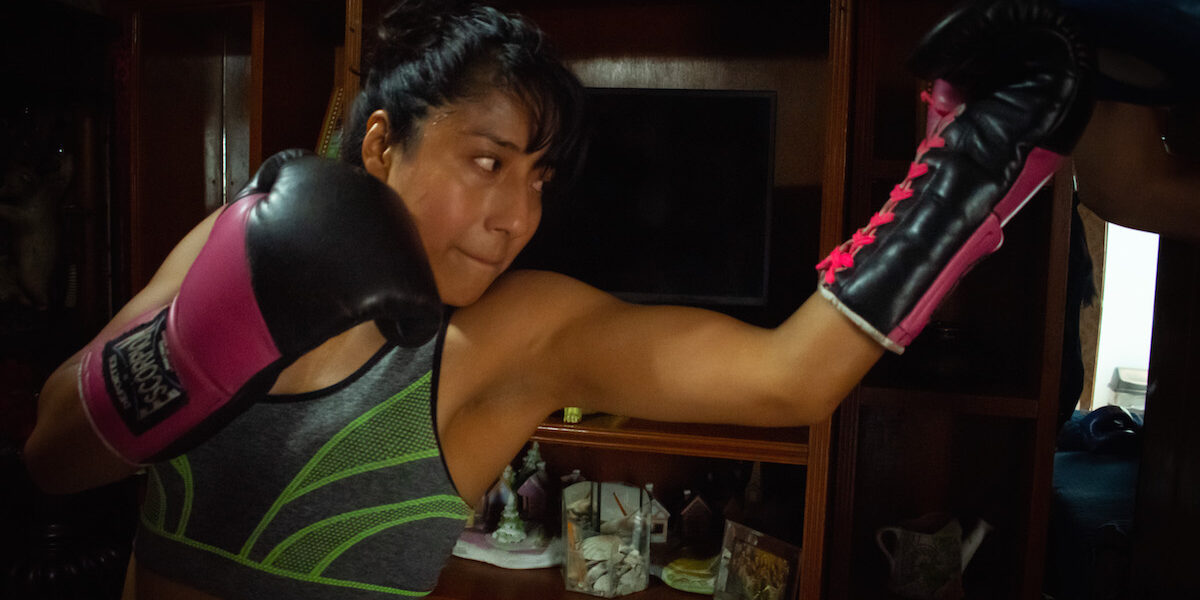
Valentina Santiago is a former Mexican boxer who left the sport to complete her gender transition in an environment that forces one to choose.


Share

Valentina Santiago is a former amateur boxer who left the sport to complete her gender transition. In Mexico, only 13 states recognize gender identity, meaning that transgender people are treated according to their gender identity; and their participation in women's sports is also questioned.
In the case of the Olympic Games, the International Olympic Committee (IOC) stipulated for Tokyo 2020 that transgender women must declare themselves as women and cannot change their gender for at least four years. There are even laws in some parts of the United States that prohibit transgender women from participating in sports.
Valentina feels nervous about returning to the professional ring: "the social aspect is what scares me the most."

Boxing is life
Valentina is 33 years old and runs a business at the central market. She supplies several restaurants thanks to the contacts she made in sports. Even in her free time, she trains other women who want to get into the ring, because for her, boxing is life.
Her story in this discipline began in a very particular way; one day her father put her in the car and took her to a gym. At just 10 years old, she began her boxing classes in the male role. The main reason her father considered this sport was "to keep me distracted, so I wouldn't be dressing up in my sisters' clothes." She remembers that from the age of five she felt she was different from the other children, since her gender did not match the one she had been assigned at birth.
The childhoods of trans people are often still lived in secret, as Layla Vázquez, a human rights specialist, explains. Their upbringing is cisnormative, meaning, “it assumes that all people have a gender identity according to the sex assigned at birth, and this cisnormativity generates behavioral norms, gender roles, and a series of other aspects, all depending on a person's genitalia. This affects everyone, especially children who sense that their gender identity is not what they are taught, but something else entirely.”

In Valentina's case, she embraced boxing and gradually became more involved in the discipline. At 18, she began training professionally as a boxer in renowned gyms, such as Romanza and the Otomi Ceremonial Center, where Jackie Nava and Saúl 'Canelo' Álvarez have trained before some of their fights.
Valentina began participating in regional fights and tournaments in different states of the Mexican Republic, the most important in her career being "The Golden Gloves", the most relevant competition at the national level in amateur boxing, and in which she achieved second place in the featherweight division.
Furthermore, she was trained by Ignacio Beristáin: “He personally oversaw my training because he saw potential in me.” Beristáin is one of the most prominent trainers in Mexican boxing, having trained champions Yessica 'Kika' Chávez and Sonia Osorio, and guided the Márquez brothers, Juan Manuel and Rafael, Jorge 'El Travieso' Arce, Oscar de la Hoya, and other world champions.
The urgency to come out of the closet
“Alongside all of this, I started wanting to, well, come out of the closet,” Valentina acknowledged. She felt comfortable in the realm of sports and recreation. “Going out to run in the mountains, being at the gym, and being able to see that the body can be pushed to its limits.” However, living with her teammates was more difficult: “I had a hard time separating gender identity from sports, so it was really difficult because after training, I would get home and, as I got older, I would start dressing in (women's) clothes that I had bought myself.”
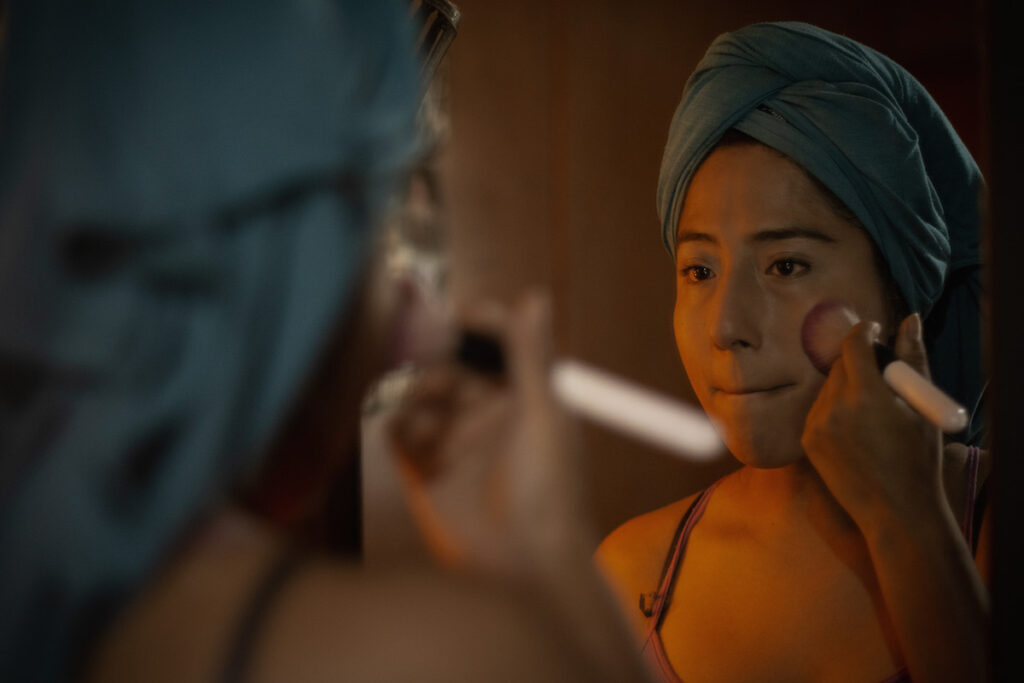
For her, the whole situation was very painful, so at 22 she decided to leave the ring. Valentina recalls that in a training match, “they put the headgear and gloves on us, and then we both came out with a lot of bruises. I split his lip and he swelled up my nose. My nose was badly injured, my eyebrow was swollen too, and then I got home and, trying to somehow cure my depression—because having taken all these blows, I was feeling a bit depressed— I started getting dressed up, something I used to do when I felt depressed and anxious. So, I started getting ready, putting on my makeup, and I realized my face was hurt. Then I realized I couldn't do it .
After leaving boxing, she continued her gender transition, where she has found happiness, acceptance, and self-love. She continues to train from home because, “I’ve always believed that being a woman doesn’t mean I have to be docile or delicate. I didn’t see it that way. I think seeing it that way would have been sexist.”
No advantages
In boxing, she has found a way to continue training her body, alongside her hormone therapy. Hormone Replacement Therapy (HRT) is not a treatment specifically designed for transition. It consists of contraceptive medications "that block testosterone and also produce estrogenic effects that promote certain secondary changes sought by trans women," explains Gwendolyne Bello Rodríguez, a general surgeon specializing in HRT.
Valentina explains that “with hormone replacement therapy, it’s a fact that many people think it might be unfair for me to fight another woman.” However, with HRT, she has the same abilities as a cisgender woman. “She has no advantage,” Dr. Bello points out , adding that this is a consequence of the testosterone blockade: “You lose the potential for the extra strength that testosterone provides at the muscular level; you lose the muscle development that testosterone has generated through its anabolic effects on these muscles.”
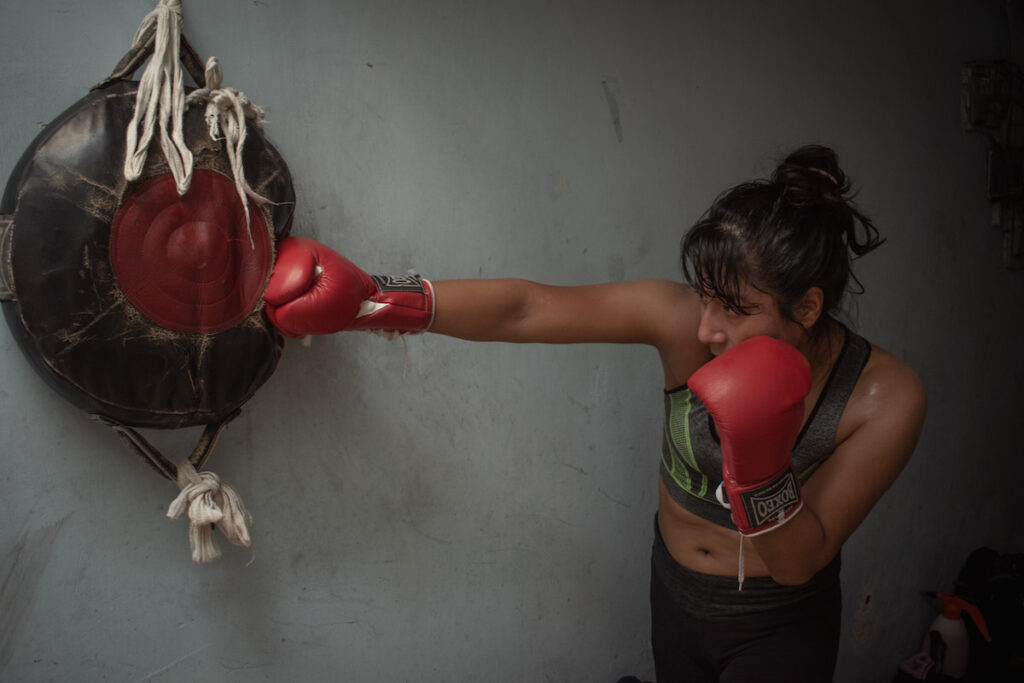
During her time as an amateur boxer, Valentina recounts, “I boxed with cisgender women, and honestly, I had some really good matches. They landed some pretty good punches on me. There’s always a sexist attitude, unfortunately, it exists in every sport, but sadly, it’s more deeply ingrained in boxing. The idea that women are weak, that they’re not capable. However, women excel in this sport in a very big way.” Like Laura Serrano, a pioneer of women’s boxing and an athlete Valentina admires.

On the other hand, she admits that she's afraid of everything that comes with participating in professional sports, although she acknowledges that she could contribute by setting an example, like the Argentine soccer player Mara Gómez, who debuted in 2020 with the Villa San Carlos team in the Women's First Division Soccer Championship with the authorization of the Argentine Football Association (AFA). There's even the LGBT Cup, where transgender amateur athletes have the opportunity to develop competitively in soccer, swimming, track and field, basketball, and volleyball in Mexico.
Today, Valentina stands out as a passionate and noble woman inside the ring, and outside of it as a happy woman who doesn't like to judge others. She is someone who has overcome difficult situations. "Valentina is someone who wants to help others, and perhaps she's someone who just wants to find love, that's all," concludes Valentina Santiago.
This article was produced in collaboration with Versus , the Mexican media outlet that covers sports from a gender perspective.
We are present
We are committed to journalism that delves into the territories and conducts thorough investigations, combined with new technologies and narrative formats. We want the protagonists, their stories, and their struggles to be present.
SUPPORT US

FOLLOW US
Related notes

We are present
This and other stories are not usually on the media agenda. Together we can bring them to light.