

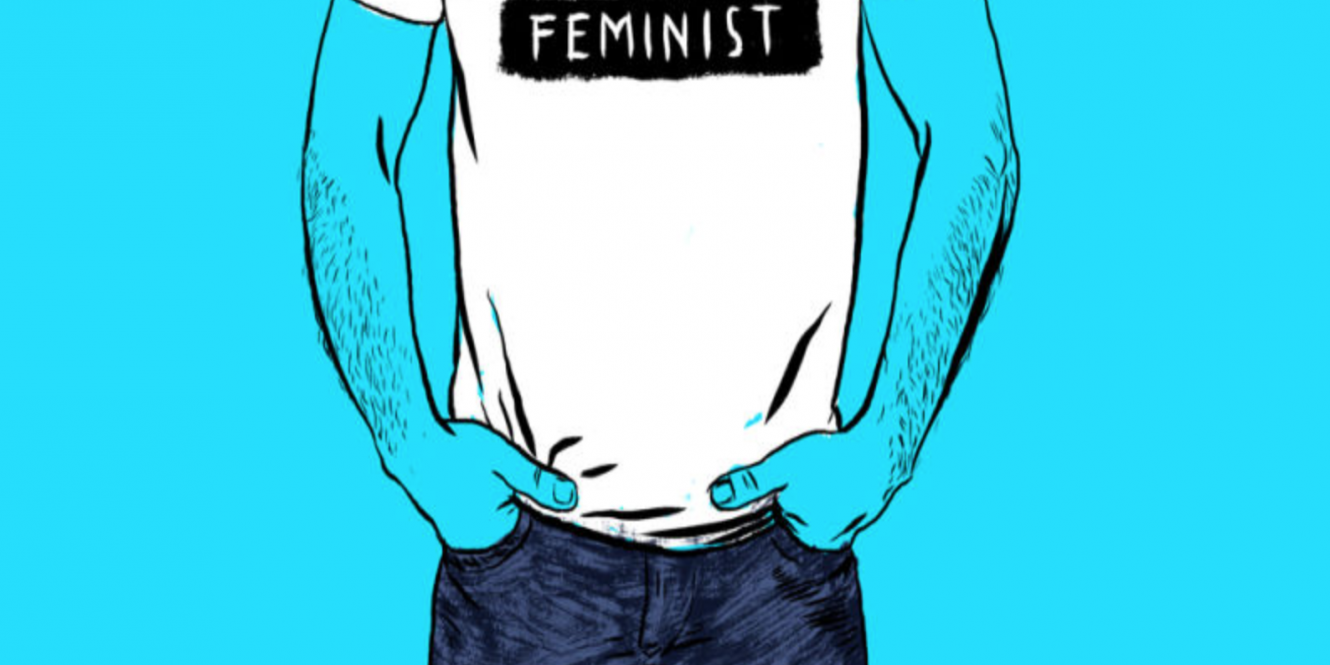
What is the problem with "new" masculinities and transvestite and trans femininities?
So far I haven't heard any cisheterosexual man acknowledge his desires for transvestite and trans femininities, with any certainty that they exist.


Share

In times when a virus threatens and everything continues to be questioned, the presence of the debate on masculinities, the creation of workshops, training and different reflective formats on the subject is becoming stronger.
These proposals are mostly driven by feminisms, but even more so by those who were socialized as masculinities and flee towards other dissident identities.
In the spaces where I was invited to participate, the discomfort surrounding masculinities seemed to be a good omen. There is a fervent demand to "unlearn" the hegemonic masculinist pedagogy that perpetuates patriarchal and sexist practices, which are, without euphemism, concrete forms of violence. There is talk of "new masculinities" as a process of relearning and recognizing sociocultural, political, economic, and erotic-relational privileges in relation to feminized identities, and again, there is discomfort, the fragile voice of the speaker who recognizes himself as part of it.
The proposal is limited: recognition doesn't save lives. While the shift to recognition as a first step is necessary, the neutrality of pointing the finger at another man, which leads them to say "not all of us are...", is irritating, but it's also part of the process. However, taking the lead and acting to eradicate sexist violence remains a significant challenge.
"Get organized!" we often shout at them, like mothers scolding their children. But that call for organization remains merely rhetoric, full of anguish. The lack of political action runs counter to years of struggle by women's rights.
Acknowledging the desire for a trans femininity
The limit of acknowledging violence remains within the heterocis system. So far, I haven't heard a single cishetero acknowledge his desires for transvestite and trans women, or even the certainty that they exist, and that even after a thoughtful proposal in any space (whatever it may be), they immediately start following you on Instagram and liking your posts . That's not talked about.
They can recognize sexist attitudes in society, in relationships with their cisgender female partners, and among other men, but recognizing violent desires or practices toward transvestites/trans people remains on hold. Could it be because they don't exist? I doubt it. Could it be because privilege has levels of recognition that are permitted and acceptable? Perhaps.
How far does deconstructed love go?
Those of us who are sexually and emotionally involved with cisgender heterosexual men know the limits of "love ." These men tend to be very private about their personal . Even when they tell us they love us, daring to tell their family, friends, or socialize with us is, in most cases, a concrete process of losing privileges, including affection.
In addition, there is the suspicious gaze directed at his own masculinity, at a sexual role, at accusations and at receiving questions from his peers and cis women in his environment who know that he is linked to one of us.
When I ask a cis woman: what would you do if your partner desired a transvestite/trans woman? they usually answer: it's all over: I can no longer give him what he needs.
The framework of cis-sexist language explicitly demonstrates, through multiple perspectives, that when a man has a relationship with us, he loses "erotic capital" to satisfy us. In other words, what can we offer you that you cannot? Is the sustainability of a relationship still reduced to genitality? To an unwavering desire? Can this inflexibility stem from sexist violence?
Underground living is precarious and leads to violence
We need clandestinity to no longer be the only option for identities that put their bodies on the line for a gender that is managed in a dissident way.
We need our comrades to reflect and bring debates outside of cis-heteronormativity into their spaces.
We need cis women to provide space (and shelter) in the face of the existence of other pleasures.
We need cis men to undergo relearning processes, so that the dissident horizons they recognize as possible cease to be agents of perpetuating sexist violence. We need them to know that it is possible to be themselves with one of us and not die (or kill) in the attempt.
We are present
We are committed to journalism that delves into the territories and conducts thorough investigations, combined with new technologies and narrative formats. We want the protagonists, their stories, and their struggles to be present.
SUPPORT US

FOLLOW US
Related notes
We are present
This and other stories are not usually on the media agenda. Together we can bring them to light.