

Does work change trans and transvestite people, or do they change work?
Does work change trans people or do trans people change work? Victoria Stéfano tells in the first person the meaning, challenges and power of trans labor inclusion, from her role at El Molino Fábrica Cultural (Santa Fe, Argentina).


Share

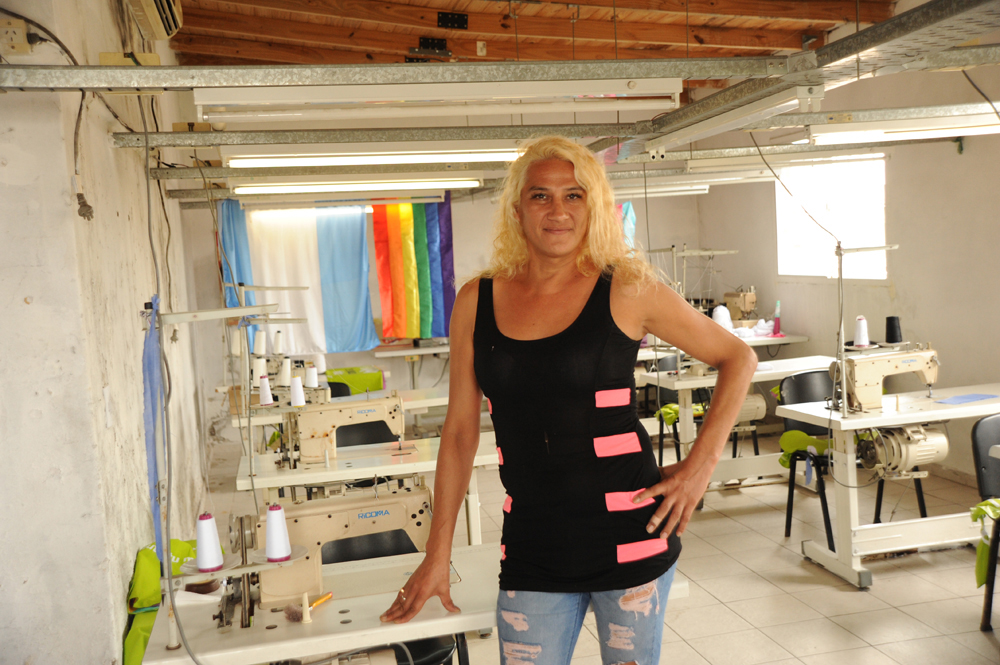
"What the hell am I going to wear?" was the first thing that crossed my mind on February 25th, when I started working at one of the cultural spaces in my province. None other than El Molino Fábrica Cultural, one of the crown jewels of the Santa Fe Ministry of Culture. They had called me two days earlier. The coordinators at 'El Moli' had thought of me to lead the pedagogical team that supports the cultural residents. In other words, a trans woman coordinating a team of coordinators. All that transvestism and confusion.
The first few days were awful. I didn't know my team, I didn't have my own workspace yet, and I certainly didn't understand my job. What the hell was I doing there, with a bunch of cis people, doing cis people's stuff? Calm down, transvestite, I'd figure it out soon enough.
Within our ministry, residencies are the backbone of cultural spaces. The residents are young people between 18 and 25 years old who complete a year-long program in these cultural spaces, welcoming the public with an approach that blends the concept of public space, cultural values, and social connections with institutional frameworks as a means of fostering encounters.
Everything is so synchronously transvestite that this residency welcomed who—I hope—will be the first of many trans artists who will traverse not only culture, but the entire state apparatus. Because transvestism saved my life, changed El Molino, and transvestism will change the world.
That also helped me understand the specificity, not just of my know-how, but of the power to act. There's a sensitivity in doing and accompanying others that our broken, broken hands can wield like no one else. And that's what it means to find the structuring element: the mission. An evangelical term if ever there was one.
Without delving into the pedagogical aspects of suffering and all that nonsense, I do think that the marks of pain and expulsion, which make us particularly contemplative regarding the needs of others, are what make us exceptional workers in terms of human relationships . And in that, I found my contribution to that space.
I can only imagine the classroom revolution that trans teachers create, how carnivalesque the offices of transvestite doctors must be, and how utterly formidable the defense of a transvestite lawyer must be. There, all the queers, lesbians, and transvestites would find, and still will find, a visual and empathetic reference point for the possibilities of being, someone who can finally understand.
There is still much to discuss regarding how we find ourselves with employability and the structures of the system, the flip side of what happens after the quota.
What work do we get recognized for, and what work do we get recognized for?
When we talk about work, I'm always struck by the idea that when everything is work, nothing is work . Prostitution is work, community work is work, activism is work, caregiving is work. But what work do we get paid for? In trans terms: what work do we do, and what work do we do?
Starting a job in the government is not the same as working on the street corner. There's a transition between sucking dick and sitting at a computer doing lesson planning for small groups during a pandemic that is, at the very least, traumatic .
But what tools are available to support this transition? Who is developing them? The truth is, these tools don't exist yet; everything remains to be thought out. And I demand, we demand, that you develop them with us.
Because in this process of discovering myself as a worker, I'm meeting other trans women and trans people who are also experiencing their first jobs. The guy I'm dating, who is also a transvestite, shares his own journey working with another trans woman and all the joy that comes with it. And he tells me that she asks him, almost as if it were the first thing he felt when they told him he was going to get a job.
Now I can't help but ask all the trans people in this way: how do you feel about this? Of course, the first answers always revolve around happiness. But they all arrive at a common point that I find transcendent: recognition.
And the working conditions of trans people employed, which we must emphasize are far from ideal despite approved and implemented job quotas, are above all defined by the recognition that we are merely useful. These discarded, violated, and corrupted bodies are, for the first time, valued and recognized by the archetype of parenthood in political terms: the State.
We are the prodigal children, expelled from our homes, on a path of desperate and devastating survival, now embraced once and for all in the warm and comforting arm of the recognition of our human worth, so questioned.
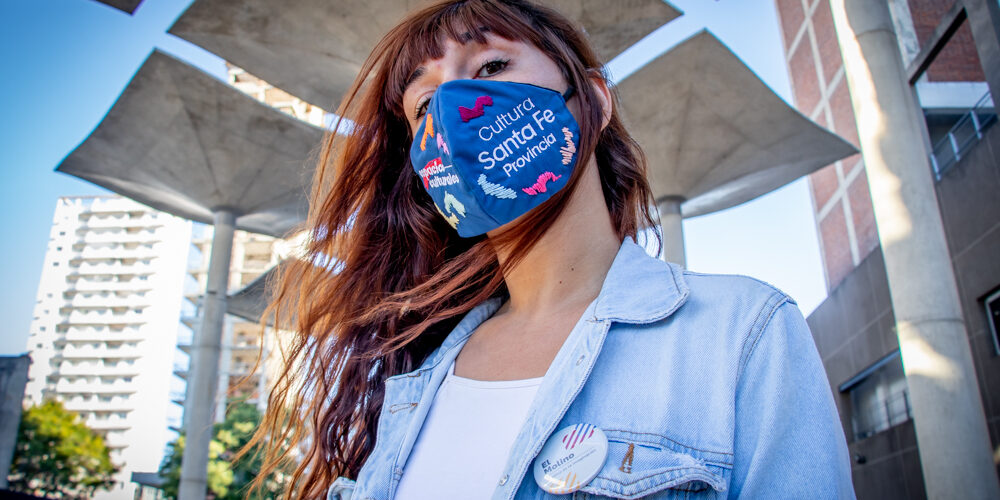
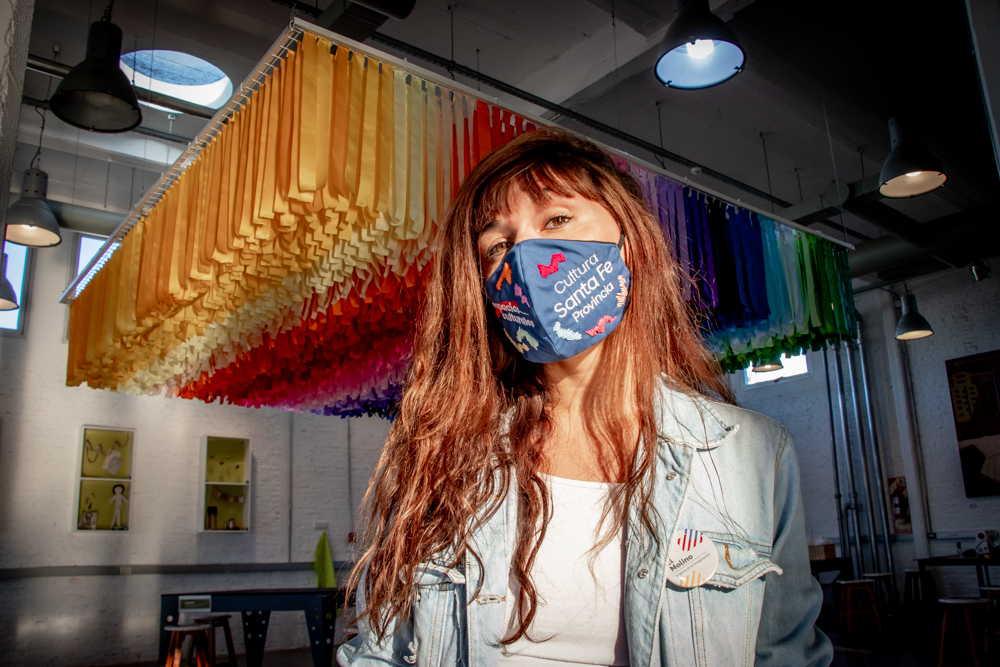
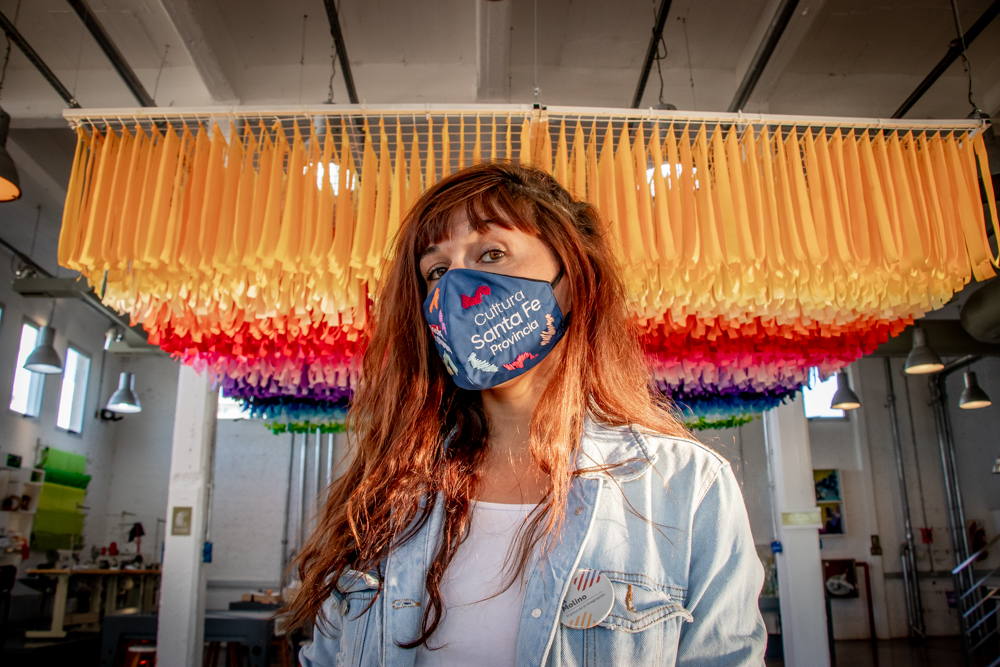
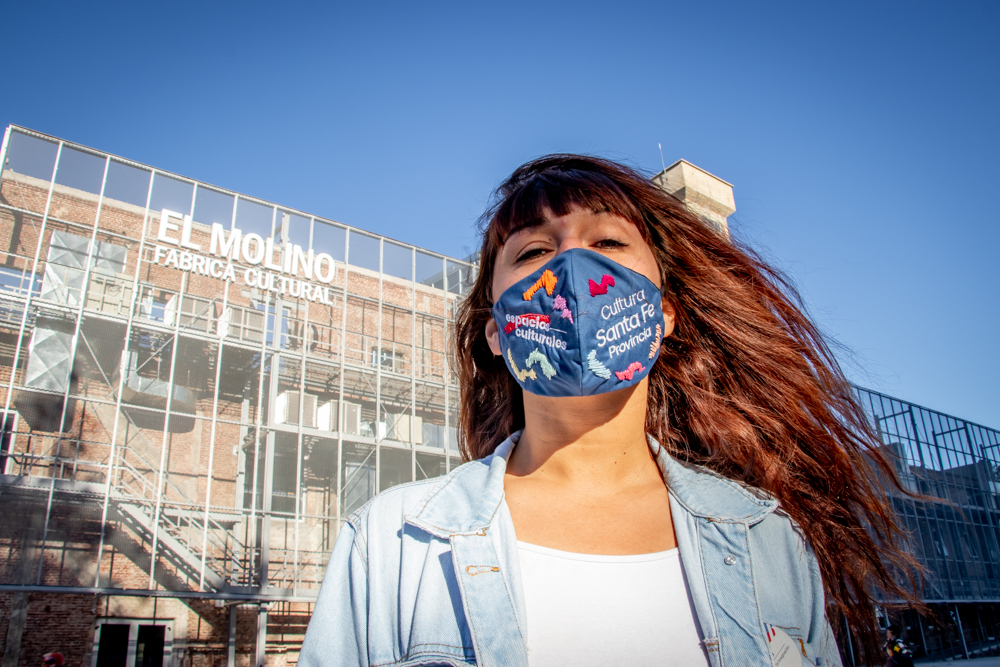
And that's how I feel every time someone looks at my face mask embroidered with the phrase "Ministry of Culture, Santa Fe Province." I'm no longer just the anecdote and the dirty joke about the little faggot. I'm a worker at the Ministry of Culture. There I'm useful, there I'm not dangerous, there I'm being recognized, I'm being.
From the timesheet with my name on it, to the day they set up my own desk with a computer for my exclusive use, I can't imagine what the day I sign my contract will be like. I only know: I never want anything less than this, for myself or for anyone else.
Until the work is guaranteed
Renata is a friend who also recently started working for the Municipality of Santa Fe. In our very long conversations, we always reach the point where we understand that their structures are theirs, not ours. That to make them ours, we have to break down several things.
The logic of group survival and strategic horizontality that we have woven, leaving on the horizons those that establish dialogue and disputes with cissexuality, suddenly clashes with the hierarchical structures of the State institutions, with the labor apparatus and with collective labor agreements.
Suddenly, we find ourselves alone, facing an order that never considered us a possibility. And employment isn't a panacea either, because the heteronormative regime has ruined everything, and work is no exception. Know that we are here also as the first emissaries of transvestism, going to corrupt and transvestize your buildings, offices, and face masks. Because we will never be them, we will always be us, intertwined among them, cunningly, and by the time they notice, having transvestized their ministries, their unions, and their labor practices. Exactly until work is a guarantee and not a dream, precisely until then, until nothing less than victory.
Victoria Stéfano is part of Periódicas , Feminist Communication from the coast.
We are present
We are committed to journalism that delves into the territories and conducts thorough investigations, combined with new technologies and narrative formats. We want the protagonists, their stories, and their struggles to be present.
SUPPORT US

FOLLOW US
Related notes
We are present
This and other stories are not usually on the media agenda. Together we can bring them to light.