

5 stories of LGBT+ artivism in Paraguay: resisting and surviving in quarantine
LGBT+ artists from Paraguay share their experiences of surviving the economic and social crisis after more than a year of pandemic and restrictions. The stories of Fátima Fernández Centurión, Sol Gomez, David Amado, Omar Mareco, and Mc Humver.

Share

By Juliana Quintana. Photos: Jessie Insfrán Pérez , Patricia Latorre (Sol Gómez) and Nhi Mu Aerial Theater.
One year and one month after the first case of Covid-19 in Paraguay, LGBTIQ+ artists, managers, and cultural workers are experiencing an unprecedented health crisis. With economic activity at a standstill and without state support, the dynamics of racism, ableism, and LGBTQ+phobia are also making themselves felt in social relationships and the economy.
Last year, President Mario Abdo Benítez's government decreed total lockdown policies to cope with the peak of the pandemic. However, as of April 21, 2021, Covid-19 deaths in the country had already surpassed 4,978. The Paraguayan artistic community, one of the sectors most neglected by the various administrations of the Colorado Party, was severely affected by these measures in the context of the pandemic.
Violence against the LGBTIQ+ community was also expressed through a system that reinforces structural inequalities. Trans people did not benefit from any of the government programs: Ñangareko and Pytyvõ. According to the latest report from the Paraguayan Human Rights Coordinator ( Codehupy ), this is related to the fact that the identity card contains the birth certificate information, which is perceived as "not matching" the image of the trans person applying.
With productions and rehearsals halted, some theater workers managed to put on small or virtual shows. Others had to look for work outside the industry. Many took out loans or, in more extreme situations, had to rely on solidarity to cover the basics for survival.
According to data presented by the Paraguayan Center for Theater (Cepate), in mid-March, G. 4,250,000,000 (USD 660,390) stopped circulating in the national economy, as a result of the suspension of workshops and shows due to the national quarantine.
On August 26 of last year, a law was enacted subsidizing artists, allowing them to receive up to four payments of 25% of the current minimum wage, which amounts to 548,210 guaraníes (US$85). More than 12,000 artists applied for the state subsidy. However, there were complaints from the artistic community that the official list of beneficiaries did not include any of the well-known artists who have worked in the field locally for years.
With just a little claw, it's not enough.
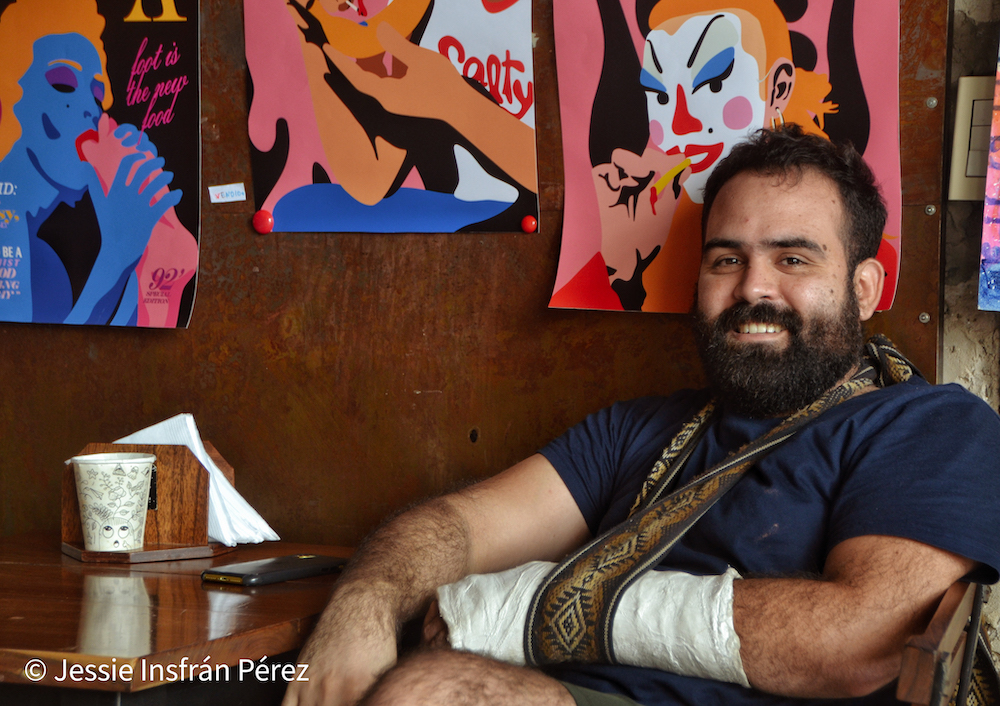
David Amado is an actor, theater director, and architect. When the pandemic began, he started working for a ride-hailing service. This allowed him more flexible hours and the opportunity to experiment with video theater, one of the few alternatives the quarantine afforded him.
In November, the arts sector protested in front of the Ministry of Finance, demanding that the government allow them to work or provide them with a subsidy to continue their resistance. On that occasion, David staged a protest in downtown Asunción. “A friend, my boyfriend, and I went out wearing our party lion masks to put up stickers around the city. The question we asked was: Where is the subsidy for art and culture workers?” says David.
The idea for the lion masks stems from the Paraguayan collective imagination surrounding the figure of strength, illustrated by an African lion: the "Guaraní claw." "I grabbed onto that image and created this idea of a lion that is weak. That isn't so physically strong, that is somewhat wounded, that isn't very manly, it's quite effeminate, it's not a winner, it's not overpowered in anything," he continues. Among the questions they put on the stickers was a statement: "A little claw isn't enough for us .
“Guaraní grit is a phrase that Silvana Abdo (the “first lady”) loves. But grit isn’t enough against such a powerful opposing force. Grit helps us get up every day. But grit doesn’t buy vaccines , it doesn’t provide beds for a collapsing hospital system, it doesn’t give us medicines that cost three million guaraníes a day,” the artist reflects.
When life gives you lemons, make lemonade.
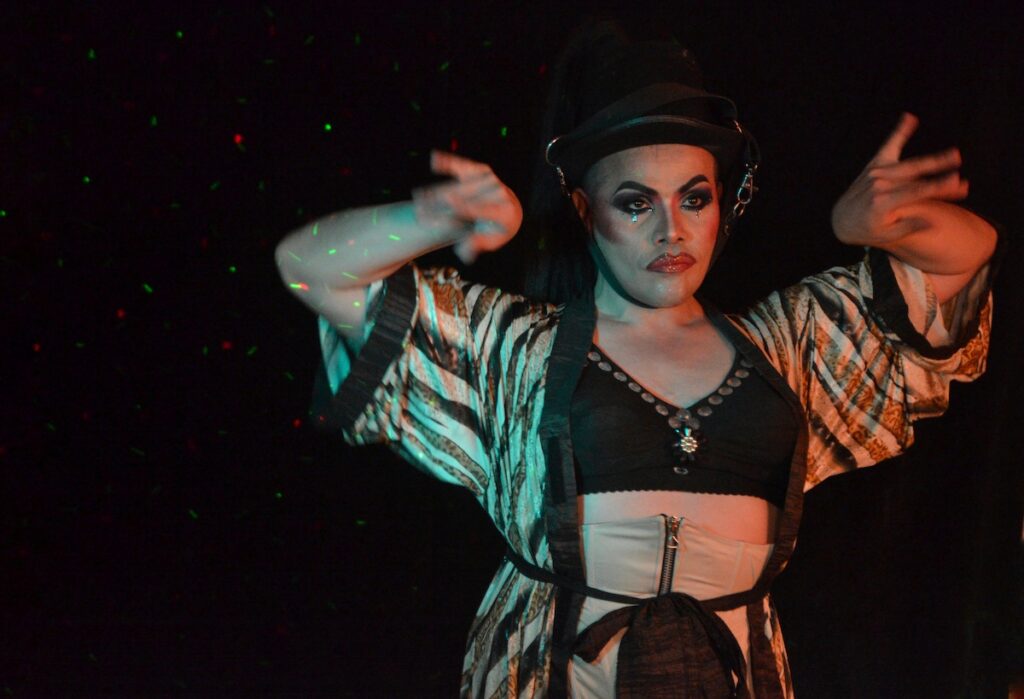
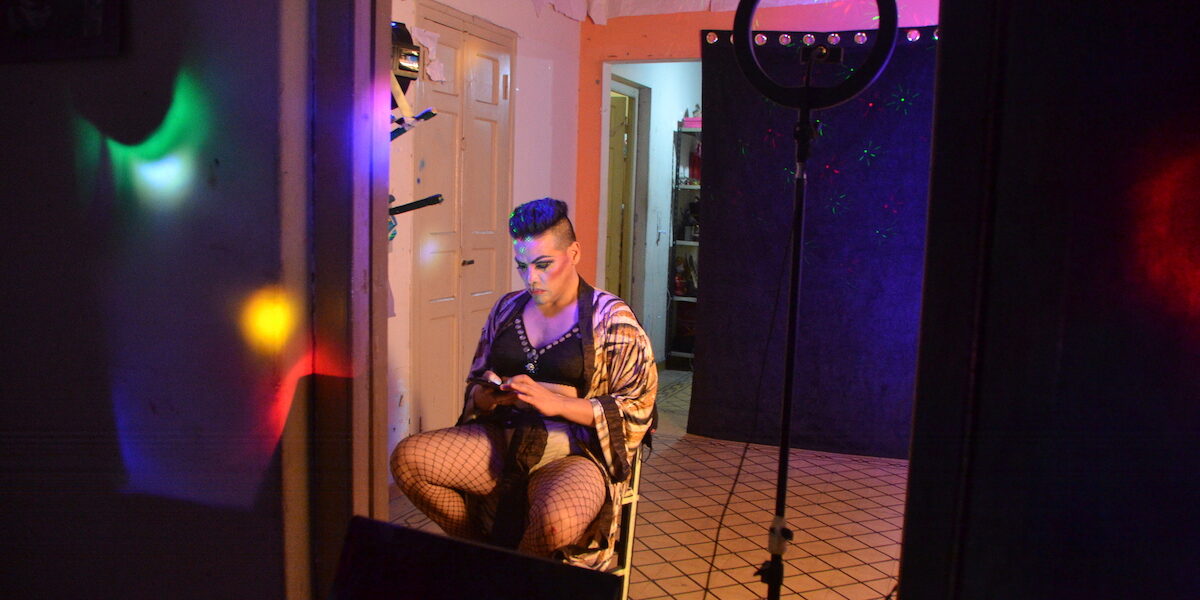
Envidia Metenés is a drag queen. She's portrayed by actor Omar Mareco. Every Saturday at 10 p.m., she lines her eyes, paints her lips, and slips on her heels. "When life gives you lemons, make lemonade," she says. Her act isn't just about the performance. There's a whole transformation and production process behind it.
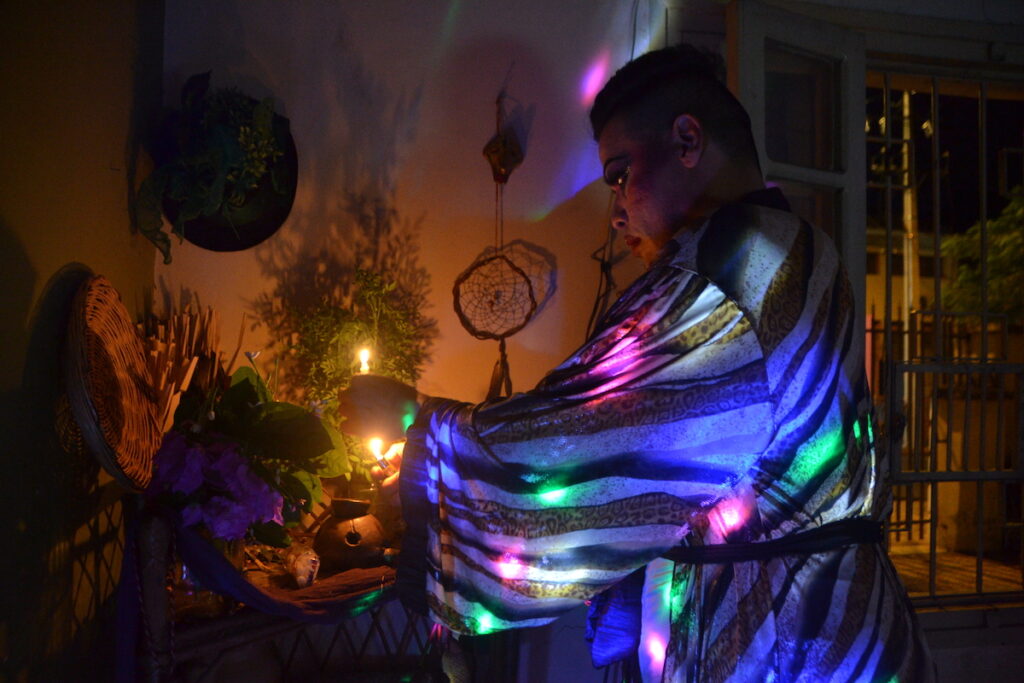
Omar has been making a living from theater since he was 24. Last year, he launched “Colocándonos con Envidia” (Getting Placed with Envy) as a response to the shutdown caused by the pandemic. The show is streamed live on Instagram and offers a mix of musical performances, dance, poetry, and interviews with members of the LGBTQ+ community. Before each performance, Omar offers a ritual offering to his statue of Saint Blaise. He asks it to ensure everything goes well.
“I don’t have time. I’m poor and I have to keep going,” says Omar, who has been doing this work since the middle of last year. He accepts voluntary donations to support his artistic work on this platform. His main source of income, besides teaching, used to be performing at bachelorette parties, birthdays, and weddings.
“Those of us who live and dream, who bet on and believe in art as a profession, were terribly affected by the pandemic. When my artistic work dried up last year, I went out to sell t-shirts, mugs, face masks, I made drinks, pizzas. I swallowed my tears and had to keep going. Just as the LGBTI march had to continue from the coalition, just as the trans women organized and collected food ,” says Omar.
The association Unidas en la Esperanza (UNES), an organization of female sex workers in Paraguay, invited Omar to help them with a play based on their experiences and denunciations. Even so, the lack of in-person performances changed their work. For Omar, theater is a ritual that needs actors, a stage, and an audience.
“All you know is that you’re here now trying to do something online, giving it your all. You don’t know what’s happening on the other side of the screen. If people are there, if they’re not, if the picture is good, if the sound is good. Still, I’m grateful for these live streams and that people connect, watch, and write. It’s what gives me life in this unequal, unjust, capitalist, alienating, and discriminatory system. Within all this crap, art brings us joy,” Omar reflects.
Nhi Mu: 23 years of resistance
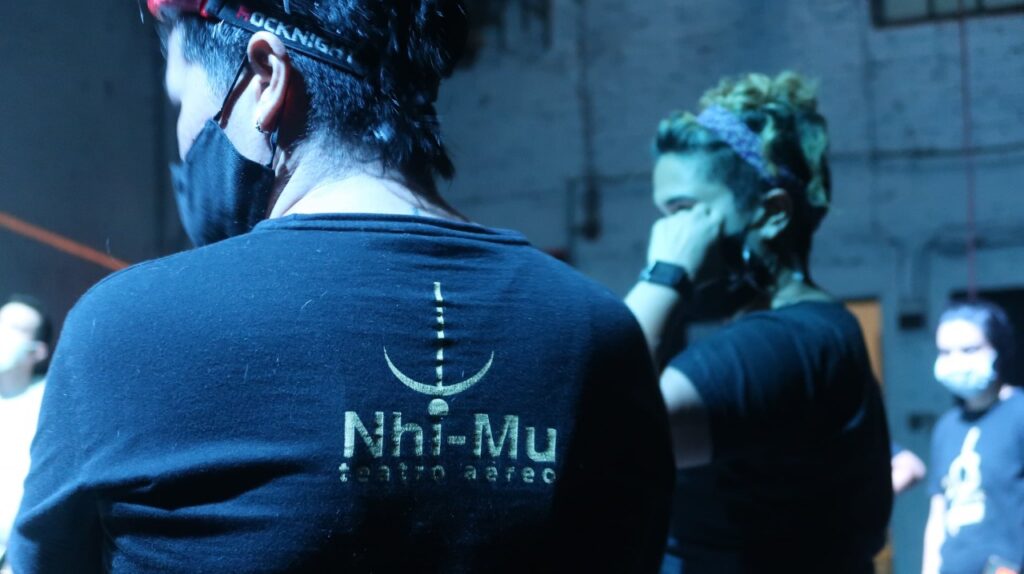
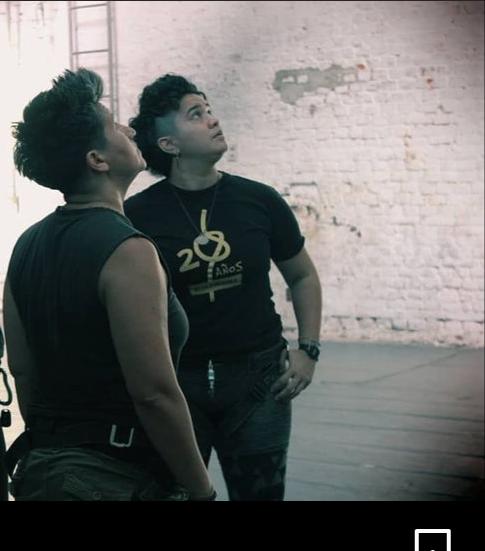
“All art is in danger in Paraguay. And we have always been in danger of extinction,” says Fátima Fernández Centurión, director, actress, acting coach, and instructor at Nhi Mu Aerial Theater . She has been resisting for 23 years with her partner Selva Fox, co-founder of the space. When the total lockdown was decreed, Fátima was 15 days away from premiering the play Ahata Aju. It took a month for the entire sector to realize that this wouldn't be the first production to be canceled.
They persevered, like so many other spaces, and made sure their comrades had enough to eat. They organized food drives, made lists, and mapped out routes to reach as many people as possible. Fátima explains that maintaining an independent space in Paraguay always means begging and pleading for rights.
“Nhi Mu has survived for 23 years thanks to the community: our friends, families, colleagues, and entire generations who have been part of this family. It’s not easy to keep turning to people who have helped you your whole life. Sometimes that help is expensive, too. Back in September, overwhelmed, we decided to start cooking. We had no other choice,” says Fatima.
They started preparing "Plato con cola" (Dish with a tail), a system where you pay for one plate and another for someone else. This money feeds homeless people and theater friends who are also in dire straits. That's how La cochina de Nhi Mu (Nhi Mu's Pig) was born.
“The queen of the kitchen is Selva Fox. She cooks with her heart. The rest of us help and keep the machine running. This network is made up of people like us: LGBT, feminists, artists, and people with big hearts. That's our driving force: art and the people who fight for joy every day. These aren't easy years, but we're in this together.”
Inclusive and anti-racist artivism
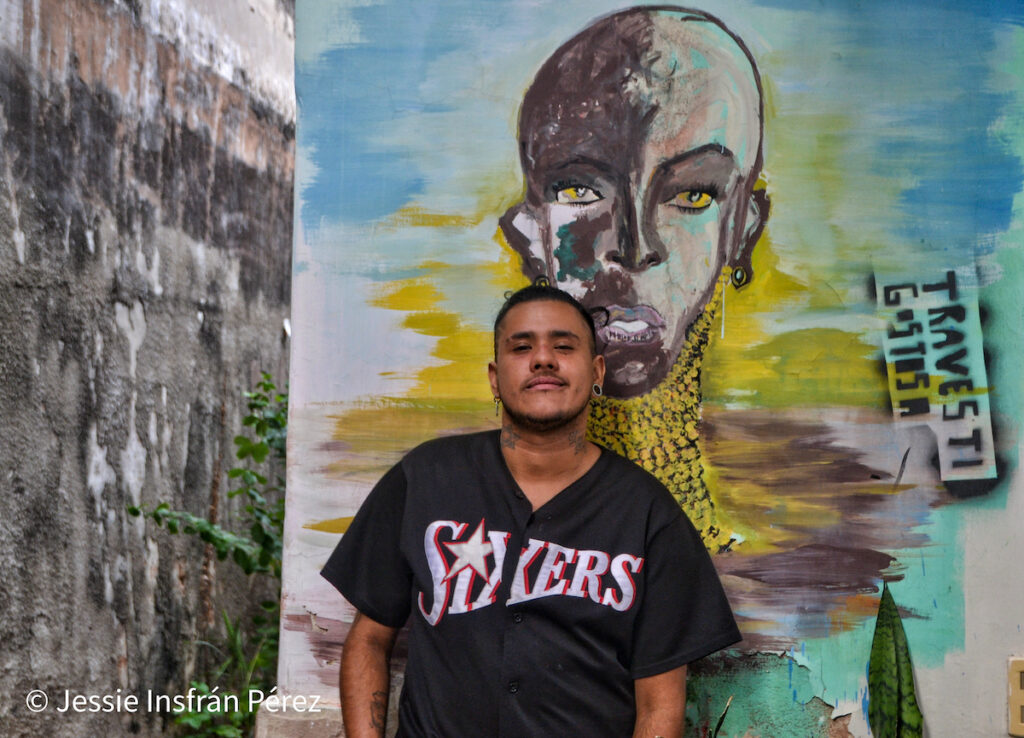
Many of the artistic creations unfolded through metaphors of illness and anti-racist artivism. Mc Humver, an Afro-Paraguayan transmasculine artist, released his single “Calentura” (Heat), a mix of various Latin urban music genres, expressing the need to address social issues such as racism, transphobia, and homophobia, with a particular focus on pleasure and sensuality. The project was funded through the collaboration of the artist's friends from the trans and Afro-Paraguayan communities.
The hardest part was fundraising because they didn't receive the amount of contributions they had hoped for. “Part of it was due to restrictions, and part of it was fear. We only reached 50% of our expectations at each event. But we made the video with a very low budget, and it turned out as best as we could. The people who were most there for me showed a lot of empathy for me being a Black trans person trying to make a living through my art,” says Mc Humver.
Visibly bisexual
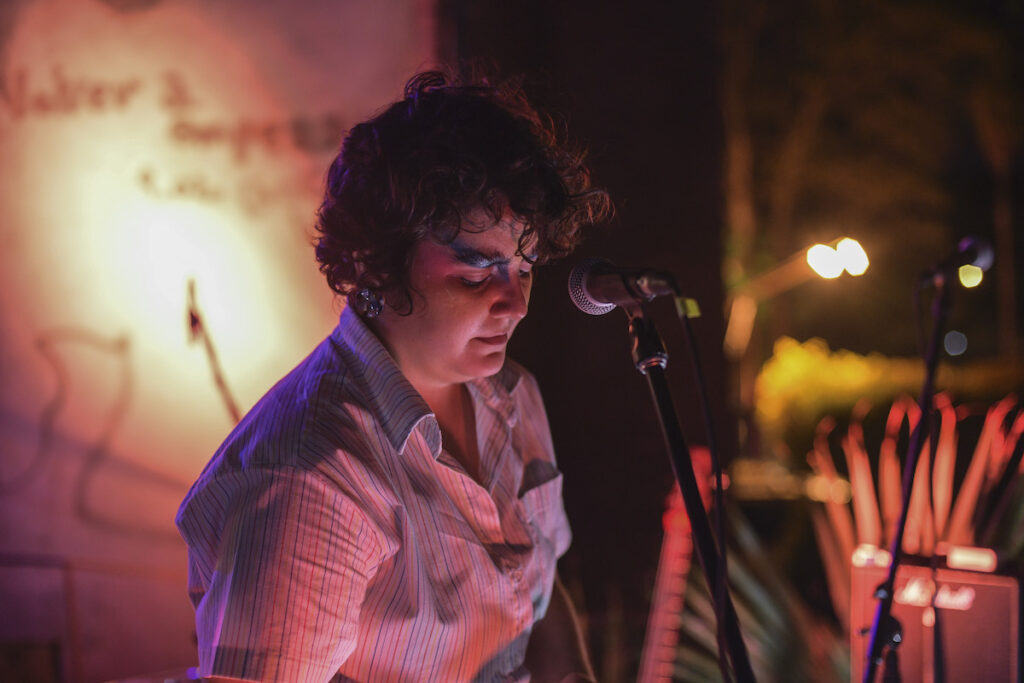
Bisexual artist Sol Gómez also released her first music video during the pandemic. She secured funding from Sorora Música , a women's collective that promotes dissident art, and was able to record one of her songs.
“There are very few visible bisexual artists in Paraguay. It’s important because people who see us and know what we’re capable of might also be encouraged to be visible. I, at least, feel I have nothing to lose and I’m happy at this stage of my life where expressing my sexuality doesn’t harm me in any way. So, I have that privilege and I’m going to use it this way, on stage,” she observes.
“Telón was born one day when I went out to eat at a bar with my girlfriend. I wanted to hold her hand there, and she told me she felt uncomfortable. When we left, we hadn't gone two blocks before she decided to take my arm as we walked. It was like an act of bravery. We got to the corner, waiting for all the cars to pass, and a guy yelled at us from a car: 'Dykes!' It was so derogatory. It made me feel incredibly powerless. From this, mixed with discussions about the acceptance of my sexuality in my own home, Telón came about,” he recalls.
In this time when everyone is living in fear, with Covid lurking, Sol believes that art was her way of confronting discriminatory and homophobic attitudes. “It’s a time to question whether we are living our lives to the fullest. And at the same time, to ask ourselves what we can do to have a good relationship with the people we love and care about, without ceasing to be ourselves.”

Share
We are present
We are committed to journalism that delves into the territories and conducts thorough investigations, combined with new technologies and narrative formats. We want the protagonists, their stories, and their struggles to be present.
SUPPORT US

FOLLOW US
Related notes


We are present
This and other stories are not usually on the media agenda. Together we can bring them to light.