

Attacks and transfemicides in Argentina: a spike in violence against transvestites and trans people reported in April
In the last week, organizations and activists warned about the increase in violence against the LGBTIQ community and mentioned a peak in the month of April.

Share

By Elena Corvalán
Photos: Alejandra Siempre Presente Facebook page
In the past week, organizations and activists have warned of an increase in violence against the LGBTIQ community, noting a peak in April. In Santiago del Estero, Micaela Catán, a 27-year-old trans woman, was murdered by her partner ; the same happened in Tucumán to Victoria Nieva, 33. In Mendoza, activists are demanding justice for Josefina Cruceño, whose death is under investigation.
In addition, in the city of San Pedro, Jujuy, Yeni Mendez was attacked with a machete by a man, and in the city of Río Grande, Tierra del Fuego, another woman was stabbed by a woman and an accomplice. Both women were hospitalized and are now doing well, but the violence of the attacks prompted expressions of concern from activists within the LGBTQ+ community. In both cases, they are calling for investigations into attempted murders of trans women.
"Violence has been increasing since the beginning of the pandemic."
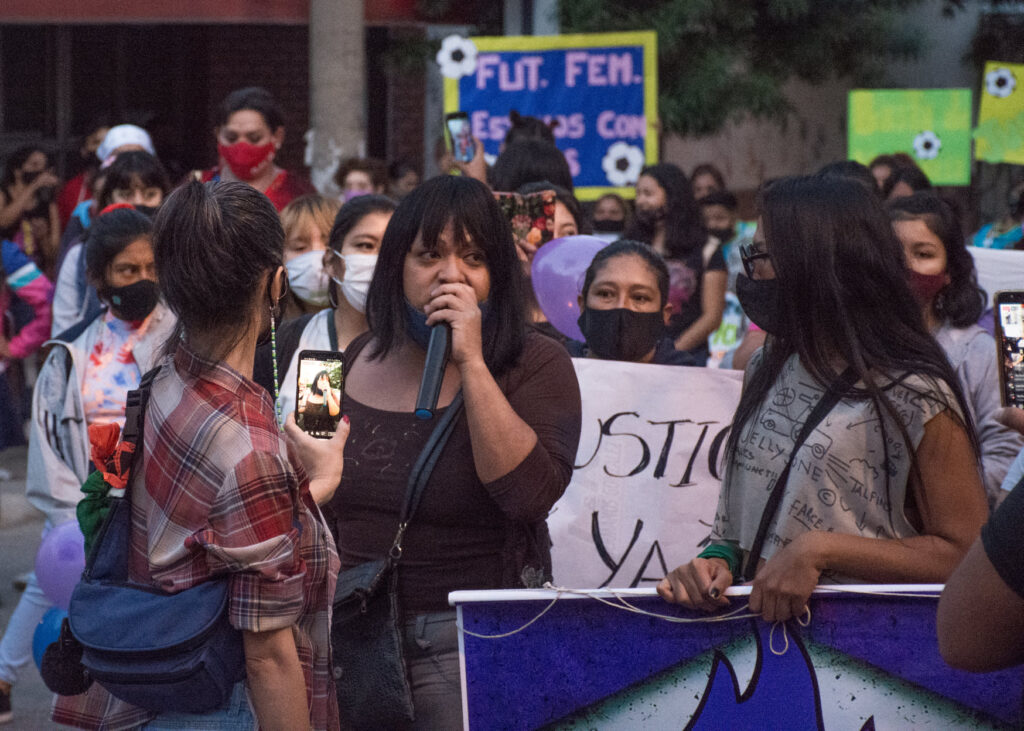
“Violence against transvestites and trans people is on the rise. We receive many cases where they were attacked and robbed, but most of the aggressions go unreported,” Yohanna Cussi, from the Equality area of the Evita Movement in Jujuy, told Presentes.
Also in Jujuy, the president of the Iron Ladies Foundation, Lourdes Ibarra, understood that the violence has been growing "since the beginning of the pandemic" and linked it to a macho culture of double standards that attacks everything different but is also a user of the sexual services of trans people.
In southern Argentina, the view is no different. “This pandemic has brought to the surface all the violations, not only physical violence but also institutional violence and this social transvesticide that we experience all the time,” trans activist Victoria Tavieres Castro, who holds the position of Undersecretary of Diversity in the government of Tierra del Fuego, told Presentes.
“The women, especially in the north, have to wait for someone to bring them a plate of food; it’s terrible. They’re being robbed through rent payments, and most of them are always involved in prostitution,” Castro added.
Yenifer Mendez, attacked by a customer in Jujuy
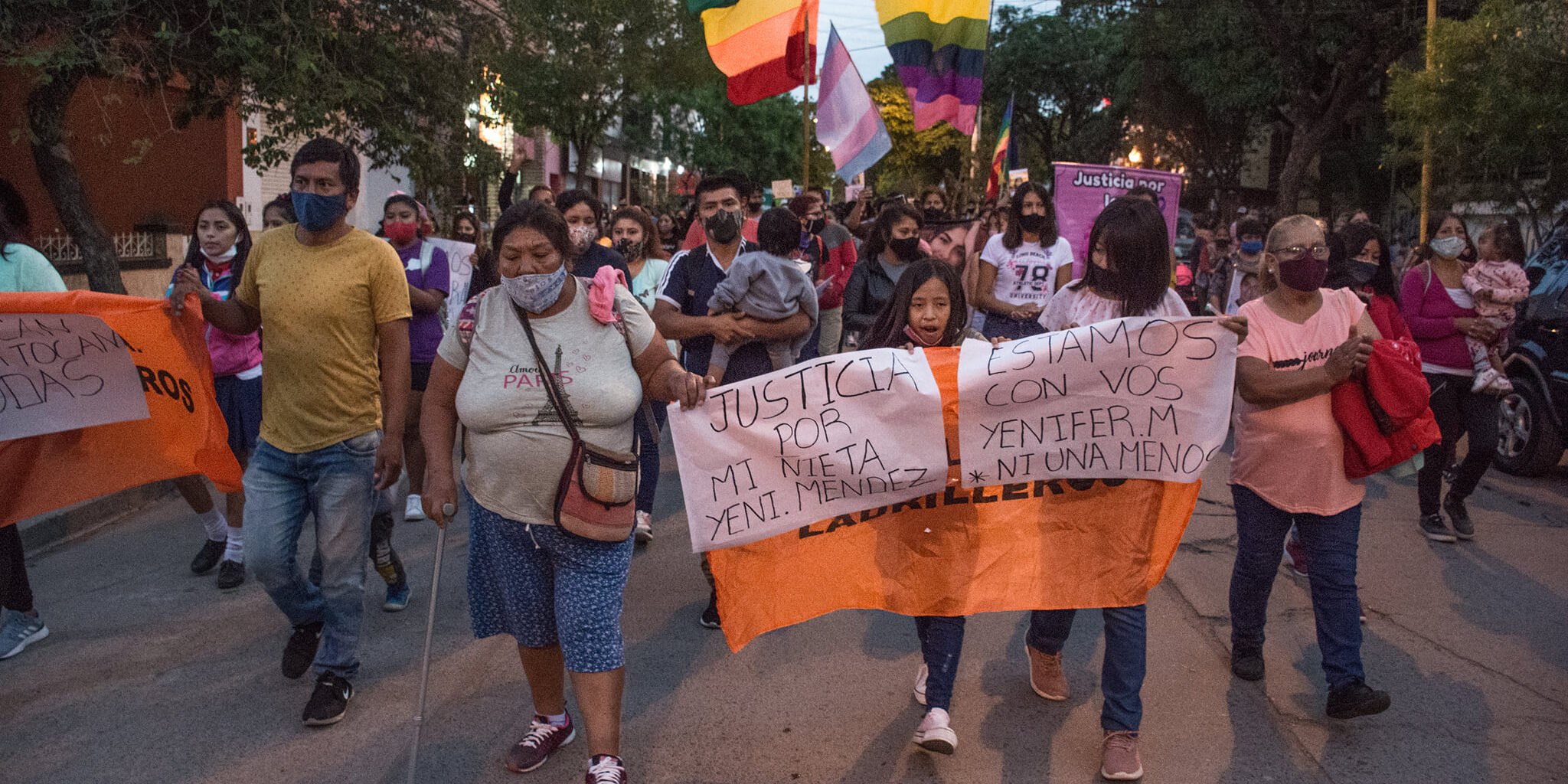
The attack on Yenifer Mendez occurred on the 10th of this month in the early morning hours on Yrigoyen Avenue in San Pedro, Jujuy province. A man who frequently solicited her for sex attacked her after she refused to continue with him as he demanded. The assailant inflicted injuries on her arm, head, buttocks, back, and leg. Yeni required two surgeries. There were fears she might lose her arm, but she is now in good health and has been discharged home to continue her recovery.
“There have been acts of violence that, frankly, make this situation unbearable for us. We can’t leave the house for fear of not returning, or we have to tell family members that if something happens to us, we’ll go to such and such a place—we live in constant fear,” added Ibarra, from Damas de Hierro.
Ibarra emphasized that “there’s a lot of hypocrisy, a double standard. During the day they walk by and insult us, and at night they seek us out for sex work.” “I’m a little afraid to walk the streets at night. Not only because of any civilian aggressor, but also because of the police.”
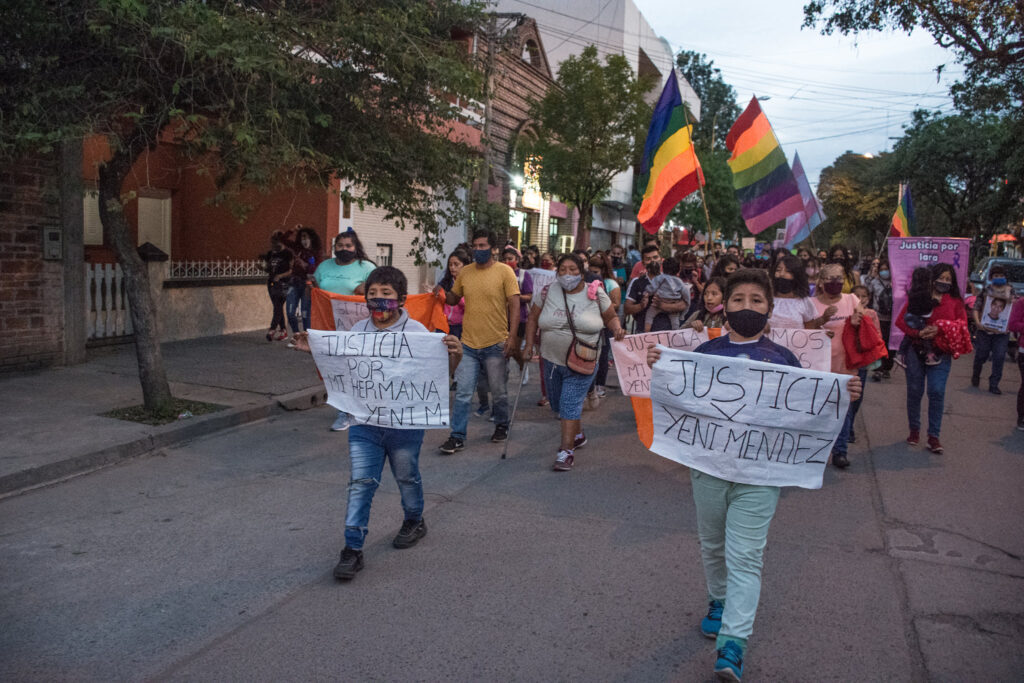
Cussi asserted that the violence is most virulent in the interior of Jujuy province. "That's where the greatest focus needs to be placed." She recounted that within the Evita Movement, there are trans women who engage in prostitution, and such acts of violence occur daily.
“For a large part of the trans and travesti community, prostitution is the only option because they lack other job opportunities,” Cussi added. She explained that the Evita Movement conducted a survey on education and work experience among the trans population of Jujuy and confirmed that most have experience but lack formal training. She also noted that when training opportunities arise, fear of discrimination often holds them back.
“The goal is for the provincial government to be involved in all of this,” said Cussi, who believes the actions of the Jujuy Council for Women and Gender Equality are insufficient. She also stated that “it is important for the Iara Law, which declares a public emergency regarding gender-based violence and was published in the Jujuy Official Gazette in November 2020, to be implemented in Jujuy.”
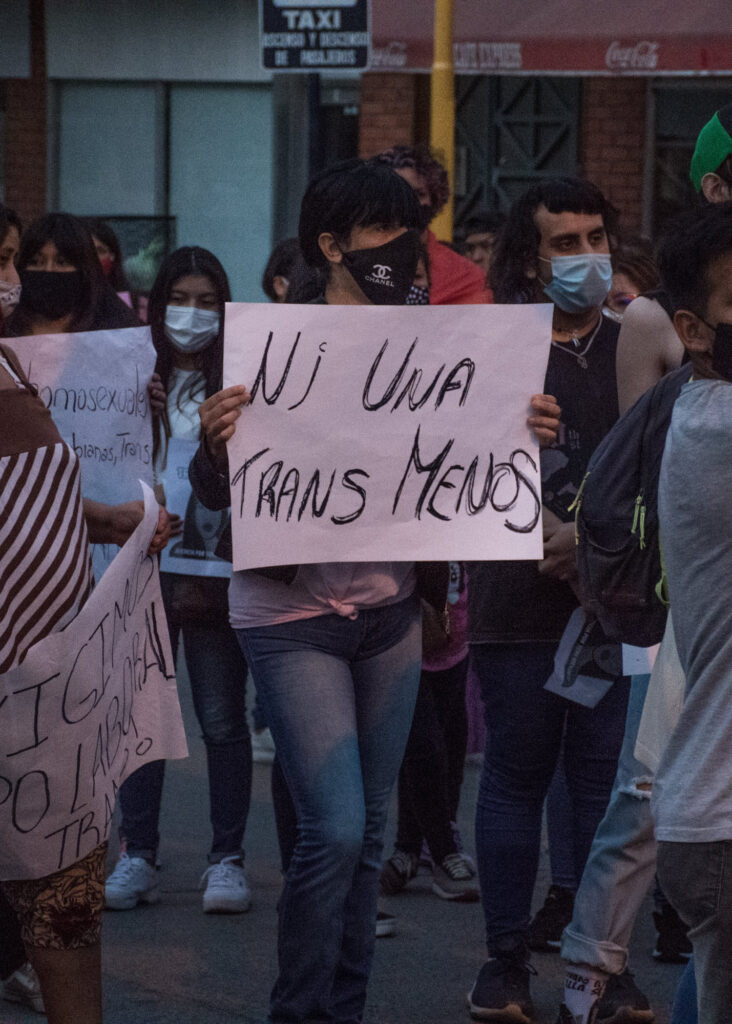
"The State has to take responsibility for ensuring that this no longer happens," said Ibarra, who emphasized that LGBTQ+ people do not feel safe with men in public or with the police.
Criminal prosecutor José Alfredo Blanco, in charge of the investigation, told local media that there is only “imprecise” information about the attacker because there were no witnesses. He said that while there have been “some arrests,” they were of people suspected of having information about the attacker, who remains at large. “I share the concern of this community of women regarding the recent acts of violence against them. We hope these are isolated incidents, but if not, we are investigating and communicating with other judicial authorities investigating these types of attacks against trans women in different parts of the province,” he stated.
The attack on Gilda Acosta, in Río Grande
The attack on trans hairdresser Gilda Acosta took place on April 6th, in a humble house in the Chacra XI neighborhood of Río Grande. An acquaintance, Tania Pilgún, invited her to her home for a haircut, but as soon as she entered, she was grabbed by a man with his face covered, and Pilgún attacked her with a knife, causing cuts to her face, ear, and scalp, and slashing her jacket, which prevented further injuries.
In an interview with Presentes, Gilda recounted that she had already imagined herself dead. During the struggle, while trying to fend off the knife attacks, Gilda managed to open the door and escape into the yard. Amidst kicks and punches, she fled to her home, about four blocks away. The attackers kept her belongings.
The attack sparked outrage within the trans community and among the victim's friends and family. LGBTQ+ organizations and local residents participated in a demonstration demanding a thorough investigation and that the crime be classified as attempted transphobic murder, rather than the "theft and assault" charge brought by the Tierra del Fuego Public Prosecutor's Office.
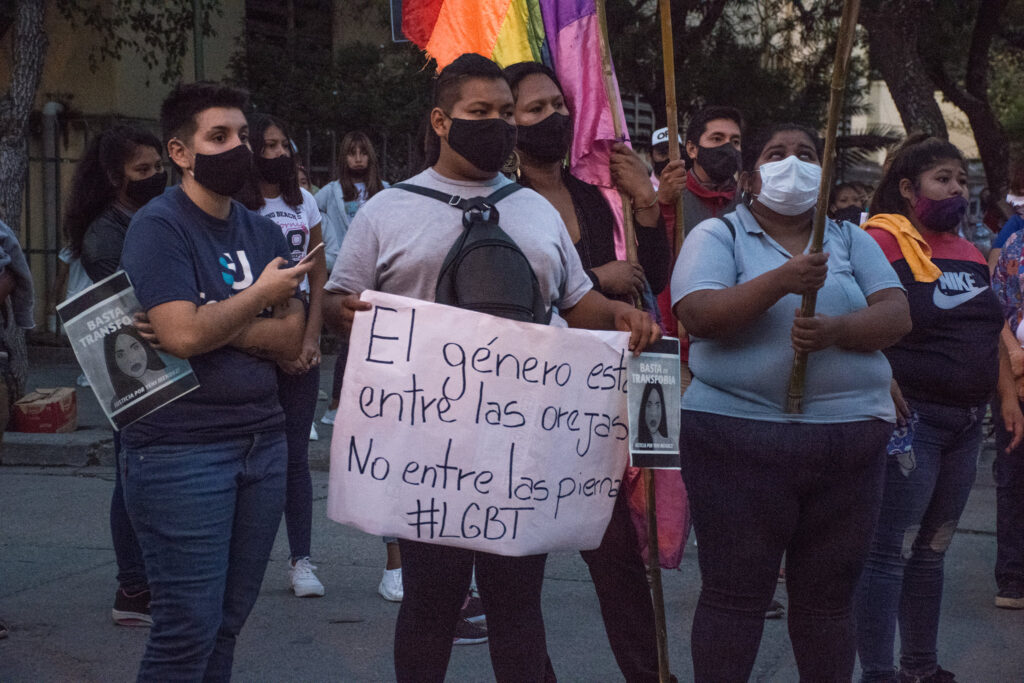
"Body violence and online violence"
“What would have happened if this had been the other way around, if it had been Gilda who committed this atrocity against someone, if she had stabbed them, cut their face, cut their ear, their mouth, if she had tried to stab them and the jacket hadn't allowed the tip of the knife to penetrate? What would have happened if they had found someone's jacket, on them, with all those stab wounds in their back, in their stomach? And I'm sure Gilda would be in jail,” Tavieres Castro questioned.
Trans activist Emita Bejarano, who serves as the provincial coordinator of Cultural Production and Dissemination in Tierra del Fuego, told Presentes that in that province “acts of violence in public spaces are not common.” However, she noted that on this occasion, expressions of violence were seen on social media and in traditional media outlets.
Both she and Tavieres Castro recalled the transvesticide of Laura Aguilar, the first trans woman to have her ID card reflect her gender identity, who was murdered in May 2013 in that province.
After that event, many years passed without any acts of violence, noted Tavieres Castro, who agreed with Bejarano that now grievances are expressed "through social media, the way the media treats people, that's when we say how far we still are."
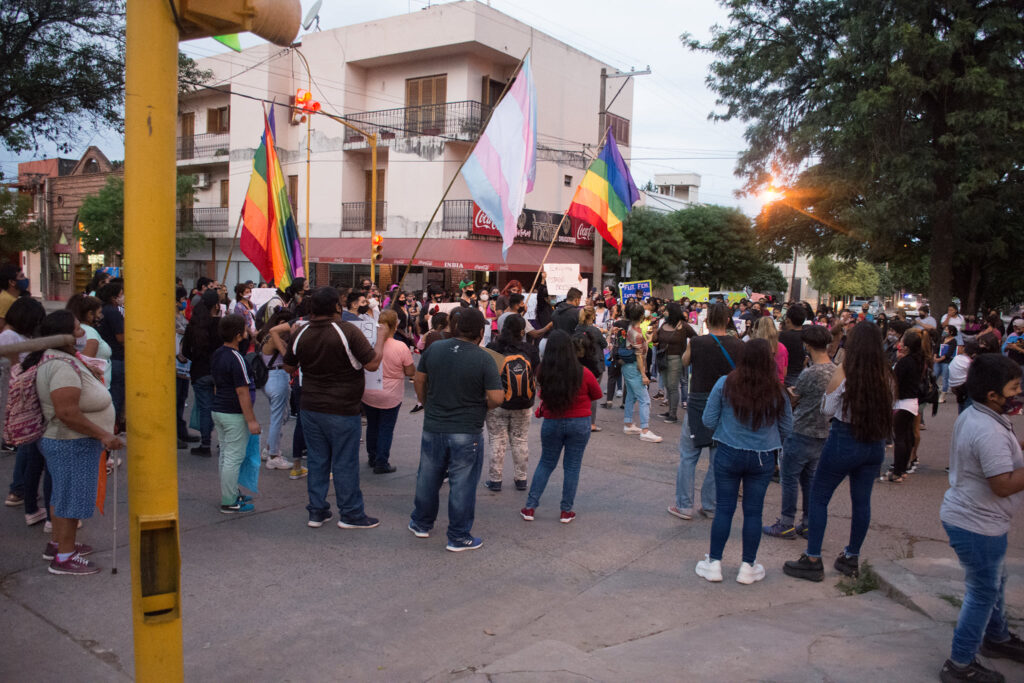
"To those differences we must add being trans, to any difference, of ethnicity, skin color, disability, because the trans person has the gaze of rejection from society."
The Undersecretary for Diversity in Tierra del Fuego focused on prejudice and malicious gossip, which harm those targeted by such scrutiny. “We have to constantly train people to treat us with dignity,” she stated. “However, I never received any training on how to treat cisgender men and women. No one trained me, I didn't need it, so why should it be the other way around?” she questioned.
Gilda's attacker is free because the minor nature of the charge allows her to remain so. It has come to light that she also filed a complaint against the hairdresser for attempted sexual abuse of her young son, an accusation that Gilda's neighbors maintain is false. The Public Prosecutor's Office did not deem it necessary to investigate this accusation.
Share
We are present
We are committed to journalism that delves into the territories and conducts thorough investigations, combined with new technologies and narrative formats. We want the protagonists, their stories, and their struggles to be present.
SUPPORT US

FOLLOW US
We are present
This and other stories are not usually on the media agenda. Together we can bring them to light.