

Report on the workshop 'Telling Diversity': how to cover LGBT news and stories' at the Gabo Festival
The three-session workshop was held virtually from November 23 to 25, 2020, and was attended by journalists from media outlets in various parts of Latin America.

Share

By: César López Linares for the Gabo Foundation
Covering LGBT+ news without understanding the characteristics and challenges faced by these communities can lead to stories filled with stereotypes, prejudices, and even discrimination. To help journalists in Latin America avoid misinformation and expand their knowledge of sexual and gender diversity and LGBT+ rights movements, the Gabo Foundation and the organization Dejusticia joined forces to offer the workshop "Telling Diversity: How to Cover LGBT News and Stories," with support from the organizations Sentiido, Colombia Diversa, and Agencia Presentes, as part of the 2020 Gabo Festival.
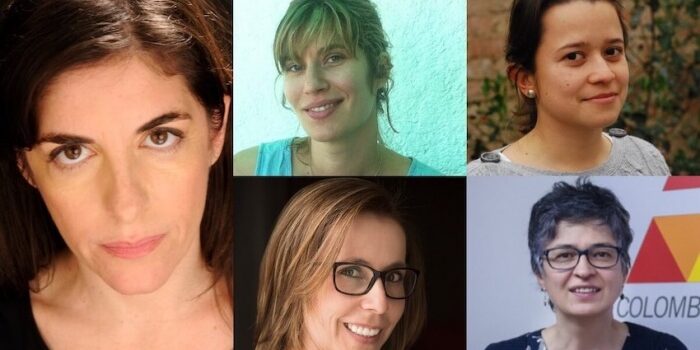
The three-session workshop was held virtually from November 23 to 25, 2020, and was attended by journalists from various sources and media outlets across the continent. It was led by María Eugenia Ludueña and Ana Fornaro, co-directors of Agencia Presentes; Nina Chaparro, gender coordinator at Dejusticia; María Mercedes Acosta, editor at Sentiido; and Marcela Sánchez, director of Colombia Diversa, as well as several special guests.
Throughout the sessions, the speakers addressed the main concepts about LGBT+ populations, gave recommendations to break down prejudices from newsrooms, showed the most frequent mistakes when covering news about diversity and highlighted the importance of having a gender perspective and always keeping human rights in mind when covering.
What does it mean to have a gender focus?
When we talk about having a gender focus in the media, we tend to think of sections dedicated to women's issues. However, talking about a gender perspective has more to do with understanding gender as a category that permeates all sections and all journalistic practice, María Mercedes Acosta pointed out.
“Journalism with a gender focus is like putting on a kind of glasses to ensure that all the information, all the content we produce, no matter the section, is treated with a gender perspective,” said the journalist.
Acosta emphasized that having a gender perspective involves everything from deciding which topics to cover to how to present them. It also implies recognizing that there is no single way to be a woman or a man.
“It is not enough to show women to say that we do journalism with a gender focus, but it is fundamental how that existing diversity is recognized,” she said.
Why is it important to have a gender perspective? Because the decisions journalists make are almost always heavily influenced by the prejudices and stereotypes they have grown up with, and this is unconsciously reflected in their reporting.
A first step in overturning these prejudices and stereotypes is to ask ourselves how men and women are represented in media content. It is also important to be aware of the inequalities stemming from differences in gender, race, ethnicity, and social class. For example, being aware of the disadvantages of being a woman compared to being a man, being gay or lesbian compared to being heterosexual, and being a trans person compared to other gender identities.
Acosta mentioned three basic pillars for having a gender focus:
- Equality of rights. Gender cannot be a reason for discrimination or for assigning fixed roles or stereotypes.
- Diversity. It must be recognized that each human being is unique without falling into generalizations (for example, that men are braver than women, or that women are more sensitive than men).
- Physical differences should not translate into inequalities.
The ABCs of sexual and gender diversity
To be a journalist with a gender perspective, it's important to understand the concepts surrounding sexual and gender diversity. José Vargas, from the organization Colombia Diversa, detailed each concept and explained the differences between them.
It is important to start by distinguishing between the concepts of sexual orientation, gender identity, and gender expression.
1. Sexual orientation
- It is defined as the capacity of each person to feel a deep emotional, affective and sexual attraction to people of a different gender, or of the same gender, or of more than one gender, as well as the capacity to maintain intimate and sexual relationships with these people.
- Sexual orientation refers to a person's physical, romantic, or emotional attraction to other people. Everyone has a sexual orientation, which is integral to a person's identity.
- Gay men and lesbian women are attracted to people of the same sex. Heterosexual people are attracted to people of a different sex. Bisexual people are attracted to people of the same sex or a different sex.
- Sexual orientation is not related to gender identity or sex characteristics.
- Sexual orientation has an external dimension: it indicates a person's sexual inclination and feelings towards others.
2. Gender identity
- It is the internal and individual experience of gender as each person feels it, which may or may not correspond to the sex assigned at birth, including the personal experience of the body.
- It has an internal dimension: the term refers to the way in which a person identifies in relation to their gender.
- Trans people are said to have a gender identity different from the sex they were assigned at birth.
- A transgender or trans person may identify with the concepts of man, woman, trans man, trans woman, or non-binary person.
- There are also other terms that trans people use to identify themselves, according to different cultures, such as hijra, third gender, bispiritual, transvestite, fa'afafine, queer, transpinoy, muxé, waria and meti, to name a few.
3. Gender expression
- It refers to the outward manifestation of a person's gender. This includes posture, clothing, gestures, language patterns, behavior, and social interactions.
- It is the way a person expresses their gender through their behavior and appearance. Gender expression can be masculine, feminine, androgynous, or any combination of the three.
There is particular confusion surrounding the concepts related to trans people. The word “trans” encompasses both transsexual and transgender gender identities. Violeta Alegre, a trans activist from Argentina who collaborates with Agencia Presentes, clarified the difference between these terms in the workshop.
Transsexual refers to people who undergo surgical procedures (vaginoplasty or phalloplasty) to align their anatomy with their gender identity. Transgender, on the other hand, refers to people who transition from one gender to another without undergoing surgery.
Alegre said that it is advisable to use the abbreviation "trans" because what is relevant is the experience of gender and not the anatomical characteristics of each body.
Vargas elaborated further on concepts surrounding trans people.
- Trans people is the umbrella term used to describe variations in gender identity (transsexuals, transvestites, drag performers, among others). Their common denominator is that the sex assigned at birth does not match the person's gender identity.
- Transgender (commonly abbreviated as “trans”) is a catch-all term used to describe a wide range of identities, including transsexual people, people who dress in clothing of another sex (sometimes referred to as “cross-dressers”), people who identify as belonging to a third gender, and others whose appearance and characteristics are perceived as gender atypical and who do not identify with the sex they were assigned at birth.
- Trans women identify as women despite having been classified as male at birth due to their physical characteristics.
- Trans men identify as men despite having been classified as female at birth due to their physical characteristics.
In short, a person is transgender when their gender identity does not correspond to the sex assigned at birth. Transgender people construct their identity independently of any medical treatment or surgical interventions.
For Vargas and the Colombia Diversa team, it is important that journalists covering stories about LGBT+ people understand these concepts and respect each individual's gender identity. Failure to do so can unintentionally lead to discrimination or acts of violence.
Transvestites and intersex people
These two terms are also associated with LGBT+ diversity, but their use and meaning differ depending on each country or region.
The term transvestite comes from "transvestite," meaning people who dress in clothing of the opposite gender. In most Latin American countries, it has a pejorative meaning. However, in Argentina, it denotes a parallel movement fighting for fundamental rights and against institutional violence, as explained by María Eugenia Ludueña.
Transvestite people do not experience themselves as men or women, although they do experience femininities, therefore they should be referred to in the feminine (“the transvestites” and not “the transvestites”).
Transvestite and transgender people are less visible than gay, lesbian, and bisexual people. They have an average life expectancy of 35 years in the region due to the structural violence they suffer, Ludueña stated.
The term intersex, on the other hand, refers to people born with sex characteristics (genitals, gonads, and chromosomal patterns) that do not correspond to typical binary notions of male or female bodies. In some cases, these variations are visible at birth, but in others, they only become apparent at puberty.
Ana Fornaro, co-director of Agencia Presentes, clarified that being intersex is neither a sexual orientation nor a gender identity. However, intersex people are frequently included within the LGBT+ universe because the political struggle of this population has become intertwined with LGBT+ movements.
Fornaro also clarified that being intersex does not mean not having a gender identity, nor having a third gender, nor being a non-binary person. It means being born with a body that varies between female and male.
In ancient times, they were known as "hermaphrodites," alluding to the myth of the being born with both sexes or with dual genitalia. However, in reality, such a thing does not exist. It is possible that hormonally, an intersex person may have characteristics of both male and female sexes, but in any case, the term "hermaphrodite" should not be used because it is a term that pathologizes this population, Fornaro said.
Until recently, medicine considered it necessary to assign an anatomical sex to babies born with intersex characteristics and opted to perform surgeries to construct the genitals of one sex or the other. Currently, these medical practices are considered torture by organizations such as the Inter-American Commission on Human Rights and the United Nations, because they are believed to leave permanent physical and emotional scars.
When the internal experience of gender does not correspond with the genitals that were surgically assigned to them, intersex people can transition to the other gender and then also become trans people.
What is the correct way to use the acronym LGBT?
The use of the acronym LGBT and its various forms depends on the context in which it is used. In general, this acronym identifies a political movement of people who have historically fought to gain rights and be considered first-class citizens in society, explained Nina Chaparro, gender coordinator at Dejusticia.
The variants include LGBT, LGBT, LGBT+, LGBTI, LGBTTTI, LGBTTTIQ, among others. Each letter identifies a form of sexual orientation, gender identity, or gender expression:
- L = lesbians
- G = gays
- B = bisexuals
- T = trans (in some cases includes transgender, transsexual and transvestite people)
- I = intersex
- Q = queer
Chaparro explained that in Colombia, the acronym LGBT is more commonly used because the political movement has been primarily led by lesbian, gay, and trans people. In Argentina, LGBTI is used because intersex people are already part of the political movement. In the United States, LGBTIQ is commonly used because there is already a queer or non-binary movement that has joined the struggle.
María Eugenia Ludueña later added that for general journalistic purposes, the LGBT+ format can be used, where “+” encompasses the rest of the identities.
The order of the letters is related to separating sexual orientations from gender identities. LGB (lesbian, gay, and bisexual) refers to all three types of sexual orientations (what gender one is attracted to), so they should be together in the acronym.
The T's refer to gender identity (the internal experience of gender, which may or may not correspond to the gender assigned at birth).
The combination of these terms and definitions can be confusing, especially in societies where sexual diversity is still a taboo subject. Therefore, the speakers recommended that journalists contact LGBT+ organizations in their countries to learn the correct use of the terms according to the local context.
Given the doubts, they also suggested asking people directly how they like to be identified.
How do the media report LGBT+ news?
It is becoming increasingly common for media outlets in Latin America to cover stories about the achievements and progress in human rights for LGBT+ people, unlike just a decade ago.
However, even in countries where there has been more progress in legislation, it is still common to see news reports that criminalize or stereotype LGBT+ people, especially trans individuals, or link them to morbid acts.
“There is a stigmatization that is established almost directly in these headlines that have no borders and that is most noticeable in the lives of trans people, and where discrimination as a media operation is most evident,” said Ludueña.
In Violeta Alegre's opinion, this type of news discredits all struggles for rights, particularly for transvestite or trans people, because in some way the media justifies violence against these populations by relating them -voluntarily or involuntarily- to prostitution or crime in the crime sections.
“This kind of news enables societies to perpetrate a lot of violence and discrimination, justifying our denial of human rights,” the activist said. “We are only seen as belonging to a spectrum of prostitution and crime, and that empowers an entire society to do whatever they want to us.”
Even the murders of trans and transvestite people do not have the repercussions or emotional effect that activates society to take to the streets to demand justice, as happens with the murders of women.
Among the main mistakes that the media make when reporting on LGBT+ issues:
- Exoticizing transvestite and trans identities in order to generate morbid curiosity.
- To make violence against LGBT+ people invisible.
- Using a stigmatizing approach to the news.
- Not using the appropriate terminology.
- Not including enough context in the stories.
- Talking about a trans person's past (including their former name) unnecessarily.
- Equating a sexual orientation or gender identity with a lifestyle.
- Associating HIV or AIDS with LGBT+ people.
The speakers shared some tips for journalists to avoid these mistakes when covering stories about LGBT+ issues:
- Respect the name and gender identity of trans people, even if legally their identity remains the one assigned at birth.
- Ask people directly how they want to be identified.
- In cases of murder or when access to the trans person is not available, it is not always a good idea to ask the family about the person's identity, as families may not agree with the transition from one gender to another of these individuals.
- In countries and regions where the word "transvestite" has a pejorative connotation, avoid using it. Instead, you can use "trans," which is the umbrella term for transsexual, transgender, and transvestite.
- Ask yourself for each news item whether it is necessary to mention the sexual orientation (LGB) or gender identity (T) of the person (what is the use of it?) or whether, on the contrary, such mention would lend itself to reproducing stereotypes.
- Get informed and trained by LGBT+ organizations on issues that concern these populations in each country.
- Try to incorporate the voices of LGBT individuals as much as possible in the coverage and offer a more collective perspective.
Is there an LGBT+ community?
The use of the term "community" to encompass the different populations that make up sexual diversity is incorrect, the workshop speakers agreed, given that the acronym LGBT represents several gender identities and sexual orientations that do not have the same characteristics or problems.
“Imagine if, when talking about women, we said 'the community of women,' as if they all shared exactly the same characteristics and we placed them in the same category, when in fact there are Black women, Indigenous women, mixed-race women, white women, centrist women, left-wing women, right-wing women… Women are incredibly diverse human beings, and it’s impossible to group them into one community. The same thing happens in the LGBT community,” explained Nina Chaparro.
It is more correct to use the word "population" or "populations," because it denotes greater breadth, he added.
However, Ana Fornaro said, it is important to keep in mind that some LGBT+ groups consider themselves part of a community, given the neglect and structural and institutional violence that has historically prevailed among all these populations.
Common mistakes in the use of journalistic sources
In the media, there's a tendency to use the same types of sources for everything related to LGBT+ issues. But it's important for journalists to be able to identify the specifics of each topic in order to choose the right sources, because the sources they select will define the focus and balance of the story.
Daniela Franco, Communications Director of Colombia Diversa, shared some criteria that journalists can take into account when choosing sources to cover LGBT+ issues:
- Do the sources speak “the same language”? For example, if it is a legal topic, do the chosen sources have equal command of legal matters?
- Do the sources have in-depth knowledge of the subject matter? For example, not every lawyer is an expert on LGBT+ issues. Not all human rights activists are experts on LGBT+ rights.
- Do the chosen sources add a new level to the discussion or do they remain at the common ground of "LGBT+ vs religion"?
- What sources are we overlooking? Can we elevate the conversation by adding other types of sources?
In general, LGBT+ organizations are a good resource for finding reliable sources, so journalists should reach out to these organizations in their countries. However, it's important to keep in mind that not all organizations cover all aspects of sexual diversity.
Another important point to consider is that some sources—even those from organizations or activist groups—may have political agendas behind them. These hidden agendas could damage the story or slant the coverage toward an undesirable extreme.
Discriminatory and sexist views may also exist among medical and legal experts. Therefore, Fornaro advised journalists to ensure that the sources and specialists they consult have a gender perspective.
“This way we ensure that the person will see the news in its entirety and will not have a biased view,” he said.
When choosing sources, it is important to know when it is prudent to ask someone's opinion or stance on an LGBT+ issue, as not all topics are open to opinion.
For example, in countries where rights such as same-sex marriage and adoption by same-sex couples are already a reality, there is no room to question the public or politicians about their opinions regarding these rights.
Therefore, in coverage of LGBT+ issues, care must be taken not to call into question rights that are already a reality, the speakers recommended.
Activism, objectivity, and polarization in LGBT+ coverage
When a journalist covers an LGBT+ issue with a focus on rights and giving voice to the struggle of a movement, their role is often confused with that of activists and social fighters.
Although journalism has functions very different from activism, both activities share some objectives, such as denouncing corruption, providing truthful information, acting as a counterweight to power, and highlighting injustices, explained María Mercedes Acosta, editor of Sentiido.
While journalism frequently draws on reports and investigations produced by activist movements, activism relies on journalism to make its causes more visible.
In the words of 2014 Pulitzer Prize winner Glenn Greenwald, every journalist should be an activist, in the sense of demanding transparency and accountability from those in power and defending the basic rights and principles of democracy.
Journalists are also required to be objective in their work. However, according to Acosta, it's debatable whether journalism has ever truly been objective, since every journalist is a human being with a specific worldview and context. These factors undoubtedly influence the writing of each story.
More than objectivity, when covering LGBT+ issues, journalists must ensure they show transparency to build trust with audiences.
“Transparency in journalism means acknowledging mistakes, showing emotions, announcing corrections, answering questions, letting people know how the media outlet is financed, rectifying when necessary, and informing if the outlet has any political, economic, or personal interests,” Acosta said.
It is also common for issues related to sexual diversity and the fight for rights to be addressed in the media through polarization. That is, presenting one position and contrasting it with the opposing viewpoint. In this regard, Acosta advised avoiding these dichotomies, which could lead to oversimplifying or trivializing the issues.
“Many media outlets are only interested in LGBT+ issues when they generate conflict, when they know they can create controversy,” she said. “They believe stories are better when there’s a good guy and a bad guy, and this leads to simplifying issues that are actually more complex.”
What stories to tell?
For journalism, it is crucial to recognize that communication can be a powerful tool in combating the various forms of violence suffered by LGBT+ communities, especially violence stemming from prejudice or a lack of information.
These types of violence are characterized by occurring with a degree of complicity from society. Therefore, it is important to bring them to light through journalism with accurate reporting, Ludueña said.
“What we need to dismantle through communication is how we make these stories impactful and understand that the problem is serious and that it also has a strong social complicity that leads to transfeminicide or transvesticide and that this is not even reflected in the media agendas,” she said.
Ludueña and Fornaro shared some ideas to consider when telling LGBT+ stories from a journalistic perspective:
- Focus on the stories. Tell lives to unravel social, cultural, and political narratives. Don't portray individuals solely as victims or heroes and heroines, but tell stories in their multifaceted nature.
- News about culture, entertainment, and sports is a good starting point for discussing rights and inequality without resorting to stereotypes. It's not always necessary to write social commentary to cover these issues effectively.
- To invite LGBT+ people to share their experiences.
- In the case of trans people, it is important to mention their achievements in the stories while respecting their gender identity.
The speakers also shared some best practices to consider:
- The aim is to broaden the news agenda. For example, by including academic sources and feminist and lesbian activists in the political section.
- To produce content that helps to break down myths and prejudices.
- Look for intersectional approaches. Look for stories of diverse individuals who also have other characteristics. For example, LGBT+Black or LGBT+Indigenous.
- Explore new narratives and formats for difficult and complex topics. For example, videos, infographics, comics, illustration, podcasts, etc.
“Telling the story of the structural violence suffered by transvestite and trans people is very complex. Perhaps a positive story, or one that has connotations about the achievements of these people, can help us illustrate the context in which these lives unfold,” said Ludueña.
Law as a news source
There are several ways in which court decisions can be used as a source for news. However, journalists don't always feel equipped to interpret judgments and other legal documents.
In the case of legal issues related to the rights of the LGBT+ population (such as same-sex marriage, adoption by same-sex couples, etc.), demystifying judicial decisions can be very helpful for readers to understand the story beyond technical legal terms, as Nina Chaparro explained.
The lawyer and gender coordinator for the organization Dejusticia said that, according to philosopher Ronald Dworkin, law is like literature, and there is an argumentative and interpretive process that goes beyond the mere description of laws. There is a whole history, with interpretations and arguments.
“It’s important for journalism to go directly to the ruling, to the judge’s decision, in order to extract the arguments that could convince the public more logically,” Chaparro said. “The arguments are the richness of judicial decisions, and they are what are generally not used.”
Although law has a different language than journalism and includes abstract technical terms that are often difficult to understand, there's also a misconception that law is something unattainable, accessible only to lawyers. However, a journalist can perfectly well use court rulings as sources for their stories. The key is to find the judges' reasoning within those rulings.
Chaparro argued that the role of the media can also be educational, so that journalists can break down and explain in simple words the reasons why a judge decides a judicial sentence.
For example, in a news story about the approval of a right for the LGBT+ community, a journalist could consult the judge's arguments and explain why that right was approved, thus convincing the public. It is when the public has complete information that prejudices can be overcome.
“When a news story is presented in a purely factual manner, it wins a legal battle, but not the cultural one, which is the most important,” Chaparro said. “The news itself may not be wrong, but it fails to fulfill its function of helping the audience understand the judges’ reasoning. Only arguments can overcome prejudices.”
Chaparro explained that a court ruling involves more than just the opinions of judges and magistrates. To write a judicial decision, judges consult experts in various fields, including sociology, medicine, psychology, and economics.
Although legal language is technical and specialized, judgments concerning fundamental rights are generally written in more universal language. These judicial decisions are interpretive activities that draw on knowledge extending beyond the letter of the law, and therefore can be a rich source of reasoning, arguments, and inspiration.
In short, communicating judges' arguments in a simple way helps people understand why certain rights exist.
'Gender ideology' and other myths that seek to discredit the LGBTI+ movement
One of the risks journalists face when covering LGBT+ stories is the movements and individuals who seek to use the media to delegitimize the rights movements of these populations and to spread false or dubious information to confuse the audience.
One such group is comprised of fundamentalist religious individuals with electoral interests who use the term "gender ideology" to spread disinformation. These groups employ various strategies to achieve their objectives:
- Spreading half-truths. They present true arguments combined with lies, resulting in confusion. For example, they argue that the sex education given to children in schools seeks to "homosexualize" them or give them ideas about "becoming trans."
- Manipulation of data or statistics. They cite studies out of context and use fallacies of generalization. For example, they mention studies that do exist but attribute information to them that they do not contain.
- Distribution of fake news. In the most extreme cases, these movements disseminate completely false information.
But what is gender ideology? Marcela Sánchez, director of Colombia Diversa, said that no one has definitively explained the meaning of this concept. However, these fundamentalist groups seek to associate the word “gender” with an alleged LGBT+ movement agenda to “homosexualize children.”
Fundamentalist religious groups use distribution channels that have proven highly effective, such as sermons and preaching, election campaigns, social media, and platforms like WhatsApp, especially through audio messages.
The same strategies, arguments, and modus operandi tend to be repeated in the different countries where these groups operate. Among other characteristics that define these groups, Sánchez mentioned:
- They are opportunists. They use elections or relevant international discussions to get their messages across.
- They use the false idea that, unlike LGBT+ groups who seek rights for themselves, they speak for the rights of all people, thus seeking to give a false pretense of generality.
- They do not act alone. They frequently ally themselves with right-wing political parties.
- They use the same strategies in movements related to abortion, same-sex adoption, and climate change.
- Their main focus is the defense of children's rights.
Another group that poses a challenge for journalists is the supposed movement seeking to legalize pedophilia worldwide: the MAP—Pedophile Activist Movement or Minor-Attracted Person . This movement does not exist, but it is discussed in order to link it to LGBT+ movements and discredit them.
Like religious fundamentalist groups, the alleged MAP uses half-truths. They base their existence on a pedophile movement that did exist in the Netherlands, but which died out.
The alleged MAP appears identified with a flag similar to the trans movement flag to create confusion and imply that they intend to belong to the LGBT+ struggle.
Another of their supposed arguments is that they want pedophilia to no longer be considered an illness, as happened with homosexuality. They also recycle messages used by human rights movements and employ discourses of exclusion and discrimination, similar to those used by LGBT+ movements. For example, “Love is love.”
Sánchez explained that these types of movements delegitimize the existence of LGBT+ people, pathologize and demonize them, distort the work of their rights defenders and activists, and even endanger their lives. They also reinforce prejudices and doubts surrounding these populations.
Journalists must be aware that the success of these movements will depend on the amplification that the media gives to their lies or half-truths.
To conclude his presentation and close the workshop, Sánchez left a list of questions for the journalists to reflect on:
- Are we using suitable sources on the subject: expert, with studies, proven?
- How to compare sources without falling into discrimination?
- How can we develop skills to uncover all these strategies without contributing to misinformation, discrimination, or propaganda?
- Could there be a relationship between these discourses and the increase in reports of discrimination, acts of violence, and homicide cases?
About the speakers
María Eugenia Ludueña
Co-founder and co-director of Agencia Presentes, a regional digital media outlet specializing in gender, diversity, and human rights. She holds a degree in Communication Sciences from the University of Buenos Aires and is a professor in the Master's Program in Communication and Human Rights at the National University of La Plata and the Metropolitan University for Education and Labor (UMET).
She has worked as a journalist for different media and formats: Gatopardo, Página/12 (Las Doce), La Nación, Anfibia, The History Channel Latin America, Perfil and Atlántida publishing houses, Nueva and Rumbos magazines, among others.
Author of Laura, life and activism of Laura Carlotto (2013, Planeta) and of the book of short stories The world does not need more songs (2017, La Parte Maldita).
She collaborates with the WikiHumanRights team, an initiative she launched together with Wikimedia Argentina for the editing of human rights content on Wikipedia in Spanish.
Ana Fornaro
Uruguayan journalist based in Buenos Aires. She is co-founder and co-director of Agencia Presentes, a regional digital media outlet specializing in gender, diversity, and human rights. She was an editor at Agence France-Presse (AFP) and a producer for CNN en Español. She writes regularly for the culture supplement of Página/12 and Lento magazine. She has published in Courrier International (France), Brecha (Uruguay), and Revista Anfibia (Argentina). She holds a degree in Literature and a master's degree in Comparative Literature from Lille Charles de Gaulle University (France).
Nina Chaparro
She is a lawyer specializing in constitutional law from Universidad del Rosario. She holds a master's degree in Public Policy from the University of Bristol (England). Her work focuses on areas related to public policy and human rights, with an emphasis on transitional justice, gender, and peace education. She coordinates the gender area at Dejusticia and has been a professor at Universidad del Rosario.
María Mercedes Acosta
A social communicator and journalist with a master's degree in Digital Journalism, she has worked for, among other media outlets, Diners Magazine, Televisa Colombia Publishing House, and Semana Magazine. She is the co-founder and general editor of Sentiido, an organization focused on providing knowledge and information about gender, sexual diversity, and social change.
Marcela Sánchez
She is a Social Worker from the National University of Colombia with a Master's degree in Peacebuilding from the University of the Andes. A feminist activist for the human rights of gay, lesbian, bisexual, and transgender people, she is the director of Colombia Diversa, one of the most prominent organizations in the fight for equality and diversity in Colombia.
About the workshop 'Telling the Diversity Story: How to Cover LGBT News and Stories'
This activity was carried out within the framework of the Gabo Festival 2020, which is made possible thanks to the alliance of the Gabo Foundation with the SURA and Bancolombia groups, with their subsidiaries in Latin America, and the alliance of the Gabo Foundation with the Mayor's Office of Medellín.
It was held virtually on Monday 23, Tuesday 24 and Wednesday of November 2020, with the participation of 20 journalists from 11 Ibero-American countries.
We are present
We are committed to journalism that delves into the territories and conducts thorough investigations, combined with new technologies and narrative formats. We want the protagonists, their stories, and their struggles to be present.
SUPPORT US

FOLLOW US
Related notes


We are present
This and other stories are not usually on the media agenda. Together we can bring them to light.