

A month without Tehuel: what is known so far and how the Justice system is investigating
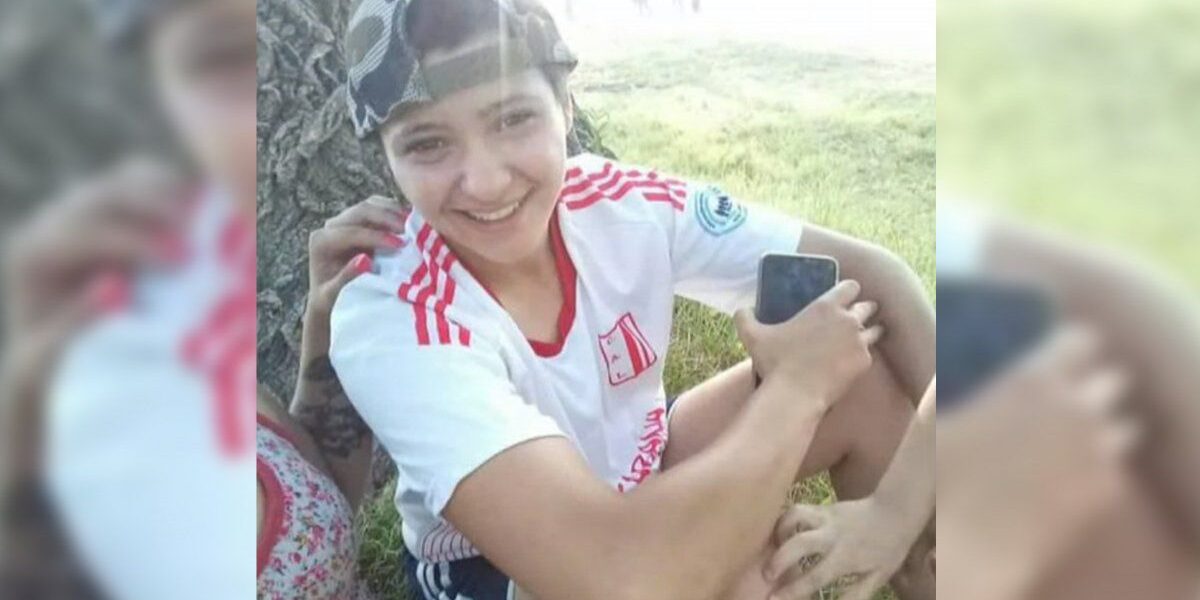
It's been a month since Tehuel De la Torre was last seen. How is the judicial investigation progressing, and how is the search for the young trans man continuing? Why do we need a trans-feminist justice system and diverse media?

Share

[News updated on April 17]
By Soledad Mizerniuk, Victoria Rodríguez and Lucas Gutiérrez
Sunday, March 11, marked one month since Tehuel De la Torre, a young trans woman from Buenos Aires, was last seen. She had recently turned 22. After five raids, two arrests, and numerous searches, sources close to the ongoing investigation say all hypotheses remain open. The possibility of human trafficking was even raised at the request of a family member, although no evidence has yet been found to support this theory. The case is still officially classified as a "missing person investigation."
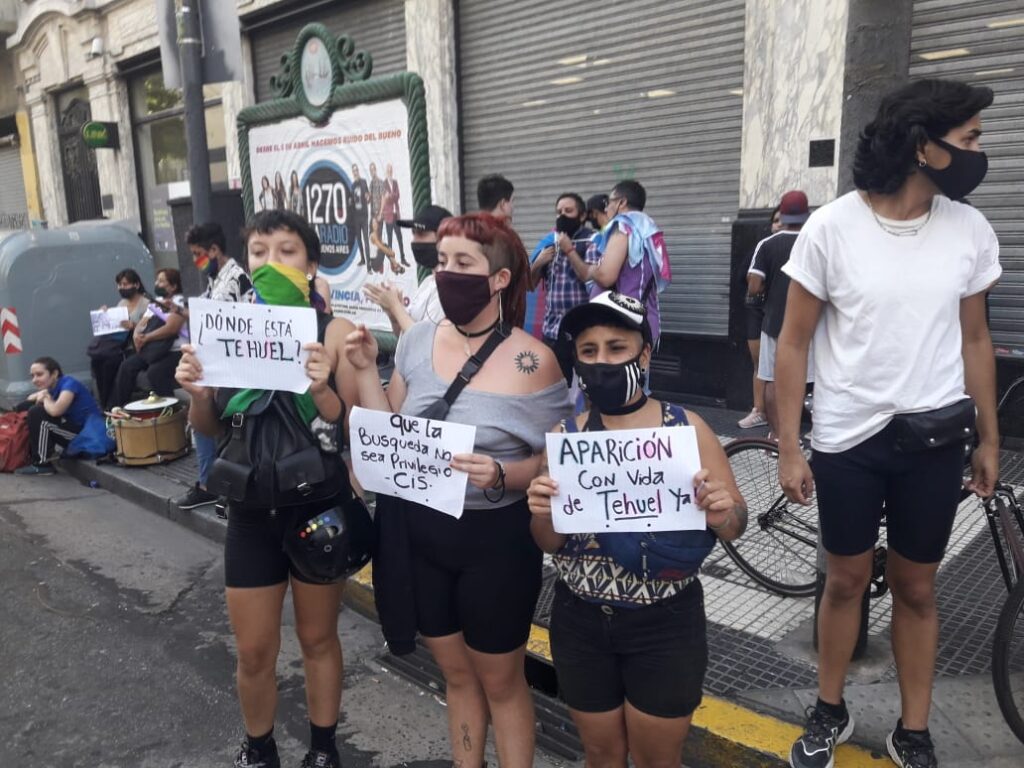
Since the request for information about what happened to Tehuel began to spread, several marches have been held demanding his reappearance.
Public reward
On Monday, March 12, it was announced that the Ministry of Security, through the Provincial Directorate of the Registry of Missing Persons , is offering a reward of between one million five hundred thousand pesos ($1,500,000) and two million pesos ($2,000,000) "to anyone who provides information leading to the whereabouts of 21-year-old Tehuel de La Torre, last seen on March 11 in San Vicente." The announcement states that the identity and confidentiality of any information provided will be guaranteed .

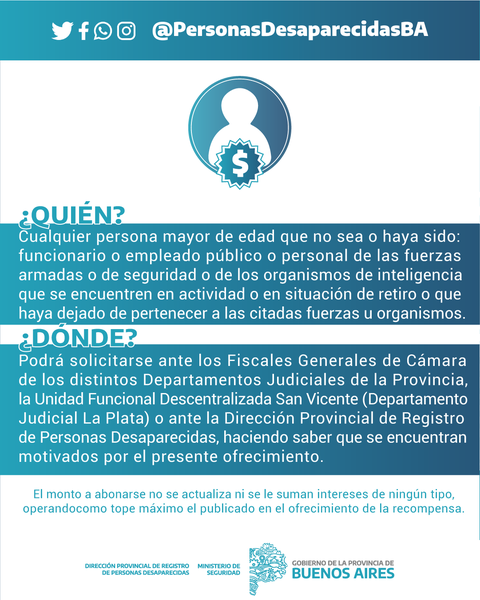

On April 16, the prosecution requested the preventive detention of Ramos – who was already detained – for concealment and false testimony.
Judicial sources confirmed to Presentes that in the reconstruction of the route he took until where his trail is lost, on March 11, 2020, it is known:
- Tehuel left the house where he lived with his mother and his girlfriend in San Vicente (Buenos Aires province) and arrived at the address he was heading to, in the La Esperanza neighborhood of Alejandro Korn.
- He went to meet Luis Alberto Ramos, whom he had known for three years, because he had offered him a job as a waiter at an event.
- From there, they both went to another house in the same area, where they met with a third man: Oscar Montes (46), a scrap metal dealer from the area. Then they returned to Luis's house. That's the last anyone knows about Tehuel.
- An important detail: a photo appeared on Ramos's cell phone showing Tehuel with both of them at Oscar Montes's house.
- Initially, Ramos and Montes were questioned as witnesses about whether they had seen Tehuel, and both denied it. On March 23, Ramos was arrested, and Montes on March 27. Both refused to testify.
The investigation began following a missing person report filed by Tehuel at the San Vicente First Police Station on March 14. The report was filed by his girlfriend after he failed to return home or answer her calls. The case is being handled by prosecutor Karina Guyot of the San Vicente Decentralized Functional Instruction Unit (UFI). When asked if any of the hypotheses were specifically related to Tehuel's gender identity, sources responded that "the important thing now is to find him."
The raids
Judicial sources confirmed to Presentes that five raids have been carried out so far. These raids identified Tehuel's presence at the homes of the two people arrested on the same date and time frame in which his trail goes cold.
The two initial raids were carried out at Luis Alberto Ramos's house. The first was because it was the address the young man had given his girlfriend. The second was after it was discovered that Ramos, who had testified as a witness, had lied about the encounter. As a result of this false testimony and for obstruction of justice, the court ordered his arrest. To date, he has not provided any further information about Tehuel's whereabouts or what happened.
The third raid took place at the home of Montes, who is now detained for obstruction of justice and perjury. The fourth raid was carried out at the home of the girlfriend of the first detainee. And there was a fifth raid last Thursday, following a 911 call. In this last raid, it was confirmed that the person seen by the neighbors was not Tehuel.
Among the operations, there were also searches in the vicinity of the raided homes. Traditional methods were used, as well as ground-penetrating radar, trained dogs from the Federal Police, and high-tech drones, with the collaboration of various ministries, the National Gendarmerie, and municipalities.
Various items were collected during the raids. The results of the forensic analysis, which could yield crucial information, are still pending. Updates are expected soon .
Several cell phones and other items have been seized. Psychological evaluations have also been carried out, and reports are expected from social media companies, which could provide important information.
The Department of Gender and Diversity Policies of the Municipality of San Vicente informed Presentes that they became aware of the case a week after the young man's disappearance, initially through social media. While they collaborate with various government agencies and levels in missing persons cases, they do not have a standardized protocol. "We don't have that many missing persons cases, and they are generally resolved within a few days," they stated. Currently, they are providing comprehensive support and assistance to Tehuel's family.
The Minister of Women, Gender Policies, and Sexual Diversity, Estela Díaz, and a team from her ministry also met with the family. The ministry has been supporting the search for Tehuel since learning of his disappearance on March 18. One of the measures taken was to establish an inter-ministerial working group, including the gender unit of San Vicente and the investigative unit. The Undersecretary of Policies against Gender-Based Violence, Flavia Delmas, stated in a press release: "It is important that the case moves forward with measures stemming from the investigation." The Director of Intervention in Critical and High-Risk Cases, Agostina Balastegui, added that resources are focused on finding him and that "computer experts are working tirelessly to search for data."
The marches and demonstrations
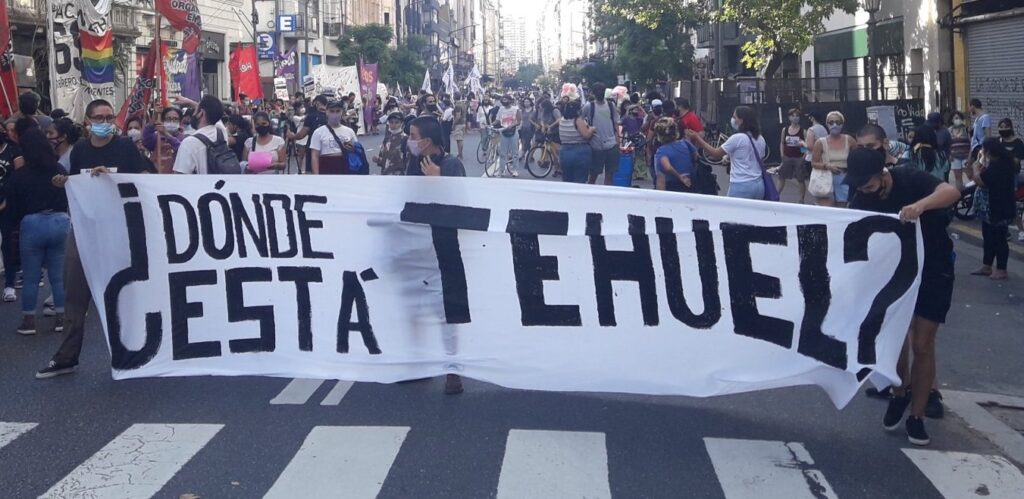
San Vicente is a city of just over 20,000 inhabitants, currently gripped by the search for Tehuel de la Torre. In this town, unaccustomed to large-scale demonstrations, gatherings have already taken place where many people are demanding to know his whereabouts and urging the search to continue.
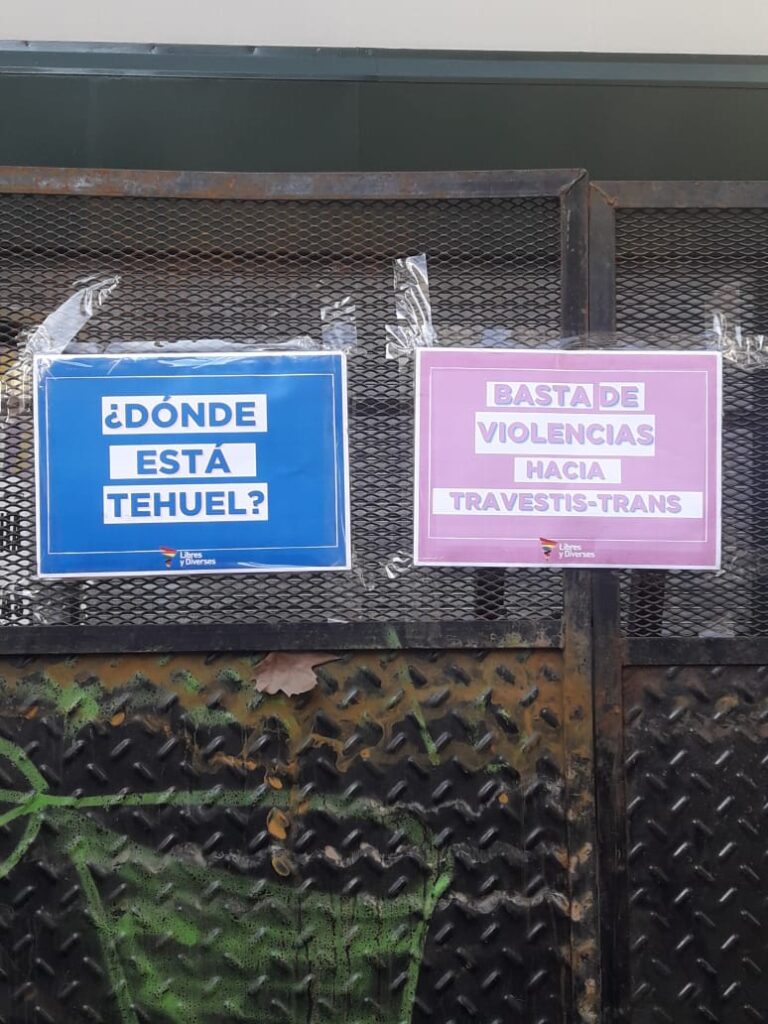
In recent weeks, there have been two torchlight marches and other demonstrations to raise awareness of the search for Tehuel in San Vicente and also in Buenos Aires. The group Autoconvocades por Tehuel (Self-Organized for Tehuel) is one of those that publicizes and organizes some of these events.
Today marks one month since the disappearance of Tehuel, and a virtual action is planned, starting with a Twitter campaign at 11:00 AM using the hashtags #OneMonthWithoutTehuel, #WhereIsTehuel, and #TheStateAndGovernmentsAreResponsible. A vigil will also be held in San Vicente this evening. On Monday the 12th, demonstrations are planned in plazas across the country at 4:00 PM. In the Autonomous City of Buenos Aires, the demonstration is scheduled for 4:00 PM in Plaza de Mayo.
“ One side of the violence that trans men experience”

In a dialogue with Presentes, Fernando Martín, from Hombres Trans Argentinos –an organization that works on issues of trans masculinities– expressed: “Unfortunately, Tehuel is the face of the invisibility that trans men suffer and the violence we go through throughout our lives.”
“We often work in violent environments, doing what we can and what we’re allowed to do. We’re assigned the female gender at birth and we’re ‘the crazy ones’ in the family. We go through the transition, but the paternalistic influence remains. We also suffer expulsion from our homes and are subjected to violence within those homes,” she emphasized.
Tehuel disappeared while on his way to a job offer. He had been unemployed for some time. That's why the demand for a trans job quota is also echoing in these calls for action. Beyond the presidential decree that, in a historic decision, reserves 1 percent of public sector jobs for trans people , there is a national bill in Congress for the inclusion of trans people in the workforce, with a broader scope and comprehensive approach, awaiting consideration and for which organizations have been advocating.
“Transmasculine men also face difficulties accessing the job market. We're filtered out during pre-employment medical exams if we're cis-passing (on hormones). But not all of our colleagues are in that process, and exclusion continues throughout that transition. We work in whatever jobs we can find and whatever they let us, and Tehuel is clearly a victim of that, because many of us are lucky or have been victims of violence and can tell the tale, but this isn't the case for him,” said Fernando Martín.
“Tehuel was looking for work, and there is another violation of rights: not having a decent, formal job. A poor, trans boy. All that intersectionality affects him,” analyzes Thatiana Carmona, activist and member of Mujeres Trans Argentina (MTA).
Andrea Rivas is president of the Association of Diverse Families of Argentina (AFDA). She says that Tehuel's identity cannot be separated from how his chances for a better life were cut short. “This context is one of high vulnerability, and the precariousness of access to work for trans people speaks to a structural inequality for certain identities. This means that there is an expulsion of trans identities from workplaces and educational institutions. And this is reflected in how the media covered the case and in the investigation. That's why we are fighting for a trans employment quota law.”
transphobic TV

Most major media outlets no longer feature her photo on their website homepages or during prime-time programming. Through sheer activism, the issue persists on social media and finds its way into the gaps of prime-time television.
In mid-March, when it became known that his family was looking for the young trans man, some media coverage was violent for several reasons and did not respect his gender identity.
“We are concerned. Although we have had a gender identity law for almost nine years, some media outlets still don't know how to treat or refer to us and don't care if they are being violent. As activists and advocates for our rights, it is important that we are referred to correctly. Especially in these situations,” Thatiana Carmona stated.
She emphasized that searches of a cisgender person and a transgender person are not treated the same way . “There is no in-depth exploration of the issue. Therefore, the role that certain media outlets play leads society to adopt these discourses and stereotypes and further reinforce them.”
According to Andrea Rivas, “ there was a pathologization , a distrustful gaze. That was the coverage we saw in most media outlets, which then quickly stopped following Tehuel's search. Very few media outlets treated a trans identity with the rights it has and with the respect it deserves, especially given the vulnerabilities experienced, even more so in this context. There was an abandonment of Tehuel and a lack of support.”
The exercise is simple: what happens when the person at risk is cisgender, and what happens when they are transgender? “We have to take all these issues into account to be able to address the problem. We can’t just think of (Tehuel) as a missing person. Rather, she is a person who has experienced multiple forms of violence throughout her life; she is a trans person, poor, from a working-class neighborhood. We want to work from a rights-based perspective, but also from a diversity perspective,” says Carmona.
For a transfeminist justice
Carmona and Rivas agree that it is necessary to closely monitor the actions of the justice system and demand prompt responses. “Argentina has a legal framework for the protection of the human rights of LGBTQA+ people, but its effectiveness is severely hampered by the lack of a trans-feminist justice system. The investigation into Tehuel's case is demanding the urgent development of a trans-feminist legal paradigm that will make the defense and protection of our human rights operational,” emphasized the president of AFDA.
The MTA member emphasized the importance of a judicial system that considers the situations experienced by trans and travesti people throughout their lives. “Society and social organizations have the obligation and the opportunity to ask the State and the Justice system to investigate properly, from a transfeminist perspective. For us, these tools are fundamental,” she said.
For Rivas, the concept of justice is not limited to the judiciary but also encompasses the network involved in designing legal processes, law schools, legal doctrines, lawyers, and their bar associations. “Privileges come into play in this process. The system oppresses and abandons the most vulnerable, in this case, trans people. There is no justice for a vulnerable person. If you look at the judicial systems, you'll see that the response depends on your social class,” she insisted.
Rivas called on social movements and society at large: “There needs to be a strong push from feminism and activism when a trans or non-binary person suffers, disappears, or experiences a situation like Tehuel's. I think that response is lacking. I think Tehuel still needs more support, and I hope that more social movements will join this search in the coming days; there's still time.”
To provide data
The last time Tehuel was seen, he was wearing gray pants, a white short-sleeved shirt, a blue jacket, a cap, and blue sneakers. He has a robust build, fair complexion, short dark hair, and is about 1.56 meters tall.
Anyone with information about his whereabouts should contact the San Vicente Decentralized Prosecutor's Office (UFI Descentralizada) by phone at 0221-429-3015 or by email at perdes@mseg.gba.gov.ar . You can also call 911.
We are present
We are committed to journalism that delves into the territories and conducts thorough investigations, combined with new technologies and narrative formats. We want the protagonists, their stories, and their struggles to be present.
SUPPORT US

FOLLOW US
Related notes

We are present
This and other stories are not usually on the media agenda. Together we can bring them to light.