

They demand that the murder of Vanessa Zúniga not go unpunished: the Honduran trans activist was beheaded
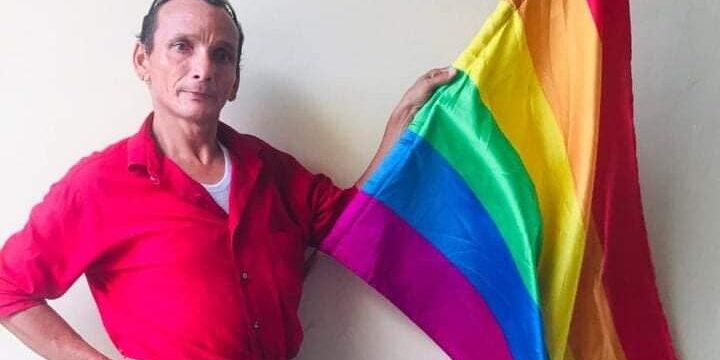
Vanessa Zúniga was transgender and worked as a volunteer at the Association for Prevention and Education in Health, Sexuality, AIDS, and Human Rights. She was found with her throat slashed on Monday, March 28.

Share

Dunia Orellana, from San Pedro Sula
Vanessa Zúniga was a 43-year-old trans woman who worked as a volunteer with the Association for Prevention and Education in Health, Sexuality, AIDS, and Human Rights (APREST). She disappeared on Sunday, March 27th. She was found beaten, partially undressed, and with her throat slashed in a vacant lot in the port of Tela, on Honduras' Atlantic coast, the following day, Monday the 28th.
Vanessa lived with her father and sisters in this municipality. Her family identified her body on Tuesday the 29th at the Forensic Medicine facilities in San Pedro Sula. “On Monday, they reported a body found in underwear with her belongings nearby, such as a shirt and red sneakers. It was in Colonias Unidas, two meters from the Public Prosecutor's Office,” Leonel Barahona Medina, executive director of the Association for Prevention and Education in Health, Sexuality, AIDS, and Human Rights (APREST), told Agencia Presentes. “It was Vanessa, who had been dead for about 24 hours.”
According to an officer of the Honduran National Police, the Police Directorate of Investigation (DPI) and the Homicide Unit for People Belonging to Groups in Vulnerable Situations are working on the case.
Vanessa survived by selling items on a very small scale and doing cleaning jobs. “She had a bicycle with a cart on it, from which she sold water and cigarettes. She also washed other people's clothes and cleaned houses,” Barahona explains.
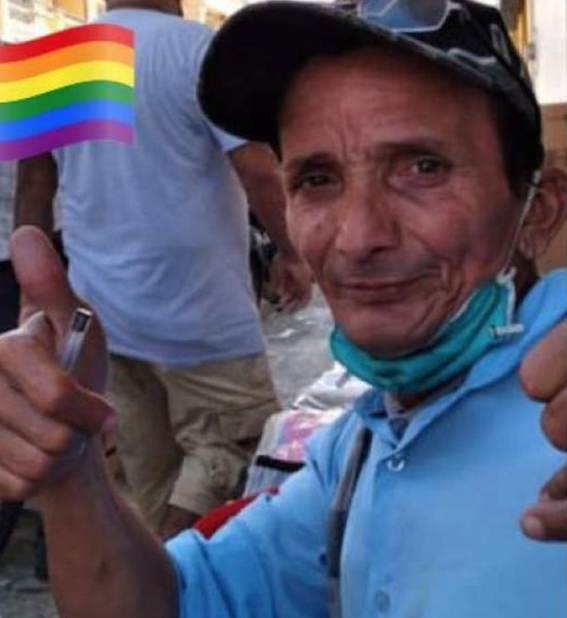
Authorities have several hypotheses about the incident, but at the scene where the body was found, they were unable to locate any evidence from security cameras or eyewitnesses. “It’s a very complicated case, but we hope to obtain more details and thus provide an answer,” the officer told Presentes.
They demand justice from the Public Prosecutor's Office.
The body of the Honduran trans activist remained for a day in the morgue of San Pedro Sula, in northern Honduras, where Vanessa's brother-in-law went to transport it to the port of Tela. "They couldn't hold a wake," Leonel Barahona, director of APREST, told Presentes. "The same day they identified her, they took her body to Tela to bury her around 7:00 PM."
LGBTI and human rights organizations are calling for justice. The LGBTI Access to Justice Roundtable, which brings together 11 national organizations, called the death of APREST volunteer Vanessa Zúniga a “vile murder” in a statement issued on April 2. In the statement, the Roundtable demanded that the Public Prosecutor's Office conduct “a thorough investigation into the murder of human rights defender Vanessa Zúniga.”
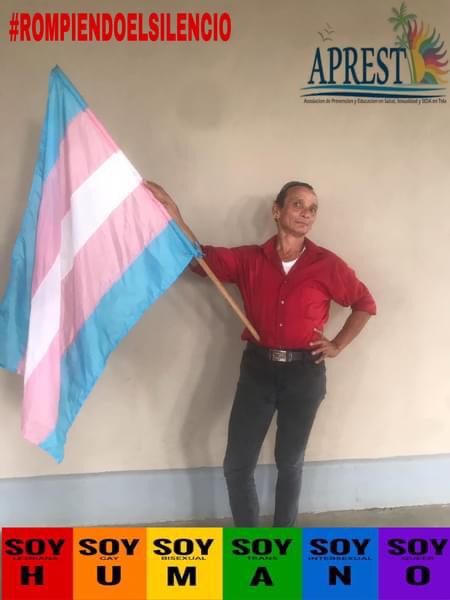
“The way she was killed makes it a hate crime,” says human rights defender Leo Barahona. “ She had already received threats .”
The voices raised in protest against this latest murder of an LGBTI person have been joined by that of the National Commissioner for Human Rights (CONADEH). In a statement released on April 3, CONADEH lamented the murder of Vanessa Zúniga and urged the Public Prosecutor's Office to investigate it. The representative of the government institution, Blanca Izaguirre, expressed her sorrow over the murder and advocated that it not go unpunished, as is so often the case with these crimes.
From June 2009 to the present, there have been 373 violent deaths. Of these, 119 were transgender people. There is a 91% impunity rate in these cases. Despite the inclusion in the new Penal Code of the aggravating circumstance of violence based on sexual orientation, gender expression, and gender identity, no sentence in this country has taken it into account.
Trans people are still being killed in Honduras.
According to the Violent Deaths of LGBTI People Observatory of the Cattrachas Lesbian Network , 2020 ended with 20 hate crimes. So far in 2021, two murders of gay men have been recorded, and now Vanessa's murder, the first of the year against a trans woman.
In April, the Inter-American Court of Human Rights (IACHR) is expected to issue its ruling on the execution of Vicky Hernández, the 26-year- old trans woman murdered between June 28 and 29, 2009, during the curfew imposed by the coup in Honduras that deposed then-President Manuel Zelaya.
Vicky's murder remains unpunished. The Inter-American Court of Human Rights deliberated last March on the case of Hernández versus the State of Honduras. If the Court finds the Honduran State guilty of Vicky's death, it will be the Court's first ruling on violence against trans people in Latin America and a further precedent, as was the ruling on the transphobic murder of Diana Sacayán, for the countries of the region.
Hostile context for human rights
On January 21, the Honduran National Congress banned abortion under any circumstances, as well as same-sex marriage , and there is no legal recognition of civil unions for the LGBTQ+ community in Honduras. Unions performed in other countries are also not recognized.
At the end of March, the Supreme Court of Honduras accepted a constitutional challenge filed by Cattachas against the reform to Articles 67 and 112 of the Honduran Constitution regarding abortion and same-sex marriage. The acceptance of the challenge was the first step.
In mid-January, more than 300 LGBTQ+ people from Honduras fled in the first migrant caravan toward the United States. Many of them were unable to reach their destinations because they were detained by immigration authorities in Guatemala and Mexico and then deported back to Honduras.
We are present
We are committed to journalism that delves into the territories and conducts thorough investigations, combined with new technologies and narrative formats. We want the protagonists, their stories, and their struggles to be present.
SUPPORT US

FOLLOW US
Related notes


We are present
This and other stories are not usually on the media agenda. Together we can bring them to light.