

Iconic moments of trans visibility on Argentine television
A historical journey from the first steps of transvestites and trans women on Argentine television. The path of deconstructing stigmatized and criminalizing roles towards achieving their own voice.

Share

By Victoria Stefano/Periódicos */Illustration by Titi Nicola
"Today we have a special guest visiting us, Alejandra Beatriz Costa"Transsexual." That's how she presented herself Mirtha Legrand in 1990 to the first visible trans person on an Argentine television program.
"What does that mean?" the host asked. "A transvestite who's had surgery," the interviewee replied, leading to what today would seem to us to be, at the very least, a violent interview.
That day Alejandra did not sit at Mirtha's table; the interview was in a separate space, improvised to create an intimate space, isolated from the rest.
Yes, they did sit down to lunch that day with the "progressive" lady of the 20th century, the lesbian activist Ilse Fuscova , and the then-president of the Argentine Homosexual Community (CHA), Rafael Freda. Years would pass before that moment arrived for us.
Finally we were starting to to exist outside the police report of the murdered transvestite, but not with our identityThe battle for the right to registration recognition was beginning to brew.
From weirdo to activist
Two years later, in 1992, that existence was reaffirmed in the program of Mariano Grondonawhere it appeared Yanina Moreno Demanding the possibility of "sex reassignment in Argentina and subsequent legal recognition," Yanina brought the trans rights movement's agenda to television. She shed light on the exile caused by persecution during the dictatorship—and afterward—and the comprehensive debt owed by the Argentine state and society to trans people.
Mirtha's table, Susana's sofa, the nap with Mauro Viale, and the evening with Chiche Gelblung
It was in 1993 when we stormed the lunch table of the diva of Argentine television. An event that, in retrospect, would mark a turning point in the history of communication in our country. The Great Argentine Mother had made her appearance. Mariela Muñoz and the transvestite activist Kenny de Michelis.
Mariela rose to national prominence thanks to a story that resonated across all sectors of society. Amid massive demonstrations supporting her cause, She demanded on live television that her adopted children be returned to her.Throughout her life, Mariela adopted and raised more than 17 children. And in 1993, a web of legal loopholes unfolded, making her the central news story of the prime time Argentinean. The justice system took away three of the children she had raised and imprisoned her.Mariela's neighbors gathered outside the police station where she was being held to demand her release. Long stretches of airtime were filled with the heart-wrenching cries of her mother, pleading for mercy from a blind and powerless state.
The media attention allowed her to change her legal gender, something no one had managed to do before. Mariela was legally recognized as a woman and also It put Argentine society, for the first time, on the side of a trans woman.
The fight for custody of the children kept Mariela Muñoz in the media well into the 2000s. Somehow, a trans woman had lodged herself in the mental repertoire of the archetype of motherhood in the collective consciousness of Argentinians.
For its part, «Kenny"as she became publicly known Victoria Alexis Mincilli, She was the media spokesperson for the growing transvestite-trans movement in our countryShe sat at Mirtha Legrand's table and on Susana Giménez's sofa, carrying the community's demands and openly speaking out about the violence we experienced in the 90s. Kenny was the coordinator of the United Transvestites Group. Along with Sandy Gonzalez and Gabriela CarrizoThey smoked a young and extra incisive Susana who repeatedly inquired about why we didn't work at something else instead of being prostitutes.
“We need society as a whole to understand that we are people predisposed to danger, since the only way for us to survive in this country (I’m speaking to all my colleagues in Argentina) is through prostitution,” Victoria Mincilli told the platinum blonde. “But why? You know, a lot of people ask themselves that, why?” Susana insisted.
-It's a fact.
-Don't they have jobs elsewhere?
-The thing is People now, through the connotation that has been given to me, have begun to see that not all transvestites are the same.For example, in August I'm starting my studies at the Faculty of Arts and Journalism, because the Gay Community publishes a monthly magazine that I write for. I've discovered that's my gift. But I also need to integrate into society. I'm speaking from my own experience. There are many other women who support me in my work. We are all forced into prostitution.
Kenny categorically announced what everyone already knew. Afterwards, her colleagues told the host what it was like to be a transvestite and live with daily persecution under Article 95 in the province of Buenos Aires and Article 2F in the Federal Capital (“Exhibiting oneself in public or public places dressed or disguised in clothing of the opposite sex”). Bribery, arbitrary arrests, police beatings, systematic human rights violations The laws concerning our entire population were finally made public, and the race to repeal those articles began.
Through these apparitions, Vanessa Show, Wendy Leguizamon, Klaudia with a K, Gabriela GreyAmong other things, they occupied spaces for dialogue with the media, obsessed with unraveling who we were and what we wanted. This opened the possibility of moving from being the strange, pet-like object to the agency of the transvestite activistTheir appearances were more frequent on programs like Mauro Viale's "Anochecer" and others, where trans narratives were prominent. Sometimes they were presented in a tone of assertiveness, and at other times as denunciation.
Trava doll
A separate chapter was Cris MiróCris, the Jennifer Aniston of transvestites on Argentine television. A shooting star who did everything she could with what she had been given. Cris was a dentist, graduated from the UBAAn intellectual and an artist. Daughter of a retired military officer and a domestic worker. Like many trans women of the time, she survived by hiding her identity, only revealing herself on rare occasions. It was then that her height of 1.85 m, which set her apart from other women, was discovered, and she was propelled into the world of revue theater.
Cris's androgynous beauty captivated all audiences. They immediately wanted her on all the daily programs, for what she was: the secret girlfriend of Argentine television.They had the enormous pleasure of having her in front of them: Tinelli, Nicolás Repetto, José María Listorti, among other epic idiots of national television.
At her peak, she arrived at the Maipo, and faced the most brutal side of a Mirtha Legrand who had already forgotten the open-mindedness she had at the beginning of the decade:
-I don't know how to treat you, my love...
-Because?
-I don't know, miss... sir... I don't know... you voted, didn't you?
-Of course.
-Well, and at which table? You voted at the men's table, right?
-Yes, yes, of course…
-Sure, sure… What's your real name? Do you want to tell us or not?
-Look, my real name is the one I feel is Cris Miró.
-Do you walk around dressed like that, just like that?
-Yes, I didn't come by helicopter.
-Who compliments you, men or women?
"You know what...? Men, of course, and women too. Surprisingly, ladies and their husbands are waiting for me outside the theater to meet me..."
-Yeah?
-To congratulate me.
-Right now there's no showgirl sexier, cuter, and more sensual than Cris Miró, right?... Is this your natural voice?
-Yeah…
-I don't know if you mind me asking you these kinds of questions…
-No, I understand why you do them…
-Of course… of course… it's logical that they do it… But does it bother you that people know you're a boy or not? And do you think that the situation could ever be reversed in your life, that is, well, “I don't want to be a woman anymore; I accept my condition as a man, as a boy… uh… I get married, have children and well, things change… Do you think that could happen?
-I enjoy my life so much that I don't think it's going to happen.
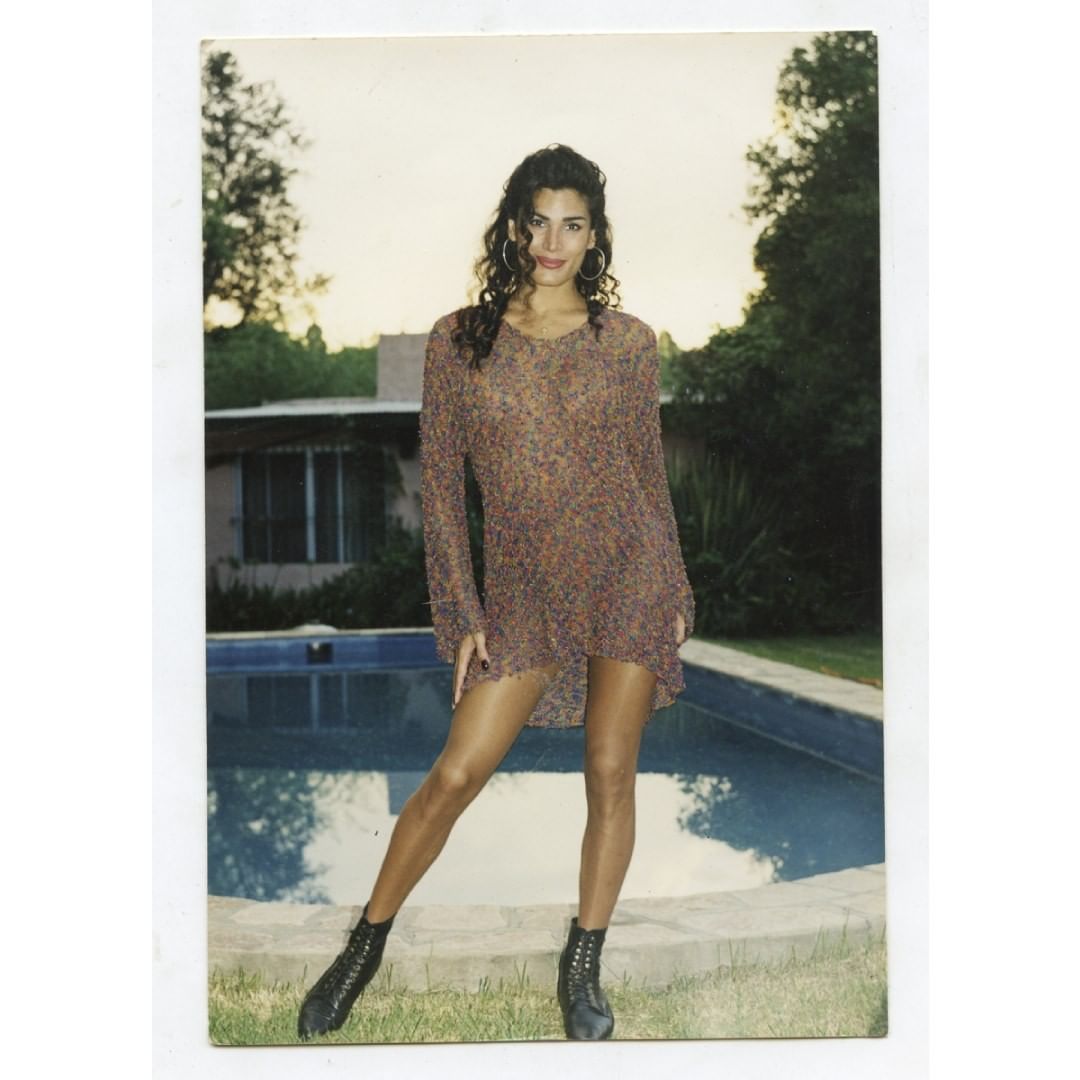
Cris died in 1999, from cancer linked to the HIV she was living with. Her time on Argentine TV and in theater broke new ground for transvestites and trans people in the media....and opened the door to others like Flower of the VThanks to Cris Miró, another possible existence began to be built: transvestite artists.
Transvestite Argentina
"What's wrong with men and you, Florencia?" he asked a young Florencia Trinidad.
Apparently, the great unknown of Argentina, far removed from the Menemist neoliberalism that was destroying the country, was What happened to men who chose trans women and transvestites? to buy some time or to find a partner or a family.
The report from Chiche's program became part of our country's collective cultural heritage. From a persistently stigmatizing perspective that reaffirmed the indivisible pairing of transvestite and prostitute The criminalization of our identities was reinforced. With images of trans women from the city and its surrounding areas, a voice in off It aimed for an objective analysis of transvestite realities and how they were woven into the rest of the social machinery.
All this concern also occurred within the framework of another discussion that had a strong impact on the media and that inaugurated the collective conquest of rights for our population: the debate on the urban coexistence code of the Autonomous City of Buenos Aires.
Live beatings
Every day, transvestites, trans women, and cisgender sex workers were confronted on live television by residents of red-light districts, priests, psychologists, sexologists, or even the police. Newspapers, radio stations, and magazines, of course, joined in the carnage.
The Buenos Aires legislature was debating the codes of conduct that particularly affected the practice of prostitution and criminalized transgender and transvestite people. The crux of the matter was establishing designated areas for prostitution and decriminalizing transvestism, in the face of the exaggerated and overacted moralizing of the residents of Palermo.
The Latin American Transvestite Theory Live
In the mid-1990s, and within the framework of the public discussion about police edicts, they also appeared on television, in newspapers and magazines Lohana Berkins , Marlene Wayar and Nadia EchazúThe historical activists of the "T population" became visible and gave a name to the public discourse of transvestites.
Lohana was already beginning to clearly characterize prostitution as a forced regime and different from the concept of work. The issue of persecution remained central, but people were beginning to talk about identity as a right.
A defiant Marlene began to appear in the newspaper Página 12, and the spearhead of the revolutionary transvestite movement was being announced. publicly disobedientIn the midst of this media-driven persecution, in 1999, organized trans women went to the British embassy to ask the Prince for asylum in his country. The message was clear: trans women were victims of political persecution in Argentina; we were the political prisoners of democracy.
From the V
Florencia de la Vega, as she was known Flower of the V In the 1990s, she managed to get on TV and stay. Of course, her space was well defined. Hypersexualized, ridiculed, objectifiedBut for better or for worse, there it was.
She started out replacing Cris Miró in the theater and had made sporadic television appearances since '95. But she was quickly catapulted to weekly and even daily appearances in one-off series and telenovelas. Around 2000, she played the trans girl on a show with Georgina Barbarrosa , and later she was one of "the girls from" Gerardo Sofovich (The Mummy). She also appeared in "La Peluquería de los Pajeros" (The Wankers' Hair Salon), or "Mateos ," something like that.
The 2001 crisis and the political instability until 2003 had buried everything else. In concrete terms, we had gone unnoticed amidst the entire crisis. Except when they were killing us and we were "the murdered transvestite", always in a web of criminalization.
The first reports of transvestites working for the national central administration reached public attention through the presidency of Néstor Kirchner And another latent but extremely belated narrative began to emerge: transvestite state workers.
On television, the image was also conveyed in a different way. The resounding success of the Roldáns, and the character of Laisa, embodied by Flor de V, inhabited a national collective unconscious: Married men were dying for a romp with the neighborhood transvestiteAnd that resource was exploited continuously and to the point of exhaustion.
With an incredible presence on the revue theater scene that kept her in the spotlight at all times, Florencia ventured into production. She broke away from the owners of her image and began her own path. She conquered audiences in major cities in the most traditional theaters and also She began a legal battle to have the State recognize her self-perceived identityachieving it in 2010.
Florencia's career was unstoppable, as was the hatred expressed to her until exhaustion by nefarious figures in the media in our country such as the pathetic Walter Queijeiro and the disgraceful Jorge Lanata .
Florencia can easily be considered one of the most iconic figures on television in our country. Not only because she became a star and stayed on the air, but because... their survival of scorn of communicators poisoned by cisheterosexuality.
The 1910s
, the right to self-perceived gender identity was consolidated , allowing transvestites and trans people to request, without legal intervention, the modification of their official records.
We finally won, and gained a little bit of freedom. They still beat us up when they could, but we started to argue in terms of a more or less possible habitability of public space.
We had begun to inhabit everything so completely that in 2015, Florencia de la V became the first trans TV presenter in Argentina.
The family comedy program broadcast daily at noon, La Pelu , changed the history of entertainment in our country forever.
The narco-transvestites
By this point we had already been criminals, prostitutes, activists, artists and, latently, we were becoming the first trans and transvestite workers in history.
But the media, in a constant reaffirmation of the criminalization tools that the security forces always reserve for the same social sectors, They created a special category for us: the narco-transvestites.
In a sort of triad of trans woman, prostitute, and drug dealer, we began to be seen as the drug queens. Of course, the narrative is never about the structural conditions that push us into prostitution or drug dealing. Much less about the alliances between drug producers and distributors and the security forces that hand over entire neighborhoods to criminal networks. The level of hatred expressed in this content is fueled by a touch of xenophobia, as if to... The class and gender cocktail doesn't lose that crunchy flavor on the fascist palate that gives a little bit of racismPeruvian, Bolivian, and Paraguayan transvestite drug dealers. Doesn't anyone wonder why they're always dealers and never bosses?
And although the wave of the first trans teachers, graduates, lawyers, psychologists and even police officers managed to become headline news in many national media outlets, the narco-transvestite continues to be a stereotype in the collective imagination about our population.
Lizy
Lizy TaglianiThe show's hairdresser gradually infiltrated Dancing for a Dream in an incipient way, until consolidating as a comic figure.
Because of his career participating in different programs and formats, always with a humorous approach, won a Martín Fierro award In 2019, she won the award for best comedic performance for her participation in the program "Cortá por Lozano." On the same channel as Florencia de la V, Lizy became the second transgender host of a family program in the history of national television.
With their own voice
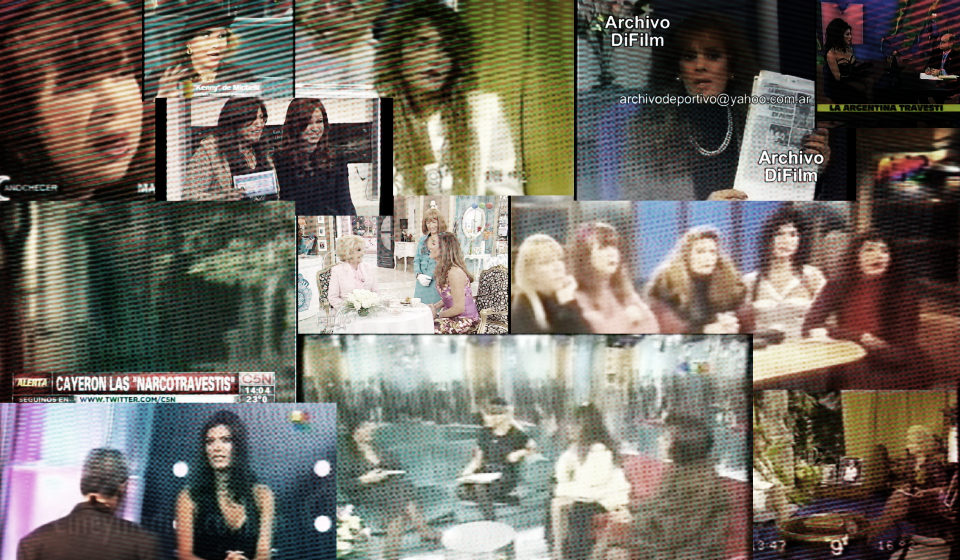
The use of our own voice in the media is something that has been systematically and categorically denied to us. In '93, on Giménez's sofa, Kenny was saying that she wrote for the CHA magazine, and that she wanted to study communication at the UBA because of it. And that dream took a while to materialize, but we started writing.
Since the new millennium we have produced a profusion of literature, even though we didn't start writing then. Lohana wrote and edited books. La Wayar founded the first transvestite newspaper in Latin America., and had and has sporadic columns in Página 12, where Berkins also wrote.
The poetesses Susy Shock and Naty Menstrual These are the first ones with their own published prose. Alma Fernández She revolutionizes pedagogy by writing about the world's first transvestite high school. The MochaAnd stupid, from Dear Unrein It becomes the chronicle of Argentine transadolescent life. And there is still much to read about the global phenomenon that is Camila Sosa Villada, opening up the topic of transvestism through a marvelous, and at times devastating, geopolitical prose. She, in addition to her wonderful writing, portrayed "Rafael's Widow" in a 2012 miniseries about the trans experience for public television.
Amidst all the fuss, we also appeared in countless documentaries, which finally allowed us to speak from our own perspectives. We made it to film, radio… And for the first time, we saw ourselves like this: as communicators.
Last year the world stage was shaken by the news of the first trans driver on a news program on the public channel. The national announcer Diana ZurcoShe transformed Public Television forever, where she can be seen daily reporting on Argentine reality.
But she's not the only one. Alejandra Malem She is also a communicator, journalist, and co-host on C5N. She is the co-star of the news channel's afternoon programming.
In Santa Fe
There really aren't many trans women and transvestites here who have managed to establish themselves on the local media and cultural agenda. By far. Delage Complaint It's the emblem of Santa Fe. Among other areas it has conquered are Radio Nacional Santa Fe, the miniseries History of a Clanand an already established place in national cinema. Also Shendell Spinola and Fernanda Galván They had a segment on two radio programs in Santa Fe.
On the other hand, the person writing to you, from this trench that is Periódicas , where I recently completed my first year as a communicator.
Clearly on the horizon is the pending discussion about How to establish guarantees of fair representation and trans quotas in provincial and national mediaThis construction also includes recognition of the daily work that trans communicators and activists do to create a different, and non-stigmatizing, image of ourselves, our population, and our demands.
From sitting at Mirtha's table, to hosting a news program, or writing for this publication, We survived a world that we began, very slowly, to conquer.
* This article was originally published in Periódicas and is republished as part of an information alliance between Periódicas, Comunicación Feminista desde el litoral, and Agencia Presente s.
Share
We are present
We are committed to journalism that delves into the territories and conducts thorough investigations, combined with new technologies and narrative formats. We want the protagonists, their stories, and their struggles to be present.
SUPPORT US

FOLLOW US
We are present
This and other stories are not usually on the media agenda. Together we can bring them to light.