

Transvestite love, the driving force behind the Nadia Echazú textile cooperative
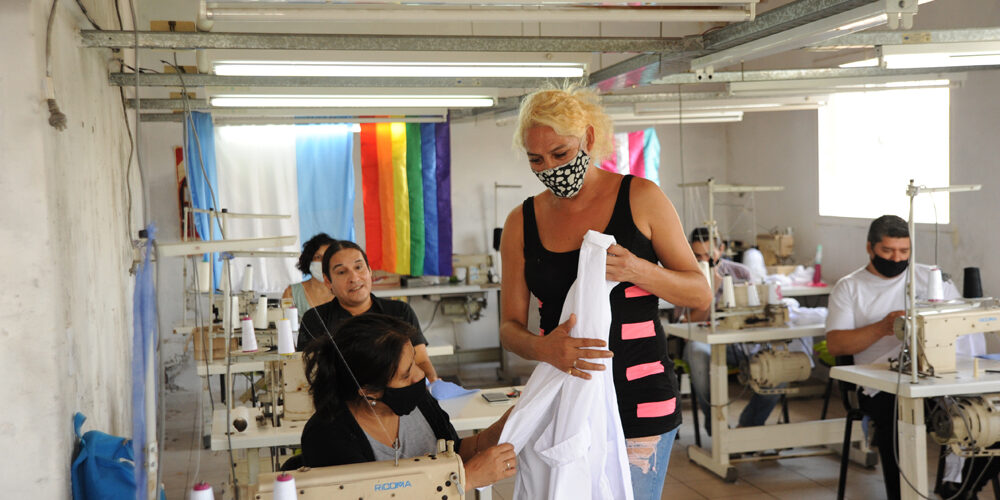
Run by transvestites and transgender people, the Nadia Echazú textile cooperative has resumed production. They manufacture Covid kits: gowns, face masks, and protective equipment for hospitals.


Share

Trans love is a trans woman sewing, because that's what it's also saying. It's saying that beyond theories and the pretty acronyms of diversity, beyond the romanticism of the rainbow that embraces us all, there's no more time to waste. The long-postponed life project for many of us can't wait, especially now, a year after the start of the pandemic, resources are beginning to dwindle.
Transvestite love is one of the main driving forces of resistance at the Nadia Echazú Textile Cooperative School, the first social enterprise managed by transvestites and trans people. Today, through an agreement, it is producing COVID kits: face masks, gowns, and other protective textile items for healthcare workers in hospitals throughout the province of Buenos Aires. It operates in the Crucecita neighborhood of Avellaneda (southern Greater Buenos Aires). Currently, 15 transvestite and transvestite people work there.
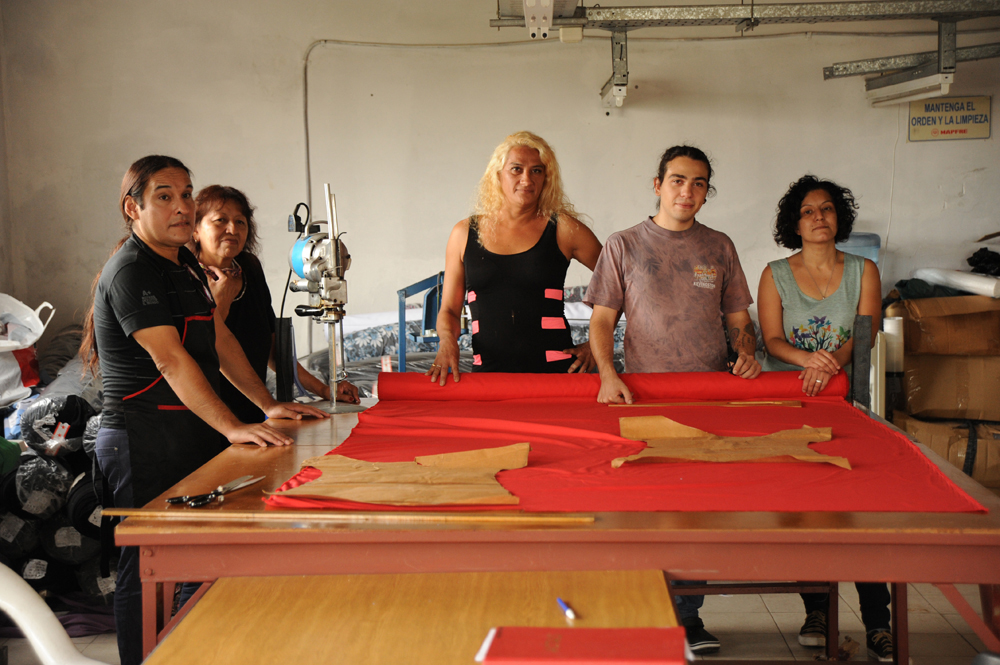
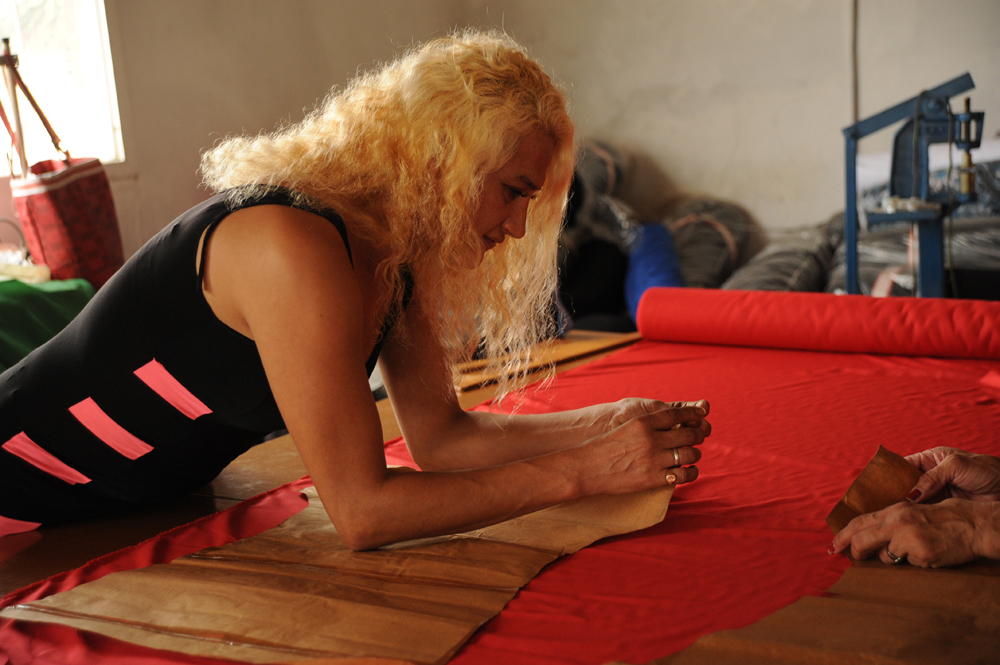
Trans love knows that while we wait for the Diana Sacayán-Lohana Berkins trans job placement and quota bill to be debated in Congress, we must continue resisting and fighting the plague, no matter the cost. A trans woman sewing also knows that she is writing , between patches and seams, giving shape and style to that life project they have been weaving. Between sequins and balls of black thread, trans love knew how to mend the finest fabric, the collective fabric of struggle and revolution.
To cross-dress the world
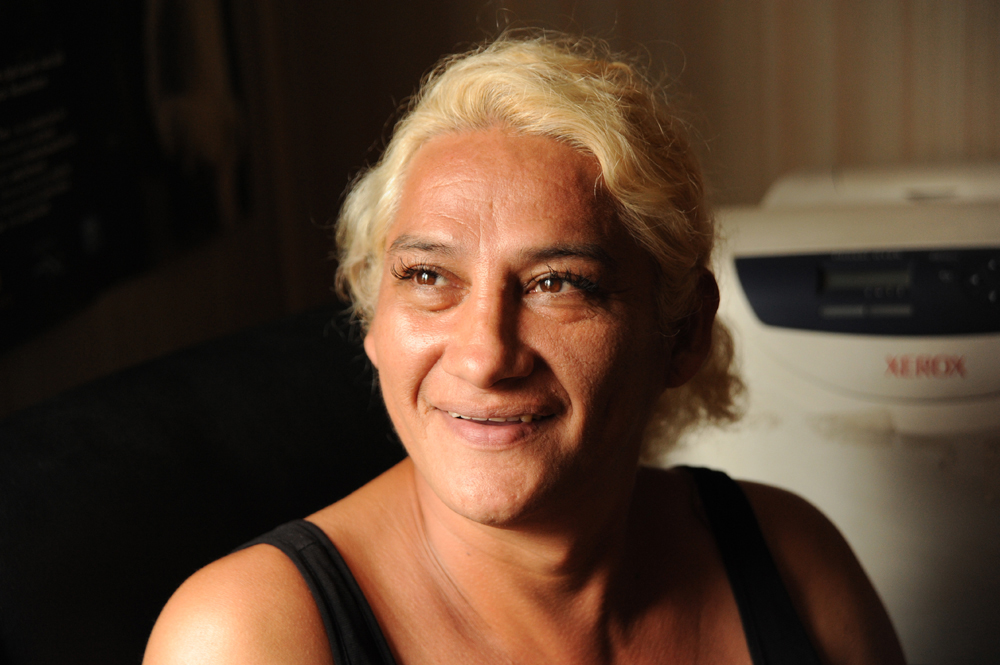
For Brisa, working at the cooperative means having a dignified job, and she proudly holds the presidency. “Today, I lead the cooperative, and it’s a daily learning experience. Everyone has goals in life. I don’t have the life I used to have. I used to live at night like a bat. Now I sleep at night and I’m involved in activism. My dreams and objectives have always been the same as Lohana Berkins’s: that the cooperative stays standing and doesn’t close. To continue giving this space to our fellow members, giving them work, a place of support. Because we are our own therapists. My dream is that our cooperative will have its own brand and that we’ll start selling on a large scale, even transforming the world through fashion itself ,” the president happily adds.
Much more than the story of a textile cooperative
Trans love ran strong in 2007, even in a cold and bleak June. It was then that Lohana Berkins, the ever-vigilant trans activist and leader of the Butterflies, sat at the table where political alliances were forged, witnessing a forge between trans love and Néstor Kirchner, a man who knew how to be seduced by difference. From this trans love, whose only desire was to exist and resist, the first trans textile cooperative, Nadia Echazú, was born. It was named in memory and homage to that great activist, Nadia, one of the pioneers in the fight for the rights denied to us.
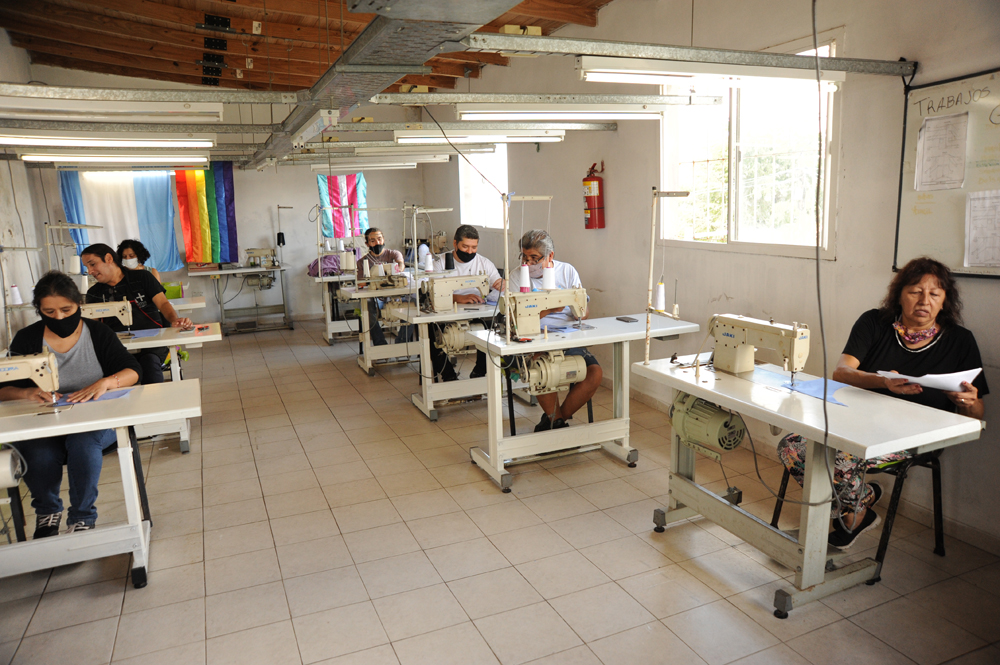
At its inauguration in 2008, the cooperative operated in the same building it occupies today in Avellaneda and was comprised of 22 transvestite and transgender women who worked in the textile manufacturing process. A year after its founding, the workers of Nadia Echazú ventured into haute couture and organized a fashion show at the historic Bauen Hotel. Some of the cooperative's members modeled designs they had created themselves. Five different looks were presented that day, presented in a red carpet style.
The trans and travesti workforce was beginning to emerge into the world and see the light. There, that day, were the trans women of Nadia Echazú, proud to show people that it was possible to escape the place society had cast them into, that there was opportunity, that it was a lie that we couldn't, that it was a lie that we didn't belong.
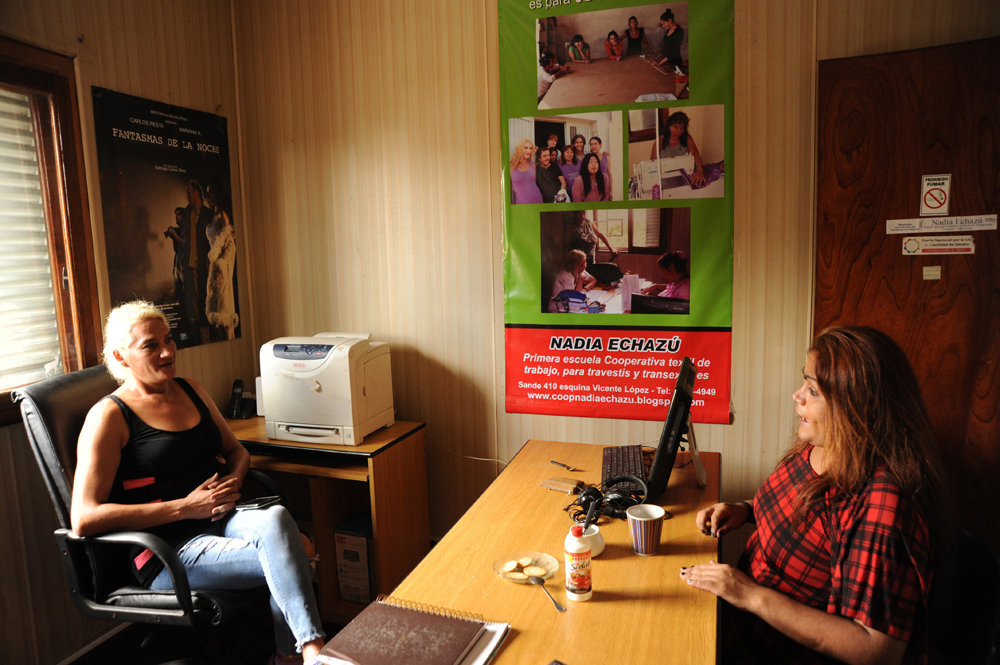
After so many shared joys, Lohana Berkins died in February 2016. Mauricio Macri was the president of Argentina. Nadia Echazú's comrades resisted the tightening neoliberal austerity measures. They survived the collective crisis gripping the country with the best strategy Lohana taught them: trans love. They tried to keep the trans cooperative from closing, doing clothing alterations, renting out parts of the building to pay the electricity bill.
In 2020, Emanuel Gonzalez Santalla, a provincial senator (Front for Victory, Avellaneda, Buenos Aires Province), visited the cooperative. From the first day Emanuel approached the cooperative, the women interviewed recall, he began asking about how to resolve some urgent issues. The roof was falling apart, and the building was in very poor condition. For the women, the senator's visit gave them a glimmer of hope. Some repairs began, and in December 2020, the textile cooperative members signed an agreement with the Ministry of Social Development, within the framework of the National Social Protection Plan (PNSP) in the Avellaneda district. The objective of this agreement was to contribute to the inclusion of trans and gender-diverse people through job training workshops and comprehensive support.
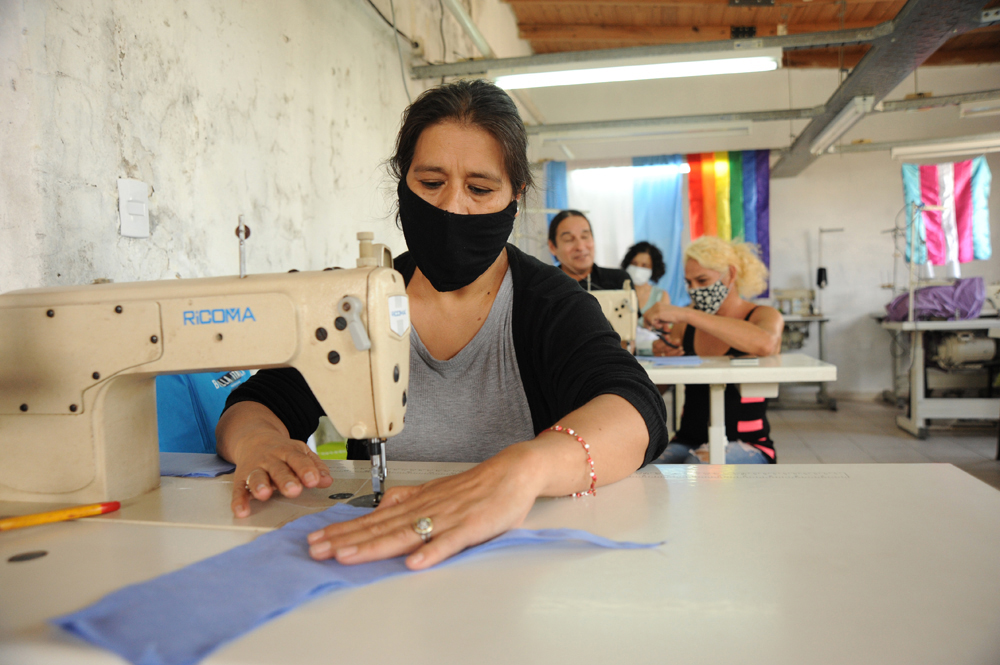
Gloria is Lohana's sister. She's the trustee and ensures that Berkins' legacy lives on. “I was in a very critical personal and financial situation. When Lohana told me about the cooperative, I found it interesting, and it was exactly what I needed as a person. I started connecting with the trans women. Later, I realized that what had happened to me wasn't so bad compared to what trans women go through. I learned the importance of empowerment and moving forward. In my case, Nadia Echazú taught me how to succeed as a single mother. And I'm very grateful for that .”
Trans love is kneaded and spread on the table, like a kilo of flour, two eggs, a little water, and fine salt. It's baked or grilled, given love, and always shared among all. Trans love is poured into the bottom of an empty plastic bottle cut in half, mixed with 20-volume hydrogen peroxide, bleaching powder, and cheap dye, then spread through the hair. The blonde tone is as pure and intense as the trans heart. Trans love endures and exists . Knowing that in the glare of car headlights, sadness isn't noticeable, much less joy.
Transvestite love is a mature young trans woman in her thirties reproaching the State, sometimes protesting, always weeping, formerly against police brutality, now for inclusion. Transvestite love was born on the periphery and absorbed, behind a tree, the best of all cunning and wit, with a body as a shield that pushes its way through the wall, while governments come and go, sometimes kind, sometimes harsh. The tenderness of transvestite love is revolutionary (I write this because I know it and I feel it).
Transvestite love transforms everything it touches. That's why, some time later, many of the transvestite and trans women from the cooperative opened their own sewing workshops. They learned to embroider, worked with haute couture designers, and began to study. Most importantly, transvestite love found a way to survive through their craft and knowledge. Those who were part of the cooperative never returned to prostitution. But it wasn't all triumph for the trans women of Nadia Echazú.
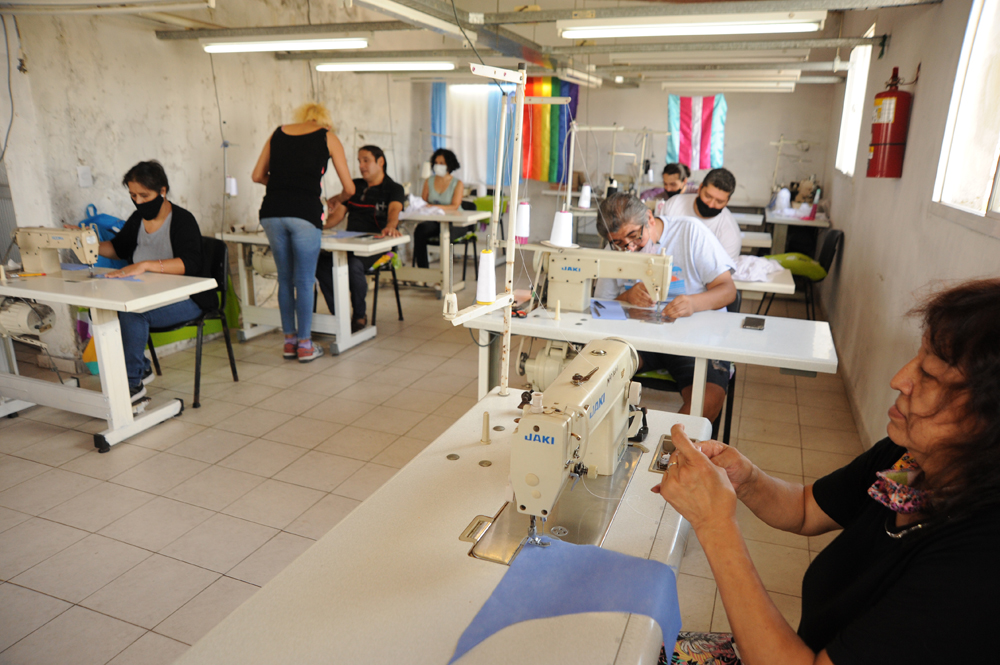
Adelyna Hoyos is 62 years old and a founding member of the cooperative where she serves as general secretary. “It’s very difficult to find work at my age because of my health problems; I have arthritis and scoliosis. I joined the cooperative during a difficult time in my life. I was suffering domestic violence from my children’s father, and my colleague Lohana invited me to join the cooperative to help me disconnect from all the trouble and anguish I was experiencing at home. Before, I thought I was alone and couldn’t get out. As soon as I walked in, I felt a sense of security. Sharing my experiences with the other women made me rethink all the time I had wasted.”
Adelyna rents an apartment. “It’s small. I rented it in 2019 with a subsidy from the City Government.” She says the pandemic affected her health. “In the cooperative, we didn’t work to promote self-care. We all have underlying health conditions. During the pandemic, several political figures from the municipality visited us, and we told them about our concerns regarding the building, which was deteriorating due to humidity and the lack of money for repairs,” Adelyna explains.
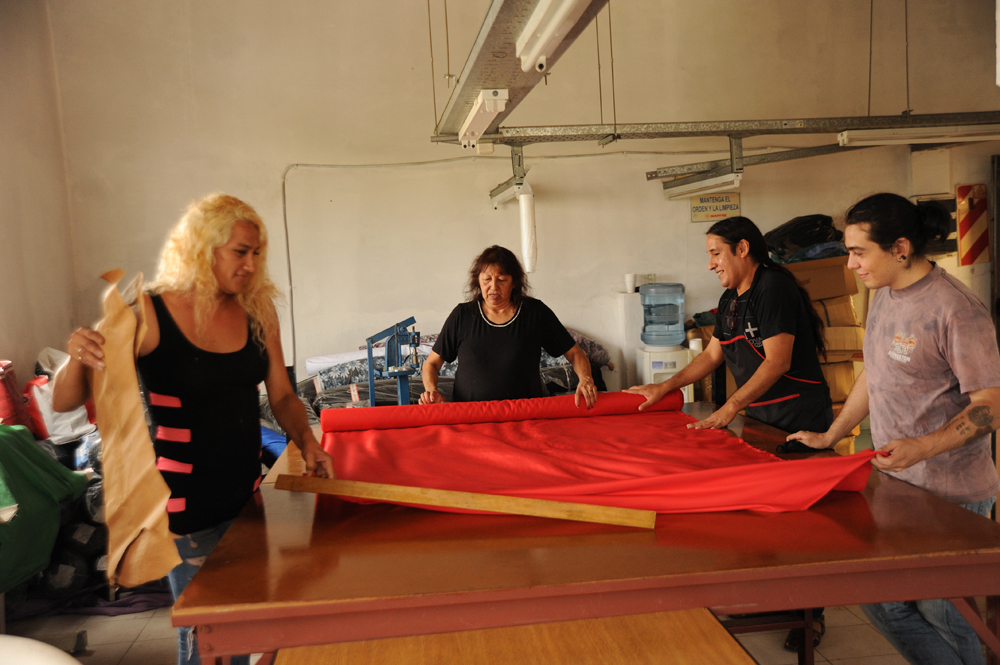
“Working at the cooperative makes me feel alive and useful. It's seeing the future despite my age. I love knowing that we're building something for people who truly need work and our help.” Adelyna envisions the space's full potential as a catalyst for repairs and new opportunities. A place where her colleagues can learn to create their own businesses, to operate sewing machines, computers, design tools, cutting and sewing techniques, and the secrets of haute couture. “That they have support and psychological help, lawyers, and plenty of social assistance,” she says, reflecting on her own experience and what she's learned. “Since I started working at the cooperative, I've become involved with my trans peers and the LGBTQ+ community. They've given me so much joy, we've shared so much, but we've also suffered many losses. This has made us cling to life, unite, and look ahead.”
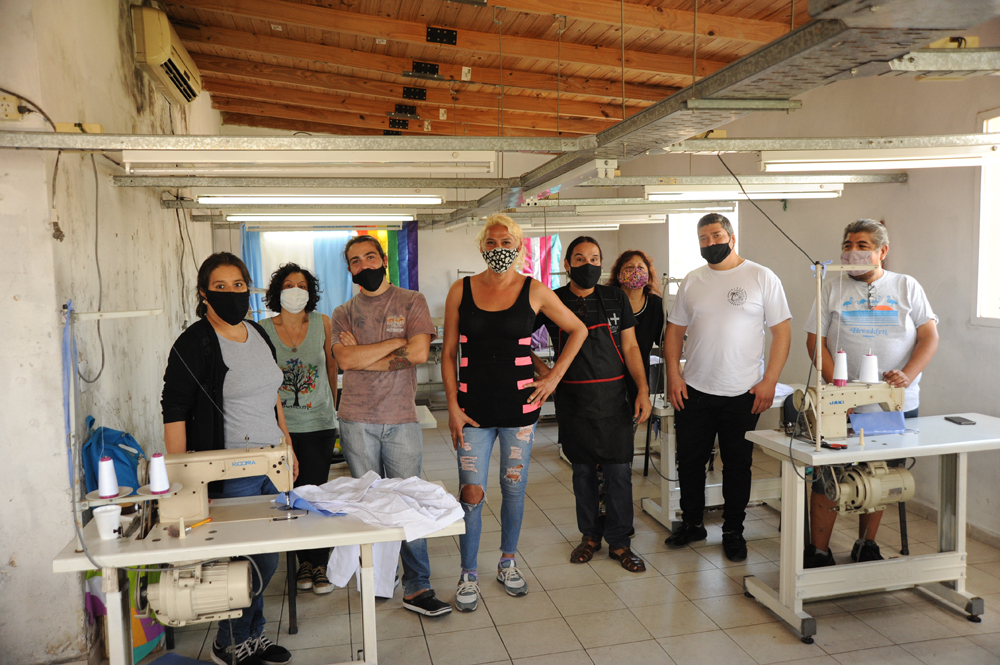
Trans women faced the pandemic from wherever they found themselves during this quarantine. The trans women of Nadia Echazú embraced each other because they know that when they embrace, the cold won't get in. Together, they continue pursuing their dreams and their long-awaited life project, embracing every day Lohana's words: "The love that was denied us is the impetus to change the world."

We are present
We are committed to journalism that delves into the territories and conducts thorough investigations, combined with new technologies and narrative formats. We want the protagonists, their stories, and their struggles to be present.
SUPPORT US

FOLLOW US
Related notes



We are present
This and other stories are not usually on the media agenda. Together we can bring them to light.