

Marina Vilte: Kolla folk singer, non-binary lesbian, and human rights activist
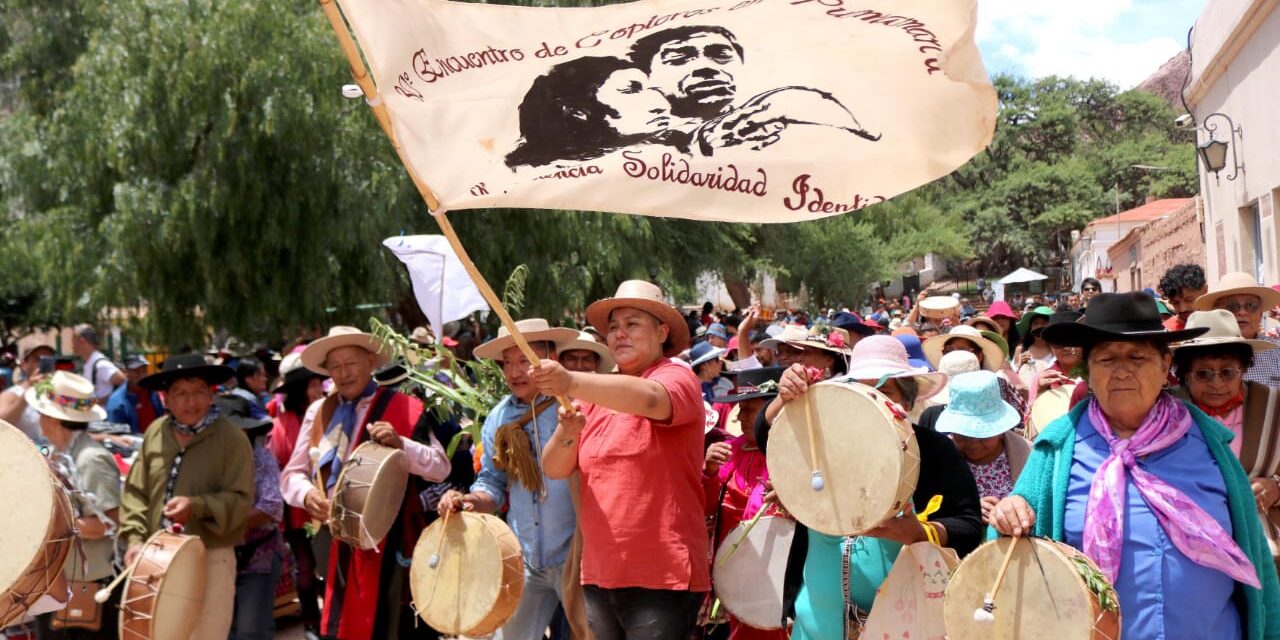
“I am Marina Vilte, I was born in Purmamarca, into a teaching family. I am the niece of Marina Leticia Vilte, a great union leader, who was detained and disappeared by the last civic-military-ecclesiastical dictatorship.”

Share

Video and text production: Estefanía Cajeao
Photos: MV's personal archive and Presentes archive
A non-binary lesbian, Kolla, lawyer, and activist, Marina Vilte carries in her name “the luck or privilege of having a very socially committed family.” And she carries in her hands the time of those who push boundaries in community: as much time as it takes. As much time as can be sung.
She is 28 years old, has a tattoo of the Mothers' headscarf, and a confident gait. She recognizes the light and positions herself there, by the window, near the boxes. She quickly establishes that the conversation will be slow and, with smooth, direct movements, shields herself from the camera by taking the guastana (the stick used to hit the box).
"My mother and my aunt taught me the value of Kolla pride"
“I am Marina Vilte, I was born in Purmamarca, into a family of teachers. I am lucky or privileged to have a very socially committed family and it's also a whole thread, isn't it?, because I also identify as part of the Kolla people.”
– How was it for you to experience the intersection between recognizing yourself as part of an indigenous community and beginning to politically affirm your gender identity?
–I was lucky enough to have my mother as the principal of the little school I attended for primary school. And back then, I remember it was shameful to say you were Kolla. You just didn't say that. And I think she's one of the few teachers who worked on cultural awareness among the students. I have memories from when I was very little of them telling me, "You're a proud Kolla."
I don't think it was too difficult to come out, as they say, or "out of the closet," because I think they—when I say "they," I mean my aunts and my mother—paved the way for me. Ultimately, it was very similar: they might have resisted me at one point, because they did. Today, I think they are the proudest aunts and mother of a non-binary lesbian. But it was the same in the sense that they taught me the value of pride ; they were the ones who said, "You had to proudly say who you are, you're a Kolla." And, extrapolated, these are two historically marginalized groups: Indigenous peoples and our origins there, and on the other hand, I was also living out my sexual identity.
–For your family, what implications does the discussion about identity have?
–I remember growing up from the womb at March 24th marches and meetings when Mothers and Relatives of the Detained and Disappeared of Jujuy were organized here. I am the niece of Marina Leticia Vilte, a great union leader, detained and disappeared by the last civic-military-ecclesiastical dictatorship.
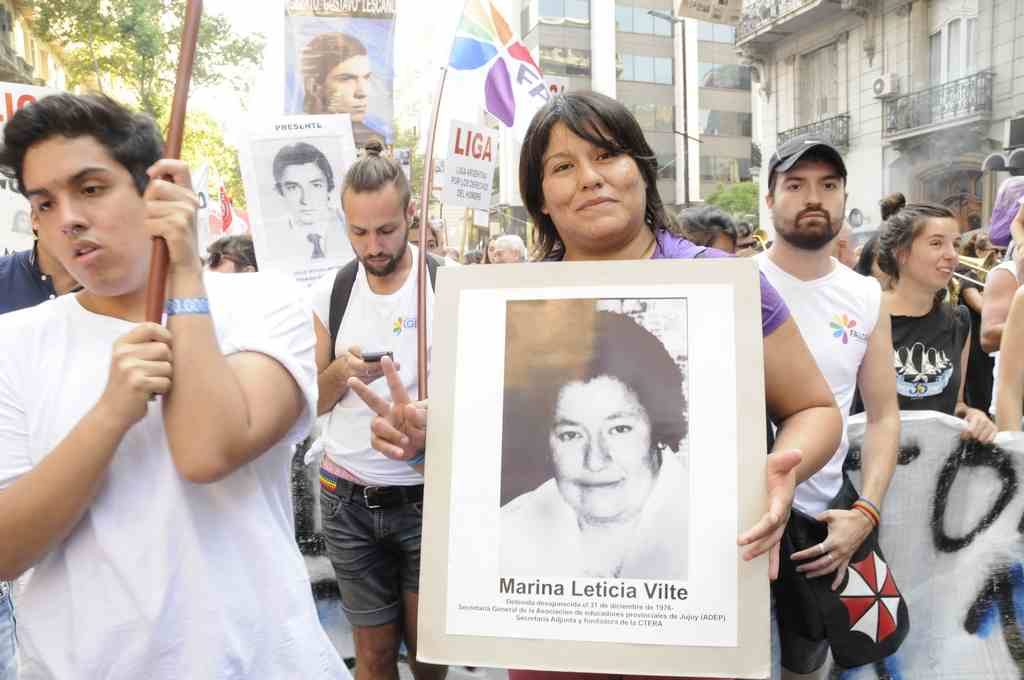
Marina's family is a reference in the fight for human rights, and promoted the creation of the Encuentro de Copleros (Meeting of Folk Singers) from the need to come together again as a people in the recovery of democracy.
–There are testimonies from detained and disappeared comrades who shared detention with your aunt, who recount that she entered the cell singing coplas. What presence does the copla have in your family and what meaning does it hold beyond the singing and the Encuentro?
–I was born in November of '92, which means I was conceived right in the middle of Carnival, surrounded by traditional songs. We think of the song as a way to communicate all kinds of feelings, from the deepest sadness to the greatest joy, heartbreak, love, and political issues . It allows you to do everything.
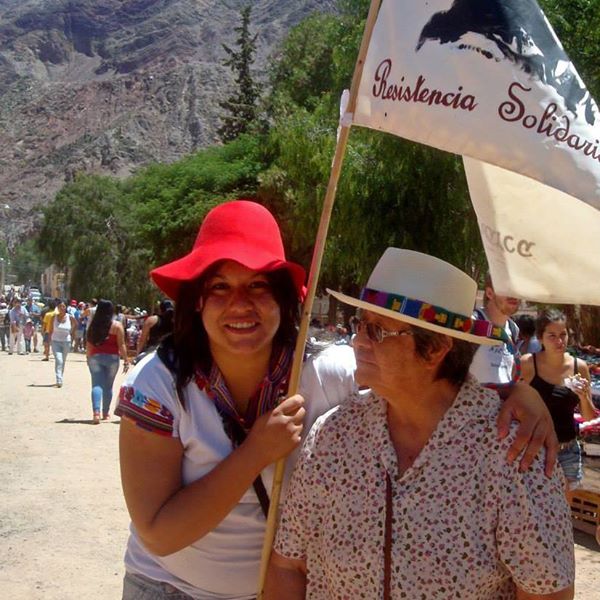
“The Encuentro de Copleros was born in '84, out of the need to continue the resistance, to reunite after that dark period, to be able to speak out again . And in that sense, that need came together with a genuine expression of our people.”
Marina remembers that in the 90s, when she was a child, she would see people arriving from the deepest parts of the Puna to participate in the Encuentro. “They would carry their goat on their shoulders and pass it around to the patio where the grills were.” The food was brought and shared among everyone before moving on to the singing rounds.
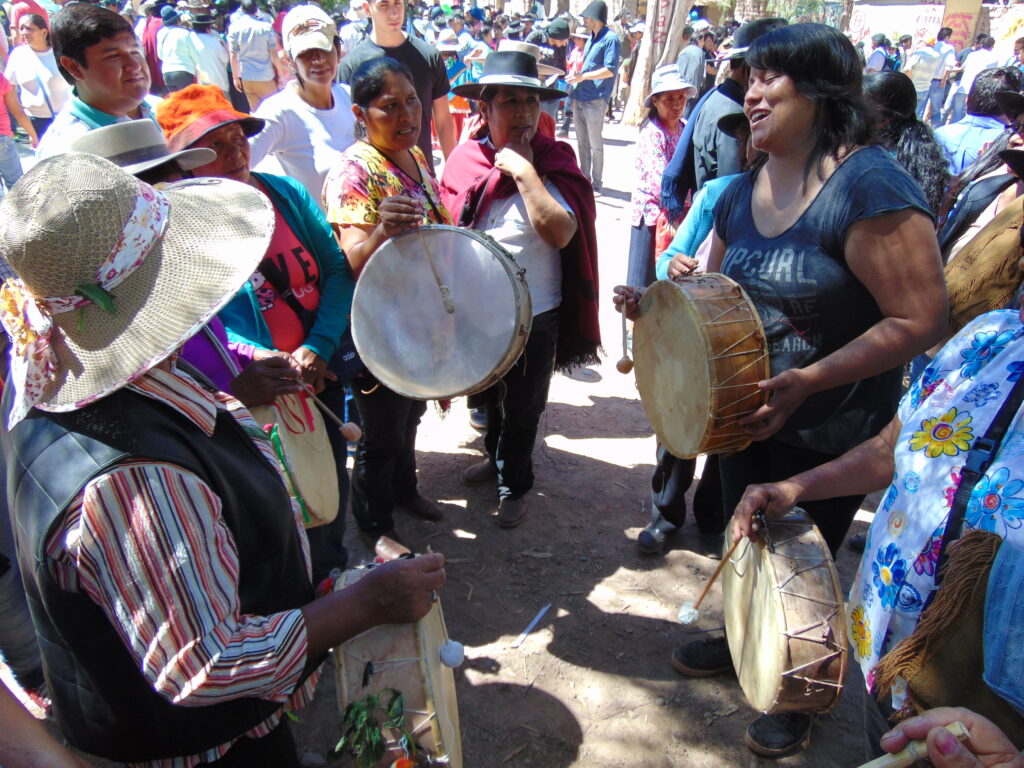
“Then there started to be more and more people and food began to run out. We started to manage it and to this day it is done like this: one person donates demijohns of wine, another lemons, another bread, it is collected and with that lunch is given, drinks are provided, chicha is made, so everything is the result of collaboration and solidarity.”
Marina studied law in Buenos Aires. Life in the capital city led her to her first experiences with LGBT+ activism through the organization "La Fulana," which she cherishes and remembers fondly. Following a series of territorial and environmental conflicts involving Indigenous communities in her province, she returned to Purmamarca with the tools of both academia and activism.
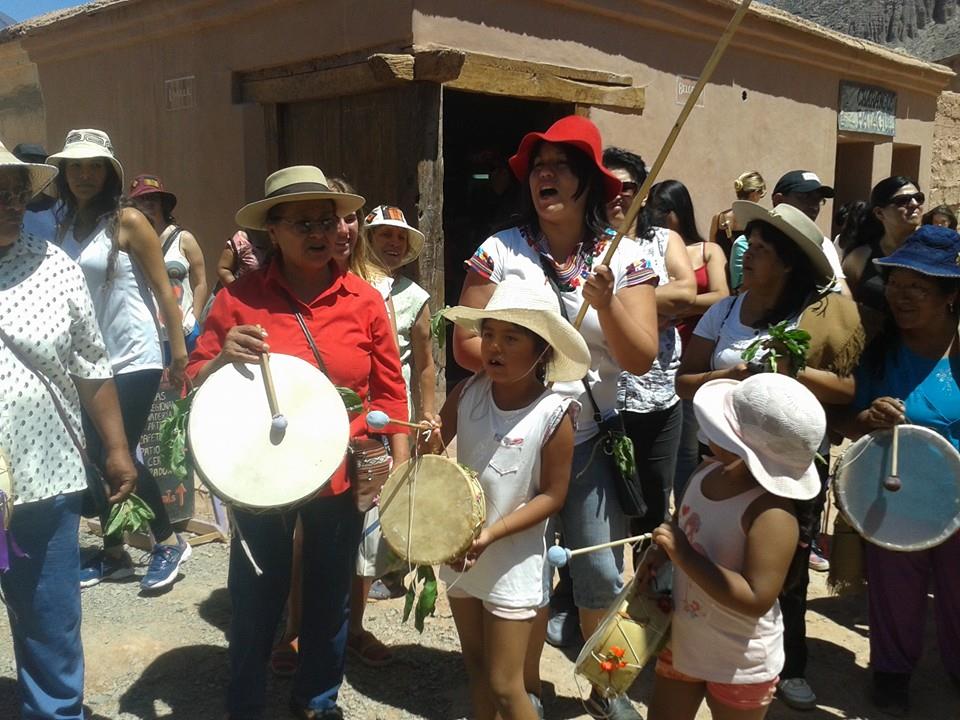
–How do you approach LGBT+ activism today, in relation to the community spaces you inhabit, such as the Encuentro?
–LGBT activism was also closely linked to something hegemonic. I think it's good that each place is reclaiming its strengths. It's another characteristic that marks our era: there's a lot of talk about intersectionality.
Needs and ways of facing life are different, as are worldviews. Here, we were devastated by a colonialism that persists daily in our unconscious, and we seek to create safe spaces where we live.
The Encuentro de Copleros, for example, is called "Encuentro de Copleros." And last year we received some criticism from feminist colleagues who questioned why it isn't called "Encuentro de Copleres." I understand that these are processes that need to develop through consensus and that it doesn't make much sense for them to be imposed.
These criticisms did help us consider how, if this Encuentro was founded and is largely sustained by women, we can highlight the role of female copla singers. That's why we're designing a new poster this year, so the images reflect the greater prominence of these women.
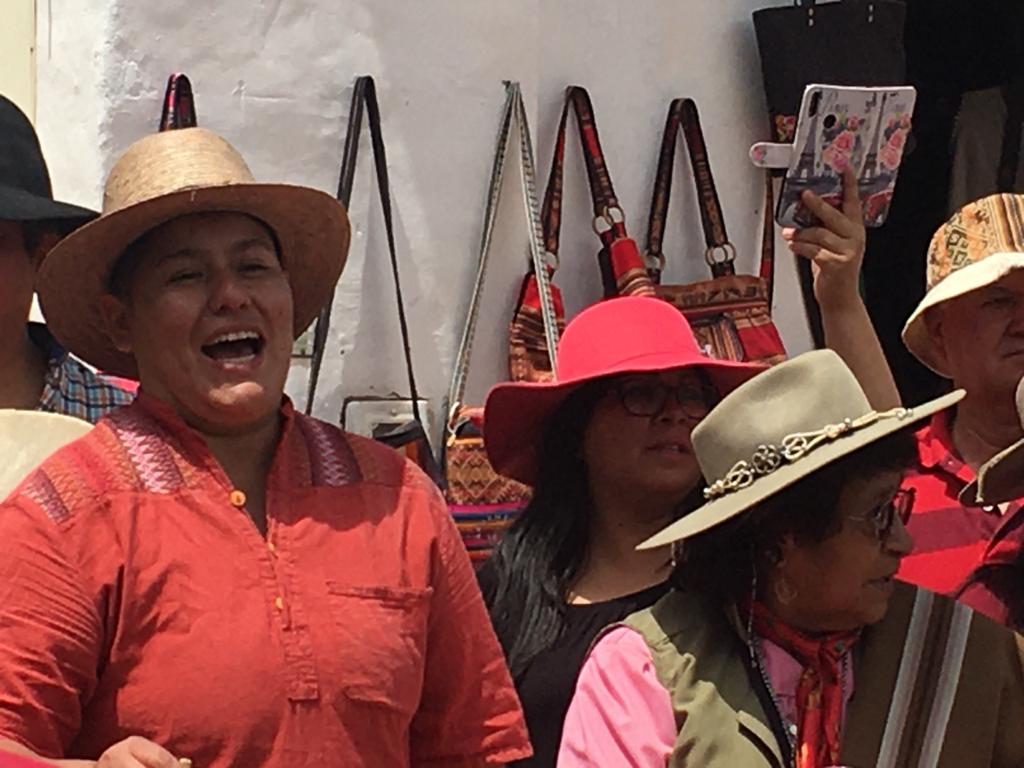
There are also folk singers who identify as such, and I think that, even though it's called the Folk Singers' Gathering, for me it was never an unsafe space. I think there's another characteristic of this gathering: it's not at all tied to a postmodern indigenism; the focus is no longer on clothing or style, but on the genuine need for singing , on community values, on the fact that anyone who wants to can come. If they want to share that singing, they can.

– At the beginning you said that the Encounter arose from the need to talk things over again. What things are said in the songs you share and how are they shared?
– Different rounds are formed, according to what each person feels and who they want to sing with, and different rounds develop. So, as we go along, some singers have more of a romantic style, others are more risqué, and the counterpoints sometimes have sexist undertones and all those issues, which are heard less and less these days, though I think we're all in transition. And well, at the last gathering there was also a round of lesbian singers.
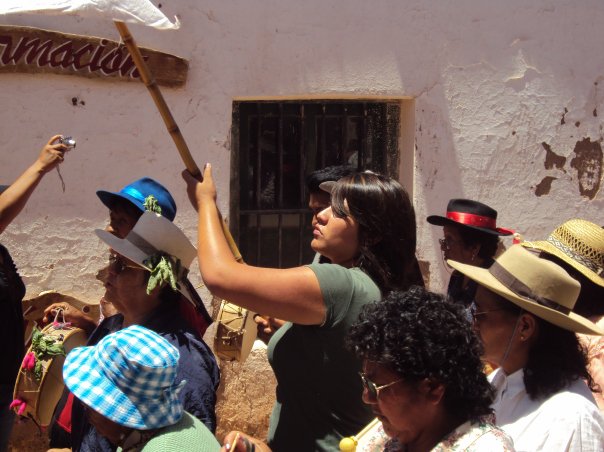
Pandemic, Indigenous women and LGBT+ people
In her role as a lawyer, Marina Vilte represents Indigenous communities. The pandemic found her juggling this work and activism with the collective work of the Ailén Chambi Movement, an organization that describes itself as “part of the LGBT+, women, Colla, feminist, and trans-feminist communities.” Through the Ailén Chambi Movement, they activated the necessary support networks in 2020 to cope with the difficulties exacerbated by the pandemic.
–What is the situation of the indigenous communities you support, and how was this first year of the pandemic in relation to working with these communities as well as with LGBT+ people?
–Regarding the communities, I think there is a whole stigmatization, a construction that centers on what is original, what it is like, how the folkloric fits into the original, and what capitalism benefits from that “original” folklore.
The situation of our communities today is very critical. Jujuy does not respect basic rights enshrined in the Constitution and internationally. And since the issue of communal land ownership has not been regulated, there is a legal vacuum, even though the existence of the communities is recognized. Jujuy has a very important ruling that obligates the provincial government to grant titles to these lands and recognize communal ownership, but to this day it has not been complied with. There are also attempts to distort the consultation process with the communities and their effective participation, based on community autonomy, in all processes related to mining exploration and/or exploitation.
Now, as an organization, we're primarily located in urban centers. This has made me experience this pandemic from a more concrete and acute perspective, particularly within the LGBT+ community. At least the urban LGBT+ community.
I'm not saying that these communities don't have needs, or that this pandemic hasn't exacerbated those needs, but rather that they've known how to overcome them for five centuries . The constant trampling of their rights . And I think that this very different communal way of life makes their needs and demands different because it's their way of life itself that allows the community group to sustain itself daily. The organization of these ways of life makes it possible. In contrast, in urban centers, work has stopped, casual jobs have stopped—no one can go out, no one can come in. Most of the LGBT community is precariously employed in the informal sector…and obviously, hunger is going to be there. We're all workers in the organization, but we pool what we can to stave off the need until the government's help arrives.
–What would it mean for you today to regain the strengths of your place? What are those strengths?
"Look, even though I have a lot of resources, when I came from Purmamarca to start my first year of high school in San Salvador de Jujuy, on the first day we had to introduce ourselves, say who we were. It was really hard for me to say that my dad was a farmer and that he'd only finished third grade (not to mention that he had meningitis for life because of poverty). I kept quiet and only mentioned that my mom was a psychologist. And then I felt so guilty because I was carrying all my family's upbringing with me, that the next day I said I'd forgotten to mention that my dad was a farmer."
If that happens to me, how can we ensure that children and teenagers in school feel pride in their mothers who weave, their grandmothers who spin, their fathers who are farmers? We need an education that addresses these issues holistically, one that fosters a sense of belonging and eliminates shame in expressing who we are . I believe this is the first step toward strengthening desires, dreams, and self-esteem. It's about reinforcing internal reflection to empower children and adolescents from their very roots.
Because I believe, at least from personal experience, there's nothing more empowering than being clear about your identity, right? And in Argentina, we have a terrible history linked to that. We have the Mothers, the Grandmothers, we have Indigenous peoples, we have the LGBT+ community. All of that is part of our identity .

We are present
We are committed to journalism that delves into the territories and conducts thorough investigations, combined with new technologies and narrative formats. We want the protagonists, their stories, and their struggles to be present.
SUPPORT US

FOLLOW US
Related notes
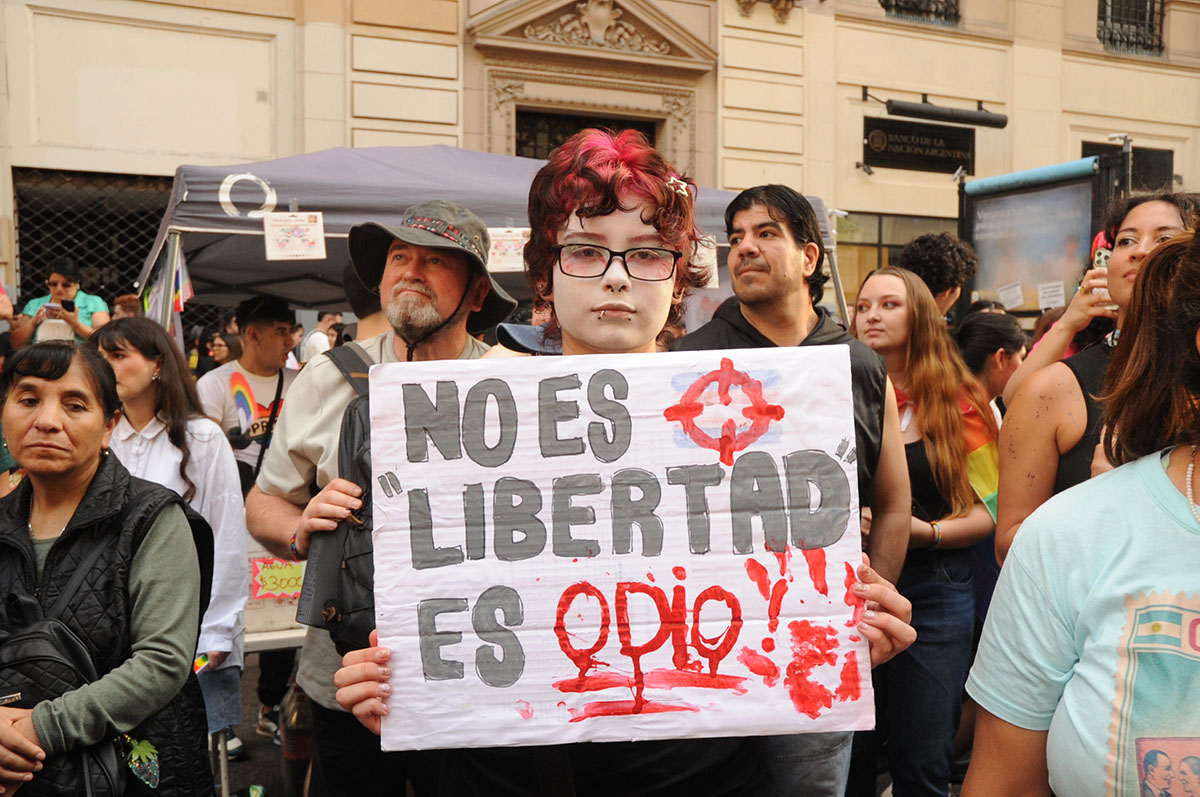
We are present
This and other stories are not usually on the media agenda. Together we can bring them to light.