

Chile: Reports of homophobia and transphobia increased in 2020, “Year of LGBTIQ+ Resilience”
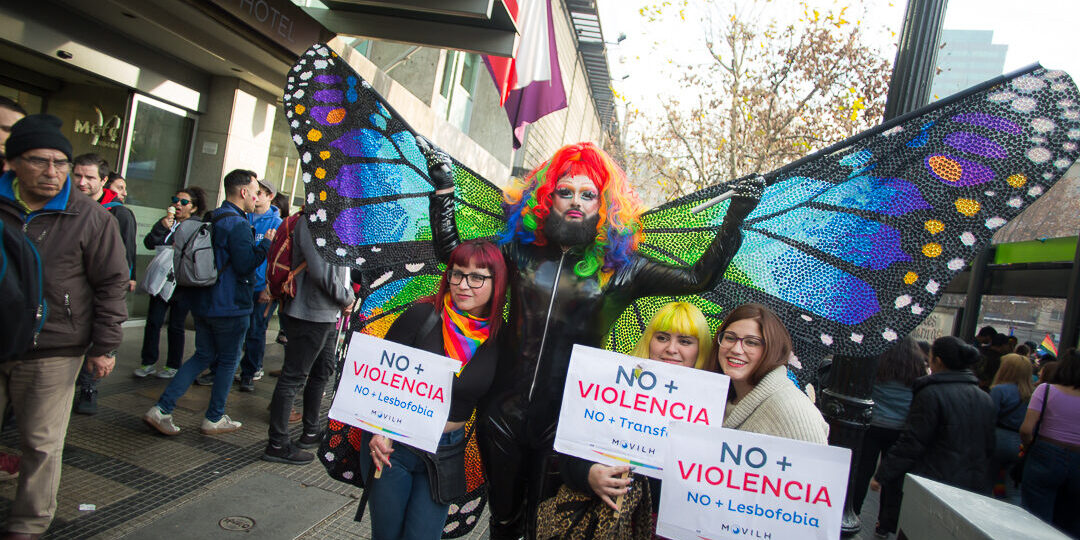
Crimes, attacks and aggressions motivated by homophobia and transphobia in Chile increased by 14.7% during 2020, according to the MOVILH report.

Share

By Airam Fernández, from Santiago, Chile
Photo: Josean Rivera/Presentes Archive
Homophobic and transphobic crimes, attacks, and assaults in Chile increased by 14.7% during 2020, with 1,266 reported incidents, according to the 19th Annual Report on Human Rights of Sexual and Gender Diversity prepared by the Movement for Homosexual Integration and Liberation (Movilh) . This is the highest annual figure recorded to date and represents 22.9% of all abuses committed over the past 19 years.
The Year of LGBTIQ+ Resilience
The organization described 2020 as the “ year of LGBTIQ + resilience,” due to the way the community faced life during the health emergency, “in the face of abuses, broken promises, and contradictions across all branches of government regarding equality ,” they explain in the report. They also emphasize that it was a year in which the LGBTQ+ community did not give up: “ In very hostile conditions, such as the COVID-19 pandemic, they continued to raise the banners for their rights .”
There are no official figures in the country. Movilh is one of the organizations that monitors the LGBTIQ+ reality in terms of rights and violence, with the results published in reports in March of each year.
According to the report presented yesterday, in 2020 there were 6 murders, 16 police abuses, 132 physical or verbal assaults perpetrated by civilians, 110 cases of workplace discrimination and 33 of an educational nature, 60 hate mobilizations or campaigns, 379 episodes of institutional marginalization, 64 exclusions in public or private spaces, 253 cases of community homo/transphobia (in family, neighborhood or friendship environments), 209 speeches that incited violence and 4 acts of discrimination in the culture, media and entertainment industry.
Homophobic/transphobic statements stand out in the category of abuses, with an increase of 208% , followed by marginalization in public or private spaces (106.4%), homophobic/transphobic mobilizations (93.5%), physical or verbal aggressions perpetrated by civilians (80.8%), community discrimination (51.4%), labor discrimination (50%) and murders (20%).
Of all the abuses the organization collected during the year, 26% affected gay men, 15% lesbians, and 11% transgender people (76 women and 59 men) . Compared to 2019, discrimination against gay men increased by 78.4%; against transgender people, by 46.8%; and against lesbians, by 8.28%.
The report also zooms in on the geographic distribution of cases. The three regions of the country with the highest incidence are Valparaíso (38.4%), the Metropolitan Region (23.93%), and the Biobío (3%). Social media, and to a lesser extent traditional media, accounted for 26.21% of all cases nationwide.
Institutional violence
Sixty-two institutions and 832 individuals were responsible for the 1,266 abuses against the LGBTIQ+ population committed in 2020. According to the report, the main perpetrators are located in the Ministry of Justice, specifically the Undersecretariat for Human Rights; the right-wing political party Independent Democratic Union (UDI); the First Chamber of the Supreme Court; the Constitutional Court; and the Eleventh Chamber of the Santiago Court of Appeals. The Gendarmerie, the Civil Registry, the Playa Ancha Naval Academy , the Ministry of Defense, and the Carabineros (Chilean National Police) are among the other institutions mentioned in the report.
“While the Government was weak in publicly condemning human rights violations against LGBTIQ+ people, it left human rights defenders unprotected, refused to implement public policies focused on the context of Covid-19, was indifferent to homophobic abuses within the Navy, and lobbied the National Congress to sabotage legal equality,” Movilh states in the document.
We are present
We are committed to journalism that delves into the territories and conducts thorough investigations, combined with new technologies and narrative formats. We want the protagonists, their stories, and their struggles to be present.
SUPPORT US

FOLLOW US
Related notes

We are present
This and other stories are not usually on the media agenda. Together we can bring them to light.