

More than 120 trans people received reparative pensions in Uruguay
Article 10 of the law establishes that those who document that they suffered "moral or physical damage" and that they were "prevented from the full exercise of their rights" may receive compensation.

Share

By Stephanie Demirdjian for La Diaria
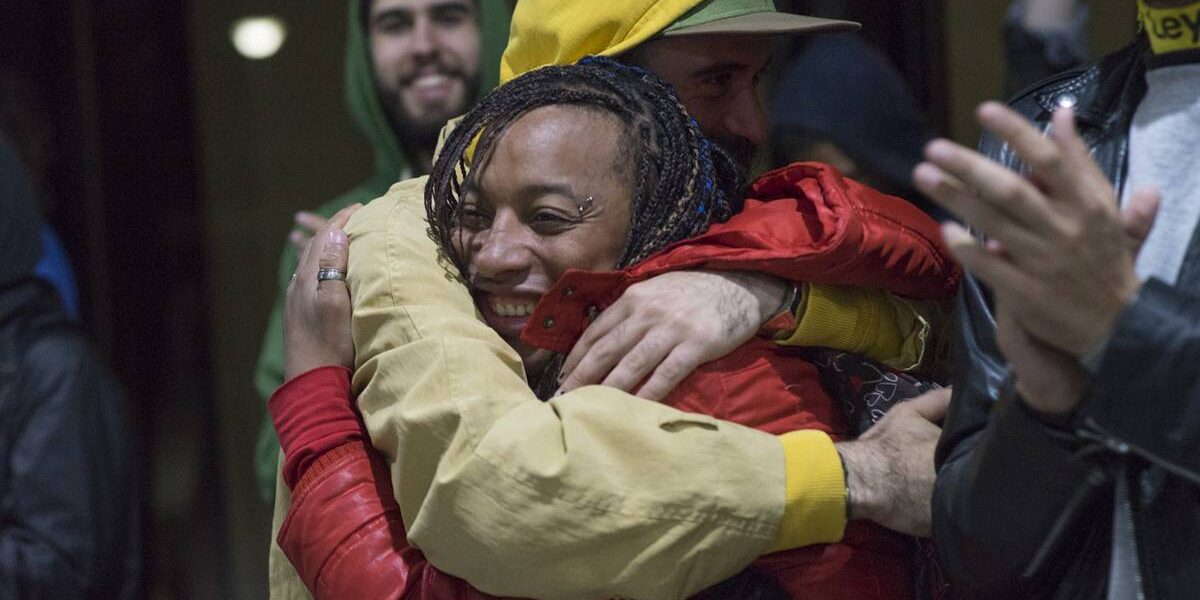
Photo: Mariana Greif
The Comprehensive Law for Transgender People, approved in October 2018, establishes a reparations program for transgender people born before December 31, 1975, who have been victims of institutional violence and/or deprived of their liberty due to their gender identity. Applications to access this benefit are received and analyzed by the Special Reparations Commission, which was formed in June 2019 with representatives from public agencies and civil society.
From its creation until December 2020, the commission approved 123 of the 198 applications received, according to information from the Ministry of Social Development (Mides) accessed by la diaria . Of the total approved, the majority (64) correspond to people living in Montevideo. On the other hand, only four were rejected, and the other 71 are under review.
Article 10 of the law establishes that those who document that they suffered “moral or physical harm” and were “prevented from the full exercise of their rights to free movement, access to work, and education, due to discriminatory practices committed by state agents” may receive reparations. However, those who are recipients of a retirement pension, disability pension, or temporary partial disability subsidy—unless they prefer the reparations benefit—or those who receive income of any kind exceeding 15 monthly contribution bases (BPC) (which as of February of this year would exceed 73,000 pesos) are not eligible. The reparations benefit for transgender people is equivalent to three monthly BPCs, an amount that, at current values, is equivalent to 14,610 pesos. It is a lifetime benefit and retroactive.
Applications are received in a sealed envelope at office 707 of the Mides headquarters, at the Ministry's Territorial Offices, or via email at leytrans@mides.gub.uy. In principle, it is not mandatory to gather documents or witnesses: only a photocopy of the identity card and a detailed report on the incident(s) of institutional violence are required.
Gather evidence
Based on this material, the Reparations Commission gathers evidence to verify the account. Generally, the first step is a request for access to the records of the Ministry of the Interior (MI). One obstacle that may arise is that the person was not registered and, therefore, documentary evidence is unavailable. In that case, the Commission moves to the second subsidiary route, which is testimonial evidence. “This evidence is crucial because we can have witnesses who can corroborate what this person recounts, who saw the entire situation and were with them, because sometimes they are colleagues who were with them at that time,” Rosa Méndez, director of the Human Rights Division of the Ministry of Social Development (MIDES) and president of the commission, explained to La Diaria . The third is the “residual route,” which consists of a sworn statement recounting the situation experienced.
Méndez said that in the last year, due to the pandemic, most of the processes moved to a virtual format and many of the interviews “were delayed”, but stressed that the work of the commission was not interrupted “even in the worst months”.
For the official, fulfilling the reparations obligation is “extremely important,” firstly because the law mandates it and it is the State’s duty to comply, but above all because it is about “guaranteeing the rights of these people who have suffered and who continue to be a vulnerable population.” “Beyond this reparation, which is both historical and specific, this is a population that needs to be much more respected, much more visible, and less discriminated against,” Méndez asserted. “Because there is a specific issue of discrimination and hatred that continues to be experienced daily and is seen on social media and in other contexts […] Within the LGBTQ+ community, this is the most vulnerable population.”
To settle a historical debt
“From what my colleagues who are already receiving reparations tell me, they aren’t happy, but they are content, because they are being compensated for something for which they suffered so much pain and injustice, and that doesn’t make a person happy, but it is comforting,” Karina Pankievich, president of the Uruguayan Trans Association (ATRU), one of the civil organizations represented on the Reparations Commission, told La Diaria . The activist said that many trans women who received reparations were homeless or living in shelters, “and now they can afford to pay for a room or build a place to live on their own.” “It has changed their lives,” she reflected.
Pankievich believes that including the reparations program in the law was, ultimately, about ensuring that transgender people, who face numerous obstacles in finding work, can live their old age with greater dignity. “Because a transgender woman in her 50s or 60s cannot continue to engage in sex work,” the activist explained. According to the first census of transgender people, conducted by the Ministry of Social Development (MIDES) in 2016, 67% of this population had engaged in sex work at some point in their lives. “As civil society, we would also like to express our desire that in the future, sex work will not be an option, or the only option,” for transgender people, Pankievich said. “That is why the bill includes reparations for women over 40.”
The head of ATRU says she has the “authority” to speak about institutional violence based on gender identity because she experienced it firsthand. “The violence was of all kinds: beatings, mistreatment, rape, extortion, a whole host of things. It was a very difficult time that we want to forget, but unfortunately, there are moments that make you go back in time and remember, which is why it’s so important that all the women who suffered these kinds of violations can obtain this redress,” Pankievich asserted. “Otherwise, what happened to us will go—like so many things in life—unpunished.”
The trans activist speaks on behalf of a generation of women who were subjected to violence, abuse, discrimination, and stigmatization by the state, but also by their own families. The census already showed that 25% of trans people had left their family home by the age of 18, a result of conflicts that arose from their gender transition.
“Many of us were excluded from our homes when we were 11, 12, or 13 years old,” she lamented, “and today, seeing that they might accept their daughters and sons, trans women and trans men, and give them the support we didn’t have, is the future we will have tomorrow , because they can study and don’t have to leave the home to engage in sex work like we did.” Younger trans women now also have a comprehensive law that protects them.
Towards full implementation of the law
The Director of Human Rights at the Ministry of Social Development (MIDES) stated that, more than two years after the approval of the trans law, its implementation has not yet reached 100%, but they are “working towards full compliance.” In this regard, the National Council for Sexual Diversity, which her ministry chairs, is “very active” in this area, collaborating with other state entities and civil society organizations.
One of the issues that most concerns transgender communities is related to job quotas. A report prepared last year by the National Civil Service Office (ONSC) revealed that during the first full year the law was in effect, only seven transgender people were hired by government agencies. This represents a mere 0.03% of the quotas created across the entire administration, far from the 1% stipulated by the law.
Méndez stated that the transgender employment quota was met in the Uruguay Trabaja program of the Ministry of Social Development (MIDES), but that it is only partially implemented at the ministerial and central government levels, "because the law itself regarding employment quotas within the National Civil Service Office (ONSC) has not yet been regulated." She also noted that there were no calls for applications from the central government in 2019 because it was an election year, and that 2020 was "an atypical year for everyone." Nevertheless, she indicated that she had held discussions with the ONSC on the matter and that the National Council for Sexual Diversity plans to summon its representatives for follow-up.
Furthermore, Méndez said that they are working on a project with the National Institute of Employment and Vocational Training for labor and educational inclusion, through study scholarships.
Access to health
Healthcare for transgender people is another area where “a great deal of work” is needed, the official said, “not only in terms of what the articles stipulate regarding hormone therapy and gender reassignment,” but also in breaking down the barriers they face in accessing services. “We have a lot of work to do in training and raising awareness among professionals, and this is part of what is still not being done,” she noted.
What Mides did do was establish an agreement with the Friendly Reference Center of the Faculty of Psychology at the University of the Republic to refer trans people seeking mental health care, guidance, and advice.
“We started working on implementing the law in 2019. There was a change of government, then the pandemic hit, and we felt it was more important to provide financial assistance to our trans sisters and work on reparations to help them,” explained Pankievich. “The social policies will continue because we want all the articles of the law to be fulfilled, not just the reparations: education, health, and employment,” she added. “The will is there, and the fight continues.”
We are present
We are committed to journalism that delves into the territories and conducts thorough investigations, combined with new technologies and narrative formats. We want the protagonists, their stories, and their struggles to be present.
SUPPORT US

FOLLOW US
Related notes


We are present
This and other stories are not usually on the media agenda. Together we can bring them to light.