

152 LGBT hate crimes and more than 100 trans deaths in Argentina in 2020
The FALGBT Hate Crimes Observatory, an ATTTA report, and another from La Rosa Naranja point to trans people as being among the most affected.

Share

By R. Marina and ME Ludueña
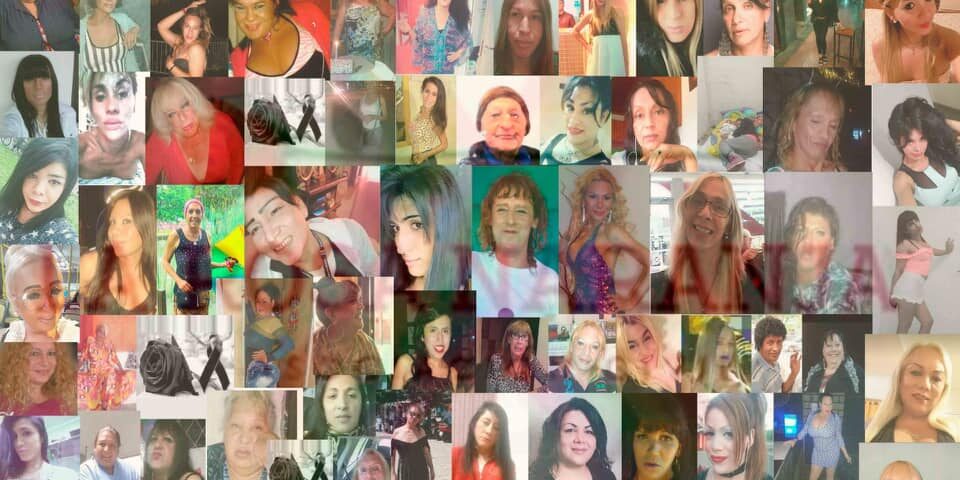
Photos: The Orange Rose (opening)/LGBT Hate Crimes Observatory Report (infographics)/Present Archive
In 2020, one hundred and fifty-two (152) hate crimes were perpetrated in Argentina, in which the sexual orientation, gender identity, and/or gender expression of all the victims were used as a discriminatory pretext for human rights violations and violence, according to the report from the National Observatory of Hate Crimes of the Argentine LGBT Federation, released yesterday. Two other reports documenting violence in Argentina during the pandemic year were also recently released: one on trans deaths, prepared by ATTA and another by La Rosa Naranja. All agree that the pandemic further aggravated the already vulnerable situation of trans people.
The FALGBT Hate Crimes Observatory report explains that “finding records of LGBT people who are victims of hate crimes has its particular difficulties, since, for example, not all trans people who are murdered are registered as trans and their gender identity is respected, and not all hate crimes against lesbians, gays and bisexuals are made visible as such.”
Of all the hate crimes recorded, 57% were murders, suicides and deaths due to historical and structural state absence and/or abandonment; and 43% were injuries to the right to physical integrity , that is, physical violence that did not end in death.


The report counts 14 murders perpetrated against sexual diversity - 10 were directed at trans women and 4 at cis gay men -; 5 suicides - 4 of trans women and 1 of a trans man -; and 67 deaths due to abandonment and/or historical and structural state absence - all of them were of trans women.

Of the total number of LGBT people who were victims of hate crimes registered in 2020, 84% of the cases (127) correspond to trans women (transvestites, transsexuals and transgender people) ; in second place with 12% (19) are cis gay men; in third place with 3% of the cases (4) are lesbians; and finally with 1% (2) are trans men.
The report indicates that the age group most affected by hate crimes is 30 to 39 years old , accounting for 33.61% of cases. The second largest group, with 25.21% of cases, is the 20 to 29 age group. Thirdly, with 21.01% of cases, are people aged 40 to 49. “These data show that the highest percentages of hate crimes correspond to younger age groups, coinciding with the low life expectancy of transgender women and the high rates of violence suffered by the LGBT community in general.”

Where did the LGBT hate crimes take place?

According to the report, the highest percentage—34.21%—of crimes occurred in the province of Buenos Aires. The Autonomous City of Buenos Aires came in second with 14.47%, followed by the province of Córdoba with 8.55%, and then Santa Fe with 6.58%. The province of Salta ranked fifth with 5.92% of the total cases, followed by Catamarca, Jujuy, Tucumán, and Santiago del Estero with 3.95% each, and then Misiones and Mendoza with 1.97% each.
Regarding the physical location where hate crimes occurred, the data collected indicates that the highest percentage took place in public spaces, accounting for 55% of cases. “26% of cases occurred in homes. Of that percentage, 24% correspond to the victim's private residence—and this is directly related to gender-based violence and the practice of sex work in private homes without any security due to a lack of regulation—; 1% of cases occurred in the aggressor's home, and the remaining 1% in another residence.”

Who perpetrates violence: 56% institutional violence
“Of the cases surveyed, 44% are committed by private individuals; and 56% are carried out by the State, and within this percentage, 11% are perpetrated specifically by security force personnel in the exercise of their state function, all of them together constituting cases of institutional violence ,” the report says.
The report highlights that Argentine security forces and prison services “often display particular cruelty and hatred toward LGBT people, especially directed toward the trans women community.” This translates into “ignorance of their self-perceived identities—mockery, insults, and denigration—arbitrary arrests with fabricated legal cases, the criminalization of sex work, demands for bribes or free sexual services, persecution, harassment, degrading and inhuman treatment, rape, and torture, both in public and in police stations and prisons.”
How the LGBT+ Observatory report was made
The survey period runs from January 1, 2020 to December 31, 2020.
The data sources included media reports, information collected by the LGBT Ombudsman's Office—part of the Institute Against Discrimination (ICD) of the Buenos Aires City Ombudsman's Office—through complaints received, social media, and telephone contacts, in coordination with the Argentine LGBT Federation and its territorial outreach in the country's 24 provinces. Data was also collected from the Center for Documentation and Trans Situation in Latin America and the Caribbean (CeDoSTALC), which belongs to the REDLACTRANS network.
Trans people are the most affected by violence
The report notes that the data only includes cases reported in the media, complaints filed by the LGBT Ombudsman's Office with FALGBT organizations, and data documented by CeDoSTALC. " They offer a glimpse into a reality that is undoubtedly much worse than the numbers suggest ."
The report also addresses deaths due to abandonment and/or historical and structural state absence. It states that the number of deaths “is imprecise and undoubtedly significantly lower than the actual figure, as these cases are not reported in the media and can only be accessed through direct reports from family members and, mostly, other trans women. These deaths are not due to a particular situation, but rather to a systematic and historical violation of rights experienced by the trans community in the region and around the world.”
Ninety-four percent of the violations of the right to life are against trans women (81 ); 5% against cisgender gay men (4); and the remaining 1% against trans men (1). “These alarming numbers show how violence against the LGBT community is particularly targeted: it is against trans women that discrimination manifests itself with special hatred, cruelty, and in its most brutal form, often ending their lives.”
ATTTA reported more than 100 trans deaths during the pandemic
ATTTA, the Association of Transvestites, Transsexuals, and Transgender People of Argentina, also keeps another record: that of trans women and transvestites who have died, whether from murder or from state neglect, primarily regarding their health. In 2020, this record tallied at least 104 trans deaths. “There are comrades who have died from Covid and are in hospital morgues because no one is claiming them; some don't have documentation, some are migrants. We get calls from the Muñiz Hospital and other hospitals in Buenos Aires to see if we know them,” Marcela Romero, president of ATTTA, at the beginning of the pandemic
“One of the main problems continues to be social exclusion and the lack of opportunities. Unfortunately, we remain invisible to the State,” Nazarena Fleitas of ATTTA explained to Presentes. “The only people who care about this are social organizations. But a bag of groceries doesn't solve anyone's problems,” she clarified.
According to Nazarena, the main causes of this number of deaths are social exclusion, exclusion from the labor market, and the lack of effective government policies. “The pandemic hit us hard: we had eight suicides. Many of our friends couldn't pay their rent. One friend, who was a sex worker and had nothing, was begging for food, and she ended up dying,” Nazarena recounts. “The pandemic exacerbated the mistreatment and social abandonment we suffer.” She adds that there were also cases of trans women who died from abandoning their HIV treatment. “The exclusion was so profound that some decided to stop treatment,” Nazarena lamented.

The Orange Rose: more than 100 deaths, mostly social transvesticide
The organization La Rosa Naranja, a civil association made up of trans women and based in Buenos Aires, released its own “ Statistical Report of transvestite, transsexual and transgender colleagues during 2020” on January 12. According to this data, last year there were at least 10 transvestite, transsexual or transgender people killed by hate crimes, one trans man by suicide and 97 socially preventable transvesticides.

The average life expectancy estimated in the 2020 La Rosa Naranja report is 39 to 42 years. These numbers are similar to those in the ATTTA report.
“Our deaths matter too, and it’s necessary to make them visible,” Marcela Tobaldi told Presentes. “The media highlights femicide statistics but never mentions the social transphobic violence, or our hate crimes. And sometimes, when they do, it’s handled poorly.”

The report documents a list with the names, ages, places, and dates of death of each person. It concludes with an urgent plea: the enactment of a national law establishing a quota for transgender and transvestite employment.
Conclusions and recommendations of the Observatory
The hate crimes against the LGBT community documented by the National Observatory of Hate Crimes of the Argentine LGBT Federation in the year of the pandemic (152) are less than those registered in 2019 (177) and greater than in 2018 (147).
“In 2020, despite the pandemic and the mandatory preventive social isolation that meant withdrawing from public spaces for most of the year, the number of cases (152) remained similar to 2019 and higher than in 2018. This is probably because the conditions that generate these hate crimes are structural, and their reduction and eradication depend on significant public policies and affirmative action that reverse centuries of violence and discrimination,” the report states. It also highlights concern about “sexual diversity in the current pandemic context, and in particular the special and delicate situation that transgender people are experiencing.” This is especially true when it comes to people forced into sex work due to a lack of opportunities.
The report reviews and commends some of the government's measures to address issues related to housing, health, and employment, but states that they are insufficient. It also calls for the enactment of a new Law against Discrimination (there is a draft National Law on Discriminatory Acts prepared by the Argentine LGBT Federation and last presented to the National Congress in November 2020).
To combat the precariousness of the lives of lesbians, gays, bisexuals and trans people, aggravated by the current pandemic context, the National Observatory of LGBT Hate Crimes also recommends that the State of Argentina definitively sanction a comprehensive law for trans people that contemplates access to all rights, the sanction of a law that guarantees the secular nature of the State and public education, the sanction of a Law Recognizing all the Rights of Sex Workers, and the Repeal of the articles of the Codes of Misdemeanors and Contraventions of the provinces of Argentina that still retain open figures that are used to criminalize the LGBT community and sex workers - in particular trans women - custom; Public policies that guarantee the training, education and awareness of the Argentine security forces and the federal penitentiary service, and guarantee the effective access to justice for the LGBT community and the proper investigation of hate crimes as such, since the contrast between the numbers and the convictions shows a strong impairment of the right to justice for this population.
We are present
We are committed to journalism that delves into the territories and conducts thorough investigations, combined with new technologies and narrative formats. We want the protagonists, their stories, and their struggles to be present.
SUPPORT US

FOLLOW US
Related notes


We are present
This and other stories are not usually on the media agenda. Together we can bring them to light.