

The world's first gender-equal constitution will be written in Chile.
Pressure from the feminist movement leads to the approval of a rule to ensure that half of those who make up the constituent body are women.

Share

By MERITXELL FREIXAS MARTORELL /Pikara Magazine*/MFM Photos
Pressure from the feminist movement led to the approval of a rule to ensure that half of those who make up the constituent body are women.
It's not often that the text of the Constitution becomes a bestseller in the non-fiction genre. In Chile, the Magna Carta was bestseller a year ago, when months of sustained street protests compelled the political class to initiate a new constitutional process. The country is experiencing a foundational moment that began on October 25th with a plebiscite in which an overwhelming majority of 78 percent of voters decided to bury the 1980 Constitution, a legacy of the dictatorship of Augusto Pinochet (1973-1990). The victory of the "Approve [a new Constitution]" option has been interpreted as the end of the transition and the starting point of a new historical era.
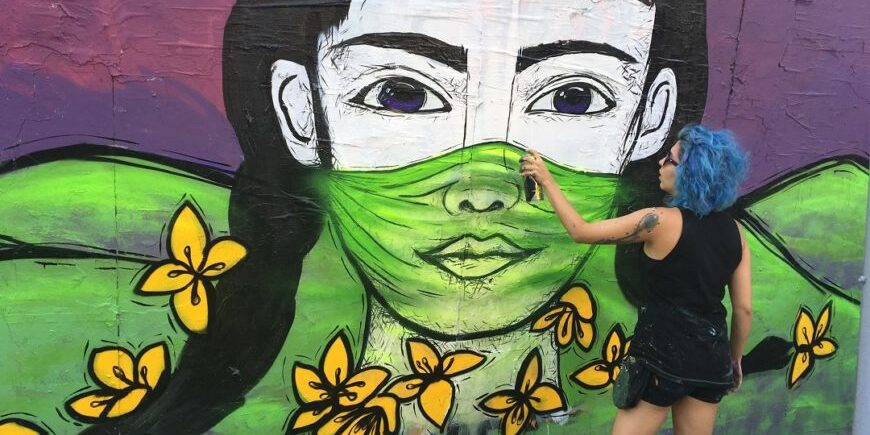
In addition to approving or rejecting the new text, voters elected the body responsible for drafting the next Constitution: 155 assembly members will be chosen by popular vote next April, coinciding with the municipal elections. The unique aspect of this process is that half of the 155 elected members must be women, as mandated by the law that governs it: a constitutional reform approved in March 2020 after a long struggle by the feminist movement , which will make Chile the first country in the world to have a fully gender-balanced Constitution.
Parity in the lists and in the final result
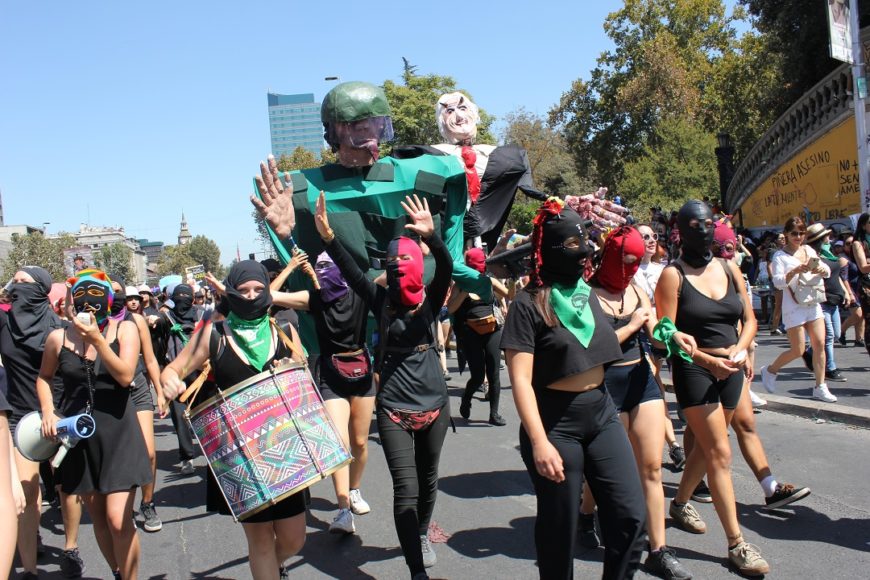
In mid-December 2019, when the political parties had already loudly announced their agreement on a new constitutional text, organized feminists, academics, and female members of parliament met for the first time to seek a formula that would ensure parity in the new Magna Carta. “The political pact that was signed did not consider equal participation for women. This did not go unnoticed by feminists, who raised the alarm and organized very quickly among sectors that are not normally coordinated ,” explains Valentina Moyano , a member of the Network of Women Political Scientists who was part of the process.
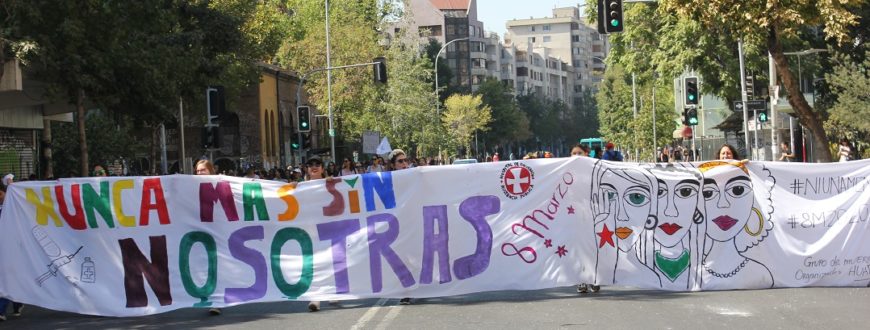
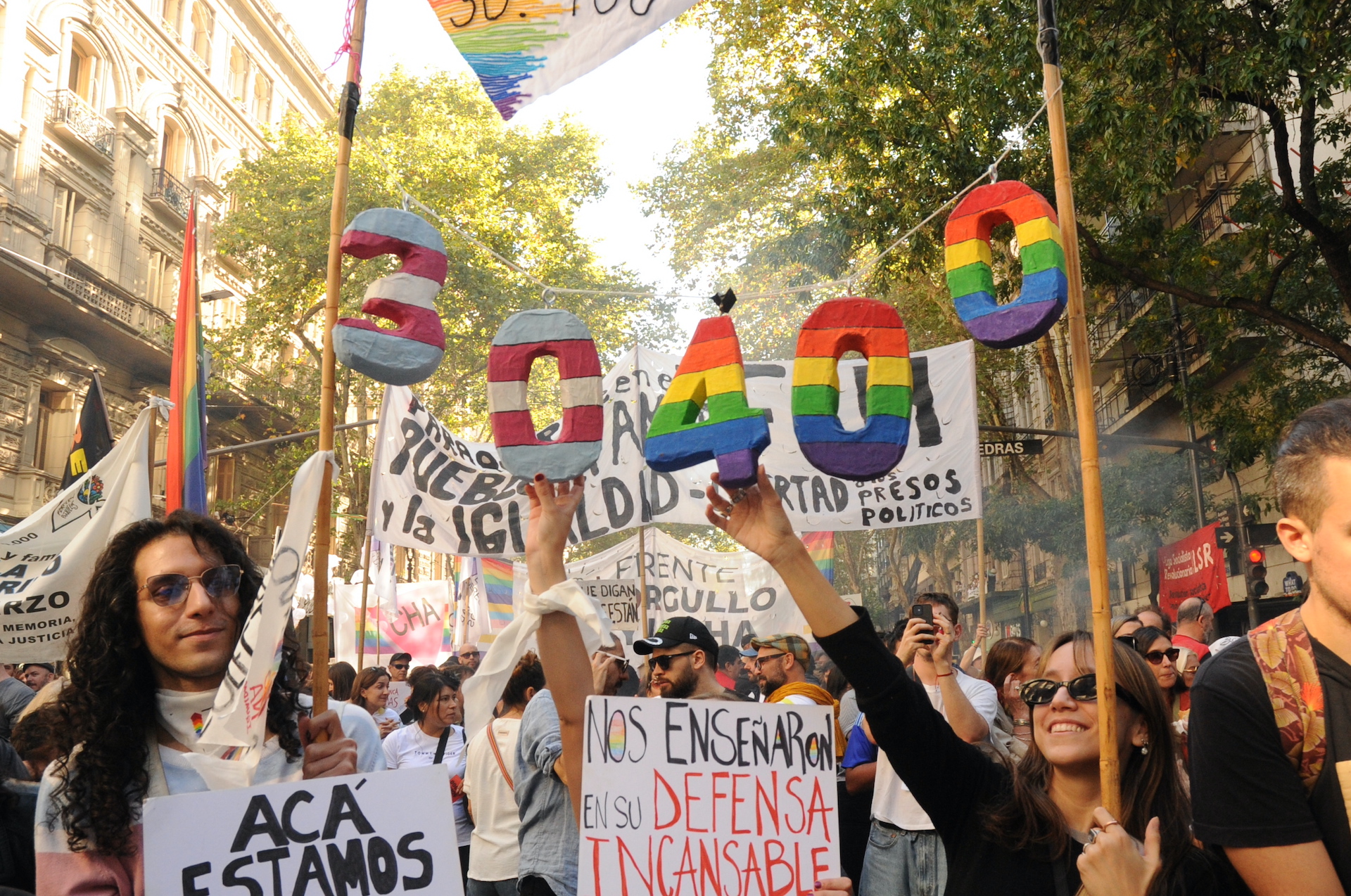
The Chilean feminist movement, which consolidated its growing strength with the social uprising of October 2019, shifted all its pressure to Congress. Activists allied themselves with female members of parliament from across the political spectrum who championed gender parity, and for months they kept the debate firmly on the national agenda .
“Women in politics, regardless of their political affiliation, suffer gender-based violence, and this fostered sisterhood among female members of parliament, allowing them to take up this cause and make it a cross-party issue,” Moyano explains. “Right up until the last day, women pressured Parliament, where they have historically been excluded; they took to the podium in the Chamber in an atmosphere unlike anything seen in other votes,” recalls the political scientist, who attended all the sessions necessary to finally approve the initiative on March 4, 2020.
According to the regulations, in each electoral district, lists will be drawn up always headed by women, alternating successively with men . In the case of an odd number of candidates, one sex may outnumber the other by a maximum of one candidate. When the difference between men and women exceeds two people, a corrective mechanism will be applied. “The proportion between the two sexes will be 45-55 percent because the total number of seats is odd, and parity is sought at the district level; all districts must achieve it, and neither sex can outnumber the other in the final composition,” Moyano explains.
The design of this recipe draws on the experience of other countries. Its creators looked to the example of Mexico, which made progress in this area during the 2018 legislative elections. In the case of constituent bodies, in 2011 Tunisia reached a percentage close to 30 percent of the seats in its Constituent Assembly after establishing a quota law; the Bolivian Convention of 2009 reached 34.5 percent female assembly members; and in Iceland, the Constitutional Council of 2010 included 10 women out of a total of 25 members.
None of the previous cases reach 50 percent. “What makes the Chilean model unique is that parity is applied not only to the lists, but also to the result,” the expert emphasizes.
Candidates with diverse profiles
Since the plebiscite, the trickle of candidates (both men and women) who want to write the new Constitution hasn't stopped. Dozens of names have already appeared in the press. “ We feminists have broadened the concept of parity so that lesbians and women from dissident communities, working-class women, and women from working-class neighborhoods—who have historically been denied access to positions of power—can also occupy those seats ,” says Sofía Brito, a law graduate, co-author of the book *The Constitution in Debate* , and editor of * For a Feminist Constitution *.
The women's profiles are diverse: from academics to activists, of all ages and geographic backgrounds. There will also be 17 seats for representatives of Indigenous peoples, and at least eight of these must be filled by women. Some are running through political parties, others as independents.
Bárbara Sepúlveda is a constitutional lawyer and director of the Association of Feminist Lawyers (Abofem), which works to incorporate a feminist approach into law in Chile and Latin America. She will be running in one of the most populous districts of the Santiago metropolitan area, on the Communist Party ticket. “I feel part of a generation, of a giant movement, that is proposing the biggest transformation Chile has ever experienced. We're talking about changing the Constitution, but not with small reforms. We're tired of traditional politics, which is completely elitist and male-dominated, of exclusion, injustice, inequality, and discrimination,” the lawyer maintains. Her contribution, she says, involves “democratizing legal knowledge” to contribute “collectively” to the constitutional process.
Luz Vidal president of the domestic workers' union , says she has received invitations from three political parties to join their lists, but she chose to join Revolución Democrática, one of the forces that make up the Broad Front left-wing coalition. "We need to present reality based on lived experience, not just on studies or academic analyses," she maintains. "For the sector I represent, it would be a form of redress for the many injustices and discrimination we have suffered during the years of struggle to win labor rights," the union leader adds.
Among the younger candidates are women like Antonia Orellana , 31, and Emilia Schneider , 24. Both will also be running on Broad Front and are competing in the most contested district, the city center. “I belong to a generation that has been very active in various causes (environmental, the right to education, the right to choose, etc.), and we have always encountered the same obstacle in the end: the Constitution. Today, being able to remove this obstacle and move to another stage for our country is very exciting because we have a much more open playing field for the future,” says Orellana. Schneider, for her part, comes from the university student movement and was one of the spokespeople for the massive mobilizations for non-sexist education in 2018: “We want to project these struggles onto this process and represent sectors and generations that have been historically excluded from politics, such as the trans population .
From the south of the country, in the Biobío region, comes Tammy Pustilnick, a consultant for UN Women and a lawyer for the Iguales Foundation, which advocates for the rights of the LGBTIQ+ community. “We complain so much about how our Constitution is written, and how that affects our daily and private lives (how we decide about our bodies or the rights of single-parent or lesbian-mother families, etc.) that I decided, at least, to try,” she says.
A broad and ambitious agenda
Until 1999, the word "woman(s)" did not appear in the Chilean Constitution. That year, the subject of the sentence "men are born free and equal in dignity and rights," in Article 1, was changed to "persons," and the phrase "men and women are equal before the law" was added to Article 19. "It is a Constitution that recognizes no identities other than male. It mentions the word 'woman' only once, when it enshrines equality before the law, but this equality is merely formal, and there is no mechanism to implement it," notes Sofía Brito. "It is not a Constitution that protects equality between men and women because, although it enshrines the right to equality, it guarantees nothing in terms of legal applicability," indicates Marcela Chahuán, a law expert at the University of Chile.
*This article was originally published in Pikara. To learn more about our partnership with this publication, click here .
We are present
We are committed to journalism that delves into the territories and conducts thorough investigations, combined with new technologies and narrative formats. We want the protagonists, their stories, and their struggles to be present.
SUPPORT US

FOLLOW US
Related notes

We are present
This and other stories are not usually on the media agenda. Together we can bring them to light.