

Photos and stories from the Argentine Trans Memory Archive in its first book
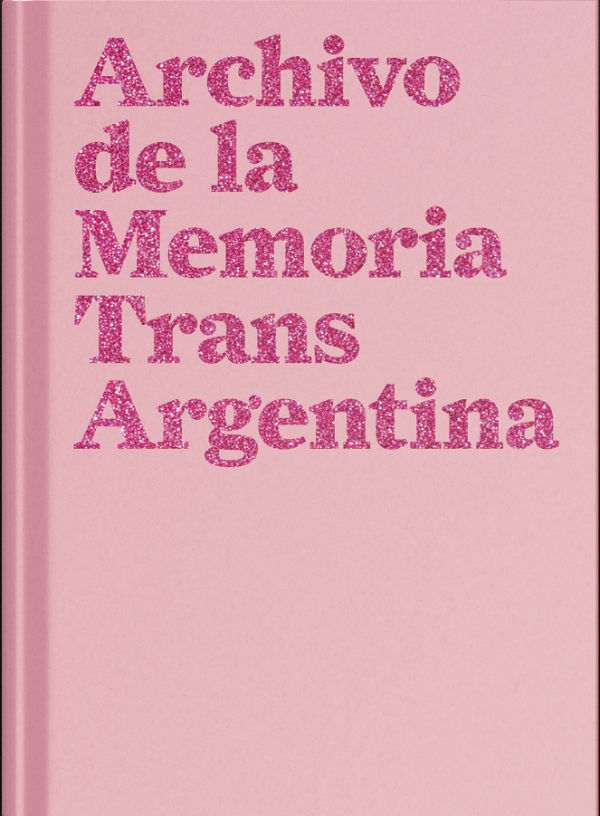
The first book of the Argentine Trans Memory Archive is a gem that tells the transvestite and trans history of the last century in photos, postcards, clippings, obituaries and memorabilia "hidden from silence and the passage of time".


Share

Kisses in the middle of the party. Silver boots, lingerie barely covered, exotic wigs dazzling the night, or rental pieces. And also, the complicity in reading fortunes in Spanish playing cards or writing letters sent in perfumed envelopes: “There’s someone who loves you silently and truly adores you,” “As the sun sets, it rises again, full of splendor,” “Don’t cry, I prefer the Charo of her show days. Lately she was too thin, but all that silicone she had helped.” The mirrors. The exile. The violence. The soldiers. The dress in the closet since the forties. The names of those who are gone, pointing to an enormous social and political debt for those preventable deaths. And laughter as a haughty and irreverent gesture, its trail of glitter weaving the connection to that chosen family.
All these gestures are part of the book *Archivo de la memoria trans* (Archive of Trans Memory ), a sumptuous publication of more than three hundred pages—the first edition was published by Editorial Chaco and later reissued by AMT itself —which includes photos, postcards, negatives, clippings, obituaries, passports, airline tickets, and memorabilia “hidden from silence and the passage of time,” explains María Belén Correa. “But it’s also a legacy. From the fifteen thousand documents we have, we chose some and bound them in magnificent covers with the names of some six hundred comrades, names that are no longer outlined in glitter. Why? Because, as some Brazilian queer people said, when we die, we turn into glitter,” she adds from Hanover, Germany, where she lives, in a telephone interview.

The project originated with María Belén and Claudia Pía Baudracco, both activists and founders in 1993 of ATTTA (Association of Transvestites, Transsexuals, and Transgender People of Argentina). Pía passed away in 2012—months before the Gender Identity Law was passed—and María Belén, from exile, founded the Archive. In 2014, with the help of photographer Cecilia Estalles, she began the work of compiling and digitally preserving the documentation. This made it possible to hold that initial exhibition at the Haroldo Conti Cultural Center at the end of 2017. From then on, the transvestite-trans community gained visibility in the cultural sphere in a broader sense than it had previously achieved.
Currently, the Archive's material spans a timeline from the beginning of the 20th century to the late 1990s. In fact, the constant growth of its collection prompted the idea of launching its own website, which will be presented in March 2021, according to Correa. In addition to María Belén and Cecilia, the members of this constantly expanding project are Carmen Ibarra, Magalí Muñiz, Carolina Figueredo, and Cecilia Saurí.

Activism before activism
“If you have to put together your family history book, you ask your mother, your grandmother, or your aunt to collect photos. That’s the way we created this Archive: with photos of our daily lives, taken by ourselves in places as diverse as Rome, Paris, or Villa Madero,” María Belén continues. And she emphasizes: “It’s an intimate history. And that same record is important in the decision that the names of certain historical figures don’t take center stage but are instead interwoven with collective memories. Because the Archive is a record of activism before activism.”

“Our bodies speak for themselves about our history. Since I entered my transition phase, my journey through life has been one of resistance. Our entire life was clandestine; we had no civil or social rights, much less access to healthcare for fear of being imprisoned. Silicone and a jail cell were the only ways to belong,” says Carolina Figueredo in one of the testimonies included in the book.
Start with Memory
As María Belén explains, for trans women “there was no difference between dictatorship and democracy” since repression (and abuse) were constant . In the book, Tranchi recounts the days she spent in Pozo de Banfield, unaware that those cells with special punishments “for faggots,” as the police called them, were also a place of kidnapping and torture during the dictatorship.
Kouka García recounts that in Devoto prison, if the barber on duty was kind, he would cut their hair in a bowl cut; if not, he would shave their heads. And Carla Pericles remembers how she had to flee La Panamericana after beating up a man who was murdering transvestites: the man was a police commissioner.

“There’s a process that Mothers and Grandmothers initiated with the demand for memory, truth, and justice. We began with the first stage, which is the construction of memory, although we don’t know if there will be truth, much less justice, given the growing number of trans murders. Even during the dictatorship, there are 400 files that speak of ‘depraved men and sodomites’ that were hidden,” Correa points out. Regarding the present, the leader notes: “We are at the stage where we want a law that says ‘To recognize is to repair.’ I’m referring to a comprehensive trans law to be able to give our trans sisters over forty a better quality of life. Because today we talk about trans job quotas, and in that way, we narrow the focus and only look at the younger ones. Or are you going to tell me that we’re going to send a 40-year-old sister to study so she can have a decent job? If our average life expectancy is 35 years, that sister is living several years of grace. And that’s a reality that the law must address.”
The book can be found here: in the Trans Memory Archive's online store.
We are present
We are committed to journalism that delves into the territories and conducts thorough investigations, combined with new technologies and narrative formats. We want the protagonists, their stories, and their struggles to be present.
SUPPORT US

FOLLOW US
Related notes

We are present
This and other stories are not usually on the media agenda. Together we can bring them to light.