

They demand justice for Verónica Dessio, a lesbian activist murdered in her home in La Plata
A lesbian feminist activist, Dessio's name was an unavoidable reference in the legal field of La Plata.

Share

By Ivana Romero
Photos: Courtesy of the Gender Secretariat of the Buenos Aires Judicial Association
On Wednesday night, the 23rd (some theories suggest it may have been early Thursday morning), 49-year-old lawyer and lesbian activist Verónica Dessio was stabbed to death. She had a deep cut to her neck and stab wounds all over her body. Carolina Pérez found her now ex-partner, but also her friend, lying in a pool of blood.
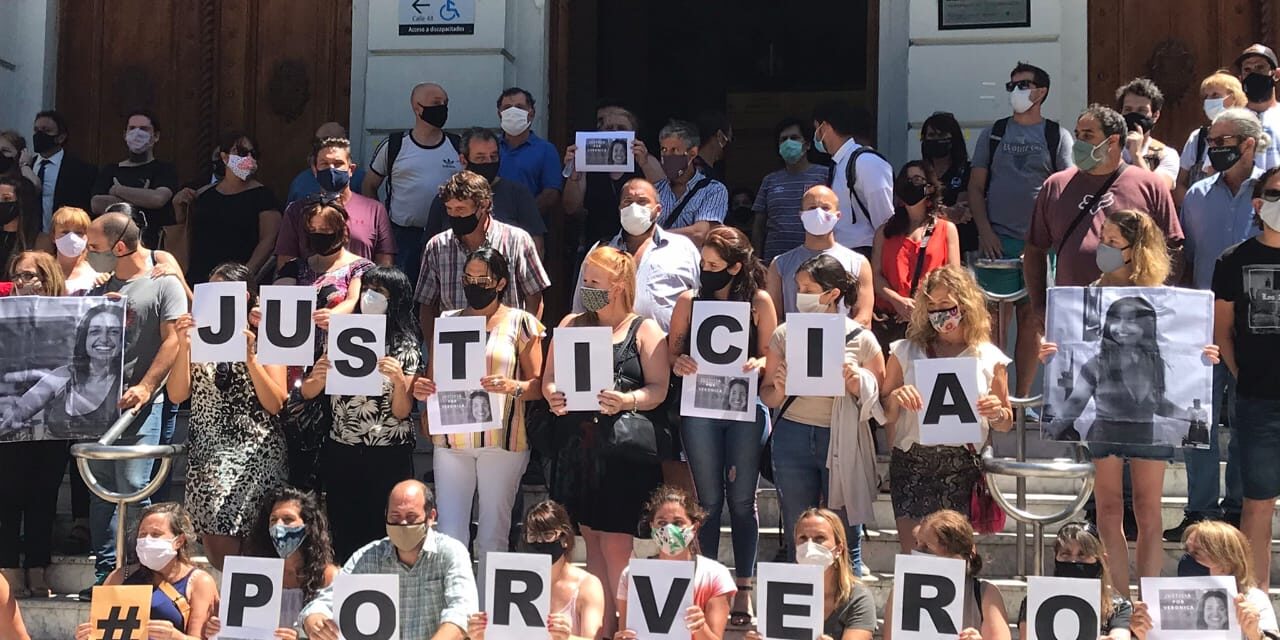
According to her statement to prosecutor Ana Medina of UFI No. 1—which is handling the case—the front door showed no signs of forced entry and nothing was missing from the house. The women lived in two separate houses on the same property on 5 bis Street, on the outskirts of the city, and shared custody of their eight-year-old son. Today, their friends held a demonstration to demand justice for what they denounce as a hate crime.
A leading figure in the judiciary and in activism
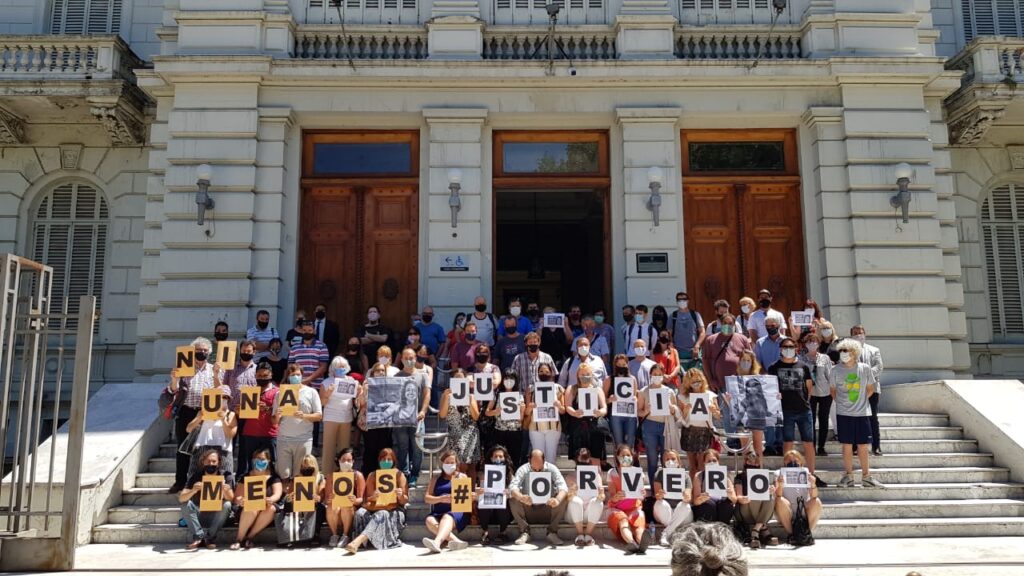
A lesbian feminist activist, Dessio's name was synonymous with the legal community of La Plata. Beyond her activism, this lawyer had worked for decades at the headquarters of the judiciary, the building that houses the Supreme Court of Justice of Buenos Aires Province. Those same stairs that Verónica climbed every morning became the site of a large demonstration held today, starting at 2:00 PM, to demand justice for her murder. Organized by family, friends, colleagues, and labor unions, the slogans were #JusticeForVeronica and #NotOneLess.
“A piece of paper won’t change our daily lives, but it will give us a legal standing and guarantee us the same rights as any other married couple,” Verónica told Clarín in May 2010. At that time, she and her partner, Carolina López, filed an injunction with the Oral Criminal Court II of La Plata to compel the civil registry to allow them to schedule a marriage ceremony. This unprecedented situation made Verónica and Carolina’s wedding the first in the LGBTQ+ community in the province of Buenos Aires, shortly before the legalization of same-sex marriage in Argentina.
In addition to femicide, it's a hate crime
This crime reveals the dark side of the fight for rights. The murder highlights, once again, the judicial system's failure to incorporate a gender perspective that permeates both the legal processes and those who carry them out. Indeed, ignoring power imbalances hinders the possibility of achieving justice.
The Gender Secretariat of the Buenos Aires Judicial Association has raised concerns about the possibility of a hate crime. “The investigation has ruled out robbery. Therefore, the first question that arises is why she was killed. The violence of the crime not only suggests a possible femicide but also a hate crime . That is why now more than ever we reaffirm her commitment to the LGBTQ+ community, her feminism, and her fight to ensure that the justice system is not a closed and patriarchal space ,” Débora Bertone, head of the Secretariat, told Presentes.
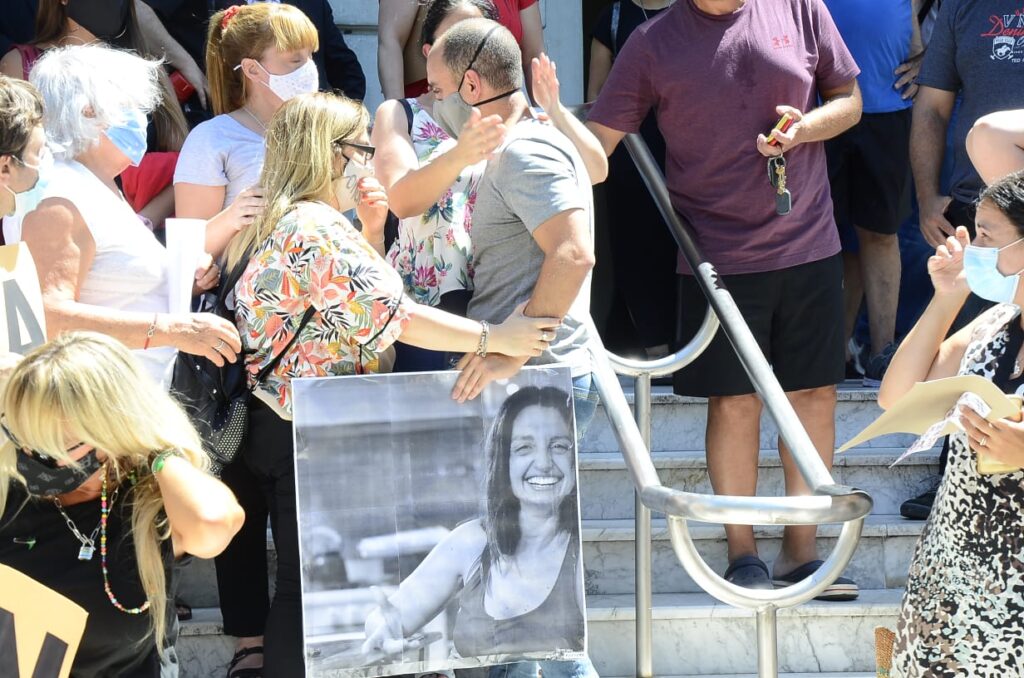
Valeria Ríos is a friend of Verónica's. She met her when she started working in the judiciary 13 years ago. They shared an office, tasks, and daily life. Verónica currently worked in the Registry Office, but the change of department didn't alter their bond. “She was the authoritative voice whenever a women's or LGBTQ+ rights issue had to be addressed. She was fully committed to that activism, as evidenced by her marriage, anticipating the legalization of same-sex marriage,” Valeria told Presentes. She added: “We are judicial workers. That's why, more than ever, we need and demand a swift response to clarify the murder, a judicial process that doesn't revictimize the victim, and exemplary sentences designed with a gender perspective.”
We are present
We are committed to journalism that delves into the territories and conducts thorough investigations, combined with new technologies and narrative formats. We want the protagonists, their stories, and their struggles to be present.
SUPPORT US

FOLLOW US
Related notes

We are present
This and other stories are not usually on the media agenda. Together we can bring them to light.