

Indigenous women from Argentina explain what's at stake in the abortion debate
A bill to legalize abortion is now in the Senate. These Indigenous women explain what these debates mean for lives in their territories.

Share

A bill to legalize abortion is now in the Senate. These Indigenous women explain what these debates mean for lives in their territories.
By Luciana Mignoli*
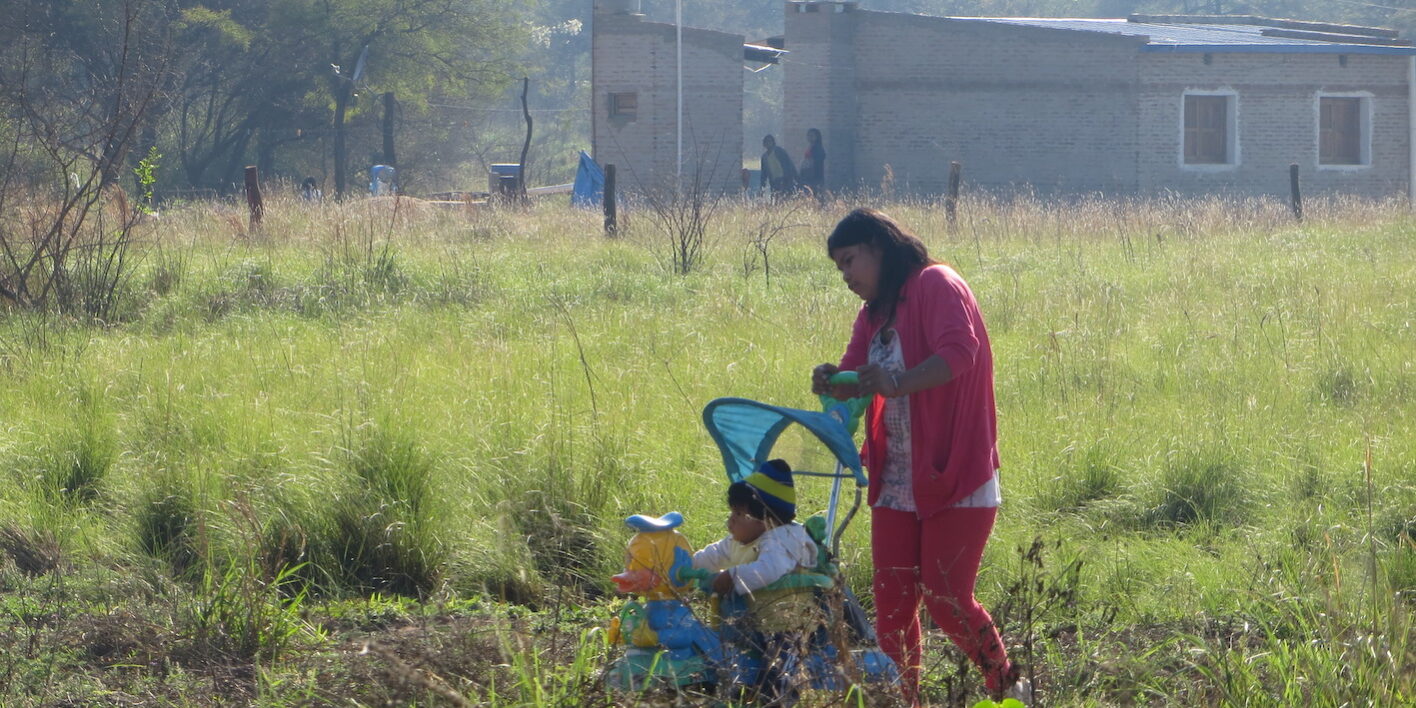
Photo: LM
“Talking about abortion is a huge challenge,” says Bashe Nuhem. She is a feminist, communicator, and audiovisual producer, a member of the Qom people in Castelli, a place in northeastern Argentina known as “The Gateway to the Impenetrable” (a vast and once dense native forest).
“I work at an Indigenous radio station, and we weave words together with other women. We challenge the men who don’t want us to talk about abortion. It’s still a taboo subject,” Nuhem explains. When we spoke, the Argentine Chamber of Deputies was debating a bill to legalize abortion up to the 14th week of pregnancy. The bill is now in the Senate.
Abortion is a crime in Argentina, with some exceptions in cases of rape or if the life or health of the pregnant person is at risk. “I celebrate this discussion regardless of the outcome, because before, the topic wasn't even discussed in the communities,” says Nuhem, a member of the Chaco Communication Workers' Front and the Indigenous Community Communication Association .
For her, the project that the Senate must vote on before the end of 2020 “has made it possible to start talking about the sexual abuses that we indigenous women suffer… I include myself, because I too have suffered abuse.”
Although it's a taboo subject, Nuhem continues, "abortion has always been practiced within the communities," by midwives. With deforestation and environmental damage, she says, "the midwives are disappearing. My sisters seek care in clandestine clinics, and, as we know, many die."
“If it’s legalized and the law is enforced, it won’t solve all their problems, but it will be a relief,” she argues. “Abortion would bring better health to our sisters,” she says.
Nuhem asserts that the law is opposed primarily by "churches and men," and describes how indigenous men post images on social media of whipalas (emblem of Native American peoples) with light blue scarves, a symbol of the campaign against the legalization of abortion.
“So I ask them: Did you read the bill? No. Do you know what the main demands are? No. So what are you opposing? Many were upset with me. It makes me very angry because I know there are indigenous leaders who forced their women to have abortions. Let's end the hypocrisy!”
“It makes me so angry because I know there are indigenous leaders who forced their women to have abortions. Let’s put an end to the hypocrisy!”
Since Congress resumed the debate in November, there have been many marches with the historic green scarf of the National Campaign for the Right to Legal, Safe and Free Abortion , while those who oppose it used the light blue scarf, as they have been doing since 2018, and demonstrated with the slogan "save both lives".
In El Potrillo, a town in the northern province of Formosa near the border with Paraguay, a column of Wichí women marched against the legalization of abortion, wearing their long, colorful skirts, some with espadrilles, others barefoot. There were no light blue scarves, but there were signs and a lot of dust kicked up from walking on the dry earth in the 43-degree heat.
These Wichí women are part of the 2.4% of Argentina's 40 million inhabitants who define themselves as belonging to one of the 36 native peoples recognized by the State, according to figures from the 2010 census, although indigenous organizations criticize this data because they claim that not all territories were surveyed.
Tujuayliya Gea, the first Wichí doctor in this country, told openDemocracy: “Not all Wichí women want access to contraception or to discuss whether or not to continue a pregnancy, because the influence of the churches is very strong. A lot of work needs to be done on education and access to information so that we can decide, like anywhere else in the country, whether or not to have children.”
Gea studied in Cuba, worked in Buenos Aires, and a few months ago returned to work with the communities in her territory, Santa Victoria Este, in the northern province of Salta. Some 13,000 people live there, 75% of whom are Indigenous. It is also the epicenter of deaths from malnutrition among Indigenous children .
“First you have to get the church and the patriarchy out of the minds of professionals”
“In my village, we die of malnutrition and there are no water wells. How can we talk about sexual rights if they aren't disseminated in the rural areas? When I was a girl, the hospital where I work already existed. And there was never a legal abortion until today,” says Gea, referring to abortions performed under the circumstances permitted by the Penal Code.
“Why? I don’t think they’ve even denied it. People don’t know they can access that right. It’s a form of denial,” she says.
“It’s a fantasy,” she adds, “to think that legalizing abortion solves everything. Obviously, we want it to be legal. But first you have to reform the healthcare system; get the church and patriarchy out of the minds of healthcare professionals.”
“Let’s walk together”
Argentina is a secular state, but Mapuche activist and social psychologist Irma Caupán Perriot, from the Indigenous Women's Movement for Good Living , observes that religious institutions act decisively against sexual and reproductive rights in indigenous territories.
“There is a church that represses, codifies, determines, and conditions. We still cannot speak about it freely. It has to do with centuries of violence, oppression, and invisibility,” says Caupán Perriot.
Her personal history is marked by these challenges. “My biological mother had a stillborn baby, buried it in her yard, as if it were an ancestral custom, and for that she was imprisoned. Later she was raped in prison, and that's how I was born. At no point did she have any rights. She was poor, she was indigenous, she was a woman.”
Indigenous women, she says, “are not respected during childbirth or for anything else. Violence and genocide are perpetrated against our bodies. Our sisters don't have translators. If they go to a clinic, they don't understand the language they speak. So they aren't treated either. They are treated as 'Indians,' as if they weren't people.”
Another proposal to legalize abortion reached the Senate in 2018, where it was defeated. At that time, no Indigenous woman was allowed to speak in Congress. However, in this year's debates, Edith Martiarena, a Wichí communicator from Radio La Voz Indígena in Tartagal, Salta province, was able to tell legislators that Indigenous women and girls "suffer firsthand the inequalities of poverty" that "force us to become mothers .
Bashe Nuhem, from the Qom community in northeastern Argentina, adds: “ Even within some feminist groups, they don't give us much importance . I tell you about a sister who was raped, and no one responds. We owe it to them to listen to us. We embrace the struggle of all our sisters, non-Indigenous, white… But it's time they listened to Indigenous women too. Don't just put us in the spotlight. Let's walk together .”
Open Democracy 's #12DaysOfResistance series .
We are present
We are committed to journalism that delves into the territories and conducts thorough investigations, combined with new technologies and narrative formats. We want the protagonists, their stories, and their struggles to be present.
SUPPORT US

FOLLOW US
Related notes


We are present
This and other stories are not usually on the media agenda. Together we can bring them to light.