

Chile 2020: The most violent year for LGBT+ people, with state abandonment during the pandemic
From the second quarter of the year onward, the violence escalated and hate crimes skyrocketed. The government's response was nonexistent.

Share

By Airam Fernández, from Santiago, Chile
Photos: Presentes Archive/Josean Rivera
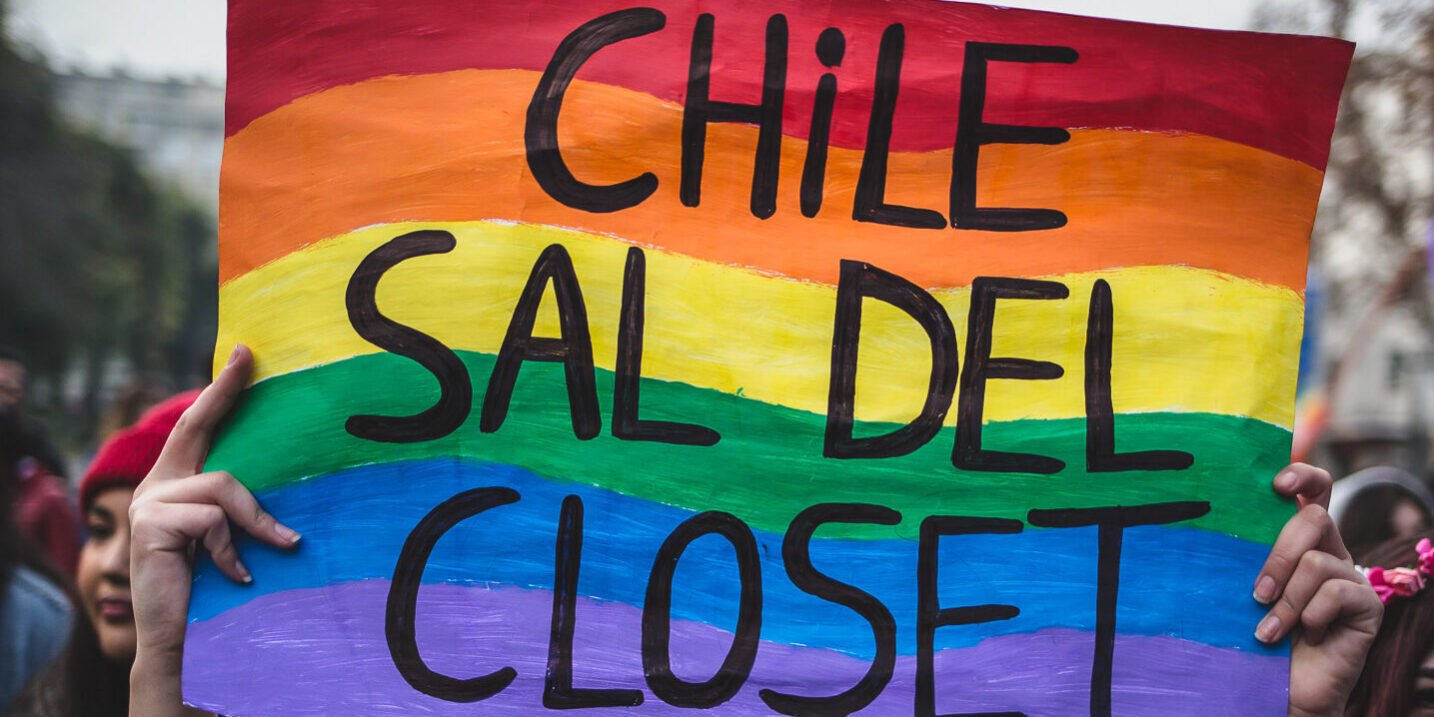
For the LGBT+ community in Chile, 2020 was a precarious year. The country had just experienced an unprecedented social uprising and was still recovering when the Covid-19 pandemic hit. The social and economic crises deepened and disproportionately affected migrants and people of diverse sexual orientations and gender identities . Faced with high unemployment rates, LGBTQ+ organizations responded with community kitchens and food boxes. There were no massive marches on the traditional dates of celebration and commemoration, but they organized to make their voices heard on social media. And when the mandatory quarantines ended, some took to the streets to protest the state's neglect.
From the second quarter of the year onward, violence escalated and hate crimes skyrocketed. The government's response was nonexistent, mirroring their inaction towards the LGBT+ community during the worst months of the health crisis.
Rodrigo Mallea , a lawyer from the University of Chile and an activist for sexual minorities, told Presentes that this year's assessment should be considered from a mixed perspective: “On the one hand, there is a positive balance regarding the capacity for organization, coordination, and advocacy of demands by organizations, activists, support networks, communities, etc. Faced with the pandemic and human rights violations, these self-managed networks and organizations were what saved us from complete abandonment. And that's where the negative balance comes in: today the State and the government have completely abandoned us . There were no specific measures for the pandemic, and there was no justice, remembrance, or reparations for LGBT people who were selectively attacked .”
Conflicts with family members and neighbors increased.
Since there are no official figures, the Movement for Homosexual Integration and Liberation (Movilh) is responsible for taking the pulse of the LGBT+ reality in terms of rights and violence, with results that they publish in March of each year.
But in this unprecedented year of 2020, they conducted two studies, in April and July, to measure levels of discrimination and the impact of Covid-19 on the community. In the latter survey, 47% of respondents reported an increase in family or neighborhood conflicts due to their sexual orientation or gender identity . 32.6% said they know at least one person who is having a difficult time at home or in their neighborhood because their family or neighbors do not accept their sexual orientation or gender identity. And in 51% of cases, there was verbal aggression, followed by psychological violence (41.5%) and physical violence (7.4%).
No public policies for LGBT+
The Chilean government provided financial assistance to people who lost their jobs and could prove it. But unlike what happened in other countries, none of that aid was specifically designed for LGBT+ people . In that Movilh survey, 61% of people agreed that the State should implement measures that exclusively help the trans population.
During the most critical months, civil society organizations reported shortages and stockouts of treatments for people living with HIV , which are provided through the public health system. Additionally, a local protocol for prioritizing access to critical care beds, issued by the Henríquez Aravena Hospital in Temuco, excluded the HIV-positive population. The Ministry of Health apologized for this protocol, stating that the circular had been "disavowed" and was subsequently withdrawn.
The 2020 report by the National Institute for Human Rights (INDH) , published in early December, mentions these problems and in its recommendations section states that the State must “include a gender equality perspective and an intersectional approach in public policies and legal modifications, as appropriate, that are introduced to address the health emergency, so as not to deepen the gaps that have historically affected people belonging to groups requiring special protection, such as women, girls, boys and adolescents, older people, people with disabilities, indigenous people, LGBTI people and migrants.”
Violence and discrimination
In October, in response to constant reports of online violence, the Undersecretariat for Crime Prevention, in conjunction with MOVILH and Fundación Iguales, launched the first national survey on hate crimes and other abuses against the LGBT+ community. The survey explores the educational, employment, family, and economic situation of people of diverse sexual orientations and gender identities, and also addresses LGBTIphobia and its various forms of expression. The results will be published in 2021.
That month, Chile also held its historic constitutional plebiscite and decided that in 2021 the country would begin to bury the constitution written during Augusto Pinochet's military dictatorship. But during the election campaign, some sectors opposed to a new constitution—linked to evangelical churches and right-wing political parties—used television airtime to spread hateful messages against sexual diversity.
A month later, those same groups threatened to bring out the so-called Freedom Bus, which in 2017 traveled through several cities in the country promoting hate speech and transphobic messages. For this reason, civil society dubbed it the Hate Bus.
Criminalized for demanding justice
Two weeks before the end of the year, María Bahamondes, cousin of Nicole Saavedra—a young lesbian kidnapped and murdered by a bus driver —was notified that she must go to trial on January 14, 2021, after she and five other activists led the occupation of the Quillota Prosecutor's Office in June 2019. For demanding justice, they are being criminalized and face up to four years in prison, charged with public disorder and aggravated damage to the building. “Stop persecuting women and lesbians who fight for justice! Stop criminalizing those who have experienced violence!” they wrote in a letter outlining their case.

More than 2,200 people changed their registered name
One year after the Gender Identity Law came into effect, the Ministry of Justice and the Civil Registry reported that as of December 21, 2,201 people had legally changed their name and gender marker in Chile . Specifically, 1,286 changed from female to male and 915 from male to female. Additionally, eight teenagers between the ages of 14 and 18 applied to a Family Court to change their name and gender marker, with the consent of both parents.
For Constanza Valdés , a trans lawyer, legislative advisor, and co-director of the Association of Feminist Lawyers of Chile (Abofem), these figures represent part of the rights won by the trans community, but they do not erase the complex scenario in which the community lived throughout the year.
2020: a bittersweet year for the trans community
“ 2020 was a bittersweet year . For the trans community, it was important because the law came into effect and also because of some positive rulings , such as the recognition of coverage by an Isapre (private health insurance) in the case of gender confirmation surgery. But we must not forget that the human rights of trans people were not taken into consideration in the management of the pandemic, nor for social benefits of any kind . We also saw many cases of gender-based violence and difficulties for trans people to participate in the constitutional process. Violence, discrimination, and exclusion are still very present, and despite small glimmers of hope, the outlook this year was very complex,” Valdés told Presentes.
The INDH report also addresses this situation. In one of its chapters, it emphasizes that although the right to gender identity is protected by law, in May more than 50 people reported to LGBTQ+ organizations that the Civil Registry had not assigned them an appointment time to carry out the procedure for changing their name and gender, along with other irregularities such as excessive delays in the delivery of new identity cards.
Why reform the Zamudio law
Starting this year, several civil society organizations are promoting a network to reform the anti-discrimination law, better known as the Zamudio Law, which has been in effect in the country for eight years. They seek to create a law more in line with the needs of the LGBT community, given the rising wave of violence.
Among other things, the bill introduced on October 29 proposes modifying the procedure for non-discrimination actions, providing legal tools to enforce accountability for violations of the law, and incorporating mechanisms to facilitate the process for victims. It is currently in its first stage of the legislative process, under review by the Human Rights and Indigenous Peoples Committee of the Chamber of Deputies.
Pending legislation for 2021
On November 13, the “José Matías” bill . This bill proposes amendments to the General Education Law to incorporate the obligation to implement and inform parents, students, and the educational community about existing rights and provisions regarding respect for and inclusion of students of diverse sexual orientations and gender identities. The bill is named after a 16-year-old transgender student who committed suicide in May 2019 after suffering a series of bullying incidents at the Sacred Heart High School in Copiapó.
But there were also obstacles that today become debts for the future: the Chamber of Deputies rejected the comprehensive sex education project after failing to reach the necessary quorum, and thus, the initiative that sought to begin addressing this type of subject from early childhood education, according to the level of maturity of minors, was shelved.
On July 1st, after four years, a significant step was taken for the rights of children of lesbian, trans, and same-sex parent families with the approval of the bill to regulate their legal parentage. “The bill arose from the urgent need to protect the bond between children and their LGBTQI+ mothers, through cohesive work based on the feminist and lesbian-trans-feminist principles of the Lesbian Group Breaking the Silence, Visibles, Familia es Familia, and Corporación Humanas,” Claudia Amigo, co-founder of Familia es Familia, told Presentes.
It is in its second stage, but in the last session several indications were discussed that unfortunately did not have enough consensus to be voted on, which makes it clear that the initiative will not be easy to process.
And with three weeks left in the year, activism took to social media to demand that the discussion of same-sex marriage be resumed, a process that has been underway since 2017 and has seen very little progress since then.
What happened to hate crimes in 2020
2019 was recorded as the most violent year in the history of the report prepared by Movilh: cases and complaints of homophobia and transphobia increased by 58%, with 1,103 incidents, the highest figure known to date, according to the 18th Annual Report on Human Rights of Sexual and Gender Diversity. But activists fear that the 2020 figures will be much higher.
Presentes contacted the Prosecutor's Office to find out how these cases are progressing in the justice system, how many complaints they received during the year—if any—and how they are working to respond to the community. As of the time of publication, there was no response.
“It’s a complicit silence,” says Rodrigo Mallea’s lawyer. In his opinion, it’s closely linked to the increase in hate crimes in Chile. And he says the reality is that “there are no statistics on anything.”
“Unfortunately, these crimes are an everyday occurrence for us. However, unlike other years, in recent months there has been greater visibility ,” Mallea notes. She adds another complaint regarding state abandonment: “The government removed us from the surveys, pathologized the LGBT community, and failed to provide timely support to the HIV-positive population during these months. And on top of that, they continue to spout rainbow rhetoric, when they haven't stood with the sexual minorities who suffer the greatest oppression from the inequalities of this system .”
Regarding the violence covered by Presentes this year, which was much more prevalent than in previous years, arrests were made in only four cases. The others either stalled in the legal system or it was impossible to verify or update information about their progress. Here is a summary:
On January 15, while painting the fence of their house, Tatiana Avendaño and María José Yañez were attacked and threatened with death by a neighbor . They reported the case to the Santiago Central Prosecutor's Office, and prosecutor Patricia Varas granted a protection order for the couple: 30 days for Tatiana and 90 days for María José, because the death threats were more direct towards her.
On June 5, Francisco Aranda, a 29-year-old bisexual man, was beaten and tortured by a group of neo-Nazis squatting in a house in the Estación Central district, in the southwestern part of Santiago. Two months later, the Special Police Investigations Brigade of the Investigative Police arrested Rodrigo González, Angelo Sánchez, Betsabet Soto, and her 16-year-old son. They were charged with kidnapping and aggravated assault. The 6th Guarantee Court ordered pretrial detention for three of them. The minor was placed under house arrest.
On August 9, Cynthia Leslie Velásquez was stabbed after intervening in an argument and defending a girl from a man who was trying to sexually assault her. Chico Leslie—as she chose to be called and as she was known in her neighborhood—was a lesbian and died a few hours after the attack in a Santiago hospital. So far, no one has been arrested in the case.
On August 23, Eduardo Hermosilla, 40, reported that his partner, Joaquín Somella, was attacked by a neighbor outside their home in Valparaíso. The blow with a glass caused a deep head wound, requiring hospitalization and later transfer to a clinic. A formal complaint was filed with the Carabineros (Chilean police), but the assailant was not arrested.
On September 17, the apartment where Marcelo Cea and Jorge Ruiz, two gay activists aged 44 and 31, lived was set on fire . They showed signs of having been beaten and stabbed. A month later, the Homicide Brigade of the Investigative Police charged 21-year-old Fabrizio Antonelli Lazo with the crime . According to information from the South Metropolitan Prosecutor's Office, Antonelli confessed. The prosecutor in the case, Miguel Palacios, told the press that one of the victims met the accused through a dating app on the same day as the attack. At that time, he said the motive for the crime was still under investigation. To date, Presentes has been unable to confirm any further developments in the case.
On October 25, Miguel Arenas Rodríguez was found dead in his home in Colina. Miguel was gay, worked as a hairdresser, was 36 years old, and showed signs of torture when police discovered his body. Francisco Norambuena Padilla, 25, was arrested and charged with robbery resulting in homicide. He was remanded in custody while the investigation continues.
On October 31, Vicente González Lorca , a 25-year-old trans man, was found murdered in a vacant lot in Valdivia, southern Chile. Victor Hugo Abarca Díaz was arrested in connection with the case and charged by the Public Prosecutor's Office with robbery resulting in homicide. The Valdivia Guarantee Court ordered his pretrial detention, and at the arraignment hearing, held online, Judge Fabián Duffau ordered his transfer to the Llancahue Penitentiary Center in Valdivia and set a 100-day deadline for the investigation, under case number 6.787-2020.
On November 12, Fernando Carrasco, a 20-year-old trans man, was attacked by two people on the street . They hit him on the head and left him with a wound on his shoulder and chest. He filed a report at the 14th Police Station in San Bernardo, but to date, no arrests have been made.
We are present
We are committed to journalism that delves into the territories and conducts thorough investigations, combined with new technologies and narrative formats. We want the protagonists, their stories, and their struggles to be present.
SUPPORT US

FOLLOW US
Related notes

We are present
This and other stories are not usually on the media agenda. Together we can bring them to light.