

Christmas for trans women: sent to the men's room for not having an ID
- My name is Alma, I'm from Tucumán, Débora Britos brought me here, I don't pay for a place - I replied.

Share

By Alma Fernández
When I arrived in Buenos Aires, I arrived like everyone else. “You poor little fourteen-year-old faggot and dreamer,” she said to me. “Who stopped you here? What’s your name? Do you know who’s in charge here? Why did you come to Flores? Where are you from? Do you know that you have to pay to be on the street here?”
– My name is Alma, I'm from Tucumán, Débora Britos brought me here, I don't pay for a place – I replied.
We pushed each other while shouting, pulling hair, slapping, a police car, both of us without documents, to the police station and that nothing more be said and keep quiet.
What followed were beautiful days of cumbia and drinking among customers, robberies and crime to survive and be happy too.
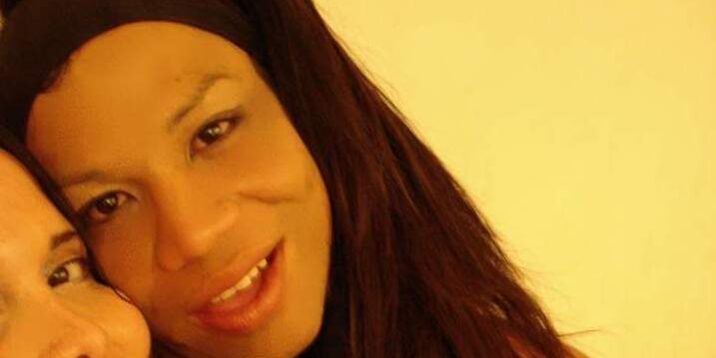
Carla Saracho, also known as “Carlita de Flores”—as she was listed in the police records—was from Mariano Acosta, a town in Merlo, Argentina. Her mother was Paraguayan and her father was from Chaco province. They had arrived in 1997 from Paraguay, driven by hunger and the desire for a better life. Her father worked in construction until he had an accident in 2000. From then on, Carlita's mother worked every day to support her and her five younger siblings. Carlita was one of the oldest in her family, and, as in any family facing hardship, the older children had to look after the younger ones.
Just like that, you're forced to grow up and start having responsibilities. How invisible, cruel, even violent capitalism and this binary system can be, the system that so relentlessly punishes us, trying to make invisible something that can never be hidden. Heterosexual culture is so deeply ingrained in the family institution that it blinds our parents, siblings, and relatives with hatred.
Carlita, you were no exception. Thrown out of your home at fifteen, because of ignorance and the inequalities of social class, simply for being different, the only path you chose was the same one we all chose: prostitution. Nights, drugs, and alcohol, moments with clients poorly disguised as Romeos. We always said those weren't princes, those were rats, because they weren't even rats. How many Christmases spent prostituting ourselves at midnight in the red-light district, how many trans women like us walk alone through the area as if it were any other day, looking for something to forget and wishing that the day would pass quickly, while in the city's homes everyone hugs, smiles, and celebrates. We deserve those moments too, I believe it, and I dream it too.
It was a few days after Christmas on the banks of the Quilmes river when you realized night was falling. The following days were spent going to the doctor, who immediately prescribed your medication. You took it constantly. The problem was paying for your place of residence and that damned woman who saw you trembling and didn't care. That damned fever that burned all over your back, which you hid so well, pretending you didn't have anything, so the other trans women wouldn't say, "She's sick," "She's got the bug," or "You're too thin." The problem was the clients and the drugs they carried in their pockets, because even that was the kind of luck the faggot had: lots of hustlers, lots of hustlers with drugs.
Autumn had begun, and like the dry leaves, you were drying up. Losing weight so quickly is noticeable, especially in the malicious stares of the gay men. We went to the Muñiz Hospital; there was no bed in the men's ward. There was one in the women's ward, but since you hadn't changed your gender marker on your ID, you couldn't go in because "the other inmates complain." That's what they told us.
That week was incredibly difficult. We had to pay for the hotel for two weeks and everything else you needed to recover. I wasn't going to accept seeing you suffer, sad and withdrawn, with those eyes trying to survive, even this. I had to go through the red-light district looking for help from those friends you loved so much, who were so absent when you were at your lowest point.
We needed to raise 800 pesos for disposable supplies so you could get treatment. I moved heaven and earth to get it. I went out to work on a Monday and made 200. I went out on Tuesday and made 500. On Wednesday, full of energy, I barely arrived in the area when the investigations unit sent me to the prosecutor's office for not having my papers. I went to see you on a Thursday, me dressed as a prostitute, and you were dying alone at one end of the room, next to a damp bathroom with broken windows that let in a draft that was bad for you. But of course, nobody cared. After all, we're faggots, born to suffer.
I got home to get ready to go down to the bus stop early. I left the bathroom and went into my room, and outside I heard your footsteps, those annoying, rhythm-killing steps you made when you shuffled. It seemed so familiar that I ran to open the door thinking it was you. There was no one there. "How silly of me," I thought, "I must have gotten confused, right, Carlita's in the hospital," I said and went back to what I was doing.
That night was a success: I saved up for everything you needed. I rushed out, took a taxi, and left without sleeping so I could talk to the doctor who was treating you. When I arrived, the bed was empty and your things were piled up in a corner. Just when I'd saved up for everything you needed, but I didn't make it, I never forgave myself for that. I should have been there in time.
What followed was sadness, and the same trans women telling me: “Life goes on, don’t cry, don’t show weakness, it will pass.” The same silence reflected in my peers is what I heard from a society that historically doesn’t talk about us, making us invisible even in everyday interactions, attacking us with words full of hatred and silence, which the trans and travesti community has so skillfully redefined—and will continue to do so.
How can we not talk about violence, when we talk about violence every day? We talk about violence, of course we do, with our aggressive words, full of hatred and repression, words that have never felt a shred of love from people or society. We talk about violence every day, so that they stop killing us, so that those dungeons that so desperately want us stop calling us. We talk about violence today and every day until we achieve a more just and equal society for everyone. I talk about violence today and every day until society understands that without opportunities we die at 35, and only one percent of my community reaches sixty. The prostitution we are forced into is a heartless madam, leaving a trail of incurable alcoholics and drug addicts in her wake. How many times was the only thing we could use to pay rent or put food on the table was with our bodies, with our lives?
Fighting against a state that expelled us from everywhere, making us illegal even in practice—those cursed practices that do nothing but strip us of what little dignity we have left. Killing us, isolating us, judging us until they force us to live a life of violent, undeserved, unnecessary repression. How long will we continue to survive like chameleons, trying to be happy, or simply to live, like my friend Carla, who lived only to die forgotten. Remembering her this Christmas.
We are present
We are committed to journalism that delves into the territories and conducts thorough investigations, combined with new technologies and narrative formats. We want the protagonists, their stories, and their struggles to be present.
SUPPORT US

FOLLOW US
Related notes

We are present
This and other stories are not usually on the media agenda. Together we can bring them to light.