

Guatemala 2020: Pandemic, underreporting of violence and LGBT+ networks
Organizations built networks to address the crisis caused by Covid-19 and the storms. Guatemala ends 2020 with 19 hate crimes and no policies for LGBT+ people.

Share

By Pilar Salazar
Photos: PS, Presentes Archive and National Diversity Network.
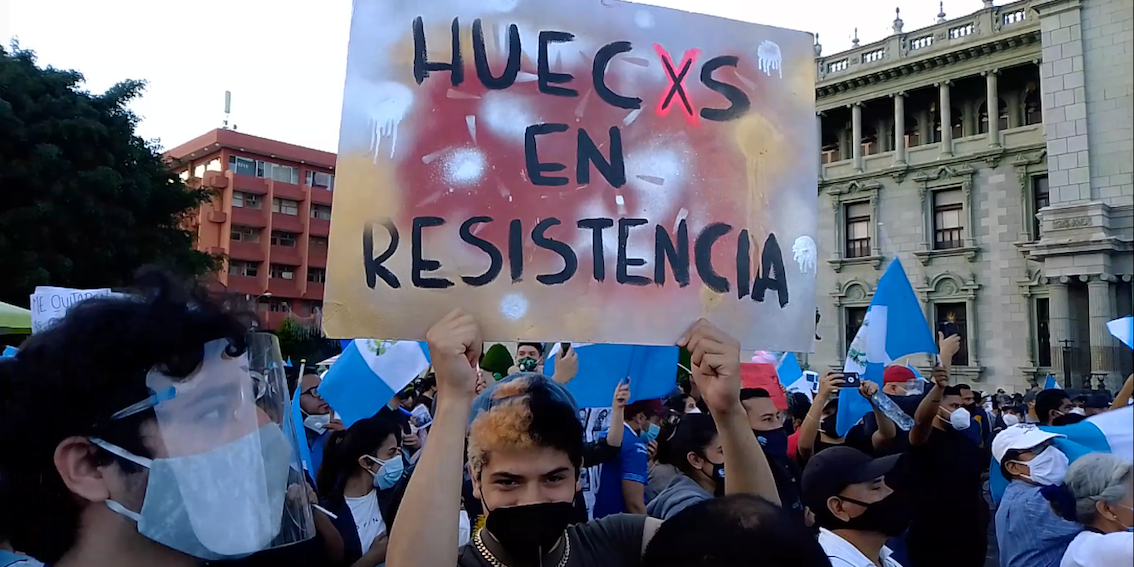
Guatemala remains one of the Northern Triangle countries most affected by hate crimes, the crisis caused by the Covid-19 pandemic, and storms Eta and Iota.

Little data and no records for trans people
Like many countries in the region, Guatemala starts from the premise of underreporting in terms of violence, whether hate crimes or reports of violent and discriminatory acts.
- In 2020, the Observatory for Violent Deaths of the National Diversity Network recorded at least 19 hate crimes. The victims were six trans women, one trans man, 11 gay men, and one bisexual man. Thirteen of these crimes were committed during the COVID-19 pandemic . At least one attempted transfemicide was also recorded.
- According to records from the National Civil Police, last year there were five reports of violence against LGBT+ people, which increased this year in 2020.
- In 2020, ten reports of violence against gay men and four against lesbians were registered. Although there has been a clear increase in these cases, they remain few, and there are no records for other populations, such as transgender people. The department of Izabal (239 km from the capital city) has the highest rate of repeat offenses: six hate crimes were committed there alone. Meanwhile, Police Station 61, which serves that area, has only registered two reports of physical assaults against gay men, according to the statistical system of the Victim Assistance Department of the National Civil Police (DAV).
- Meanwhile, the Office of the Ombudsman for Sexual Diversity of the Human Rights Ombudsman registered 30 complaints this year for human rights violations against the LGBTIQ+ population , as reported to Presentes, very close to double the number from last year, when they registered 17 complaints.
Covid and sexual diversity
In Guatemala, obtaining statistical data on violence against the LGBTIQ+ population during the Covid-19 pandemic is difficult because the State does not maintain disaggregated records . Some organizations, such as the National Diversity Network through its observatory and the Latin American and Caribbean Network of Trans People, have taken on this responsibility, tallying hate crimes that occurred during the pandemic and documenting the numerous abuses against trans women in Latin America.
The situation of violence against trans people during the pandemic has worsened, but the social exclusion experienced by trans people in Latin America has also become more visible . This is according to the report "Trans Lives in Times of Pandemic" by the Latin American and Caribbean Network of Trans People. Quarantine, curfews, the health emergency, movement restrictions, and the lack of public policies with a rights-based approach are the situations that exacerbated the violence they face in their life context.
Throughout 2020 , no measures were recorded taken by the Guatemalan government to care for people with HIV .
highlights grievances against vulnerable populations, such as transgender sex workers , who, due to a lack of job opportunities, do not have resources or means to support themselves and are even homeless.

The Office of the Ombudsman for Sexual Diversity, through Henry España, informed this media outlet that at the beginning of the pandemic, the National Civil Police harassed and threatened sex workers in Guatemala City, warning them that they could not go out to perform sex work or they would be taken to prison.
The solidarity networks of activism
Although 2020 hit the LGBT+ community in Guatemala hard, there was significant impact and solidarity from civil society organizations . One example is the Multicultural Network of Trans Women (Redmmutrans), which on October 5th opened the doors of the Jackelin Sánchez LGBTIQ+ Community Kitchen to serve the community affected by the health crisis caused by the Covid-19 pandemic, as well as those experiencing homelessness.
There were several food and clothing drives organized by various groups, due to the pandemic but also because of the storms that hit the country.
The dining hall run by trans women

Bárbara Herrarte is an activist with Redmmuntrans and monitors the distribution of lunches at the soup kitchen. She explains that the need arose from seeing fellow activists “wandering the streets ” The soup kitchen’s name is a posthumous tribute to activist Jackelin Sánchez, who led a support group called “Lazos de amistad” (Bonds of Friendship) that included LGBT+ and HIV+ individuals.
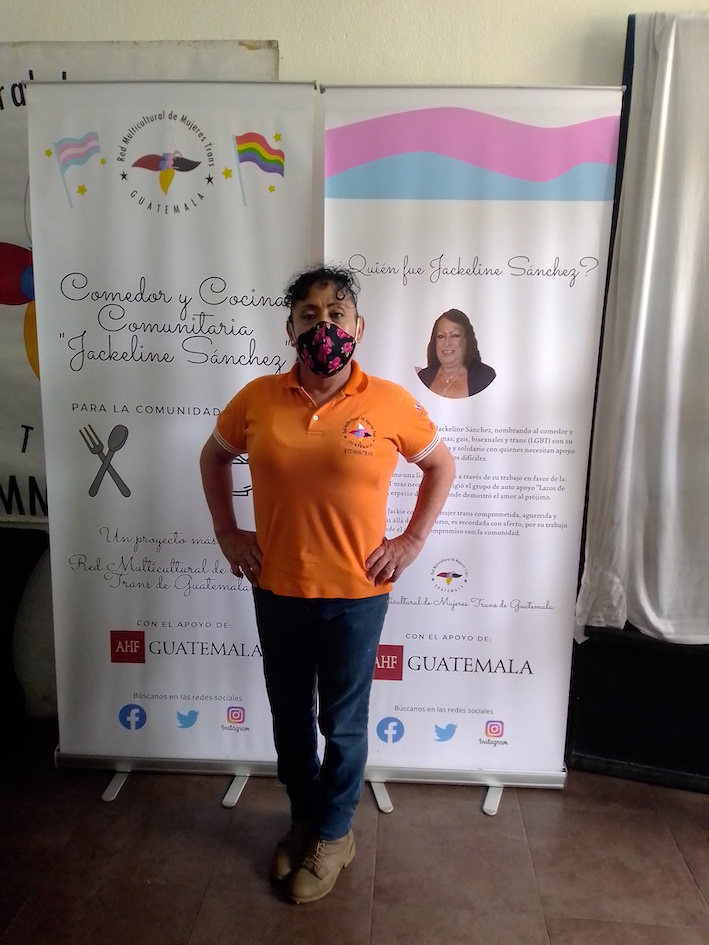
The soup kitchen served 105 people a week and, until its closure on December 14, served 1,000 lunches. The organization Redmmutrans hopes to secure funding so the soup kitchen can continue operating next year.

Without public health policies for trans people
The year 2020 ends without the "Differentiated Health Strategy for Trans People," which seeks to implement health policies tailored to the needs of trans people in a comprehensive manner within the public health system, being operational. Approved in 2015 by the Ministry of Public Health and Social Assistance (MSPAS) with the support and advice of civil society organizations, neither the document that instructs healthcare personnel nor the one that regulates public policies has been approved by the ministry authorities.
Following an inspection, Henry España, from the Office of the Ombudsman for Sexual Diversity, recommended to the Ministry of Health that these documents be expedited in order to provide comprehensive care to trans people in the public health system.
Pending: Trans Law and punishment of hate crimes
The organization Otrans Reinas de la Noche, with the support of other civil society organizations, had planned to resubmit a proposed "Law for the Vindication and Dignity of Trans People " would recognize the gender identity of trans people within the legal and social framework of Guatemala. However, the pandemic was one of the main obstacles to realizing this initiative. The organizations will seek the necessary support to resubmit the proposal to Congress in 2021.
Another major issue is the prevention and punishment of hate crimes. In 2019, former congresswoman Sandra Morán, the first person in the country to openly and publicly identify as a lesbian , introduced bill 5674 to prevent and punish hate crimes. This was the second time it was proposed (the first was in 2018), and it was rejected by the Congressional Committee on Legislation and Constitutional Matters. No progress was made on the issue in 2020.
2021: Remove patents on antiretrovirals and other medicines
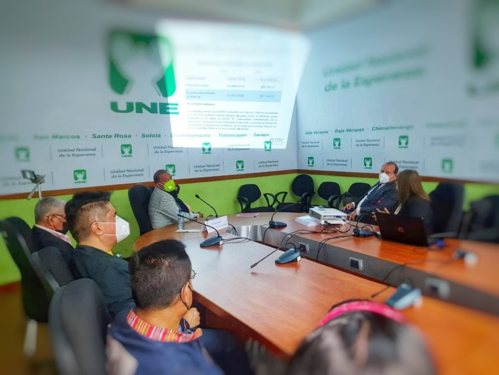
With the support of Congressman Aldo Dávila and the National Diversity Network, the Positive People Association, the AIDS Healthcare Foundation (AHF), and the International Treatment Preparedness Coalition (ITPC LATCA) presented an initiative to a group of parliamentarians to lift the patents on antiretroviral medications for people living with HIV, as well as other medications for chronic illnesses (diabetes, cancer, kidney disease), with the aim of making them less expensive and preventing the shortages that have occurred in the healthcare system at times due to high prices. Congressman Aldo Dávila will present this initiative to Congress in 2021.
Latent threat: “Protection of life and family”
Sacrificing the right to choose for girls and women and censoring the LGBTQ+ community is the purpose of this bill, which is awaiting its third reading and approval in the Congress of the Republic. Promoted since 2017 by the Catholic Church, the Evangelical Church, conservative members of Congress, and anti-rights groups, it seeks to prohibit sex education, information on sexual diversity and gender identity, and same-sex marriage. It establishes prison sentences for women who have abortions, whether intentional or accidental. Until it is shelved by parliamentarians, human rights and LGBTQ+ organizations consider it a threat to rights and a violation of key global frameworks and agreements signed and ratified by Guatemala.
We are present
We are committed to journalism that delves into the territories and conducts thorough investigations, combined with new technologies and narrative formats. We want the protagonists, their stories, and their struggles to be present.
SUPPORT US

FOLLOW US
Related notes
We are present
This and other stories are not usually on the media agenda. Together we can bring them to light.