

2020 in El Salvador: fewer crimes against LGBT people, more state neglect
Attacks and hate crimes decreased due to quarantines, but the State left LGBT+ people unprotected during the pandemic.

Share

By Paula Rosales , from San Salvador
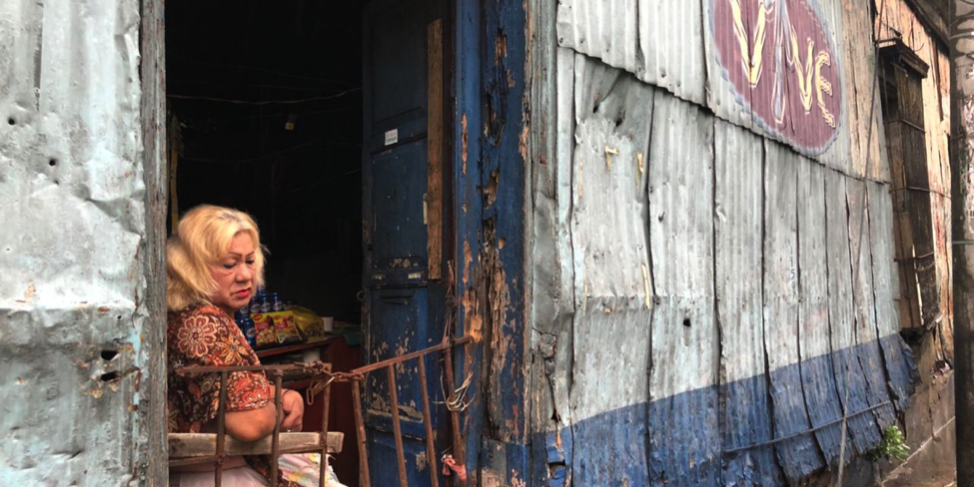
Photo: Paula Rosales /Presentes Archive
El Salvador ended 2020 in an ambivalent way for LGBT+ people. On the one hand, organizations reported a reduction in deaths and that the judicial system handed down an unprecedented prison sentence for those responsible for the death of a trans woman; however, the coronavirus pandemic deepened the lack of protection from the State.
According to LGBTI rights organizations, four murders were reported in the Central American country in 2020, a 51 percent decrease compared to the same period of the previous year. Three of them were trans women and one was a gay person, while in 2019 nine crimes were reported.
Overall, El Salvador, which was previously among the countries with the highest homicide rates in the world, has seen a dramatic 60 percent drop in homicides. From January to December, police reported 969 murders, compared to 2,390 during the same period last year.
However, murders against the LGBTI population continue to occur. The Solidarity Association to Promote Human Development – ASPIDH Arcoíris Trans commented that the reduction in cases registered in 2020 could be attributed to the lockdown period to contain the spread of the coronavirus.
“I think it was because of the pandemic and the confinement that we had almost by force, although some colleagues have always been doing sex work, because most of the murders in general are of colleagues who did sex work, many were not exposing themselves on the streets and I think this made the cases of transfeminicides decrease,” Camila Portillo, a member of the Association, told Presentes.
Briyit Michelle Alas, a 21-year-old transgender woman, was murdered on Thursday, January 16, in one of the municipalities with the highest rates of violence in El Salvador. According to the police report, she was shot at least five times in different parts of her body and then thrown into a ravine in Ciudad Delgado, about eight kilometers from the center of the capital. The police referred to her using male pronouns throughout the report.
Tita Andrade Umaña, a 32-year-old transgender woman, left her home on Friday, March 6, in the municipality of Intipucá, in the department of La Unión, 180 kilometers southeast of El Salvador's capital. She was found murdered on Saturday, March 7, in an open field in the hamlet of La Agencia, in a rural area in the eastern part of the country.
Jaime Natividad Rubio Ramos, a 28-year-old gay man, is the second LGBTI victim murdered in the first week of March in the eastern part of El Salvador.
Katherine Rosmery Duvall, a trans woman, was murdered by members of the Barrio 18 gang on the night of September 3rd in the densely populated Altavista residential area of Ilopango, 14 kilometers east of the capital, according to information from LGBTI rights organizations. They believe the motive was that police officers were arriving at her home and the gang members mistook her for someone who was giving them information.
However, Katherine Duvall filed complaints against the police officers who were extorting her in exchange for not arresting her with false accusations.
The police in Altavista, a city fiercely contested by gangs, have been accused of planting evidence to arrest and prosecute local youths. The police force is one of the most frequently denounced for violence and discrimination against the LGBTI community.
Of the four reported deaths, authorities only arrested Ronald Asael Cáceres Campos in March, accused of murdering Tita Andrade Umaña. In the case of Michelle Alas, police interviewed her colleagues on the same street where she worked as a sex worker, but no arrests have been made yet.
Presentes contacted the Attorney General's press office to learn about the progress of the investigations, but no response was received by the time of publication.
The health system abandons the LGBTI population to their fate
Valeria N., 24, lay bedridden in her mother's dilapidated house. Her health deteriorated in April during the total lockdown ordered by the government to reduce the chances of coronavirus infection.
Valeria N lived with HIV and suffered from severe malnutrition. Her weakened body forced her to depend on her mother's care. Last April, Valeria had fevers and diarrhea, but she was denied medical attention in the public health system, which claimed that at that time they were only attending to coronavirus cases. Days later, she died abandoned by the state.
“Desperate, Valeria’s mother went out into the street just as a PNC patrol car was passing by, asked for help, made an officer enter her house and asked him to please help her take her daughter to a hospital; however, the officer made a call requesting instructions to transfer Valeria, but on the other end of the line he was told that if Valeria was very ill, it was better for her to die naturally, since they were focused on the pandemic,” says an ASPIDH report.
The delivery of antiretroviral therapy for people with HIV was deficient during the quarantine period, according to complaints received by the Association Communicating and Training Trans Women – COMCAVIS TRANS.
“It is the responsibility of the Salvadoran State to supply the hospital network with ART so that it reaches each of the people who require it in time, since due to the confinement a shortage of the treatment was reported putting the life and integrity of people living with HIV at risk,” the association demanded.
Presentes contacted the press office of the Ministry of Health regarding the supply of the treatment, but received no response.
Arbitrary arrests in detention centers
In March, the president of El Salvador, Nayib Bukele, asked Congress to approve an exceptional regime for the implementation of a mandatory home quarantine, under threat of sending people who failed to comply to containment centers.
Presentes documented the case of an individual, who requested anonymity, detained by the police and held in a detention center alongside cisgender people. The arbitrary detention of individuals was criticized by the Human Rights Ombudsman's Office and international organizations.
Quarantine periods in these centers ranged from 15 to 30 days; however, many people reported being detained for up to 40 days.
“I was on my way to buy bread three meters from my house, and the police didn't even offer an explanation and brought me to this quarantine center. I was quarantining peacefully at home when they brought me here without any justification. They violated my rights because I am a gay person. Here I am exposed to getting sick with something other than Covid ,” he told Presentes in a voice recording.
Exacerbated discrimination on social media
President Bukele announced on the night of Friday, March 27, the delivery of a $300 bonus to 1.5 million Salvadoran households that had been affected by the closure of all economic activities.
The government spent $450 million to fulfill the delivery of the economic benefit, which overwhelmed the grant registration centers.
Camila Portillo is a human rights defender and part of the Solidarity Association to Promote Human Development – ASPIDH Arcoíris Trans. After the announcement of the subsidy, an image of her holding her National Identity Document (DUI) in her right hand circulated on social media. Posts on Facebook pages claimed that she was not eligible for the $300 bonus announced by the government because she is a transvestite.
Although Portillo did not file any complaint about it, he had to endure an avalanche of criticism and hate speech.
“I have endured slander and defamation, based on a photo of me from 2014, when I was not allowed to vote. Now they have used it in several news stories saying that I could not access the $300 for the DUI and, of course, they have done so in a way that mocks trans people,” Camila Portillo told Presentes.
The government has been repeatedly accused by human rights organizations of instigating online attacks against those it considers its opponents.
The attacks against the activist began after she questioned the government's handling of the health crisis, which has left the Central American country with 42,397 confirmed cases and 1,234 deaths. Many people on social media defamed and ridiculed the trans community.
A historic condemnation
A court in El Salvador handed down a landmark sentence in July against three police officers accused of murdering transgender woman Camila Diaz Cordova in 2019. The prosecution's investigation determined that the officers detained the transgender woman, beat her, and then threw her out of a moving patrol car onto the road.
Camila Diaz, who had been deported from the US after her asylum request was rejected in 2017, worked as a sex worker. Following a report of her causing a public disturbance, the three police officers subdued her and then threw her into the street, where she was picked up hours later and taken to the hospital, where she died.
The judge in the case handed down 20 years in prison for each officer, and it became the first sentence condemning people responsible for a murder against the trans population in the country.
We are present
We are committed to journalism that delves into the territories and conducts thorough investigations, combined with new technologies and narrative formats. We want the protagonists, their stories, and their struggles to be present.
SUPPORT US

FOLLOW US
Related notes

We are present
This and other stories are not usually on the media agenda. Together we can bring them to light.