

Mara Gómez makes history in Argentina: "Football saved my life"
Mara Gómez became the first trans woman footballer to play in the first division in Argentina.


Share

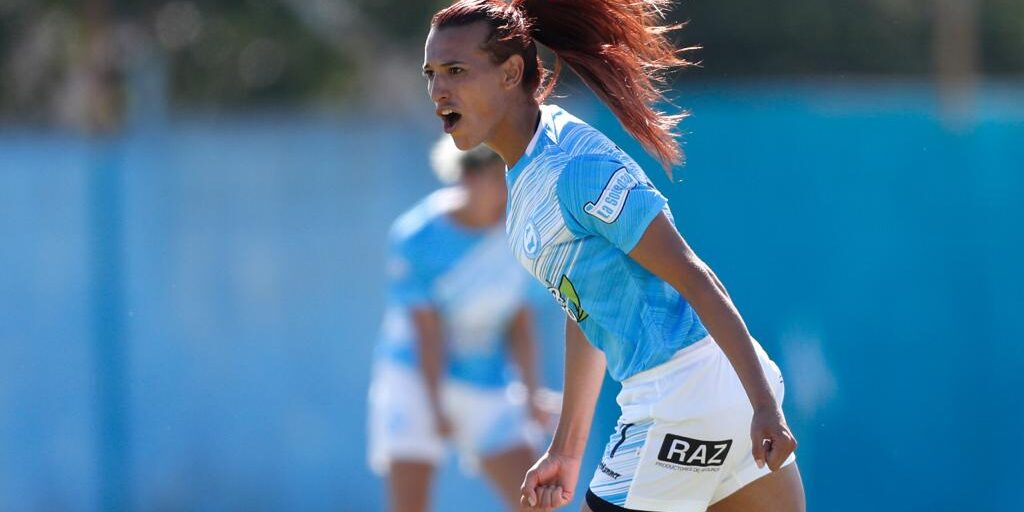
December 7, 2020, was perhaps the most important day in Mara Gómez's life. She did what she knows and loves, what she had done so many times before that morning: she put on the number 7 jersey and took her place as a forward to play soccer. But this was a match unlike any other, not only in her life but in the history of soccer in Argentina. It was the day Mara became the first trans woman to play in the top tier of professional soccer in Argentina.
When a soccer player who reaches the top division is asked if they ever imagined stepping onto a field as a professional, the answer is always no, that it's a dream come true. For Mara, imagining that scenario was doubly difficult: it meant not only thinking about the possibility of being a professional, but also about playing in the category corresponding to their self-identified gender, and not the one assigned at birth.
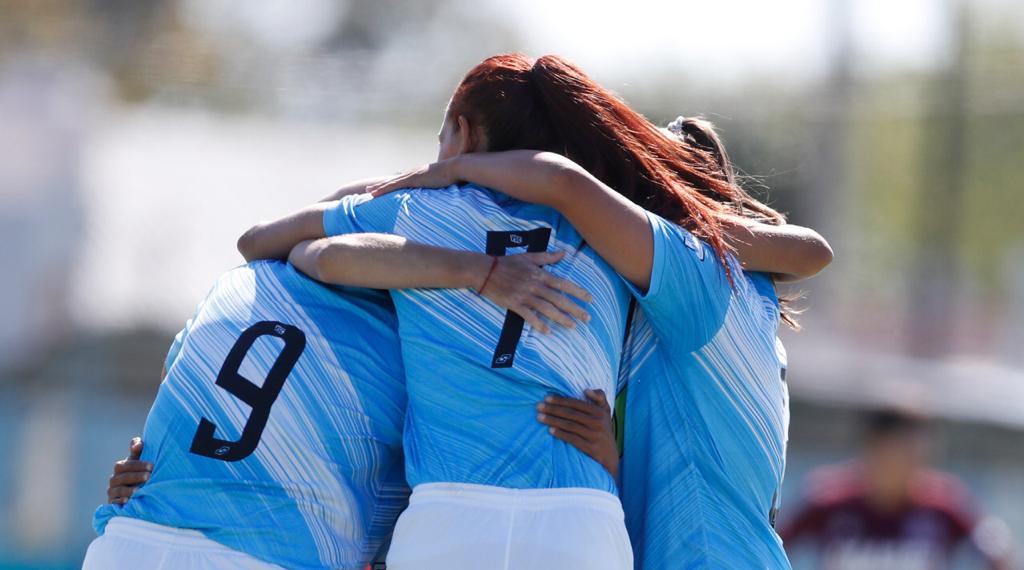
Therefore, the result of the match, in which her team Villa San Carlos de Berisso lost 7-1 against Lanús, was almost irrelevant. “ It was wonderful to be back after so many months away from the pitch,” Mara told Presentes. “And also to know that something historic was happening, something that will mark a turning point. But while I was playing, I was only focused on playing.”
Football: first refuge
Mara started playing soccer at 15 when her neighbor, Adriana, invited her to play on the small fields across the street, where the neighborhood tournament was held. For Mara, who suffered so much discrimination that she contemplated suicide, that small gesture was immense. “ Soccer saved my life,” Mara said. “I was having a hard time because of the discrimination I faced every day. It ended up being therapy for me, a form of psychological support.” However, she also suffered discrimination on the field, mainly because opposing teams considered her a disadvantage. But she, in her own words, “I played badly. We have to change the perspectives people have about others just because they are trans.”
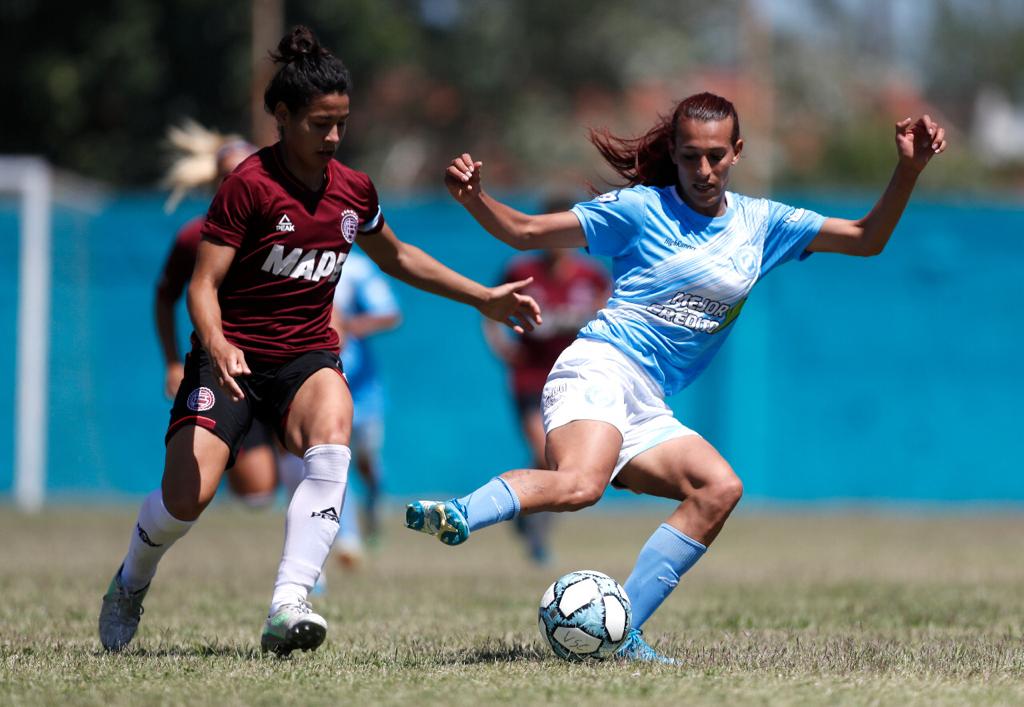
Despite the field being a place of happiness for Mara, the behind-the-scenes bureaucracy wasn't easy. Until she turned 18 and, protected by the Gender Identity Law, legally changed her gender on her official documents, she not only couldn't begin her journey to playing professionally, but some teams excluded and discriminated against her for being trans . Once legally recognized, Mara played for several teams and leagues until, after winning two championships with Las Malvinas in the Platense Amateur League, she joined Villa San Carlos in the first division.
In addition to undergoing the routine medical tests required of any player, Mara had to provide proof of her testosterone level, which, according to the IOC, must be below 10 nanograms per milliliter of blood for all high-performance sports. Mara told Presentes that “we received excellent treatment from the AFA, which was unexpected. This is because there is a Gender Identity Law that supports and protects me, providing me with state-level protection. Thanks to this law, I am able to play at the highest level today,” she added.
For her part, Lorena Berdula, a non-hegemonic representative of Mara, pointed out that she will have to undergo a blood testosterone test every time the championship begins. “While it’s a biological perspective and a completely patriarchal condition, we think that somehow we need to start a dialogue with these institutions, which are also patriarchal ,” she explained to Presentes. “The idea is that we can overcome this in order to have a dialogue with CONMEBOL when she has to play and with FIFA if she’s called up for the national team, and thus be able to de-binarize these regulations, not only in sports but also in institutions.”
The path to equality
Mara's inclusion in the top division is undoubtedly a watershed moment in sports. Despite soccer being the most popular sport in Argentina, its professional practice remains a privilege of cisgender . While first division male players earn an average salary of $80,000, with some earning over $300,000, all professional female soccer players in Argentina have other jobs to support themselves, as their average salary is $20,250.
Thus, while critics of Mara's inclusion in professional women's soccer argued that her participation would create an unfair disadvantage on the field due to the perceived strength associated with male biology, Mara's perspective differs. "I was on the field the other day, and we still lost," she says. She goes on to explain that the rules in mixed-gender tournaments, where men cannot shoot on goal if a woman is in goal, stem from the fact that "men have been playing soccer for longer. It's a way of achieving parity."
Inclusion in sports, therefore, seems to have more to do with invested resources than with hormones. “We need to de-binarize sports to de-binarize different social spheres,” Mara tells Presentes. “We have to break the idea that men have to play soccer; they can dance ballet and women can play soccer. Sport has no gender or sex. Sport is a sport. Soccer is soccer, and people who are passionate about it have the right to practice it freely without discrimination.”
We are present
We are committed to journalism that delves into the territories and conducts thorough investigations, combined with new technologies and narrative formats. We want the protagonists, their stories, and their struggles to be present.
SUPPORT US

FOLLOW US
Related notes


We are present
This and other stories are not usually on the media agenda. Together we can bring them to light.