

They travel to Jalisco, the first state to recognize transgender children, to obtain documents.
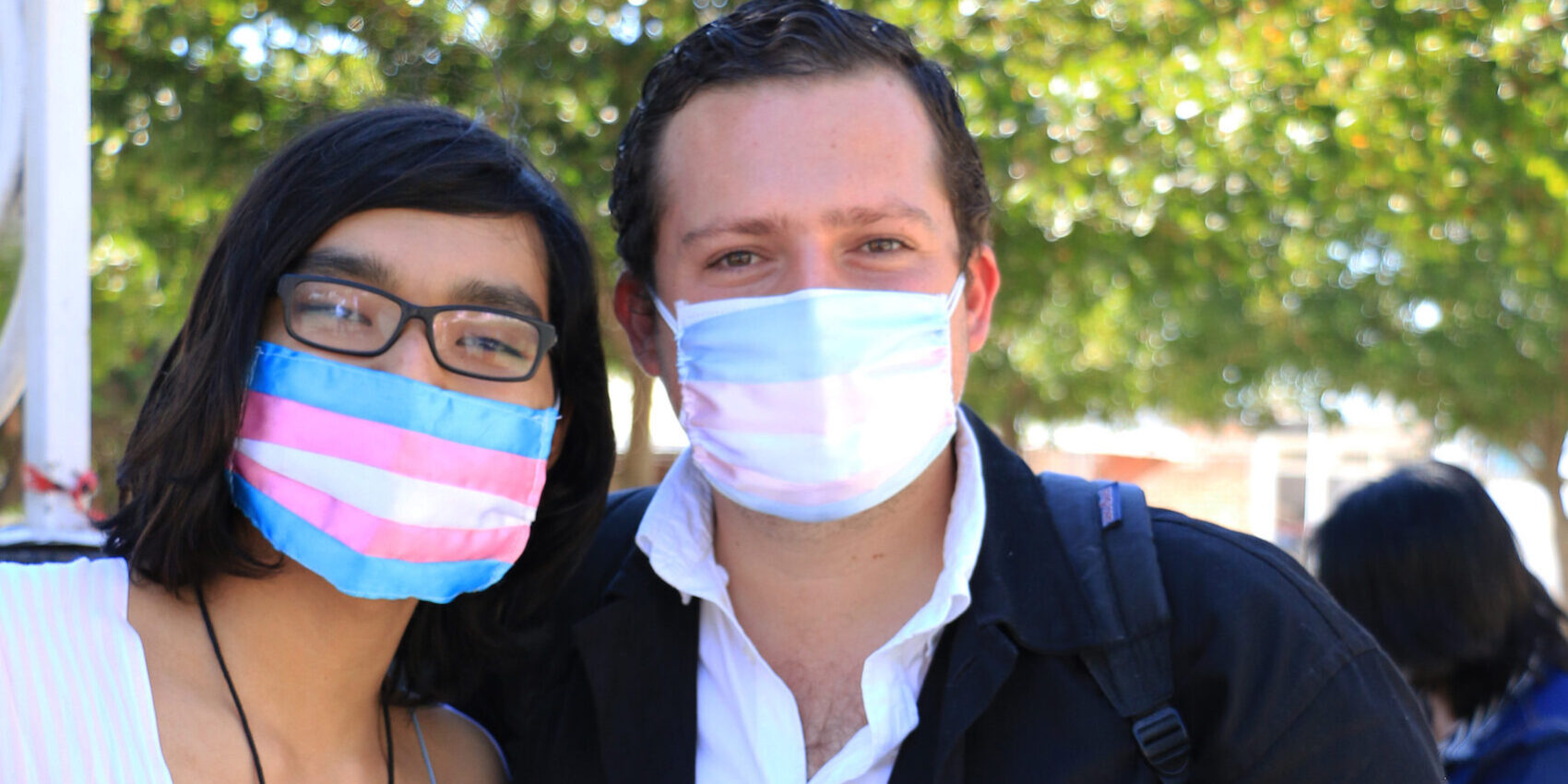
Jalisco has become a kind of oasis for transgender children and teenagers. Families from all over the country travel there to access their rights.

Share

Photos: Esteban Leñero
On October 29, the government of the Mexican state of Jalisco published a decree reforming the local civil registry regulations, recognizing the right to gender identity for transgender people regardless of age, place of birth, or residence, as long as they are Mexican citizens.
In one year, Jalisco became a kind of oasis for transgender children and teenagers in the country. And many families began planning how to get there so their children could have a birth certificate that recognizes their chosen name and self-perceived gender identity.
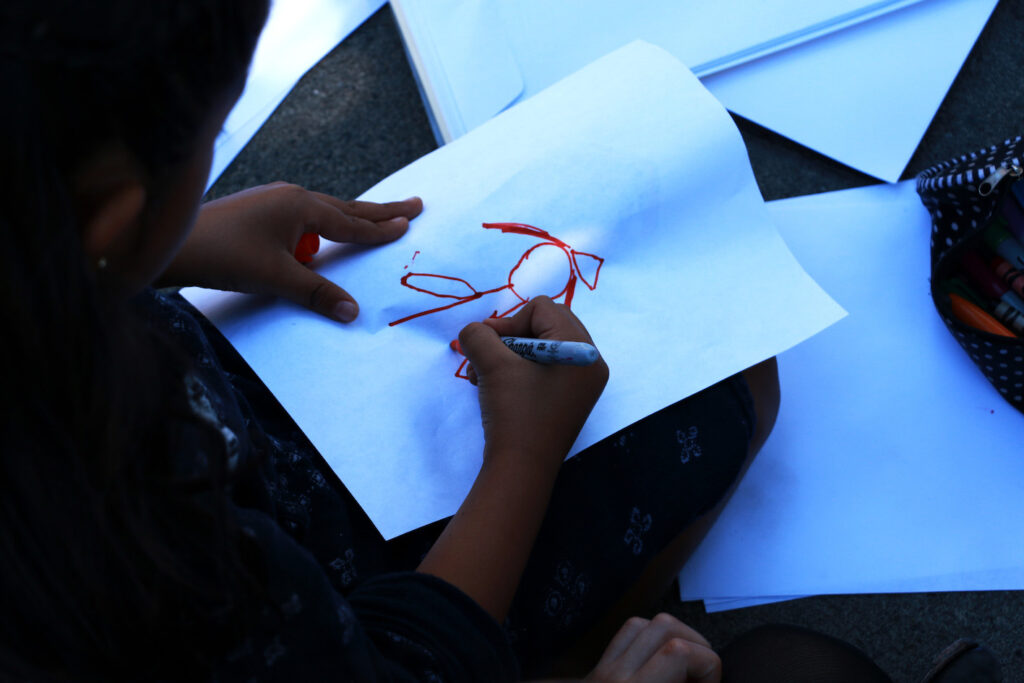
Following the publication of the decree, at least 25 to 30 minors have rectified their birth certificates, according to approximate data from the Directorate of Sexual Diversity of the Jalisco government .
“With this measure, we are anticipating the growth of a new generation of trans people whose lives are not necessarily marked by constant discrimination, nor by the pain that it has meant for others,” said Andrés Treviño, director of the Directorate of Sexual Diversity, in an interview with Presentes.
Travel by right
Sara Artemisa Ramón is 16 years old and comes from Macuspana, Tabasco, a place in southeastern Mexico where there is still no gender identity law. Sara and her mother, Marcela Ramón, are among the fourteen families who had to travel from their place of origin to exercise their right to identity on November 17, 2020.
Although they had faith in the ruling that seeks to guarantee the right to identity for transgender children and adolescents in Mexico City, Congress continues to deny its approval . The alternative then was to initiate legal proceedings. And suddenly, on October 29, the governor of Jalisco announced : “From now on, our state recognizes, with full legal force, the right to identity of transgender people .

“It was surprising, we weren’t expecting it,” Marcela excitedly told Presentes. Sara and her mother didn’t hesitate and organized their trip to Jalisco.
With guidance from Benjamín Gutiérrez, a member of the legal team at the Transgender Children's , they gathered the necessary documentation for the process. This requires: a certified copy of the original birth certificate; an application stating the requested name and gender; the original and a copy of any identification document; and, if the applicant is under 18, a written consent form from their legal guardian.
“I didn’t stop to think. I was afraid that anti-rights groups would do something and block that big step. That’s why it was important to go soon. We gathered the documents, sent them, and two weeks later we were flying from Ciudad del Carmen, Campeche to El Salto, Jalisco,” Marcela said.
To obtain legal recognition of her gender and name, Sara traveled 1,234 kilometers by plane with her mother. Meanwhile, other mothers, grandmothers, and fathers traveled with their children, aged between 5 and 17, from Mexico City, the State of Mexico, Sinaloa, Sonora, Guanajuato, Aguascalientes, and Baja California.
After a long journey of exclusion, fourteen families were finally able to reunite at the Civil Registry in El Salto. The hope they longed for took shape in a birth certificate that reflects the chosen name and gender identity of their children.
Families in a network
Getting to and staying in El Salto involved a lot of effort. From navigating the chaos of a pandemic; the physical strain of traveling by bus, car, or plane; the financial investment required for food and lodging; and the risk of missing a day of work and school.
The Trans Families Network (comprised of organizations from different states across the country) mobilized to facilitate the families' arrival. Tania Morales, Damián Cruz, and Benjamín Gutiérrez, members of the Transgender Children's Association and part of the Network, provided legal and emotional support throughout the process. They also assisted those groups with limited financial resources to cover transportation costs. "It was crucial to have a significant number of people supporting each other, because we didn't know how the people of Jalisco would react," Tania Morales explained to Presentes.
The participation of Isack Zacarías, a human rights defender and coordinator of Impulso Trans (a local organization that has been promoting this issue for the past five years), has been vital. He was instrumental not only in ensuring the timely delivery of the families' documentation on November 17th, but also in the drafting of the decree and the ongoing trans rights movement in Jalisco.
“Nobody is going to tell me anything anymore.”
“I saw a house with the flag hanging up. The streets were full of the colors of the trans flag. It was beautiful, and yes, I shed a few tears.” That’s how Sara describes how they were received in El Salto.
The families entered the Civil Registry. In the town's central square, the other children and teenagers waited their turn, playing and chatting. And with each family that left, they all celebrated together.
Sara and Marcela were the last to go through. After six in the evening, they left with the birth certificate that recognizes their daughter's gender and name: Sara Artemisa. "Having my birth certificate was like conquering the world," she told Presentes.
At the same time, she relived everything she should never have experienced before that day. “I have my name now, I have my birth certificate, no one is going to bother me anymore. No one is going to say anything to me, no one is going to be able to deny me entry to school, my name, my uniform, nothing,” she sighed. “I’m so happy. I no longer need adults to be nice to me because they are literally obligated to be ,” she maintains.
Sara acknowledges that without her mother's support—and that of so many others who fought for the right to identity as a human right—she wouldn't have felt that sense of overcoming adversity. In fact, 85% of the people who support and accompany transgender children and adolescents are their mothers.
The story behind a decree with high human rights standards
The Jalisco decree is currently the mechanism with the highest human rights standards for transgender people in Mexico. This is because the other eleven laws passed in Mexico only guarantee the right to identity for adults.
For Jalisco to become the twelfth state to guarantee this right to trans people (minors and adults), it was necessary to coordinate between activists, civil society, international organizations and the Directorate of Sexual Diversity of Jalisco .
In October 2019, the Directorate of Sexual Diversity sought the best strategy to guarantee the right to identity for transgender people in Jalisco without having to go through a legislative process. To this end, they received technical support from experts from the Organization of American States (OAS) and shared experiences among institutions and activist groups.
In February, the OAS published the report “Alternatives for the Legal Recognition of Gender Identity for the State of Jalisco,” based on Advisory Opinion 24/17 of the Inter-American Court of Human Rights (IACHR). It also drew upon Recommendation 20/2018 of the Jalisco State Human Rights Commission (CEDHJ) and Amparo Appeal 101/2019 of the Supreme Court of Justice of the Nation (SCJN).
“We took those parameters and recommendations to heart when drafting our own proposed decree. And I think that, obviously, the decree has a direct impact on transgender people, but it also has to do with combating adultcentrism. The issue that in Mexico there are still rights that children and young people cannot exercise ,” says Andrés Treviño.
To make this accessible to children and teenagers, Noé Hermosillo, civil registry official of El Salto, implements easy-to-read forms for each minor who carries out the procedure.
Crucial data for assessing a need
One of the key arguments was to determine how many transgender people from Jalisco had changed their name and gender on their birth certificates in Mexico City, a state that has guaranteed this right to adults since 2008. More than 800 transgender people completed this process before the decree.
“Having numbers allowed us to grasp the magnitude of this need, which is often minimized or made invisible. And paying attention to those statistics allowed us to explain the importance of the decree being issued in the way it was,” Treviño points out.
Since the publication of the decree, more than 200 trans people, minors and adults, have completed this procedure in the different civil registry offices of Jalisco, according to approximate data from the Directorate of Sexual Diversity.
“We are very committed to generating statistics as soon as possible because, just as it was important for us to know that 800 people from Jalisco went to Mexico City, we hope that as more people, mainly minors, come to Jalisco to do so, these figures will help open the door to the recognition of this right in other states ,” she added.
“It doesn’t end here”
Both Sara and Marcela are aware that what they experienced in El Salto was thanks to their privileges. And they regret that the situation is not the same for the rest of the trans families who are waiting for this right in different parts of Mexico.
“‘As long as my people don’t have rights throughout the country, there is no reason to celebrate,’ said Marsha P. Johnson,” Sara recounts in the interview.
“That day (November 17th) I tried to embrace that wisdom, to channel it. And to say: okay, it’s me, but it’s just me, and there are many more to come. This isn’t the end. It’s only the first chapter, the first victory of many. But it is undoubtedly a pivotal moment in the history of activism and the fight for human rights,” she added.
Similarly, Tania Morales believes that “Jalisco laid the groundwork from which we can build and showed us that it is possible.” She added, “We still have to modify the CURP (Unique Population Registry Code), safeguard birth certificates, and update school certificates. We have countless things ahead of us in education, health, and sports. We have so much more to do. This is the first step forward.”
Meanwhile, the organizations Transgender Children and Trans Impulse are coordinating the arrival of more families so that girls, boys, children and adolescents can obtain a birth certificate that recognizes their chosen name and gender identity.
Repaying a debt and changing lives
Andrés Treviño believes that “there is still a long way to go before we can say that (Jalisco) is inclusive of LGBT people (…) Standardizing certain procedures will take time. We continue our work raising awareness and training civil registry officials, and the message we're conveying to them is that it's more than just a procedure. It's a measure to redress a historical debt, and they have the power to change someone's life .”
Treviño also encourages reporting any discriminatory act or denial of rights directly to the Directorate of Sexual Diversity , with the aim of providing support and ensuring, through immediate intervention, the right to identity for all trans people.
USEFUL INFORMATION:
Email address for the Sexual Diversity Department: diversidadsexual.sgg@jalisco.gob.mx
Contact phone number: +33 3169-2669 (Mexico)
We are present
We are committed to journalism that delves into the territories and conducts thorough investigations, combined with new technologies and narrative formats. We want the protagonists, their stories, and their struggles to be present.
SUPPORT US

FOLLOW US
Related notes
We are present
This and other stories are not usually on the media agenda. Together we can bring them to light.