

They are calling for Honduras to be condemned for the murder of trans activist Vicky Hernández
What happened and why is it so important that the Inter-American Court of Human Rights addressed the murder of trans activist Vicky Hernández?

Share

By María Eugenia Ludueña and Dunia Orellana
Photos: Cristina Santos/Illustrations by Cattrachas
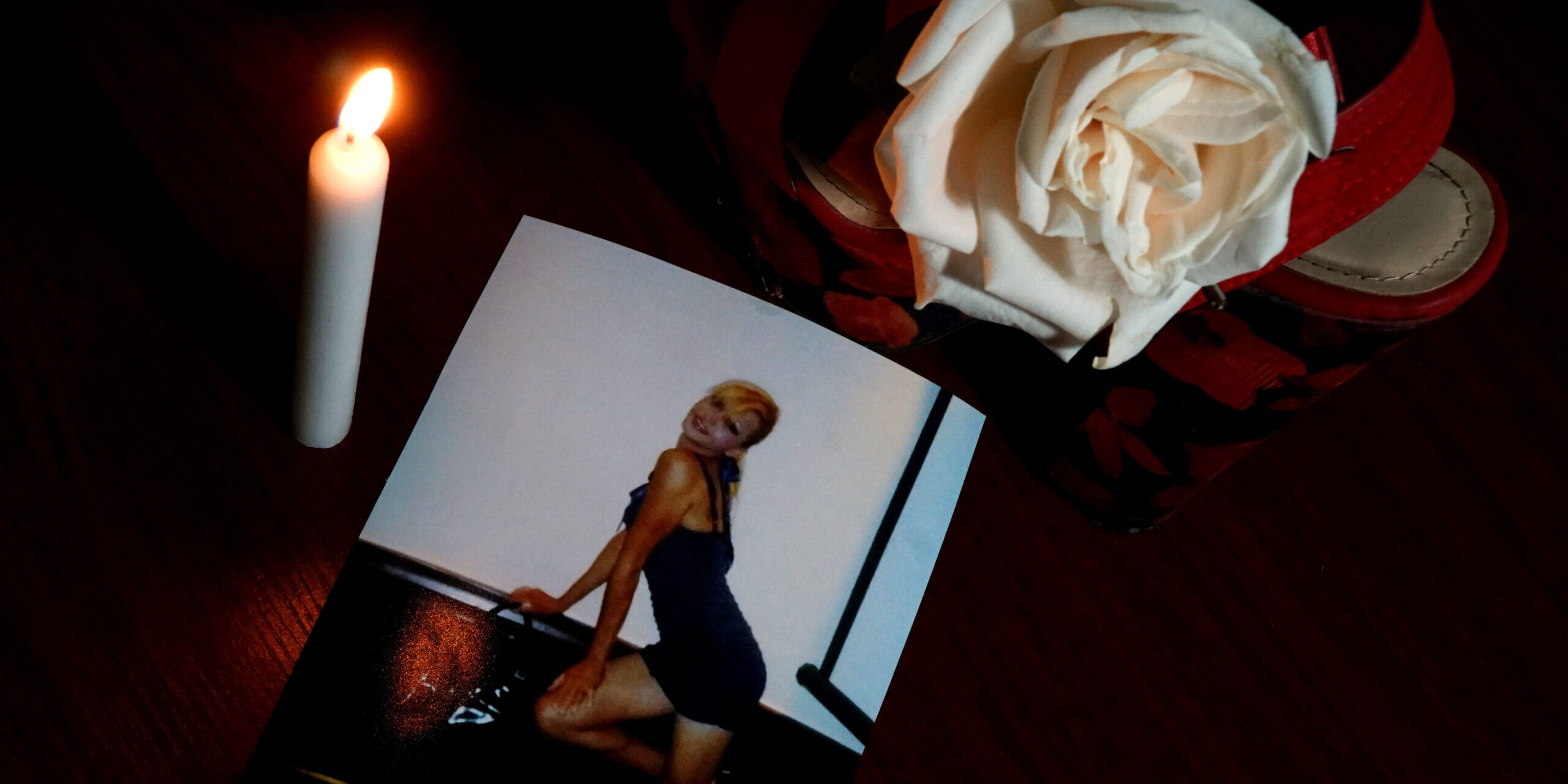
Eleven years after her murder, the case of Honduran trans activist and human rights defender Vicky Hernández was addressed before judges of the Inter-American Court of Human Rights in two virtual public hearings on November 11 and 12.
Why are these hearings so important?
Because this is the first time the murder of a trans person has reached this Court, at the request of the Inter-American Commission on Human Rights. For this reason, the judges who comprise the Court met virtually for two days to hear from activists and lawyers.
The members of the Inter-American Court of Human Rights who were present were Judge Elizabeth Odio Benito, President (Costa Rica); Patricio Pazmiño Freire, Vice President (Ecuador); Eduardo Vio Grossi (Chile); Humberto Antonio Sierra Porto (Colombia); Eduardo Ferrer MacGregor Poisot (Mexico); Eugenio Raúl Zaffaroni (Argentina); and Ricardo Pérez Manrique (Uruguay).
Now they must determine the responsibility of the Honduran state in the extrajudicial execution carried out on the streets of San Pedro Sula, where 26-year-old Vicky survived by working as a sex worker. The crime was committed between the night of June 28 and the early morning of June 29, 2009, just hours after the coup against then-President Manuel Zelaya, and there is strong evidence of state involvement not only in the murder but also in the lack of investigation and justice.

“Trans women who stay in Honduras die.”
Claudia Spellman, a Honduran trans activist, was the first witness at the virtual hearing.
She spoke via video conference from the United States, where she is in exile after fleeing violence in Honduras. She said it's impossible to know all the details of Hernández's death because, according to her family, the authorities didn't perform an autopsy after claiming she was living with HIV. She also said that most of the trans women who were with Vicky at the time are now dead. "Most of the trans people who stay in Honduras die," Spellman added.
The police, she said, are responsible for many of the violent acts suffered by transgender Hondurans. “They pulled out their guns to intimidate us, they beat us with batons, they ripped off our wigs, they tore our dresses. It’s a constant reality we live in Honduras. They told us we were a bad image for the city, that we were men and had no reason to dress as women.”
The murder of Vicky Hernández occurred within a context of violence exacerbated by the 2009 coup. “The country was in chaos, militarized,” Spellman recounted. On June 29, Spellman received a call informing her that Vicky Hernández had just been murdered. “I was in shock,” she said. “The coup led to a surge in the number of deaths of trans women. Being on the streets under police control makes us vulnerable. We lack a law that recognizes us.”
More violence against LGBT+ and trans people in Honduras after the coup
Peruvian expert Carlos Zelada gave crucial details about the context of violence against LGBTI people and highlighted that it particularly affects trans women.
Zelada detailed data compiled by United Nations agencies, the IACHR, and Honduran non-governmental organizations, which determine that between 1994 and 2019 at least 350 LGBT people have been murdered in Honduras.
According to the expert, between 1994 and 2008 there were 20 recorded murders of LGBT people, and after the coup d'état the numbers increased. In the seven months following the coup, 29 of these crimes were recorded, 15 of which involved transgender people, Zelada explained.
In total, 10 of those victims were linked to the organization Unidad Color Rosa, of which Vicky Hernández was a member, according to the expert. “In no case have there been any significant advances in the investigation,” Zelada asserted.
Marlene Wayar, Argentine trans activist at the Inter-American Court of Human Rights
Argentine trans activist Marlene Wayar was called as an expert witness to testify about the role of states in addressing the violence suffered by trans people and why it is important to name these crimes. “The importance of addressing these crimes as transfemicides lies in naming their specific nature, which reveals challenges for the state in preventing and eradicating these crimes. Otherwise, we would only be focusing on punishment,” she explained to the judges.
In an interview with Presentes, Marlene explained: “Vicky’s murder is paradigmatic because of its specific nature: a firing squad where trans women are forced to look at their executioner. Even that last moment is torture. It’s important to recognize the systematic nature of these prejudices,” she expressed. “I believe that somewhere, on some plane of the universe we don’t know, Nadia (Echazú), Lohana (Berkins), Maite (Amaya), and Sacayán (Amancay Diana) are weaving and plotting so that everything unfolds as it does, all magical, causal, and chance connections. It’s very difficult for us to get to know each other and find opportunities. And we are weaving this Latin American trans network that has a lot of magic and protection in it. The Latin American strength that unites us. We take our destiny into our own hands in the way we can, and we must use this to strengthen the rest of our sisters,” Marlene said.
And he recalled another emblematic trial, that of the transvesticide of Diana Sacayán (where the muxe anthropologist Amaranta Gómez Regalado was also summoned as a witness).
“When Diana’s case was decided, I saw it as a victory for Diana herself. Even in death, trans women continue to achieve these victories. I think the same is true for Vicky. It wasn’t in vain that they killed another human rights fighter. I believe she is guiding this process, illuminating us. Our powerlessness compels us to write a huge book so that we can rise to the occasion,” said Marlene.
Serious: harassment during hearings
During the second hearing, it was reported that Vicky's mother received three calls from investigators while the first day of hearings was underway. An activist from the lesbian organization was also harassed.
The Inter-American Court of Human Rights yesterday granted provisional measures to the family of Vicky Hernández and her team of lawyers from the Cattrachas organization to safeguard her life after the intimidation and harassment carried out by the Honduran State.

Hernández's defense team stated that Vicky's mother received a direct call from someone who identified himself as being from the investigative police and immediately handed the phone to the psychologist who was with her. The police officer was informed that what he was doing constituted a form of harassment that was prohibited. For its part, the Honduran government acknowledged that the call had indeed taken place, although it specified that it was not intended to intimidate.
Among these measures granted are requiring the State of Honduras to immediately adopt all appropriate measures to effectively protect the rights to life and personal integrity of Vicky Hernández's family members, as well as the members of the Red Lésbica Cattrachas organization, which is litigating the case before the Inter-American Court of Human Rights.
“We are not vulnerable, we were made vulnerable.”
“LGBTI people are not vulnerable, we were made vulnerable, we are that 'permitted' quota of disposable bodies discarded by the State of Honduras,” said Indyra Mendoza, coordinator of the Cattrachas Lesbian Network, who participated in the hearing on the second day.
For more than eleven years, the lesbian organization Cattrachas has been demanding justice so that Vicky's murder and other hate crimes do not go unpunished. Cattrachas presented the case to the Inter-American Commission on Human Rights (IACHR) in 2013, and the Robert F. Kennedy Human Rights organization in the United States later joined the defense. The Cattrachas Observatory has recorded 371 violent deaths of LGBTI people in Honduras from June 2009 to the present. Of these, 118 are transgender people, 210 are gay men, and 43 are lesbians.
Angelita Baeyens of Robert F. Kennedy Human Rights and the victim's lawyer said that this is a "classic case of unlawful killing by state agents," as it occurred during a curfew in which security authorities were the only ones authorized to circulate.
Flávia Piovesan, Vice President and Rapporteur on the Rights of LGBTI Persons of the IACHR, stated, “The IACHR observes with concern that the prevalence of this hypothesis of a crime of passion could conceal the actions of state agents. The state has not pursued other logical lines of relevant investigation, such as Vicky's work as a human rights defender and the murder of seven founders of the Colectivo Color Rosa.”
“Trans women are the ones who suffer the most violence. They are murdered with firearms and their bodies tend to be displayed. This violence intensifies when they are human rights defenders (…) Vicky’s case was a transfemicide and the State should be held responsible because it is a case of violence against women,” said Piovesan.
For his part, the president of the IACHR, Joel Hernández, reiterated the arguments of the accusation presented by that body to the IACHR Court, in which he holds the State responsible for the extrajudicial execution of Hernández, as well as for a lack of diligence in the investigations that keep the case in impunity.
“More than 10 years later, the State has neither designed nor promoted an investigation to clarify the participation of state agents. The only hypothesis has yielded no results and is based on stereotypes. The State has failed to refute the clear evidence of state involvement in a context of violence against trans women,” Hernández stated.
Using discriminatory arguments alluding to Vicky's private life, the Honduran Attorney General's Office attempted to discredit the hypothesis of its responsibility in the murder of the transsexual, who died 11 years ago, on June 28, 2009, during the coup against former President Manuel Zelaya to impose the de facto government headed by Roberto Micheletti.
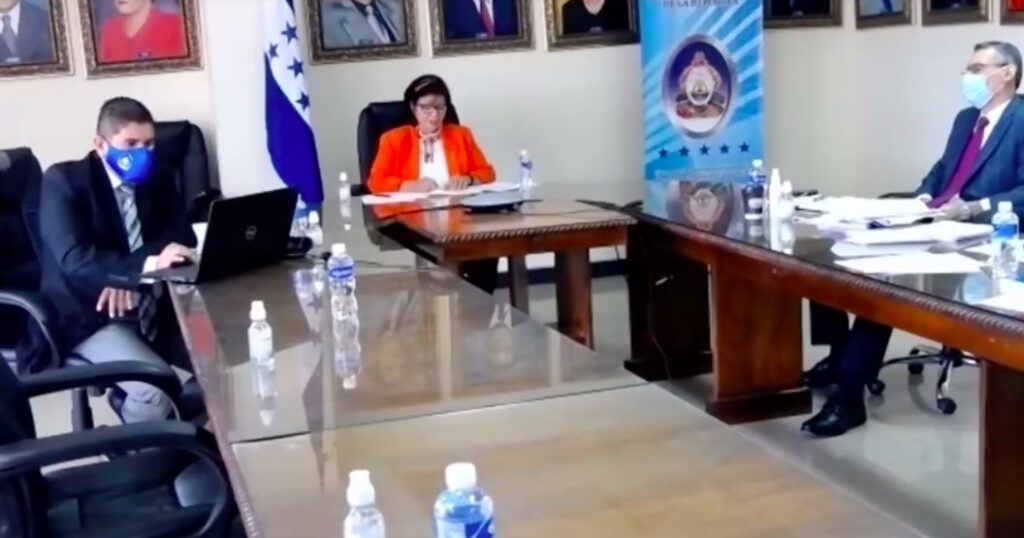
The Honduran state's defense, the organizations representing Vicky Hernández's family, Cattrachas and Robert F. Kennedy Human Rights, and the Inter-American Commission on Human Rights have until December 14 to present their final arguments. Vicky's sentence is expected to be read in three to six months.

We are present
We are committed to journalism that delves into the territories and conducts thorough investigations, combined with new technologies and narrative formats. We want the protagonists, their stories, and their struggles to be present.
SUPPORT US

FOLLOW US
Related notes
We are present
This and other stories are not usually on the media agenda. Together we can bring them to light.