

Four LGBT+ people make history by winning the US elections
Two transgender women and two gay African American men have made history by being elected today in the United States. The vote count is very close, and for now, Joe Biden is ahead of Republican Donald Trump in the presidential race.

Share

By Dunia Orellan
Two transgender women and two gay African American men have made history by being elected today in the United States. The vote count is very close, and for now, Joe Biden is ahead of Republican Donald Trump in the presidential race.
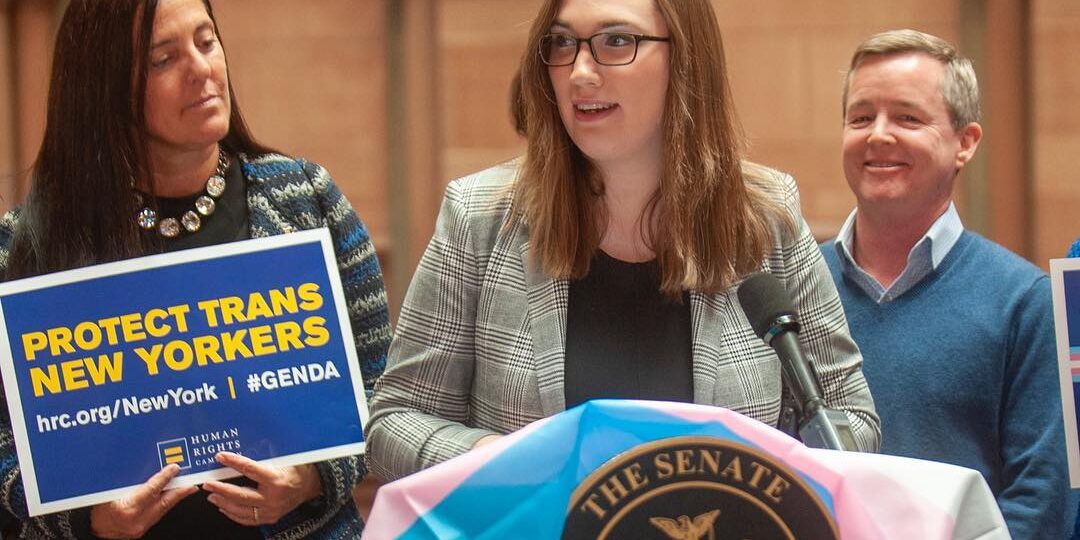
Among the four LGBTQ+ individuals elected, Sarah McBride, 30, stands out. She was elected Democratic senator for Delaware in the northeastern United States. McBride is the first transgender woman to hold that position in U.S. political history. “We did it. We won the general election. Thank you, thank you, thank you,” the LGBTQ+ politician wrote on her Instagram account.
"I hope tonight shows LGBTQ kids that our democracy is big enough for them too," McBride, the first transgender woman elected to Congress in U.S. history, told a group of supporters Tuesday night, before the election results that gave her a seat in Congress were official.
MacBride, now a senator from Delaware, has an extensive resume that includes the honor of being the first transgender person to speak at the 2016 Democratic National Convention. In addition, she is recognized for her work as an activist for the LGBTQ+ community.
“We are so proud of you,” the LGBTQ+ Human Rights Campaign . “LGBTQ+ candidates have made history in this election. Sarah’s victory is a powerful testament to the growing influence of transgender leaders in our politics and gives hope to countless trans people looking toward a brighter future,” said former Houston Mayor Annise Parker.
Sexual diversity groups in the United States are happy with the victory of the senator from Delaware and hope that McBride will use her position to promote policies in their favor.
"It is a powerful testament to the growing influence of transgender leaders in our politics and gives hope to countless trans people looking toward a brighter future," added Annise Parker.

Another trans woman elected is Democrat Taylor Small, who will join the House of Representatives of the state of Vermont, located in the northeast of the United States.
“Thank you all for your kind messages,” Small said on social media after her win was announced. “Instagram won’t let me reply anymore, so while I wait to be allowed to continue responding, I want to say that I’m grateful to you all.”
Gays and Afros
Richie Torres was also elected, breaking all the molds as the first openly gay Afro-Latino to become a congressman. Torres, 32, is a Bronx Democrat who defeated many other Democratic hopefuls in the race for Congress.
Torres, of Puerto Rican descent, was just 25 years old when he became the first openly gay elected official in New York City. Torres won one of his many battles by defeating Rubén Díaz, known for making homophobic and transphobic comments, in the congressional primaries.

“It is the honor of my life to represent a borough full of essential workers who have rooted their lives here so that New York City could live. The Bronx is my home, the borough that made me who I am, and it is what I will fight for in Congress,” were Torres’ first words on Instagram after winning her seat in Congress.
Another of Torres's allies in the LGBTQ+ rights movement, and also elected to Congress, is Mondaire Jones, 33, a Democrat. "I humbly accept the trust that voters have placed in me," the newly elected New York congressman wrote on his Instagram.

“I also give thanks for the opportunity to serve the community that raised me. The community that sent an openly gay Black man, raised in poor settlements and fed by trading food stamps, to Congress.”
The House expects the entry of New Yorkers Jones and Torres in January.
Share
We are present
We are committed to journalism that delves into the territories and conducts thorough investigations, combined with new technologies and narrative formats. We want the protagonists, their stories, and their struggles to be present.
SUPPORT US

FOLLOW US
Related notes



We are present
This and other stories are not usually on the media agenda. Together we can bring them to light.