

A landmark trial for Vicky Hernández, a Honduran trans woman murdered by state forces
Eleven years after the murder of the Honduran trans activist, a hearing was set for November 11, 2020.

Share

By Dunia Orellana
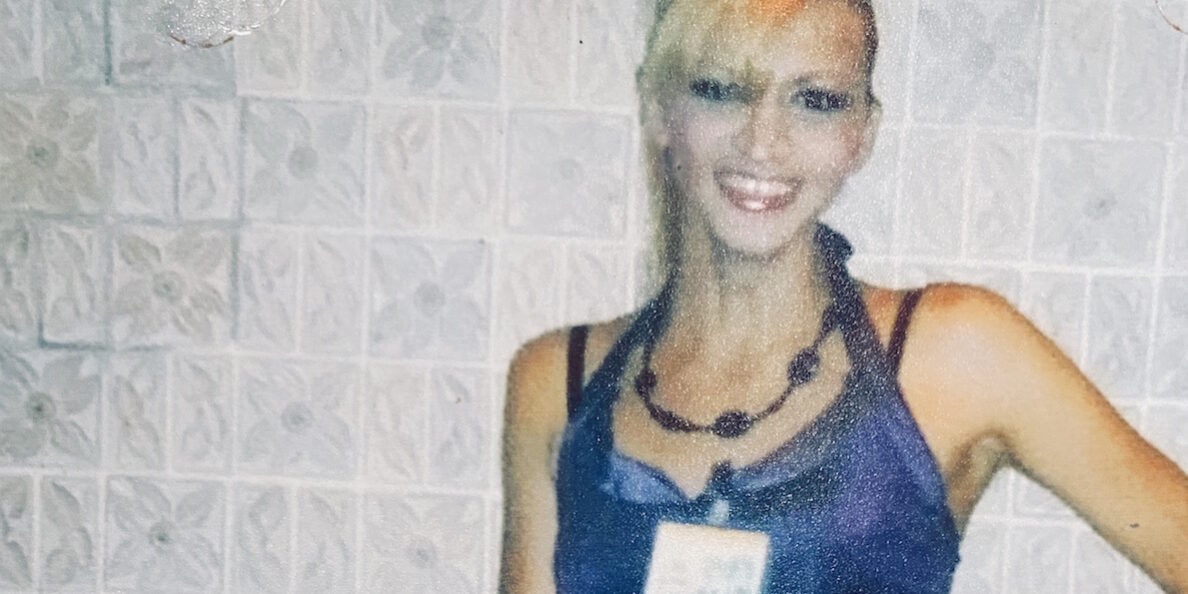
On November 11 and 12, 2020, the Inter-American Court of Human Rights (IACHR) will hold a virtual hearing to issue a ruling against the State of Honduras for the murder of trans activist Vicky Hernández. Vicky was killed on June 28, 2009, the day of the coup against then-President Manuel Zelaya, which established the de facto government of Roberto Micheletti. The lawsuit seeks to overturn the 2010 amnesty decree that protects the perpetrators of the coup in order to identify the chain of command that ordered the murder of the Honduran trans activist .
Vicky Hernández, the first victim of extrajudicial execution by the de facto regime during the coup, was 26 years old at the time of her murder. Vicky finished primary school but dropped out to work and support her mother, sister, and niece. She was a sex worker and a well-known activist with the trans women's human rights organization Unidad Color Rosa in San Pedro Sula, Honduras.
The night of the crime
Vicky went out on the street on the night of June 28 to work as a sex worker, unaware of the curfew imposed by the de facto government. That same night, Zelaya was taken from his home at gunpoint and sent on a plane to Costa Rica.
On the morning of the 29th, Vicky was found dead on a street in the Ruiz neighborhood, in northeastern San Pedro Sula. Agents from the National Directorate of Criminal Investigation removed the body at 7:30 a.m. The previous night, only state security forces were present on the streets of San Pedro Sula. This raised suspicions among LGBTQ+ organizations and human rights defenders that those responsible for the murder had ties to the Honduran state.
The trans activist's body showed "an irregular wound on her left eye" and another similar wound "on the left side of her forehead." The forensic expert concluded that Vicky was murdered with a firearm, according to a document from the Inter-American Commission on Human Rights (IACHR) issued in December 2018.

The chain of impunity began with the crime and continued with the handling of Vicky's body, which was taken to the Forensic Medicine facilities in northern San Pedro Sula, where authorities refused to perform an autopsy. “Human rights organizations denounced that forensic authorities refused to carry out the autopsy report under the pretext of assuming the victim was living with HIV,” the IACHR document states.
“They refused to undertake any investigative proceedings because they considered the victim to be a 'different' person without rights, which constitutes discrimination based on his sexual preferences,” adds a petition filed on December 23, 2012 by the Cattrachas organization, and years later the Robert F. Kennedy Human Rights organization of the United States joined the defense.
Later, the authorities claimed that they had performed an autopsy, but there are no official records of it having been done.
The wake for transgender leader Vicky Hernández was held at the headquarters of the Unidad Color Rosa collective, Colectivo TTT, in San Pedro Sula. She was buried in La Puerta, a cemetery for the general population located in the south of the city.
From impunity to hope
Vicky Hernández has ceased to be just another number on the long list of violent deaths of LGBTIQ+ people in Honduras and has become a sign of hope for the traditionally despised groups in the country.
Since the activist's murder in 2009, at least 366 LGBT people have died violently, including 117 transgender women like Vicky. But the Honduran Penal Code still does not include the term "transfemicide" to define the murder of transgender women and men. Almost all cases, including Vicky's, remain unpunished.
“A murderer in Honduras has a 96% chance of not being caught by the system. It’s a lucrative business to be a hitman in Honduras; 96% chance, and 98% according to the community,” he adds, delving into the causes of the high impunity rates in Honduras. “This is due to the deficient investigations in Honduras,” explains lawyer and university professor Ramón Enrique Barrios to Presentes.

According to Barrios, the investigative bodies themselves believe that members of the LGBTI community are murdered because they deserve it. There are even underlying religious prejudices, as society believes they deserve it because they “don’t follow God’s traditional dictates.”
The lesbian organization Cattrachas has been working for over 11 years to ensure that Vicky's case does not go unpunished. This is just the beginning of an effort to also hold accountable those responsible for the murders of the other 116 trans women and 250 LGBTQ+ people killed since 2009.
“With so much impunity, with so many deaths, this is like collective justice,” says Indyra Mendoza, coordinator of Cattrachas. “The names of other trans people will be there. There was prejudice, discrimination, violence, hatred, but in the end we will achieve that collective justice.”
"It was an extrajudicial execution."
The team led by Cattrachas and Robert F. Kennedy Human Rights has called for the repeal of the 2010 amnesty decree that has allowed all crimes committed during the 2009 coup to remain unpunished. This would allow justice to be served for the human rights violators who shielded themselves behind the coup. “It was an extrajudicial execution, but there was a chain of command surrounding them,” says Indyra Mendoza.
The other results from the group of litigants led by Indyra Mendoza are the economic and psychological compensation that the Honduran State must grant to the family of the transgender activist murdered on the day of the coup that deposed Manuel Zelaya to impose the de facto government of Roberto Micheletti.
“With the establishment of the curfew, the de facto authorities justified the militarization of Honduran territory and the presence of military and police in the streets,” Cattrachas points out.
"To prove that our bodies have value"
Furthermore, the Tegucigalpa-based organization recorded 31 murders of LGBTI people during the eight months of Micheletti's administration, 15 of whom were trans women and 16 gay men. This number exceeds the total documented between 2003 and 2008. Cattrachas identified a pattern of murders against trans women, which strengthens the theory that most were extrajudicial killings.
Vicky's case is shrouded in mystery and marred by impunity. Because authorities refused to perform an autopsy on her, claiming she was living with HIV, "she suffered discrimination even after her murder," says Angelita Baeyens, director of advocacy and international litigation at Robert F. Kennedy Human Rights.
“It is very significant that a case of lethal violence against a trans woman has reached the Inter-American Court for the first time because it opens the door to making the situation of this population visible and exposing all the abuses committed in this case. It is not just Vicky’s tragic story. It is the story of hundreds of trans women in Honduras and the region who are victims of constant discrimination and violence by the authorities and many other sectors of the population,” Baeyens adds.
“It’s like showing that our bodies also have value, our lives have value, our struggles have value. That’s important to me,” says Indyra Mendoza.
In May 2019, the IACHR
According to the Commission, “taking into account such contexts, the fact that the streets were under total control of the public force, as well as the lack of judicial clarification of what happened, there are sufficient elements to conclude the direct responsibility of the State for the death of Vicky Hernández.”
According to the organization, the murder of Hernández "constituted an instance of violence motivated by prejudice towards her gender identity and expression."
It was a transfemicide
The team from the Robert F. Kennedy Human Rights organization and Cattrachas hopes that the legal term “transfemicide” will be recognized in Vicky's murder, but the path has been fraught with obstacles.
A first step towards reaching the goal was to establish a pattern in the murders of LGBTI people and especially trans women during the coup in Honduras as a way to categorize those crimes as extrajudicial executions.
“These transfemicides took place late at night, during illegal curfews, when the streets were under the absolute control of the military and police forces. Furthermore, most of the victims were sex workers and were executed with a shot to the head,” Cattrachas points out.
Based on the pattern identified in the 15 murders of trans women committed during the de facto regime of Roberto Micheletti, Cattrachas created the following definition of the word 'transfemicide': “Violent death of trans women, motivated by prejudice, contempt and discrimination of the gender and assumed identity of the victims, being the materialization of a systematic violence due to social and state exclusion.”
Despite everything, the Inter-American Commission's merits report recognizes that Vicky's extrajudicial killing was a transfemicide. This is the first time the term "transfemicide" has been used within the Inter-American system.
Vicky's death is the first transphobic extrajudicial killing recognized by the Inter-American System. The Commission considers the case a hate crime based on gender identity, and there is strong evidence that the Honduran state is directly involved in the crime.
However, to this day the State continues to deny the human rights violations that occurred during the coup and the direct involvement of law enforcement agents in Vicky's murder.
We are present
We are committed to journalism that delves into the territories and conducts thorough investigations, combined with new technologies and narrative formats. We want the protagonists, their stories, and their struggles to be present.
SUPPORT US

FOLLOW US
Related notes

We are present
This and other stories are not usually on the media agenda. Together we can bring them to light.