

LGBT+ people missing in Mexico: Tere Cox and Nora Pacheco have been missing for two months
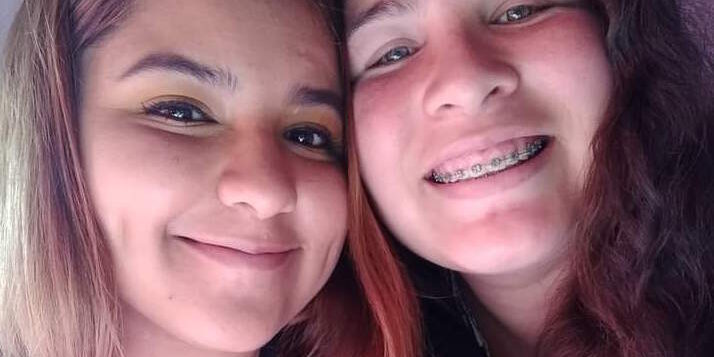
Teresa Cox (25) and Nora Pacheco (23), two lesbian women from Tijuana, Baja California, have been missing since the early morning of August 25.

Share

By Georgina González
Teresa Cox (25) and Nora Pacheco (23), two lesbian women from Tijuana, Baja California, have been missing since the early morning of August 25, 2020. The citizens of Tijuana and groups of families of the disappeared have shown solidarity with the mothers and relatives of the young women in their efforts to find them. In Mexico, 35 LGBT+ people are missing, according to the registry of the Center for Support of Trans Identities ( CAIT ).
The two women left their apartment together at 1:00 a.m. on the morning of their disappearance. The apartment is located in the Castillo neighborhood, in downtown Tijuana, near the border. Their clothing and destination are unknown.

“All we know is that they leave. But we don’t know where they go. They don’t tell anyone. They don’t tell the security guard, or the girls’ father. They just leave the house without a known destination. That’s why the investigation has been so difficult for the Prosecutor’s Office because there are no leads; they are working women and homemakers,” says Karla Cox, Tere’s mother, in an interview with Presentes.
Tere and Nora have been in a relationship for a year and a half and have known each other for two years. Nora is the mother of two girls. On the night of her disappearance, her daughters were with their father.
Friends of the couple and Mrs. Cox do not know if Tere and Nora ever experienced discrimination or violence for living as a couple.
“They never told me they were harassed because of their sexuality. And if they were, if at some point they were harassed, maybe they didn't tell me so as not to upset me,” Mrs. Cox added.
As of August of this year, 421 people had disappeared in Baja California, according to figures from the Executive Secretariat of the National Public Security System. The majority of disappearances of women occur among those between the ages of 18 and 25, according to the State Movement for the Disappeared.

Conservatism and violence
Baja California has been the most violent state in Mexico since 2019, according to the 2020 Mexico Peace Index (MPI) report by the Institute for Economics and Peace (IEP). Tijuana, in turn, is the most violent city in the state and the country. The report attributes the surge in violence in Baja California to the presence of drug cartels and the fact that "the struggle for control of key drug trafficking routes to the United States has become concentrated in Tijuana."
Currently Baja California is governed by Morena in alliance with the Social Encounter Party (PES), a political party made up of Christian-evangelicals.
“There’s a very strong political conservatism here. We’re talking about how lesbian women are made invisible as women and denied as lesbians. And the violence ranges from silly mockery and intimidation through stares to threats and even lesbofeminicides, which aren’t recognized as femicides or even as crimes against lesbians. When justice is demanded, if it happens, the family will march with their flags out in the open to represent who they are. And one example is that of these girls (Tere and Nora). They go out into the street without denying who their daughters are, with that love they show for them, and that should be the norm,” Sara Islas, a member of the Tijuana-based lesbian feminist collective Lavanda Clit, Presentes.
Who are Tere and Nora?
“My daughter is a poet, she loves to write. Nora is a wonderful cook, she’s a very lovely woman, very much a homebody, very devoted to her daughters. Her favorite pastime is the beach; they used to go there a lot. My daughter charmed Nora with her romantic nature. She’s a sweetheart, my daughter. That’s all I can say. It’s not just because she’s my daughter, but those who know her know, and that’s why social media is flooded with her picture. We weren’t expecting anything like this. Their life was like this: work, home, romance, in love,” is how Karla Cox remembers her daughter and daughter-in-law.
When Mrs. Cox talks about the relationship between Teresita, as she calls her daughter, and Nora, a smile spreads across her face.

Neither she, nor those close to "her daughters," have any prejudice against them having a relationship, nor against Tere being a lesbian.
“Shortly before this tragedy, I asked my daughter how she felt about being in a committed relationship. She told me, ‘I’m happy, Mom. My wife makes me very happy. That’s enough for me,’ I said.”
Two months without leads
More than two months after the disappearance of Tere Cox and Nora Pacheco, there are still no leads. “Neither of our mothers has received any calls. Not from our daughters, not from anyone,” says Karla Cox.
Desperate not knowing their whereabouts, the families used social media to circulate the couple's photo, asking anyone who saw them to contact them. After receiving an extortion call, they decided to file a missing persons report with the authorities.

“The first thing I did on the 25th (of August) was call Tere’s workplace. They told me she hadn’t come in, and Tere is a very responsible young woman, so I felt in my heart that something had happened. The first thing that came to mind was to call 911, and they suggested I rule out hospitals and jails, which made sense. That day, my family and I searched hospitals and jails until the 26th. They weren’t in any of them,” Mrs. Cox describes the first moments of the search for her daughter and daughter-in-law.
On August 28, Ms. Karla Cox filed a missing persons report for Teresa Cox and Nora Pacheco at the Center for Support of Missing or Absent Persons (CEPEA), which is part of the Baja California State Attorney General's Office. According to Ms. Cox, authorities did not begin the search until Monday, August 31.
“Every time I’ve gone to the Prosecutor’s Office, they’ve always attended to me. I can see that they’re interested in finding them. It’s been like a boom ; society is bewildered, people in Tijuana are shocked because they commonly associate disappearances with drug trafficking, and in this case, that’s not the case,” she adds.
To date, no family member of the missing couple has received psychological support from the Prosecutor's Office. The president and members of the Todos Somos Erick Carrillo Collective have provided support and companionship to Ms. Cox during this search.
Accompany the search
“I didn’t even know what a group of missing persons was because I never thought it would happen to me, to my family, to my daughters (Tere and Nora).”
The collective "We Are All Erick Carrillo" created a missing person poster for Tere and Nora with a secure phone number that has not been used for extortion since August 26. They have been accompanying Karla Cox since that day.
They travel by group throughout the city and metropolitan area of Tijuana. They visit the Forensic Medical Service (SEMEFO), distribute flyers at bus stops, and hang banners with photographs of their missing sons and daughters on pedestrian bridges.

“They help me understand this process, they help me know what to do as a family member. Being with the group, seeing them, even though their children have been missing for months and years, they are strong, they are there. That has motivated me because if they can do it, I can do it. They know how I feel, they understand me, and that helps me psychologically. It's a huge moral support,” says Karla Cox.
“The community here has come together in ways you can’t imagine. They’ve shared my girls’ post so much. They’ve helped me put up flyers all over the city. They’ve really rallied together in the search for the girls,” she adds.
Searching costs
In Mexico, the work that corresponds to the authorities is mostly done by families.
It's common to see, especially women, demonstrating for their missing loved ones. Whether in the cities or scouring the hills with picks and shovels to dig in the earth in order to find their relatives or other missing persons.
Karla Cox describes herself as a woman “not religious but with a lot of faith and few resources.” She has walked under the sun for up to 15 hours, lost count of how many flyers she has handed out, and how much money she has spent on copies and printing banners. Her daily life has been disrupted.
Silence. “The day it hit me, my heart broke. I’ve missed them terribly; it’s made me so sad. My life has completely changed. All I think about is finding them, putting up flyers, walking around. And when I haven’t done it for a day, I feel like I haven’t done anything, and I can’t sleep peacefully. That’s how I do my part to find them. I pray a lot and ask for sanity so I don’t go crazy. I don’t know how to behave; I don’t know if I can laugh. But sometimes I fall into despair, and I cry.”

“The young man (Nora’s daughters’ father) is devastated. And my granddaughters, the little ones, it hurts me to see them so sad and they need their mother. They’re starting to miss her, they look at their mother’s flyer and ask if they’re being searched for,” says Karla Cox, her voice breaking.
The process of searching for missing persons in Mexico involves high investments by the families searching, where in addition to money, they involve their time, their affections, their health and their lives in the journey to find them.
There are no official figures on missing LGBT+ people
In Mexico, there are no official statistics on violence against the LGBT population. When it comes to the crime of disappearance, “there is underreporting, there is fear of reporting . There are no resources on the part of the State, no guarantee of a thorough search,” Rocío Suárez, coordinator of the Center for Support of Trans Identities (CAIT), told Presentes.
In 2017, Rocío received information about Mario Antonio de la Cruz, a 16-year-old gay youth who disappeared in Cancún. Since then, she has been following the case and has begun documenting the disappearance of LGBT+ people in the country.

In Mexico, there are 35 registered missing LGBT+ people. The majority are trans women ; however, the CAIT (Center for Assistance to Victims of Transgender People) has records of the disappearance of three lesbian women. Two were located in 2017, and in July 2020 in Tijuana, Jennifer Valeria Tamayo disappeared, and it is unknown whether she has been found.
“There are many disappearances that go unseen. We generally talk about disappearances of people living in urban centers, but not about the disappearance of Indigenous people, or people living in rural areas, and their cases remain invisible. LGBT people also matter, and these search mechanisms should be created for them. Exchanging information with organizations that aren't specifically LGBT-focused—what ultimately unites us is the call to locate the disappeared. I think this is important, until we find them all,” Rocío emphasizes.
What to do in case of a disappearance?
Rocío believes that the issue of missing LGBT people doesn't receive enough attention and doesn't raise awareness among the country's LGBT population. "It's important to raise awareness and for us to know our rights, and the rights of our families and friends when someone disappears. There's a lot of ignorance about how to create a missing person report and which institutions to contact," she says.
So, what's important to keep in mind when someone goes missing? Rocío recommends not losing sight of:
- It's a myth that you have to wait 72 hours to report someone missing. "As soon as someone's whereabouts are unknown, a report can be filed."
- If you are a friend of a missing person, you may face reluctance from the authorities when trying to file a report. “The Prosecutor's Offices need to work on this; it's the same thing that happens in trans femicides, where the authorities don't allow people who aren't direct relatives of the victims to follow up on the investigation.”
- It is important to identify and try to reconstruct the last moments. “Knowing what route they took, what path they followed, identifying the people who may have been near the victim before their disappearance.”
- Identify security cameras. “Press the Prosecutor's Office to recover recordings and evidence from public and private cameras.”
- Generate searches with the aim of finding them alive. “What many groups are proposing is to gather evidence to reconstruct the events, generate lines of investigation, and not just have the Prosecutor's Offices dedicate themselves to searching for graves.”
We are present
We are committed to journalism that delves into the territories and conducts thorough investigations, combined with new technologies and narrative formats. We want the protagonists, their stories, and their struggles to be present.
SUPPORT US

FOLLOW US
Related notes
We are present
This and other stories are not usually on the media agenda. Together we can bring them to light.