

Cis/Trans: some linguistic considerations
By Teresa Maldonado/Pikara Magazine* Illustration: Mrs. Milton Following the article on freedom of expression and hate speech published in Pikara Magazine last summer, I have received messages from friends on both sides (I have friends—and enemies, I'm afraid—on both sides of the debate, and, above all, in the middle, which is the…

Share

By Teresa Maldonado /Pikara Magazine*
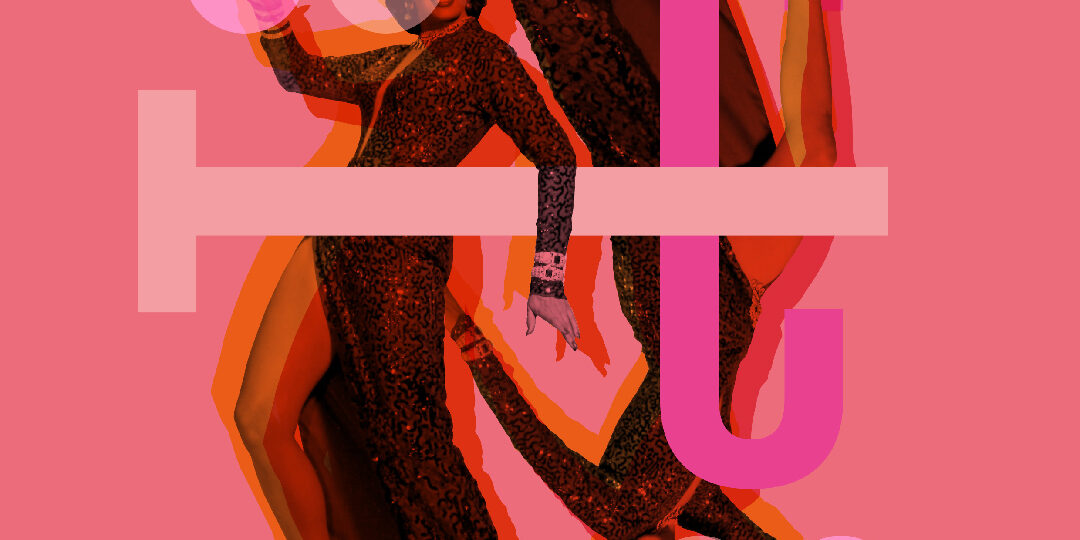
Illustration: Mrs. Milton

Following the article on freedom of expression and hate speech published in Pikara Magazine last summer, I received messages from friends on both sides (I have friends—and enemies, I'm afraid—on both sides of the debate, and especially in the middle, which is the widest and can accommodate the most people). It's striking that all those who are very clear about their position on one extreme or the other always consider that it is "the others," those on the other side, who have more and better means to spread their message and their point of view; that it is "the others" who are less respectful, more violent in the discussion, and less rigorous in their analysis. Regarding content, one of the disputed issues is the appropriateness of using the terminology that distinguishes cis/trans. What follows is a reflection on this last point.
1
I follow Násara ⚢ @SahrawiFeminist on Twitter. A few weeks ago, she wrote the following on her account: “(…) I’m going to explain why we are called 'Cis'. We are called this because being born a woman and conforming to the corset of femininity is supposedly a privilege.” She then weaves a thread recounting the restrictions, limitations, prohibitions, fears, taboos, and exclusions she was raised and socialized with during her childhood and youth in the Sahrawi refugee camp where she was born. And she concludes, among other things: “Having said all this, don’t call me 'Cis', don’t romanticize the femininity that has been imposed on me since I was old enough to understand and that has caused me so much harm and continues to do so. Don’t stop me from fighting against gender because I know firsthand its consequences for women.”
Along the same lines, one of the friends who wrote to me after the article on freedom of expression told me that feminists can't be cisgender because we fight against the imposition of gender. For her, therefore, as for Nássara @SahrawiFeminist, being cisgender is accepting (or not fighting against) the imposition of gender. I'll leave for another time the question of whether we should "abolish" gender, as this friend and many other feminists propose, or "fight against it," as Násara @SahrawiFeminist wants, or whether it's more a matter of "undoing" it (as Judith Butler in the title of one of her books), what each of these actions would consist of (abolishing, fighting against, undoing), and to what extent they are divergent, distinct, complementary, or... even the same thing? (That would be something!).
Wikipedia informs us of the following: “Cisgender (abbreviated cis) is a neologism and technical term of German origin from the interdisciplinary field of gender studies, used to refer to individuals whose gender identity aligns with their sex assigned at birth. The opposite of cisgender is transgender. The neologism was introduced in 1991 by the German psychiatrist and sexologist Volkmar Sigusch.” It then alludes to some of the complexities we might encounter when considering the difference between cisgender and cisexual, parallel to the difference between transsexual and transgender. But we'll leave that aside for now.
This time I want to focus solely on the cis/trans distinction. It's true that some of us don't particularly like what we perceive as excessive references to our (or our) cis status. Perhaps we have a political and privilege-related issue; I don't rule that out. Among those of us who dislike the constant allusions to the distinction between cis and trans women or people, there are some (among whom I no longer count myself) who particularly dislike being referred to (or described, as we'll see later) as cis and raise a series of objections, along the lines of those I mentioned above. Násara's thread @SahrawiFeminist highlights this unease or disagreement with the repeated use of the prefix cis. In reality, I think it's more of a discomfort than disagreement, which, like all discomforts, is difficult to define and objectify, but which presents itself as a theoretical disagreement, I think somewhat forcedly. Let's see.
2
It is well known that the Latin prefix cis means "on this side," the opposite of trans, which would be "on the other side." Hence, one can speak, for example, of the cismundane to refer to what takes place in this world, as opposed to the transmundane, which would happen beyond. But I believe the reason for using this terminology has to do not with the meanings of words (with semantics) but with their structural relationships (with syntax). Specifically, with the distinction made in linguistics between "marked" and "unmarked" terms. According to this distinction, the "unmarked" refers to the most abundant extralinguistic referents of a term; it would be the general, the rule that can (and often does) have exceptions. The "marked," on the other hand, refers to the particular, to what is not abundant, to the exception that proves the rule. For example: if in our usual discourse we say on the one hand "men" and on the other "black men", we demonstrate that the extralinguistic referent of the "unmarked" term (men) is actually white men, and that to refer to black men we have to specify it, that is, "mark" it in language with an adjective that specifies which men we are talking about.
Similarly, if we say "women" on the one hand and "trans women" on the other, it becomes clear that trans women are not, in fact, included in the category of women (without a label). However, when we speak of "cis women" on the one hand and "trans women" on the other, we are implying that the category of women (without a linguistic label) must include both, and that if we want to refer only to one or only to the other, we have to mark the noun "woman" in both cases: cis women and trans women. In this way, "trans woman" ceases to be the marked term and is syntactically equated with "cis woman." This implies that "women"—without a label—includes (or must include) both types of women.
Although it's not usually explicitly stated, this is the position of one side in the feminist debate; the other side rejects it because it essentially argues that either trans women aren't "real" women, or trans women are just that—trans women—but not simply women. Refusing to use the cis label implies maintaining "trans" as a marker of exception or minority, which, on the other hand, doesn't deviate from reality, given that trans women are indeed a minority within the category of women (just like men).
As can be seen, the concept of "unmarked" in linguistics is very similar to that of "default" (used in computer science and other fields). It manifests itself when someone tells us, for example, "I saw a man in the distance," and we automatically, without realizing it, think of a white man, implicitly assuming that if the person seen had been a Black man, they would surely have said, "I saw a Black man in the distance." This automatic reaction is the product of a racist bias similar in form to androcentric bias. However, it also happens that what we unconsciously imagine by default upon hearing a common noun without an adjective ("man") is highly conditioned by the context: it is not the same if the person sending and/or receiving the message ("I saw a man in the distance") is a white person or a Black person; the reference that comes to mind also varies depending on whether the phrase is said and heard in Harlem, a village in Siberia, or a city in Central Africa.
Routinely distinguishing between cis and trans prevents the semantic leap that feminist linguists have observed and denounced in the use of the grammatical masculine as a generic. In the case at hand, the semantic leap would occur if statements like “women face many disadvantages in patriarchal societies; in fact, when they reach menopause…” were made. If we grant the benefit of the doubt (something we always do to allow the semantic leap to take place) that the initial reference to women includes both cis and trans women, the mention of menopause (which only cis women experience) reveals that the hidden referent of women was only cis women.
Using the generic in a (supposedly) inclusive way has some further flaws: it renders invisible those who name the marked terms, who are always human groups subject to some kind of discrimination or subordination. Feminism had to denounce the fact that the noun "man," when intended as a synonym for humanity, functioned as the unmarked term in an androcentric pair (man-woman) that made women invisible.
However, despite all of the above, and being aware that all those reasons exist, I don't believe we should stop saying things like the one above about menopause, or that we should stop referring to things like "women's history" because it's seemingly more correct to say "cis women's history." As I've tried to explain, I don't doubt that there's a theoretical basis for using that terminology (binary and dichotomous as they come, by the way). But I don't think we should always use it systematically. I believe it's more transformative in the long run, and fairer to all women in the short term, to modify the extralinguistic referent of the unmarked terms "woman" or "man" so that if something like "women during menopause..." is said, it's sufficient to include a parenthetical clarification (or, in verbal communication, an on-the-spot explanation) such as: "Obviously, at this point we're referring to cis women.".
I believe that using the cis/trans distinction only when necessary, and not systematically, can help ensure that feminist discourse is understood by everyone, not just those already initiated into it. And I also believe that this latter point—being understood by as many people as possible—is an urgent need for feminism right now.
Let's keep in mind that in the cis/trans distinction there aren't two nouns (as there are in the case of androcentrism, man/woman), but rather only one: "women," which is then qualified as cis or trans. This is not a minor difference. It's related to the fact that women are not a minority (although they are often treated as such), but rather half of humanity. Even less so are women a specific type of "man." We cannot broaden the extralinguistic referents of "man" to include women: we must speak of persons or human beings. In contrast, with the noun "women," if we have been insisting that women are plural, diverse, and heterogeneous, let's accept that this enormous plurality of ways of being a woman includes trans women.
3
But what has been said so far does not explain why some feminists tend to systematically use the cis/trans dichotomy while others seem to find it extremely irritating. To understand why this is the case, why some use it with relish and others stubbornly avoid it, we must consider the connotations that have been attached to its use and avoidance.
It is evident that each feminist current tends to use a particular vocabulary . The type of vocabulary used by each feminist current gives us a clue about the conceptions it subscribes to. Descriptions of the world speak as much about the world being described as about the person doing the describing it. This is not unique to feminism; every social group uses a vocabulary that identifies it as such. Through the use of language, we show which tribe we belong to (or which tribe we want to belong to: using a certain language can be a way of gaining merit to be admitted to that group). Just as we show our adherence to a social group or subgroup, we also differentiate ourselves from the rest through language. When we systematically resort to cis/trans terminology, we proclaim our adherence to a particular current, a particular feminist subculture… in opposition to another (or others). Similarly, by refusing to use that (or other) terminology, dismissing it as "newspeak," we place ourselves in a very specific feminist position. But not only that: we also protest against the establishment (“imposition,” some would say) of terms for the debate that we do not accept because “what we are going to discuss” is not separate from “in what terms we are going to do it” (…terrorism or armed struggle?). Thomas Szasz expressed it clearly in The Second Sin : “In the animal kingdom the rule is: eat or be eaten; in the human kingdom: define or be defined,” which is why “the first to speak imposes reality on the other.”
I don't like to talk about "Newspeak" because doing so would place me on a side I neither want to nor can be on, but I won't deny that I share the concern of those who do use George Orwell . In other words, I'm not comfortable on the other side either (and, above all, I'm bothered by the fact that there are factions within feminism ). As I've already mentioned, I think the proliferation in recent years within feminism of incomprehensible jargon, of cryptic terminology suitable only for initiates, is very worrying . Feminism has to be understood by most people. But this whole issue of feminist language is a matter for another discussion. As for the use of the cis/trans distinction, I think feminists should use it, but not turn it into a symbol of allegiance to any side in any war among us; that's why it's best to use it when appropriate and not systematically.
4
On the other hand, it's a given that trans people disagree on the linguistic (and therefore ontological and political) treatment that should be given to their condition (just as cis people or any other group of people do). For some, it's convenient to literally substantiate, that is, to treat their condition as a transsexual or transgender person as a noun (with a name or substantive), abandoning the adjectival function that the term "trans" usually has in common usage. We can do this or not, but we must know that what we do in this area is not without consequences and, above all, reveals our conceptions about the issue of sex/gender, which is central to feminism.
When we talk about trans and cis women (or men), we are talking about a type of woman (or man); in this linguistic way of framing it, the substantive element (that which has substance) is being a woman, and the characteristic of being trans is an adjectival condition, formally the same as the condition of being cis (one might say: only formally the same). This is the position of those who say of trans women, “They are women, period.” On the other hand, if we stop using the words trans, transsexual, or transgender as adjectives and use them as nouns, we substantivize the fact of being trans [1]. By speaking of “trans women” or “trans men,” we are conceiving of things differently [2]. We are recognizing more substantial differences between being a woman in one way and another, between being a cis woman and being a trans woman. In fact, we are adopting an ontology according to which, in the world, there would rather be women, men, and trans people (cis women, cis men, and trans people) [3]. We would be assigning ontological weight (which, I insist, is always associated with a particular political conception) to being one thing or another (cis or trans), separating rather than conceptually merging cis women and trans women. We would be, in a way, accepting (some would say “recognizing”) the idea that trans people are not women (or men) “period,” but rather a very specific and particular way of being women (or men); so much so that being a cis woman and being a trans woman cease to be modalities of the same thing and come to be conceived as different things: different substances to which different nouns correspond.
This approach differs from what I proposed above. According to that proposal, rather than constantly marking the nouns "woman" and "man," systematically specifying whether we are talking about cis or trans women (or men), what should be done is to redefine the semantic content of "woman" (or "man") so that the referent of these nouns is not only cis people. I won't hide the fact that I personally have doubts about the most appropriate way to address this issue. Other issues that intersect with what is analyzed here, and which go beyond this linguistic reflection, such as the passing [4] of trans people, should be taken into consideration. What I have no doubt about is that there must be a place for this discussion within feminism. It is a discussion, obviously, that cannot take place without the participation of trans feminists (note: not all trans feminists are transfeminists, nor do they necessarily subscribe to any version of queer ).
I believe we should begin by acknowledging that this is a highly complex issue that can also be very delicate. Therefore, it's essential to avoid public shaming and outrage . We cannot be insensitive (for example, to the suffering or distress of others), but neither can we display an overly sensitive nature that censures disagreement or condemns ignorance and shuts down the discussion before it even begins. A little empathy, good faith, and the well-known principle of care should be enough to navigate this labyrinthine question. For my part, I would argue that, in the face of various transfeminisms and trans or posthumanisms, the path out of this labyrinth lies in the reconstruction of humanism , so battered in recent times ; I say this, of course, convinced that feminism is a form of humanism. And that women's rights and trans rights are all human rights that we feminists must defend.
*This article was originally published in Pikara. To learn more about our partnership with this publication, click here .
All our content is freely accessible. To continue producing independent, inclusive, and rigorous journalism, we need your help. You can contribute here .
[1] I think this helps to partially understand what Miquel Misé in his book *A la conquista del cuerpo equivocado* (Conquering the Wrong Body ), published by Egales. [2] Others would prefer to say "les trans," with which I disagree, although I won't go into that here. What we do need to address more precisely is the linguistic issue of nominalizing adjectives. According to the Royal Spanish Academy (RAE), *madre* (mother) is a noun and *lesbiana* (lesbian) is an adjective. However, just as we can make sentences in which *madre* is the subject ("the mothers in the group got up angry"), we can do the same with *lesbiana* ("lesbians always get up happy in the mornings"). In this last example, as in any other we could use with, say, "feminists" (another adjective, according to the RAE), what has happened is an ellipsis of the adjectival noun: we would be talking about lesbian (and/or feminist) women, only the noun *mujeres* (women) would be omitted. The ellipsis of a name is a syntactic process, while nominalization itself is a lexical process. It is worth noting that for the language (or for the Academy), *madre* (mother) has substance in itself (and is not an adjective, it does not denote a possible quality or attribute of the noun *mujer* [woman]), while *feminista* (feminist), *lesbiana* (lesbian), *transsexual* (transsexual), or *joven* (young) are adjectives; that is, they do not have their own entity, they are forms in which one can be a woman, they allude to classes, to types of women. Put another way: “madre” or “mujer” would answer the question “what am I?”, and “feminista” (feminist), “lesbiana” (lesbian), “transsexual” or “joven” would answer “what am I like?” or “what type of woman am I?”[3] Ontology and ethics are parts of Philosophy. Just as ethics studies “what ought to be,” ontology deals with “what is,” with what exists. We can adopt different ontologies; To put it using the graphic example of the philosopher Ulises Moulines : it is just as correct to say that there are scissors and buttons inside a drawer as it is to say that there are elementary particles moving through electromagnetic fields. Celia Amorós has explained that every ontology presupposes and implies a political theory and an ethics.[5] Passing in trans people refers to whether or not it is “noticeable” that they are trans.
Share
We are present
We are committed to journalism that delves into the territories and conducts thorough investigations, combined with new technologies and narrative formats. We want the protagonists, their stories, and their struggles to be present.
SUPPORT US

FOLLOW US
Related notes
We are present
This and other stories are not usually on the media agenda. Together we can bring them to light.