

Grey, the trans woman whose photo went viral, sought asylum to escape violence in Honduras
A murdered journalist, suspicious calls, and alleged police officers asking about her whereabouts prompted Grey Anahí Ríos to flee Comayagua after her attack went viral.

Share

Dunia Orellana, from Tegucigalpa, Honduras
Photos: DO and Erick Montalvan
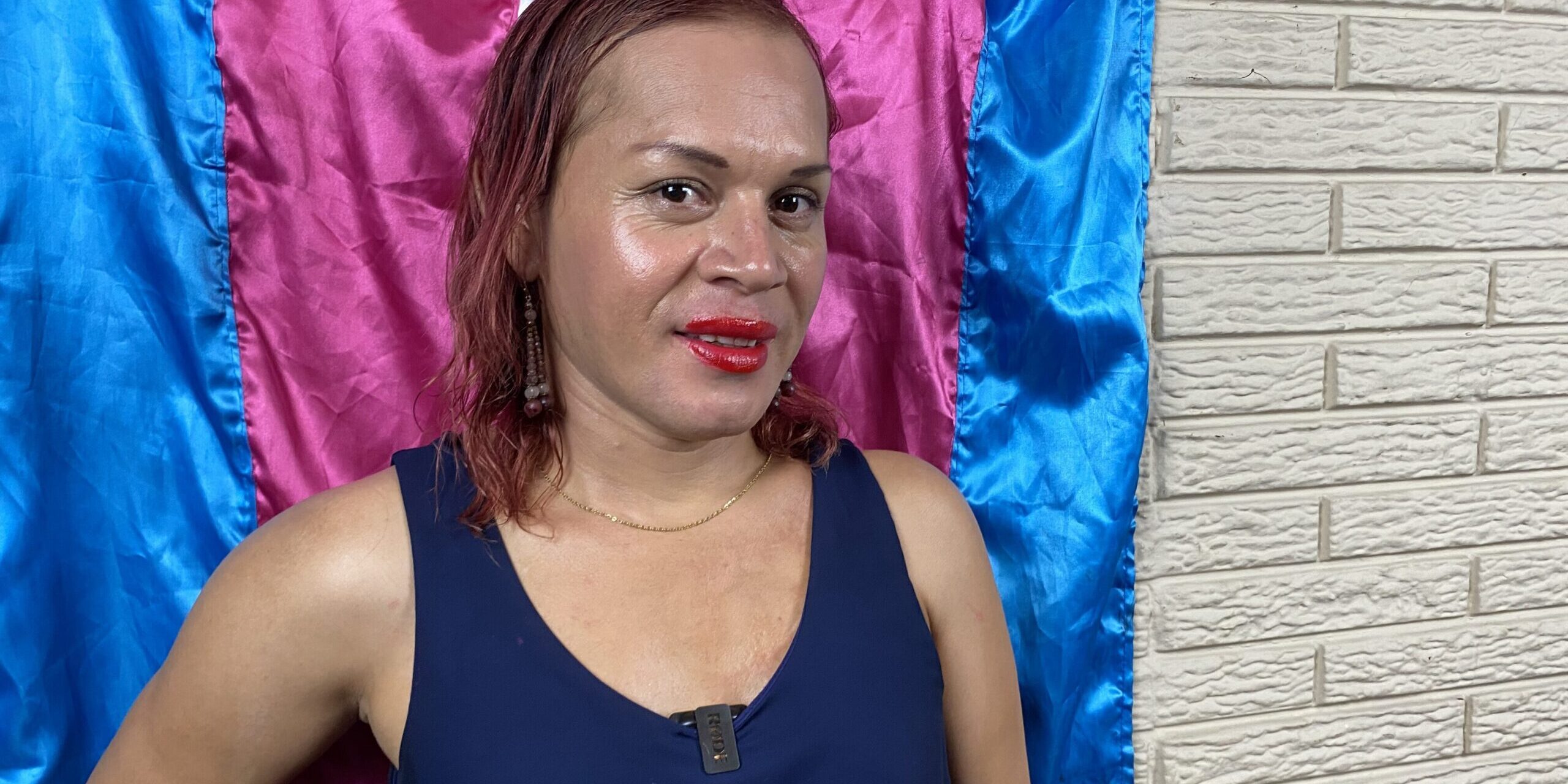
Grey Anahí Ríos , the trans woman whose photo went viral after she was attacked with a machete, was left without justice in Honduras. After being assaulted on September 6, 2020, in San José de Comayagua, in central Honduras, she sought asylum in another country because her life was in danger. This was further complicated by the reported murder of the Honduran journalist who had first interviewed her . Luis Almendares, 35, lived in the same town as Grey and was shot to death in the street by men on a motorcycle.
“My story is very long,” says Grey, 34, in an interview with Presentes. She is now in a safe place far from the rural areas of central Honduras where her nightmare began the moment she entered the bar owned by the mother of her attacker, JT. “That day I was going to work at two houses and I passed by his mother’s. He was drinking and had already threatened me,” Grey recounts. “I didn’t expect what was going to happen to me; I took it as a joke.”
That afternoon she entered the bar at 4:30 and sat down across from her attacker and his mother, who were listening to music on the jukebox. “He told me, ‘Today I’m going to kill you,’ grabbed the machete, and did this,” Grey recounts, imitating JT’s gesture as he dropped the weapon on her.
“If I hadn’t put my hand up, it would have grabbed my head and disfigured my face.” God saved me from that. The wound was bleeding like a “fountain,” he says. At that moment, he went to sit on the bench where the now-viral photo was taken. The coronavirus pandemic prevented him from finding transportation, so he says he went home at 5:00 a.m., clutching his injured hand. With his good hand, he changed his bloodstained clothes as best he could and went to sleep.

She woke up four hours later, “covered in blood,” she recalls. She made her way to a friend’s house, who, seeing that Grey was no longer answering her questions, asked for help to take her to the clinic, where they gave her an IV and stitched up her wound. “She was minutes away from dying,” said the doctor who treated her.
Waiting for Justice
Grey says the Honduran justice system “turned a blind eye” to her case. She filed the complaint on September 8, two days after the attack, and the judge asked her for witnesses. When she received no response from the court, Grey says she went to the Police Directorate of Investigations, where she feels they did little to help her.
“I felt that the authorities weren’t doing their duty. I was looking for support and nobody wanted to help me. It was like there were no authorities in San José. I was wandering around looking for someone who would help me file a report,” she adds.
However, the justice of the peace, Fredy Valle, posted a document on social media dated September 9th stating that Grey's complaint was indeed addressed.
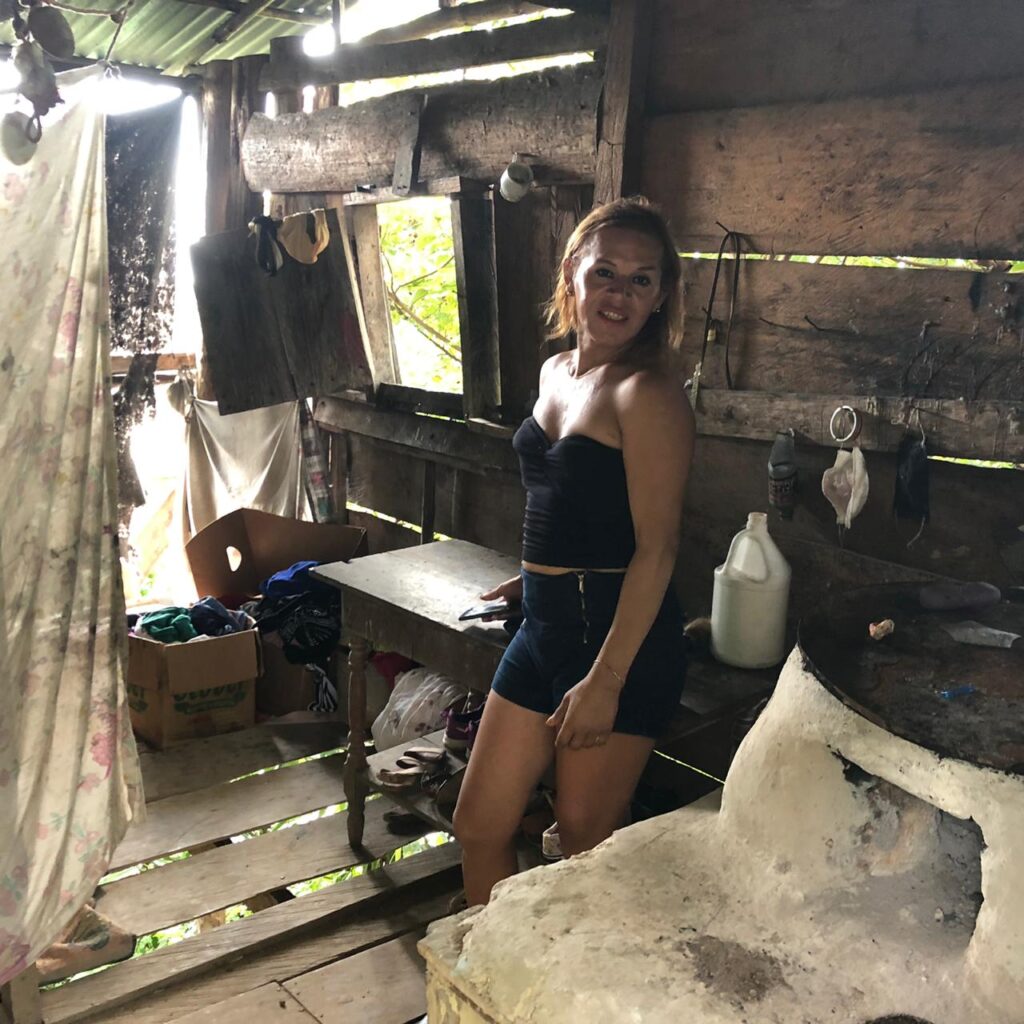
Discrimination against Honduran trans women doesn't begin in the justice system. Grey's problems started at home, when she began her transition as a child. Her father would tell her, "I'm going to buy you toy cars to play with because you're a boy." "I'm a girl," Grey recounts, was her response, and she would ask for a doll.
“I would hide from my dad and run to take off my sisters’ clothes and hide them so he wouldn’t see me like that. I played more with girls than with boys. That’s how I grew up until I was 16 and started dating.”
As is often the case for trans women, the discrimination and exclusion Grey suffered extended from her home to the community and even escalated to physical assault. If a Honduran trans woman experiences constant rejection in urban areas, in rural areas like San José de Comayagua, where she lived, the violence can be even more severe.
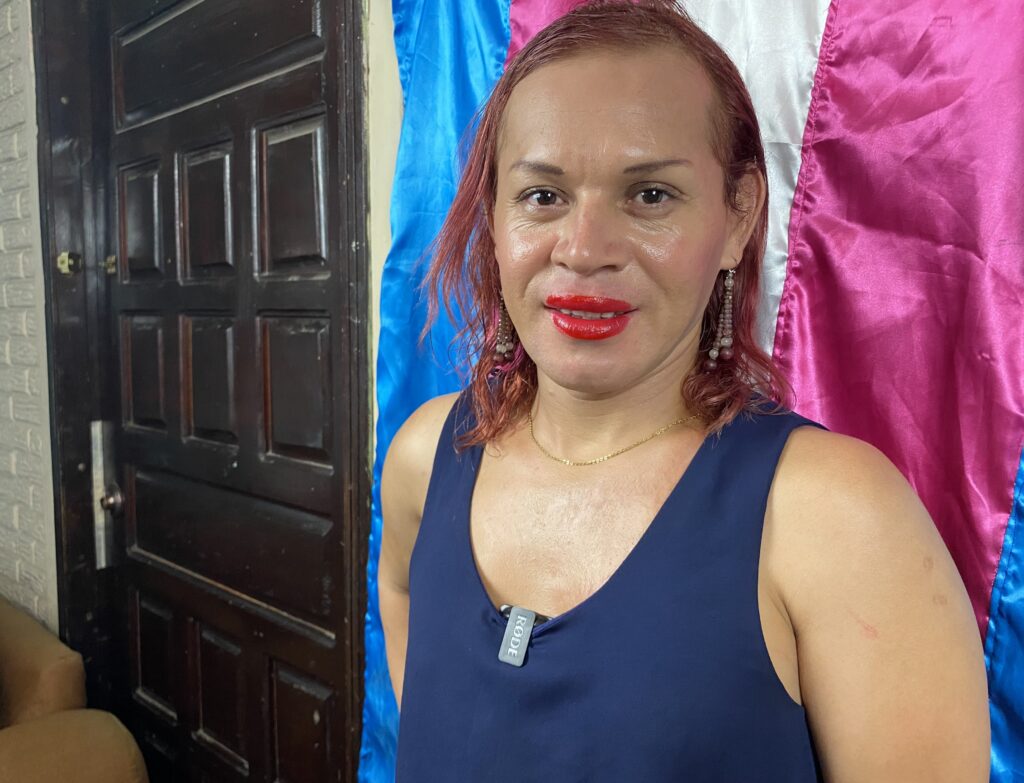
Grey's story in Honduras may sound exceptional, given that she has spent her entire life in a rural area, in a country where six out of ten people live in urban areas, according to the World Bank . "When I was a girl, there weren't so many bad people," she says, recalling how her neighbors in the countryside viewed her during her early years.
The attack against Grey is one of many in Honduras. In 2020, the LGBTI Violent Deaths Observatory recorded 16 violent deaths of LGBTQ+ people. Seven of them were transgender .
Since the photo of Grey bleeding profusely was shared on social media, many people started a GoFundMe campaign to help her. Her story went viral after illustrator and LGBTQ+ activist Óscar Ramírez, moved by the photograph, created a drawing of Grey injured. Visual artist Karla Funes and organizations such as Safe Space, AFET, Honduras Diversa, Iguales, and The Color Project also joined the effort.
Escaping death
It would be good, as they say in Honduras, if the only problem in the case of the attack against Grey were the lack of justice. The worst part is that now there are people after her, wanting to kill her.
How does she know? Because just a few days ago, Luis Almendares , the journalist who shared Grey's story, was murdered. And because alleged police officers have been searching for her in Comayagua with suspicious intentions.
Two men on a motorcycle opened fire on Almendares on Sunday, September 27. The 35-year-old journalist died hours later at a medical center in Comayagua. According to reports, Almendares was a member of the opposition against the government of Juan Orlando Hernández. He had previously reported receiving several death threats.
“I love him very much because he's the one who got everything that happened to me published,” says Grey, referring to Almendares. “When you have your dignity, you have to bring your story to light. I've already come out, and every trans person has to come out. That takes courage because you're also at risk.” Grey is afraid that the same thing that happened to Almendares could happen to her. “Imagine, they killed him, a journalist; they're not going to kill someone like me.”
Danger began to stalk Grey everywhere and in many ways. On Saturday, September 26, a group of men claiming to be members of the Honduran National Police came looking for her and her friends at their homes. Fear gripped her, as stories of murders committed by individuals dressed as police officers or soldiers are common in Honduras.
A series of suspicious calls from people who kept asking about her whereabouts finally convinced her that she had to flee her town and seek refuge in a safe place.
If they are denied life in Honduras, LGBTQ+ people have no choice but to go abroad. With the support of Honduran human rights defenders and others, Grey, assisted by her lawyer, sought asylum in another country. This is the first time in her life she has left Comayagua, Grey said.
“I feel happy and supported by all the people who care about me,” she says. She looks to her future outside of Honduras with hope. She knows that even so, nothing will be easy. In the meantime, she is taking all the necessary precautions in this new environment. She will have to get used to the idea of fighting discrimination every day of her life, but at least for now she is far from the danger of death that made her flee her hometown.
We are present
We are committed to journalism that delves into the territories and conducts thorough investigations, combined with new technologies and narrative formats. We want the protagonists, their stories, and their struggles to be present.
SUPPORT US

FOLLOW US
Related notes



We are present
This and other stories are not usually on the media agenda. Together we can bring them to light.