

How do rental guarantees work for transvestite and trans workers in Buenos Aires?
Transgender people working in the province of Buenos Aires can now access a guarantee to rent a home. The first contract has already been signed.


Share

Illustration: Florencia Capella/Photos: personal archives.
, the province of Buenos Aires announced the launch of surety bonds for transgender people working for the provincial government . This means that transgender people employed in the province can now access a guarantee to rent housing near their workplaces.
The agreement—between Provincia Seguros (a state-owned company), the Banco Provincia Foundation, and the Ministry of Women, Gender Policies, and Sexual Diversity, headed by Estela Díaz—initially provides ten people with free access to this guarantee, aiming to promote both improved access to housing and greater financial inclusion. For this pilot program, the Banco Provincia Foundation decided to provide the financial backing for these first surety bonds. The first contract has already been signed, enabling a transgender worker from Buenos Aires province to rent a home through this mechanism.
This measure is part of a series of rights won in the state thanks to the activism of these organizations. Last December, after more than four years of waiting, the province enacted the Diana Sacayán Employment Quota Law . And a few weeks ago, the national government implemented a trans employment quota for the national public sector by decree.
The first woman from Buenos Aires to sign a contract
Iby Valero, 29, is a leader in the Association of Sex Workers of Argentina (AMMAR) in La Plata and has worked at the Provincial Ministry of Women since July of this year. Iby was one of the first to sign up for this program. She had been sharing an apartment with a friend. Since that lease was about to expire, she wanted to move to a place closer to her work, this time on her own. A few days ago, she became the first sex worker in Buenos Aires Province to sign a rental agreement using this surety bond.
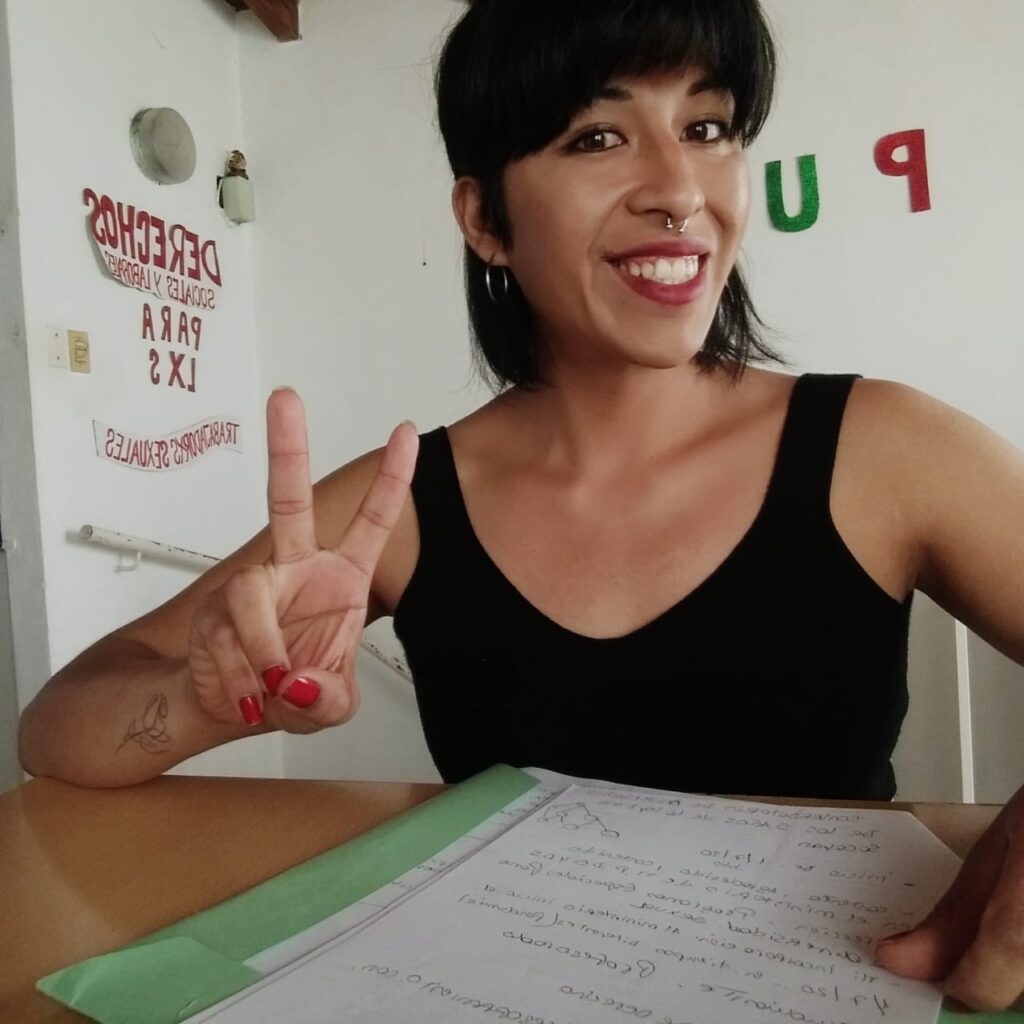
Originally from Puerto Madryn and a resident of La Plata since 2018, Iby explains that the process involves a series of requirements and steps that she resolved through discussions with the Ministry and the Bank. The most important thing, she says, is to contact a real estate agency that has an apartment for rent and accepts these surety bonds, and ask them for a contract template so she can send it to Provincia Seguros and initiate the process. In addition, personal documents, proof of salary, and proof of employment with the government are required. Iby says that " there are trans women who also work for the government and are still unaware of this measure." And she believes this is largely due to the digital divide that hinders access to online procedures .
Access to housing for transvestites and trans people
For 53-year-old Yohana Lencina, the situation is different. She started working at the Ministry of Social Action in San Isidro thanks to the trans quota law passed in the municipality in 2018. Because of the requirements of this surety bond, which mandate that applicants work for the provincial government, she can't begin the process this time. But, in an interview with Presentes, she expressed enthusiasm for the idea of promoting a similar initiative in the municipality. San Isidro is one of the most unequal districts in Greater Buenos Aires, where affluent areas like the lower part of Acassuso coexist with socioeconomically poorer neighborhoods like Boulogne and La Cava. Yohana lives right across the street, in a building constructed by the National Housing Fund (FONAVI). She lives with her aunt and uncle, who have three children. And she dreams of the possibility of owning her own place.
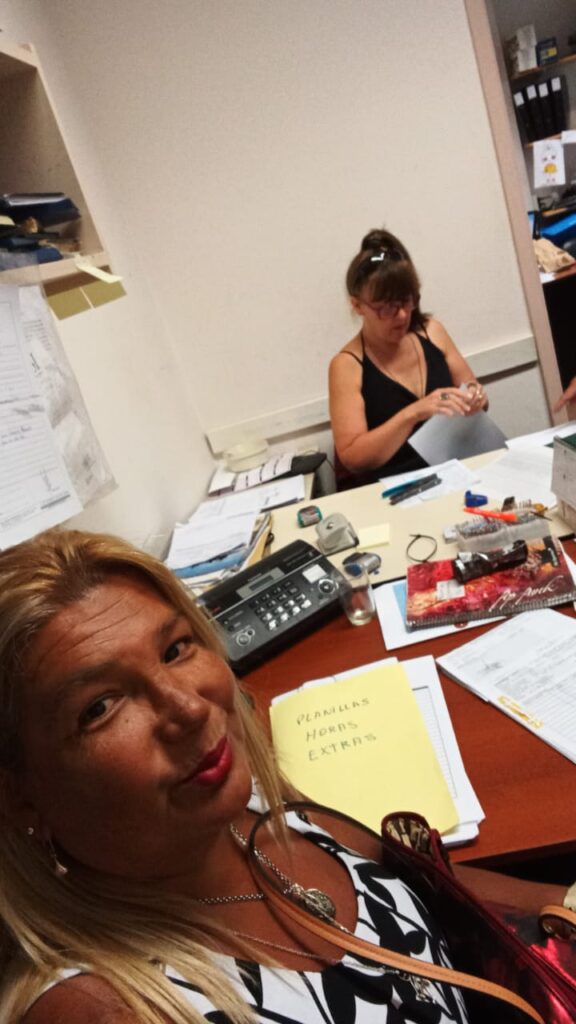
“Real estate agencies must think we make good money on the street, I don’t know what they think. They ask for 50, 60 thousand pesos upfront to even move into a rental. Where am I supposed to get that kind of money, when my salary is way below that?” she wonders. “They ask for that because we don’t have surety bonds or anything. I’ve gone looking for a place with my pay stub and nothing. You might think a municipal tax receipt would work to rent something, but they still say no. Other times I’ve called apartments that were supposed to be for rent and they told me no, that they were already rented, even though I knew they were vacant,” she adds.
Luly Arias is a 33-year-old trans nurse and member of La Cámpora. For the past few months, she has worked in the diversity department of the Buenos Aires Province Ministry of Health. She lives with her husband in San Miguel, west of Greater Buenos Aires. And although she doesn't currently need to use surety bonds to rent an apartment, she is well aware of the difficulties trans people face when trying to find housing.
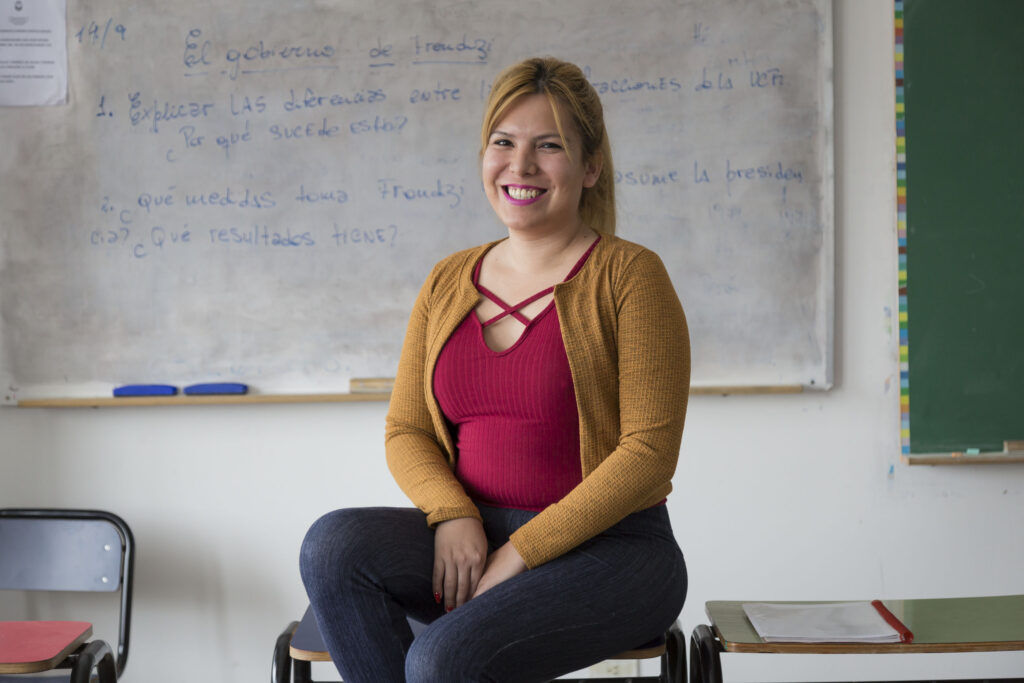
Born in San José, a small town of barely ten thousand inhabitants in the province of Catamarca, Luly Arias completed her higher education in Pedagogy and Social Education in her home province and decided to try her luck in Buenos Aires, the Argentine capital. It was 2009, she was in her early twenties, and she arrived hoping to find a job in the big city. “Leave your CV and we’ll call you if anything comes up,” was the response she heard most often when she applied for positions as a saleswoman, waitress, or store manager. After a few months, she says she felt forced into prostitution. “I couldn’t see any other option.”
Housing was the other major issue Luly had to face as soon as she arrived in Buenos Aires. For the first few months, she stayed at the legendary Hotel Gondolín in Villa Crespo, a place that welcomes trans people arriving from all over the country. When she wanted to rent her first apartment, she encountered a series of new difficulties. These ranged from landlords who, upon seeing her, wanted to charge her triple the rent to problems finding a guarantor.
“When I arrived in Buenos Aires, there were some transvestite and trans women who could rent apartments because they knew a lawyer friend who was really cool with us. He charged us the deposit, the first month's rent, and something for selling the guarantee. At that time, it was the only way we could afford to rent,” Arias recounts. Luly also taught at the Mocha Celis Trans Popular High School .
“One job is not enough for such discriminated populations”
“Obtaining guarantees and surety bonds has a significant economic impact on lease agreements,” Julia Strada, director of the Banco Provincia Group and one of the driving forces behind this inclusion measure at Provincia Seguros, explained to Presentes. “ The difficulties are even greater for a sector of society that finds itself in a state of structural vulnerability as a result of historical social discrimination .”
“The initial implementation of the Employment Quota Law, which involved beginning to work towards incorporating transgender people into the provincial government, made us realize that simply obtaining a job is not enough for such discriminated-against populations . Following this initial inclusion, new needs arise, and from these needs, rights emerge. It is crucial that the various levels of government take a comprehensive approach ,” Strada explains.
The situation of a trans worker prompted the measure
The agreement between the various parties arose from a request by Cristian Girard, head of ARBA (Buenos Aires Tax Collection Agency). Specifically, it came from an agency employee who needed to move closer to her workplace. When ARBA learned of the immense difficulties she and other transgender and transvestite people faced, they began to consider designing a more inclusive and comprehensive mechanism.
She was the first to start the process, and the second was Iby Valero.
Currently, no insurance companies are offering these guarantees to the trans community, and it is the provincial government, through one of its corporations, that is changing the game. If this initiative is replicated by the national government, other provincial governments, municipalities, or even private sector insurance companies, the financial inclusion of the trans community will have taken another step forward in its history of achievements. Access to housing remains an outstanding debt among the many violated rights of trans and gender-diverse people.
The Ministry of Women, Gender Policies and Sexual Diversity of the province of Buenos Aires can be contacted through contacto@ministeriodelasmujeres.gba.gob.ar
We are present
We are committed to journalism that delves into the territories and conducts thorough investigations, combined with new technologies and narrative formats. We want the protagonists, their stories, and their struggles to be present.
SUPPORT US

FOLLOW US
Related notes


We are present
This and other stories are not usually on the media agenda. Together we can bring them to light.