

Public interview with Moira Millán: "Colonialism and patriarchy are recycled"
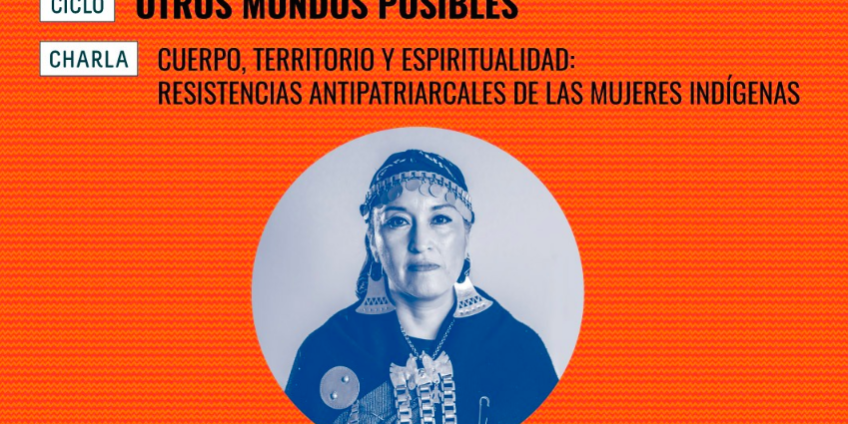
María Eugenia Ludueña and Ana Fornaro, co-directors of Agencia Presentes, interviewed Moira Millán, a Mapuche weychafe (warrior), writer and member of the Indigenous Women's Movement for Good Living.

Share

By Airam Fernández
Anti-patriarchal struggle, resistance for and from territories, spirituality, discrimination, sexual offenses, hate crimes, resistance, racism, and, of course, colonization. As part of the "Other Possible Worlds" series, Presentes organized a talk to discuss these topics on October 12. Ana Fornaro and María Eugenia Ludueña, co-directors of the agency, interviewed Moira Millán, a Mapuche weychafe (warrior), writer, and member of the Indigenous Women's Movement for Good Living.
Moira is one of the most recognized land defenders in Argentina. She has dedicated years to the struggle for the recovery of ancestral Indigenous lands, denouncing what Indigenous nations call "terricide," or the elimination of life in three dimensions: environmental, genocidal, and spiritual. She also stands firm against other human rights violations, such as police violence and what for centuries has been disguised by the patriarchal system as a cultural practice: "chineo," or the rape of Indigenous children in the north of the country by non-Indigenous people.
In this meeting with Presentes, he reiterated his stance on this and other issues. He shared over 50 minutes of ancestral wisdom, which we summarize in these reflections:
“Colonization is recycled”
Moira began her speech with a reflection on the commemorated date. For her, October 11th holds much greater significance, which she defines as "the first day of resistance." She believes that today presents a particularly important opportunity to rewrite history, to reclaim and demonstrate that resistance: "Despite everything, we continue to fight. It is a day to be imbued with profound meaning," she said.
She also spoke about the importance of not continuing to contribute to what she calls a “matrix of death” that is recycled time and again over the years: “ This recycling of the colonization system acquires particular characteristics depending on the era, and the reason is that the architects of death never left. They created a model that expanded throughout the world and remained in the invaded territories. So, whenever the model enters a crisis, mechanisms appear that allow it to continue feeding our fears and domesticating our people. That is why it is important, if we consider ourselves true fighters, to understand that we cannot continue acting in ways that contribute to this recycling.”
“You cannot be a feminist without being anti-racist and anti-colonial.”
Moira maintains a strong distance from Western feminisms. She is uncomfortable being labeled a feminist, and whenever she is defined as part of that struggle, she responds that she is rather anti-patriarchal.
“We do not accept the ideological tutelage of any sector. We don't even believe in the concept of power that feminism challenges patriarchy for. We consider it alien to our conception of life,” she said, also speaking on behalf of the movement she is part of.
“Unfortunately, there is a pervasive white supremacist view of the perspective and rights of diverse groups, and we believe that this has to change.” In that sense, she warned that the great challenge is understanding something very specific: “You cannot be a feminist without being anti-racist (…) or anti-colonial.”

“In the indigenous world, territory is what defines us.”
Understanding that the Mapuche people inhabit a territory and that the territory inhabits them, Moira explained the relationship between this and spirituality, as one of the many ecosystems that exist within the Indigenous worldview. She said that although the political struggle is extremely important, the spiritual struggle precedes it.
“Spiritual ecosystems have elemental forces that inhabit those territories and also possess us. That’s why there are machis ,” she said. And she added: “In the Indigenous world, the territory is what defines us, and spirituality is very important there. If they strip us of that, they not only weaken the cultural structure of our people, but also our bodies.”
To further explore this point, she spoke about the case of Machi Mawün Jones, who in March, due to the Covid-19 pandemic lockdowns, became stranded in the city of Esquel, Chubut Province, Puelmapu (Argentina), where she had arrived from Gulumapu (Chile) to treat several patients. To this day, she has been unable to return to where she has lived for the past three years with her husband, and where her rewe is located—the altar where each machi renews their spirit through a ceremony that connects their energy with that of the spiritual universe. Despite having obtained the necessary documents to cross the border, Chilean authorities continue to deny her permission to do so.
“The spirit of any machi who strays from their rewe will be affected, and therefore, their body will eventually become ill. Some machis even die when they stray from their rewe. This is very difficult for non-Indigenous society to understand; they cannot grasp the extent to which this dimension blends and intertwines to give us identity and existence,” Moira explained. For this reason, since March they have been running a digital campaign to raise awareness of this issue*.
“Enough with the coddling”
Shortly before the national emergency was declared due to the pandemic, the Indigenous Women's Movement for Good Living was preparing to launch a campaign to abolish child sexual abuse. They launched it during the "Climate Camp: Peoples Against Terricide," a march that brought together various organizations and social movements. At that time, Moira proposed that rather than considering it a sexual offense, it should be classified as a hate crime, because this would allow for an aggravated penalty, as has been done in cases of transphobia or the murders of members of the LGBT community.
What happened during the quarantine, she denounced, is that this form of repression intensified: “There was a quarantine for the people, but not for the extractive companies. They continued to arrive in the territories, and within the context of that confinement, of course, violence against women increased, particularly against Indigenous women.”
In that context, Moira continued to denounce the lack of access to justice: “Most of our sisters, especially in the north of the country, are not Spanish speakers. They have nowhere to turn to report abuse; the helplines for gender-based violence don't work, and if they do get through, no one understands them, and they can't communicate. There is absolute vulnerability to everyday violence, and that's where child abuse comes into play with much greater force.”
In response, and with even greater force, they continue to spread the “Stop the Child Abuse” campaign, especially on digital platforms: “We continue to denounce this sexual aberration, which occurs because powerful Creoles choose those they consider rapeable, because in reality they see them as disposable bodies.” Moira also said that in these cases, there is often complicity from the men in the communities: “They act as ‘handers’ of the children, and that’s where the terror of the mothers who don’t dare to report it or can’t. We want it to be understood that this is not natural, it’s not cultural, it’s a latent crime within a judicial system that is perverse, racist, and misogynistic.”
*If you want to learn more about the campaign for the return of Machi Mawün Jones to her rewe, the liberation of ancestral Mapuche medicine, or help spread the word about the cause, write to urdiendounawallmapulibre@gmail.com
We are present
We are committed to journalism that delves into the territories and conducts thorough investigations, combined with new technologies and narrative formats. We want the protagonists, their stories, and their struggles to be present.
SUPPORT US

FOLLOW US
Related notes

We are present
This and other stories are not usually on the media agenda. Together we can bring them to light.