

Being LGBTI in the Northern Triangle of Central America is living in danger
A Human Rights Watch report explains how the governments of Honduras, El Salvador, and Guatemala fail to guarantee the safety and security of LGBTI people.

Share

By Paula Rosales, from El Salvador
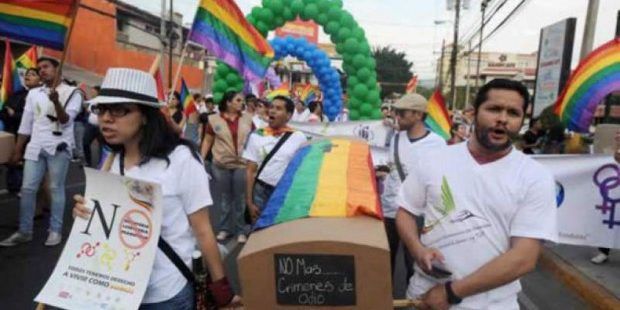
Photo: Presentes Archive
The governments of the so-called Northern Triangle of Central America have not made sufficient efforts to guarantee the safety and security of LGBTI people in their countries. As a result, many are forced to flee, primarily to the United States, where their asylum applications are rejected, according to a report by Human Rights Watch (HRW).
The report “I live every day in fear: Violence and discrimination against LGBT people in El Salvador, Guatemala and Honduras and obstacles to asylum in the United States” includes the testimonies of 116 people from the three countries.
The State and gangs: main threats
According to the HRW study, the main actors that threaten the community are state security forces, such as police, soldiers, gangs, organized crime and their own families, without states guaranteeing their protection.
“The governments of the Northern Triangle do not provide adequate protection to LGBT people against violence and discrimination, and they must overcome serious obstacles if they try to obtain asylum in the United States,” Human Rights Watch said in a statement.
The governments of the three countries are conservative, like that of Honduran Juan Orlando Hernández and Guatemalan Alejandro Giammattei, or the totalitarian style of Salvadoran Nayib Bukele, who abolished the Directorate of Sexual Diversity in 2019 and adopted other measures that contravene the rights of the population, such as the cancellation of the only telephone line to receive complaints of discrimination and attacks.
Fleeing poverty and high levels of violence, thousands of Central Americans leave their countries in search of better opportunities. Since 2018, Hondurans, Salvadorans, and Guatemalans have formed migrant caravans attempting to cross into the United States; many have lost their lives and been deported back to their countries.
Trump and the rejection from the United States
The exodus sparked anger from President Donald Trump, who reinforced border security measures and coordinated containment strategies with countries of origin to stem the flow of people.
US President Donald Trump also announced on April 20, in the context of the coronavirus crisis, that his country had temporarily suspended humanitarian asylum applications, affecting the LGBTQ+ community.
For LGBTI rights organizations, this policy puts migrants fleeing their countries of origin to save their lives at risk of death.
“For some LGBT people in the region, seeking asylum in the United States is their only hope for safety. But the Trump administration is preventing it in every way possible,” said Neela Goshal, senior researcher on LGBT rights at HRW.
No conviction for hate crimes
Human Rights Watch points out that both Honduras and El Salvador have passed laws on hate crimes in the last 10 years, but neither of these countries has imposed convictions for those crimes.
In July, in an unprecedented ruling, three police officers were sentenced to 20 years in prison after a judge found them guilty of brutally murdering trans woman Camila Díaz ; however, the hate crime aggravating factor was not included.
Camila Díaz, who was being pursued by the Barrio 18 gang, traveled to the United States and requested asylum, but it was denied by the authorities.
Bianka Rodríguez, director of Communicating and Training Trans Women (COMCAVIS TRANS), told Presentes that in Central America the necessary conditions do not exist for the LGBTI population to fully develop, due to policies of exclusion and discrimination, often driven by the State.
“We live in countries founded on heteropatriarchal systems or patterns, and this is compounded by the economic, political, and lack of transparency crisis, which also contribute to the lack of the necessary means to ensure the sustenance of the lives of LGBTI people and their families,” Rodríguez told Presentes.
According to COMCAVIS, since 2015, some 450 people from the LGBTI population have left the country in search of international protection, while from January to June 2020, some 110 people had to be displaced, in the context of the pandemic, due to violence, persecution and threats in El Salvador.
We are present
We are committed to journalism that delves into the territories and conducts thorough investigations, combined with new technologies and narrative formats. We want the protagonists, their stories, and their struggles to be present.
SUPPORT US

FOLLOW US
We are present
This and other stories are not usually on the media agenda. Together we can bring them to light.