

Transgender children need protection, and the Mexico City Congress is denying it to them.
The proposal seeks a reform to the Civil Code and the Code of Civil Procedure of Mexico City to guarantee respect for gender identity.

Share

By Georgina González, from Mexico City
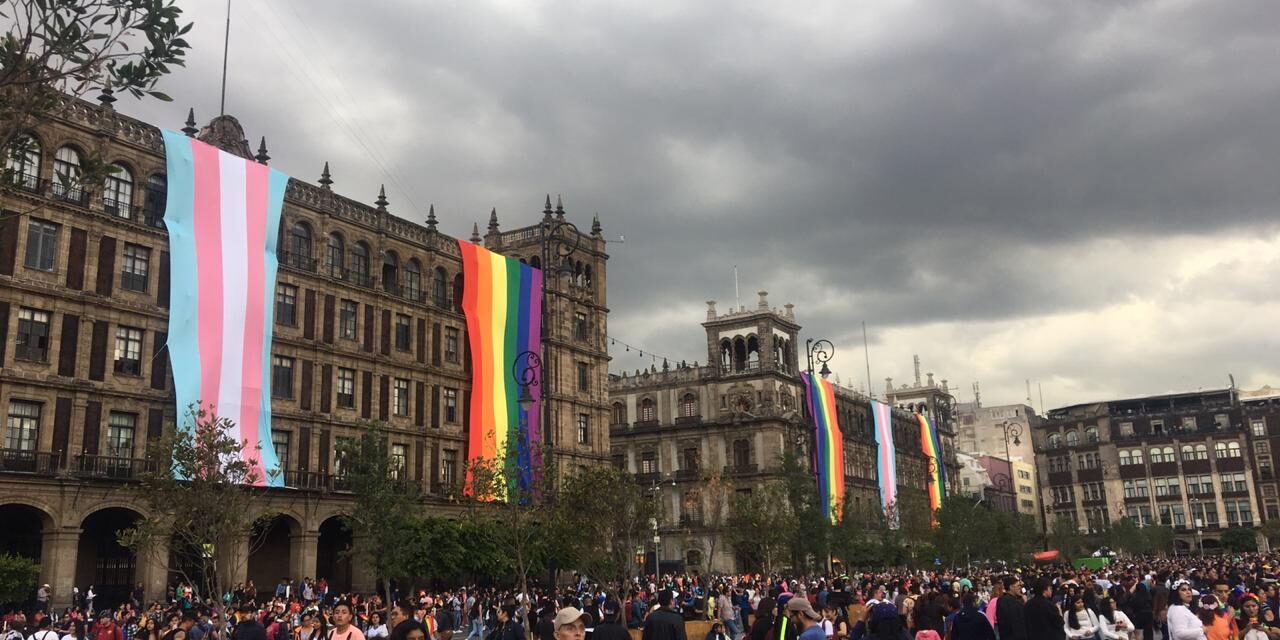
Photo: Milena Pafundi/Presentes Agency Archive
The bill seeking to guarantee an administrative process in Mexico City for transgender individuals under 18 to rectify their birth certificates with their chosen name and self-perceived gender has been stalled for nine months. It has not yet been brought to the floor of the local Congress for a vote, despite a request made yesterday by legislators who announced a proposed amendment (modifications to certain articles) to be voted on today . However, the PAN, PRI, PRD, and PES parties voted against including the bill on gender identity for transgender minors on the agenda.
The proposal seeks a reform to the Civil Code and the Code of Civil Procedure of Mexico City.
Birth certificates and registry changes
Nine Mexican states have gender identity laws that allow access to a birth certificate in an expedited, affordable, and non-pathologizing manner, but none of them include people under 18. In contrast, four birth certificates have been issued nationwide through legal protection to transgender minors.
However, legal protection is often not accessible to all families. Currently, for transgender children and adolescents and their families to obtain their birth certificates, they are subject to a pathologizing, stigmatizing, slow, and costly legal process where ultimately a judge certifies the gender identity of the minor.
«I always get very nervous in class when the teacher announces that he is going to take attendance.»
Iker is 17 years old and about to start his senior year of high school. Two years ago, one of his teachers revealed to the students that he is transgender and tried to withhold his grades. This put Iker in a potentially dangerous situation, facing transphobia and risking his academic standing.
“Having my birth certificate with my name and gender would help reduce the social anxiety I experience at school. I always get very nervous in class when the teacher announces they're going to take attendance. If I had my birth certificate with my name and gender, my only concerns would be, like any other student, focused on getting good grades. I wouldn't have to constantly worry about how people will react if the teacher makes a mistake, or have to listen to the whispers when it happens, because it's happened many times . I would be much more at ease because the teacher, not knowing I'm trans, wouldn't have any reason to discriminate against me, and I wouldn't have to worry that my grades are at risk because of something I can't control, like my gender identity.”
16-year-old Chrom says that having his birth certificate reflect his gender and name would help him " avoid any confrontation for identifying myself as who I am, and prevent it from being used as a weapon against me. Besides being certain, it would make me feel good, very satisfied."
Benjamin Gutierrez, a lawyer and member of the legal team of the Association for Transgender Children , an organization that provides advice and support to transgender people and their families in Mexico, emphasizes the need for the approval of the ruling:
“Children and adolescents have the right to identity, just like everyone else, whether cisgender or transgender, and regardless of age. An identity document is a key right; without a birth certificate to back you up, it's very difficult to access healthcare, education, housing, and so on. It's crucial that transgender children and adolescents are supported by the State, and it's the State's obligation to guarantee them this right.”.
What does the report propose?
The ruling proposes a reform to the Civil Code and the Code of Civil Procedure of Mexico City so that trans girls, boys and adolescents can access the recognition of their gender identity and their chosen name on their birth certificate.
Among the requirements is that transgender minors freely and knowledgeably express their gender identity and their chosen name (without surnames) in the presence of a judge from the Civil Registry. Representatives from the Office of the Ombudsman for Children's Rights of the System for the Integral Development of the Family of Mexico City and a gender studies specialist appointed by the Central Civil Registry Court will also be present. Furthermore, they must be accompanied by at least one person who has parental authority or guardianship.
Since its approval in November 2019, the ruling has been used by deputies and anti-rights groups such as the National Front for the Family to spread misinformation regarding its proposals, arguing that the initiative seeks to: administer hormones, operate on children, "ideologize" them, and take away parental rights from parents.
“There are also certain feminist groups that argue on social media that children don't exist and that trans adults try to impose gender stereotypes on children. In the end, this misinformation turns into moral panic and leads to absurd concepts surrounding the issue of trans children when all we're talking about is their right to change their name and gender on their birth certificate ,” says Benjamín Gutierrez.
For her part, Tania Morales, a lawyer, mother of a young trans person, and director of the Association for Transgender Children, points out, “The intention is not to regulate bodies, but rather to ensure that children and adolescents have the freedom to grow. We want more responsible families supporting their children. But what we don't want is for a person to be denied access to their other rights simply because they don't want to learn or refuse to respect a human right .
The role of mothers
Tania Morales was part of the first Women's Parliament of Mexico City, where she presented a bill for transgender children with a gender perspective. The bill seeks to eliminate the requirement that both parents be present when a minor requests recognition of their gender identity on their birth certificate; instead, they should be accompanied by at least one person with parental authority or guardianship.
And it turns out that 85% of the people who support and accompany trans girls, boys, children and adolescents are their mothers , according to a survey conducted by the Association that Tania directs in conjunction with two other organizations.
“Today you can’t make laws without this perspective because then they wouldn’t be realistic, and as a mother I experience it every day and I also see it in other women, mothers; it’s just a reflection of what we experience socially and it goes beyond having a trans daughter, son, or child. When someone gets sick or there’s the issue of child support debtors, the first ones to wash their hands of it or evade those responsibilities aren’t women, it’s men, fathers ,” Tania explains.
International recommendations
This year, the Mexican State is submitting a report on the observations made by the UN Committee on the Rights of the Child in 2015. One of the points is that Mexico adopt “a course of action that includes the necessary resources, a timeline and measurable goals that involve authorities at all levels in adopting measures, including affirmative action, to prevent and eliminate de facto discrimination against transgender children, […]”.
Faced with this obligation of the Mexican State, Tania Morales asks, “What will Mexico say? What has it done?” Tania believes that this historical moment is “a great opportunity” for the State to guarantee the rights of transgender children and adolescents.
“Even though we have a legal recourse through amparo (a type of injunction), as a movement we will not negotiate. If there is going to be legislation, it will be legislation that includes all possibilities, all people, all experiences. Because these are human rights, we are not negotiating a piece of land. These are people's lives, and no life is more valid than another ,” says Tania Morales.
The fight continues
After ten months of uncertainty, the organized trans families movement continues to focus on ensuring that the rights of trans children and adolescents are guaranteed.
According to the National Survey on Discrimination based on Sexual Orientation and Gender Identity ( ENDOSIG , 2018), 8 out of 10 trans people had the need to hide their gender identity in their schools during their adolescence.
“Unfortunately, today we are at the mercy of schools' decisions to respect or not the identity of transgender children and adolescents. We present our protocol to schools when a family requests our support, but we are civil society; our protocol is neither binding nor mandatory ,” warns Benjamín Gutiérrez.
Part of the energy of the families and the organization is focused on promoting the institutionalization of a best practices protocol in schools at the federal level. Currently, the Protocol for Action in Schools with Cases of Transgender Children and Adolescents, developed by the Association for Transgender Children, is being implemented in 15 schools across the country.
For Tania Morales, this pause in time has also allowed her to realize something: “Originally, we were just a few families with a trans person and with trans people who were supporting us, and suddenly, we are a movement. Realizing that is incredible because now we can better plan where we are going and how we are supporting each other .
All our content is freely accessible. To continue producing independent, inclusive, and rigorous journalism, we need your help. You can contribute here .
We are present
We are committed to journalism that delves into the territories and conducts thorough investigations, combined with new technologies and narrative formats. We want the protagonists, their stories, and their struggles to be present.
SUPPORT US

FOLLOW US
Related notes


We are present
This and other stories are not usually on the media agenda. Together we can bring them to light.