

He fled Honduras for being LGBT and paid for it with a year in jail in the US: the story of César Mejía
Activist César Ramón Mejía had to flee Honduras in 2018 due to violence. Instead of employment and freedom, he received a year in prison in the US and a ban on returning.

Share

By Dunia Orellana, from Honduras
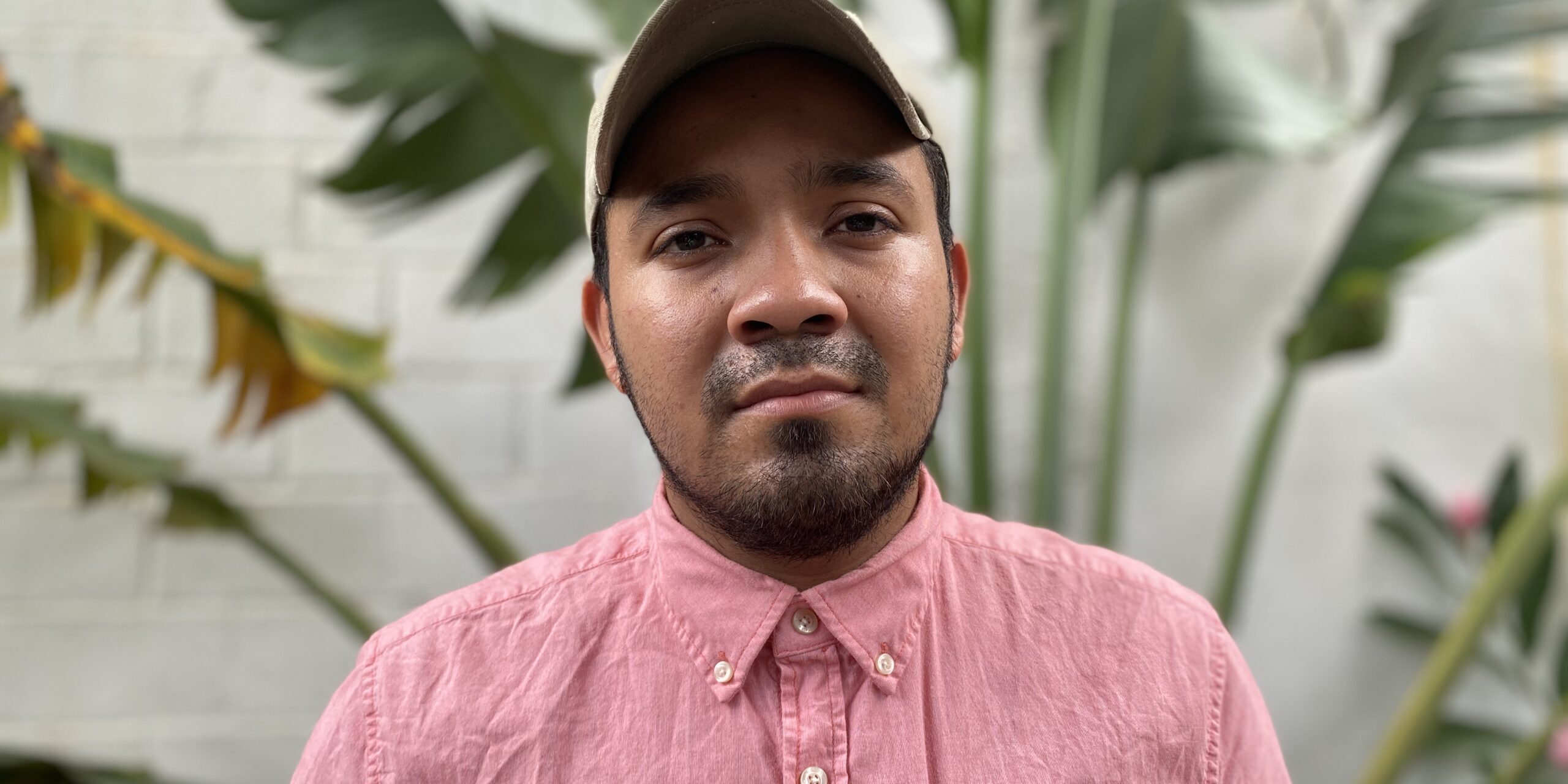
Activist César Ramón Mejía had to flee Honduras in 2018 due to violence, unemployment, and discrimination against LGBTQ+ people. When he reached the U.S. border, he was deported and sentenced to not returning to the United States for the next twenty years. His crime was being forced to leave his country because of the violence, unemployment, and discrimination against the LGBTQ+ community to which he belongs.
“I’m in San Pedro Sula now, and I might wake up dead later. A lot of boys and girls are killed because there are homophobic people around who say, ‘One less faggot on the street,’” says César, 26.
“Defeated, penniless, having accomplished nothing.” That’s how César feels after two failed attempts to migrate to the United States and in the midst of the coronavirus pandemic. He lives with the anxiety of not knowing where his next meal or next bullet will come from. Presentes spoke with him to hear his story.
From the American dream to jail
In late 2018, César was at the border between Mexico and the United States when he decided to turn himself in to the authorities to see if he could obtain asylum in the US. He had made the journey typical of every Honduran in search of the “American Dream,” an expression popularized by the country's press.
Months earlier, she had joined the first migrant caravan that departed from northern Honduras, crossed Guatemala, and reached Mexico. The caravan was made up of a diverse group from the poorest Honduran social classes. There were elderly people, children, cisgender men and women, and transgender people. Even infants were carried by their mothers in sheets tied to their shoulders.
In Mexico, César, nicknamed "The Authentic One," sought refuge with other undocumented immigrants of various nationalities in a boarding house in the center of the capital. There, he appeared in several media outlets, advocating for undocumented immigrants. At least one short documentary featuring him in Mexico City, accompanied by a reporter from Vice, can be found on YouTube .

Request asylum
On December 23, 2018, he decided to turn himself in to U.S. authorities "because I thought it was a country of laws and fairness, unlike the country I come from," he told Presentes. He hoped to obtain asylum.
US officials began to interrogate him fiercely. They wanted to know about his relationship with the caravan leaders, even though all they could accuse him of was supporting the other migrants by helping them obtain food and reporting mistreatment and discrimination.
There, too, he was accused of human trafficking . “I had nothing to do with the caravan leaders. I was traveling alone, but along the way you come to see the people you're with as family. The kids looked up to me as someone who helped solve problems. Nobody can speak ill of me; I didn't prostitute anyone or send anyone into prostitution,” he tells Presentes.
First confinement
On December 28, 2018, the Immigration Department played a trick on him and imprisoned him in a jail in Arizona, in the southwestern United States. From there, on January 15, 2019, he was transferred to the Tallahatchie County Correctional Facility in Mississippi, in the southern part of the country, where he spent most of that year behind bars.
Locked up in Tallahatchie, he almost lost his mind from the anguish: “I didn’t know when it was night or day. I lost track of time because of the confinement,” he recounts.
He remembers the day he received a "poor man's joy." "They sent me confirmation of the parole, that I could take my case abroad. I felt joy, I said 'here I'm going to start from scratch,' to forget everything, to provide for my mother, for my family."
But three days later they tricked him again, according to César's account. His journey from jail to jail continued when, twenty days later, he was sent from the Tallahatchie Correctional Facility to Louisiana. "Here you're going to see a judge who will decide whether you go back to your country or stay here," a U.S. officer told him.
Political deals and crazy trips
“The U.S. judge would tell every Honduran who came to court, ‘Your country is safe. We have an agreement with them. We gave them millions of dollars so there would be more development and you could be well off there, so you’re going back,’” César recounts. The judge didn’t even glance at his file.
That happened in August 2019. What César didn't know was that he still had at least four months of jail time before he was deported in November of that year. “In jail, I had to fight for food, enduring being asked if there wasn't a jail for faggots. I felt worse than ever.”
Depression devastated him. In addition to medication for tachycardia, he took antidepressants. “Several times I had to go to solitary confinement for defending myself.”
After months, her lawyers told her that due to a technicality in the justice system, they could file an appeal. It seemed like good news. The problem was that she had to stay in prison for another six months.
"At least I'm going to see my mom again."
César signed his self-deportation. “It’s better that they kill me in Honduras, but at least I’ll see my mother again.” But they didn’t just deport him. They also made him an outcast. He was banned from the United States for the next twenty years. Honduran authorities labeled him a dangerous criminal who would be much better off keeping quiet. Any “jump” against Honduran institutions could bring him serious trouble. “How does the Honduran government kill?” César wonders. And he answers himself: “Institutionally.”
On November 19, 2019, Immigration officials put César on a plane and sent him back to Honduras. At least that was the intention. But the flight was going to Jamaica.
On the plane that landed at Kingston airport, the Jamaican capital, César was being transported “in chains, handcuffs, waist, and feet, like El Chapo,” he recounts, referring to the infamous Mexican drug lord Joaquín Guzmán. “You can leave me here. I have no problem with that,” he told the immigration officials when they realized their mistake.
Second attempt amid coronavirus
He was treated like a high-ranking diplomat. The United States sent a plane to Kingston full of Hondurans to bring César to San Pedro Sula that same day. He was the only one who boarded the plane. At least he had the luxury of spending four hours in Jamaica.
Jobless, homeless, penniless, César arrived in his hometown with only the clothes on his back. “A lot of deportees were sleeping at the San Pedro Sula bus terminal,” César recounts, “waiting for dawn to board a bus with a ticket someone had given them.” By pure chance, he ran into a friend downtown who gave him 100 lempiras. “'Here, take this so you can go see your mom,' she told me. So I went to my mom's. I surprised her.”
In the end, the twenty-year ban didn't matter to him. Two months after returning, desperate for work, César joined a small caravan that left San Pedro Sula in January 2020. A month earlier, news reports had begun about a new virus that had appeared in Wuhan, China.
César's second adventure ended in Tabasco, Mexico, as the coronavirus pandemic was shutting everything down. There, César turned around and returned to Honduras.
“I want to leave here, but the United States is no longer an option. If I go back, it won’t be eight months or a year in jail. I don’t know what I did wrong. I have no criminal record. All I have left are these papers to read,” he says, his voice breaking, pointing to the stack of documents he carries in his backpack that support his story of being imprisoned in the land of the “American Dream.”
Share
We are present
We are committed to journalism that delves into the territories and conducts thorough investigations, combined with new technologies and narrative formats. We want the protagonists, their stories, and their struggles to be present.
SUPPORT US

FOLLOW US
We are present
This and other stories are not usually on the media agenda. Together we can bring them to light.