

Why the murder of Juliana, a trans woman killed at an army checkpoint, has outraged Colombia
Why the murder of Juliana Díaz, a trans woman, has shocked and outraged a nation. And how the media continued to perpetrate violence against her even after her death.

Share

By Pompilio Peña Montoya/ We Remember *
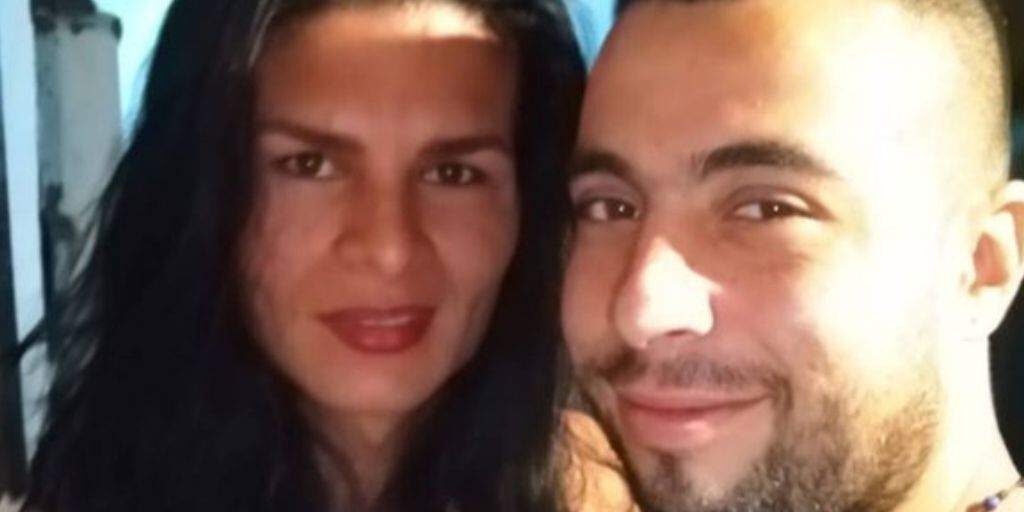
On Sunday, September 27, hundreds of people dressed in white accompanied the body of Juliana Giraldo Díaz to the central cemetery of the municipality of Jamundí, in the department of Valle del Cauca, Colombia. The death of this trans woman, after the Army fired on the car she was traveling in on Thursday, September 24, caused shock in Colombia.
Francisco Larrañaga, the victim's husband, uploaded to social media the dramatic moment he experienced after a soldier shot at the vehicle in which he, Juliana, and two other people were traveling, on the road leading to the municipality of Miranda.
According to Francisco Larrañaga's account to the media, he was driving his car when several uniformed officers suddenly emerged from a field and one of them fired. At least four bullets struck the car, and one fatally wounded Juliana.
According to the version of events given to the media by Army General Marco Mayorga, the soldier involved fired at the vehicle's tires after noticing that it was supposedly going to ignore a checkpoint. One of the bullets hit the pavement, changing its trajectory and killing Juliana.
Outrage and context
The media frenzy and wave of outrage sparked by Juliana's murder occurred amidst a series of events that have discredited the Colombian security forces. Wilson Castañeda, director of Caribe Afirmativo and a human rights advocate for the LGBTI community, explains that it all began with the death of Javier Ordoñez at the hands of police officers on September 8th in a Bogotá street. The killing ignited a wave of protests in the country's main cities, especially the capital. There, demonstrators destroyed 53 police stations and at least ten civilians were killed, incidents that are currently under investigation following the release of videos showing police officers firing on protesters.
The situation is very serious, Castañeda noted, because “it is compounded by the refusal of the president and the defense minister to comply with the Supreme Court's order to apologize and stop the violence during the social protests. So, it's a series of phenomena that have been growing and have two manifestations: on the one hand, the excessive use of force by the police, and on the other, public outrage. Juliana's case has brought these tensions to a head.”
Castañeda added that the defenselessness of the victims of the public force and the impunity of the cases, in which many times the whole truth is not known, have served as fuel for the indignation of a sector of society.
Media violence against Juliana
This was compounded by a series of strong criticisms of the way some media outlets covered the story. The most visible case was the headline on the radio station La FM: “Man Dies After Being Shot by Soldier at Checkpoint in Miranda, Cauca.” Well-known Twitter users such as Físico Impuro and the Red Comunitaria Trans (Trans Community Network ) condemned these journalistic accounts, which also failed to identify the case as a homicide, a fact later corroborated by law enforcement.
The magazine Semana also faced strong criticism on social media for its headline, “Woman Dies from Soldier’s Shot in Miranda, Cauca.” Followers of this media outlet, one of the most important in Colombia, criticized the magazine for not using words like “murder” or “homicide.” They also criticized the publication for featuring covers like the one that emphasized the headline “Love, Death, and Forgiveness,” sensationalizing the news without providing context.
Target of soldiers' mockery
Juliana's sister, Aura Díaz, also shared with Noticias Caracol the profound sadness she felt upon reading a tweet from the Ministry of Defense, less than 24 hours after the murder, which read "Glory to the soldier!": "It was a low blow. Not all soldiers are the same, but I think there's a better time for that. I believe the institution is not in a position to incite violence against the military." The Minister then added a message urging the community not to resort to violent protests.
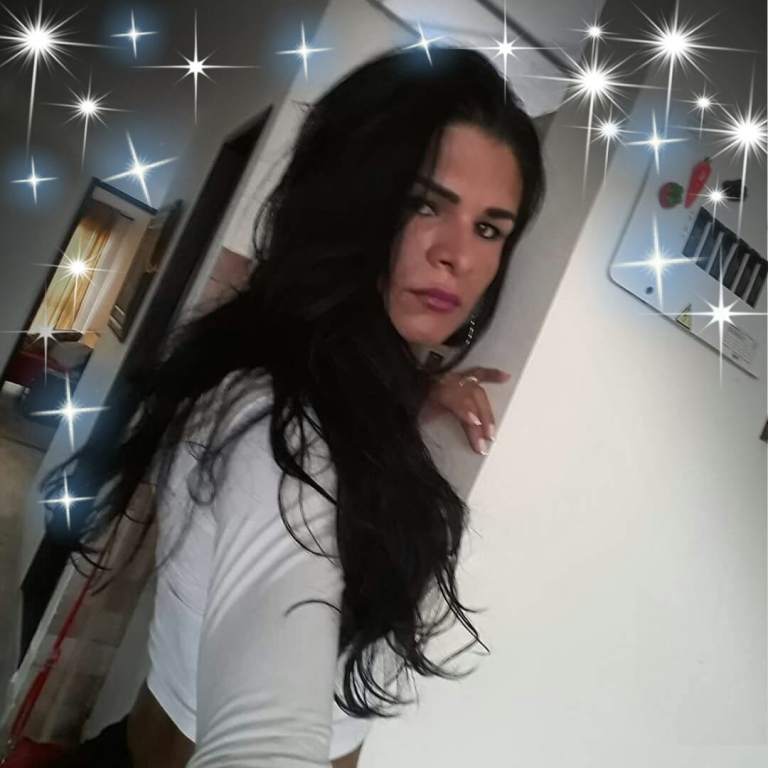
Gloria Díaz, Juliana's mother, who traveled from Spain to attend her daughter's funeral, said that Juliana's dream was to open her own beauty salon with savings from a family chicken farming business. She added that Juliana wanted to change her name to Juliana, as her ID card listed her as Carlos Julio Giraldo Díaz. This, she recalled, made her the target of ridicule from soldiers whenever they asked for her identification.
On the same day as the murder, President Iván Duque said he condemned the “reprehensible act that occurred in Miranda, Cauca. I have ordered the Ministry of Defense and the Colombian Army to take all necessary measures for a swift investigation. The perpetrator must receive exemplary punishment. My solidarity is with the family of Juliana Giraldo, to whom we will provide support.”
Voices of sexual diversity groups
Activist Wilson Castañeda explains: “What happens is that the security forces distance themselves and make statements implying that this or that incident was an isolated case. The question is, why did a member of the military act this way? The Colombian state doesn't ask itself this question, when the success of a human rights policy isn't just about punishing those who violate rights, but about analyzing what caused the violation in order to prevent it.”
Maira Castillo, a member of Arcos Diversos LGBTIQ and the Cauca Departmental Sexual Diversity Roundtable, who knew Juliana, told Hacemos Memoria that people with diverse sexual orientations typically survive abuse, discrimination, stigmatization, and violations of their rights, especially trans women. “It’s no secret that Cauca has lived in constant struggle and resistance against all the abuses and violence we have been exposed to for the last 50 years,” she said.
“With Juliana’s death, we confirm what we have all felt during this time: that the military forces and the State are not willing to respect our lives, orientation, and sexual condition, that they do not offer us guarantees for a dignified life, and that, on the contrary, the people who should be safeguarding our physical integrity are the ones taking our lives away ,” Castillo stated.
56 social leaders murdered in Cauca this year
The department of Cauca and its neighbors, particularly Valle del Cauca and Nariño, have been suffering from severe violence. These are territories disputed by subversive groups such as FARC dissidents, the ELN, and gangs working for drug traffickers. In fact, as of September 28th of this year, 56 social leaders have been murdered in Cauca, most of them Indigenous , according to data from the Institute for Development and Peace Studies (Indepaz).
IACHR demands respect for gender identity
Amidst this difficult situation, Aura Díaz, Juliana's sister, and the mother of the soldier accused of pulling the trigger, participated in an act of forgiveness and reconciliation by meeting and embracing. Aura took the opportunity to express her hope that the investigations into how the events actually unfolded will be made public and that justice will be served and appropriate sanctions imposed.
The soldier involved in the incident, who is 19 years old and was part of the Miranda military base (Cauca), is being investigated by the Prosecutor's Office.
For its part, the Inter-American Commission on Human Rights called on the Colombian state to conduct a thorough investigation of the case, taking into account the victim's gender identity and expression, and adopting necessary reparation measures, as well as guaranteeing human rights in the interventions of the armed forces.
* This article was written as part of an information alliance for the Journalism and Memory Network, between Hacemos Memoria of the University of Antioquia and Agencia Presente s.
All our content is freely accessible. To continue producing independent, inclusive, and rigorous journalism, we need your help. You can contribute here .
We are present
We are committed to journalism that delves into the territories and conducts thorough investigations, combined with new technologies and narrative formats. We want the protagonists, their stories, and their struggles to be present.
SUPPORT US

FOLLOW US
Related notes



We are present
This and other stories are not usually on the media agenda. Together we can bring them to light.