

“The intersex revolution will be intimate, social, and political.”
Interview with the intersex activist M, the protagonist of the French documentary Ni d'Eve, ni d'Adam, une historie intersexe.


Share

Starting today, we're launching Pikara Magazine's collaborations with Agencia Presentes. This article was originally published in Pikara Magazine. To learn more about our partnership, click here .
At 27, M began to identify as intersex. Through her participation in the documentary 'Ni d'Eve ni d'Adam, une histoire intersexe' (Neither Eve nor Adam, an intersex story), she met others with similar experiences. This process marked a personal and political turning point in her life. Since then, she has become a tireless activist for the human rights of intersex people.
Intersex activist M is a 30-year-old French woman who loves playing badminton and climbing ever-higher mountains. Always accompanied by her bicycle, she seeks out the margins of cities to disconnect from society and reconnect with her inner self. She is also the voice of the protagonist in the French documentary * Ni d'Eve, ni d'Adam, une historie intersexe* (Neither Eve nor Adam, an Intersex Story) , directed by Floriane Devigne . This film about intersexuality won the DOK Award at Zinegoak 2019 , the Bilbao International Gay, Lesbian, and Trans Film and Performing Arts Festival, as well as a special mention in the Diversity and Human Rights Award. As she herself acknowledges, "I am passionate about challenges, researching very complex issues, and educating others."
For M, participating in the documentary was a catalyst for her intersex de-massification, both privately and publicly. Since then, she has continued to live and experience her revolution. She admits the process hasn't been easy, but she has learned to reconcile with her body, to reclaim it. Today, making her experience visible and fighting collectively for the human rights of intersex people have become priority goals. This is what she wanted to tell us in this interview.
-When did you become aware of your intersex body?
"Since I was 17, I knew something was wrong. I remember going to the hospital several times. I had my first surgery when I was little. Later, they told me I wasn't fertile. But all I knew was that my ovaries had been removed because they might have been cancerous, and that I'd had to take hormones since I was 11. And seven years ago, I found out in a different way; I wanted to know. That's how all the research began. Personal research, questioning medical institutions. You have something about you that they tell you to keep secret, a rare case that doesn't happen often, a taboo that makes you unthinkable. That increased the stigma surrounding my body. Until I decided to put an end to this trauma and to that world that made me nervous. I chose to leave my country; I had to get away from my family, from the people who knew the secret. When I returned, I reconnected with that secret, and I started gathering all the information that was at my parents' house. I found some medical reports, diagnoses, clinical terminology." From there, I understood that I had had internal testicles that had been removed and that there were contradictions between my genotype and my genitals.
What were those years like, reconnecting with yourself?
It was between the ages of 22 and 27. I saw a psychologist once a week. During that hour, I would explode—a controlled, intellectual explosion. I didn't talk about it with anyone else. It was imprisoning. I had nervous breakdowns; I needed to explode. It was going from having a syndrome I couldn't talk about, that I didn't know what it was, to meeting other people who allowed me to end that injustice and connect with myself, with what's good. The only time I could do it was by writing it down. I began to feel that my body is valid, that my experience is valid, that I exist. Then the secret was over. From the social taboo to my personal taboo. I wanted to end both. My identity is political and social; now I can choose when to say it. I found out who I was twice: at 22, reading my reports, and later, at 27, when I began to understand myself in a different way. For me, it's very powerful to think of myself this way.
–Why did you decide to participate in a documentary telling your story? What was that process like?
-At the end of 2015, the film email group for intersex people in France. There wasn't an organization yet, just that mailing list. I was there anonymously, along with many other people, and I read the email . There were many people interested in making documentaries, but hers seemed different and relatable. The question that most encouraged me was: "What would make a good documentary for you?" I answered with something that was fundamental to starting the film . For me, the important thing was to talk about shame, anonymity, about the body, and how to break free from that to empower myself, to make it public. That process was what was interesting, speaking from the perspective of invisible people. I told her I had some things written, and she wanted me to be the voice of the film. She also told me that nothing would be included that I didn't want. It was a long process; I objected several times, but we persisted.
–Was it through the documentary that you first met other intersex people?
Yes, Floriane put me in touch with other people in Switzerland. That was very positive. From there, we started contacting each other and sharing our experiences throughout 2016. That's how I met Deborah, another participant. She even came to Paris and encouraged me to attend an event organized by Collectif Intersexes et Allié.es, which I'm now a part of. At first, I was scared, I didn't want to go, but when I started meeting more people, I felt very comfortable. There were about ten of us, but we knew there were more in France. Later, I went to Brussels for an event organized by ILGA, the International Gay, Bisexual, Trans and Intersex Association, and met more people from other countries.
-After incorporating these experiences into your life, how would you define intersexuality? What does it mean to you to be intersex?
For me, there are two definitions. On the one hand, we are people with sexual characteristics that don't conform to the binary norm: male or female. On the other hand, from a political standpoint, it encompasses all the experiences we've had because of having these different sexual characteristics. Being intersex stems from invisibility, denial, and the eradication of that type of body. Biology is incredibly diverse, and yet there are still people who refuse to see that diversity. Being intersex means having experienced—lived—social denial, having a body that has been rejected socially based on a clinical definition. This implies a range of social denials of diversity, from the complete absence of cultural representation to imposed clinical treatments. My body doesn't exist within that binary system. That's why it's political, because it speaks to those social experiences resulting from the rejection of our bodies.
– ¿And now, how do you identify yourself?
"With my family, I'm M. With my intersex family, I'm intersex. For the institution, maybe I'm a variation. But ultimately, I'm an intersex woman. Although I don't usually say so publicly."
–You're the only participant in the film who doesn't show your face publicly…
It was a very long process. At first, I didn't want to participate, and if I did, anonymity was key. Talking about this with Floriane, she also thought it was very interesting to reflect the taboo in some way, to give it prominence. That was the best way to do it.
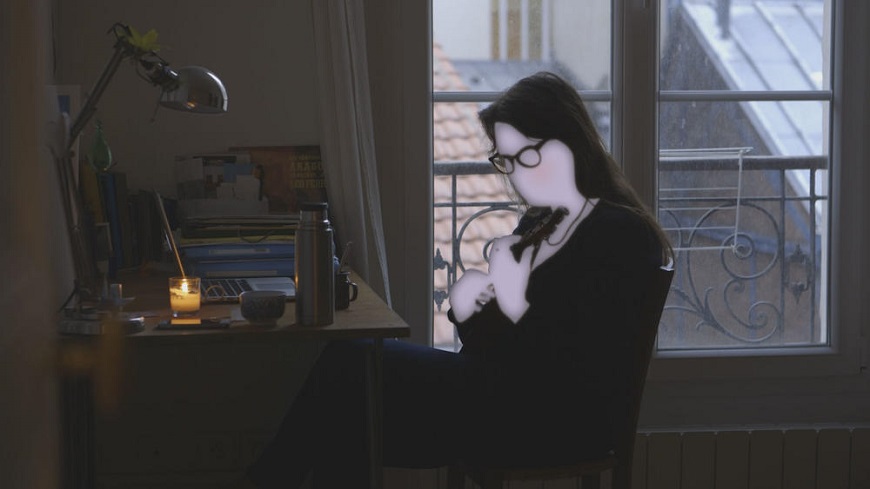
–Also, you use a pseudonym, why is that important to you?
Being intersex means having a social experience from within that body. People often have misconceptions about your body due to ignorance, lack of visibility, or because they've heard the myths and legends that exist: the myth of the Greek hermaphrodite and the myth of medical devices. Of course, it's a private matter, but because it's so invisible, it's necessary for people to speak out, to speak from that perspective, to help create new understandings, and to encourage people to put faces to the experience. But it's important that this happens when each person decides, always freely, choosing where and how. I do it anonymously, and I explain that it's part of the destruction that has been inflicted upon me. We have to acknowledge the lack of information that exists in society and the difficulties that this continues to cause.
-I understand that these difficulties also have to do with the idea of socially conceiving sex as a very strict binary, what is your opinion on this subject?
I like to talk about the image of a constellation, the constellation of the sexes. All sexual characteristics are part of this constellation. There are ramifications surrounding the word "sex," which would be the variations of characteristics, the chromosomes, the gonads, the internal and external organs—everything. Each being, in the end, is unique if we understand it that way. It's much more beautiful to speak from that perspective. If we see sex as a line with two opposite ends, everything in between would be what's diagnosed, contradictory, unnatural.
–You mentioned earlier the Collectif Intersexes et Allié.es, which you are part of in France. What are the lines of work you pursue?
There are two main lines of work. On the one hand, we work with intersex adults and new families. It's important that they experience their own processes and rhythms, that they recover, and that we share experiences. It's community-based work, involving gatherings, talks, and training. On the other hand, we work along more political lines, demanding and advocating for the needs we have as a community. There's a strong focus on awareness-raising and political activism. We train NGOs, human rights organizations, LGBTQ+ groups, and feminists. We also create alliances with intersex organizations in other countries. Building networks is crucial because political work is very difficult and complicated; it's full of uncertainty.
-What are those needs and demands?
Do not subject anyone to non-consensual and unnecessary treatments, such as hormone therapy, diagnostic procedures, surgeries, and anything else that is neither consented to nor essential for a person's life. With this, we aim to gradually move away from the pathologization of our bodies. We must end unnecessary treatments and fight against the pathologization of bodies that do not fit the binary norm. This is achieved through education at all levels and in all cultural spheres, including training for clinical teams. In France, we are trying to prohibit all interventions that are not strictly for health reasons and all medical treatments that involve altering a person's sex characteristics without their explicit consent and without clear prior information.
– ¿And what about the shared struggles with the LGBT community?
We share phobias and discrimination. The enemy is the same transphobic, homophobic, interphobic, patriarchal, and heteronormative system. We have to fight from both sides, from outside and from within the LGBTQ+ community. It's necessary to do so collectively but also independently, from the "i" (in Spanish ), because, like any other group, we have specific needs. Always being careful not to harm other groups and focusing on the trans population because of the issue of interventions on bodies. It must be made clear that, from the intersex community, we defend the issue of consent. As long as you want it and freely decide, it's okay.
– a third sex part of the demands of the intersex community ?
At the European level, intersex organizations oppose the existence of a third category in state identification documents. What exists in Australia has had the opposite effect: it has allowed for categorization and provided justification for clinical and legal systems. They realized that surgeries increased after its adoption. That's why, in France, we argue that it shouldn't exist, that it's unnecessary. Just as race was removed from these categories, so too should sex. We know it's a utopian ideal now. But this isn't an issue that originates solely from our perspective. We don't want a category that creates a new form of discrimination. Even so, there are countries where it does exist because it's being demanded by other identities, and that's great, but it must be made clear that it's not part of the demands of the international intersex community. For us, creating a third category would continue to stigmatize certain bodies and give clinical teams justification for continuing to discriminate against them. In Germany, it would be reserved for intersex people, but who decides what is intersex?
–From a legal point of view, are the laws regarding intersexuality in other countries proving effective?
There are laws in place, but they still don't work. In Malta, there's a law that proposed changing the protocols. The day they had to sit down and do it, it didn't happen. The same thing happened in Portugal and California [United States]. There's a commitment from the governments, but then it's not put into practice effectively. It simply doesn't exist. You can't legislate by including the "i" if there's no reference text, no guidelines, if there's no information about the "i," if they don't consult us. All we have so far are recommendations and legal texts, like those from the European Council, which addresses female genital mutilation and advocates ending it. The European Parliament is on the same page. Country by country, there are UN committees that denounce and condemn these kinds of protocols.
-As a society, what responsibilities do we have?
There are people who don't want to know we exist, who don't validate our experiences beyond diagnoses and illnesses, who promote false or inaccurate images of our bodies. This generates a lot of discrimination. It's crucial to educate, in all areas, starting in schools. Of course, we must continue working from a human rights perspective. There are so many variations in every body, even independently of sex characteristics. Such treatments cannot continue; society must be more tolerant of bodies and their diversity.
–Why would you recommend we watch the documentary?
Because even if not everyone can identify with the intersex narrative, they can identify with things linked to our patriarchal society that we all share: taboos, social norms about how bodies should be, or the power of clinical apparatuses and medicalization. This documentary, in this sense, is a new way of interpreting discrimination, deconstructing it, and creating new collective imaginaries.
-A final sentence to close the interview.
-The intersex revolution will be intimate, social, and political.
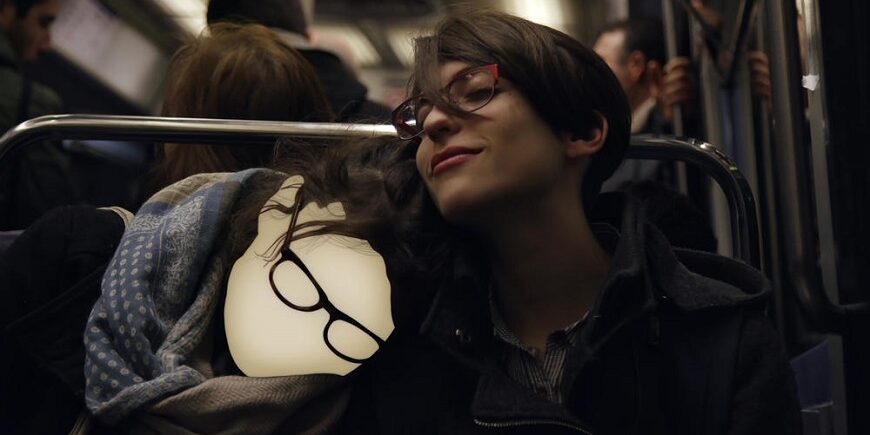
Images taken from the documentary 'Ni d'Eve ni d'Adam, une histoire intersexe'
All our content is freely accessible. To continue producing independent, inclusive, and rigorous journalism, we need your help. You can contribute here .
We are present
We are committed to journalism that delves into the territories and conducts thorough investigations, combined with new technologies and narrative formats. We want the protagonists, their stories, and their struggles to be present.
SUPPORT US

FOLLOW US
Related notes
We are present
This and other stories are not usually on the media agenda. Together we can bring them to light.