

Grey, a Honduran trans woman, was attacked with a machete: her photo is going viral.
Grey Anahí Ríos, a 34-year-old Honduran trans woman, was attacked with machetes in her town's bar.


Share

By Dunia Orellana, from Tegucigalpa (Honduras)
Images: DO, @Kart.hn, Oscar Ramírez.
Grey Anahí Ríos, a 34-year-old trans woman, was in a bar in her hometown of San José de Comayagua, in central Honduras, when she was attacked with a machete on September 6. A photo of Grey covered in blood, sitting on a wooden bench after the attack by Jesús Tábora Muñoz, went viral on social media after Honduran influencer Óscar Ramírez shared it on Twitter, Facebook, and Instagram with the message, “Trans rights are also human rights!” He also lamented that the authorities did not assist Grey after the attack.
Grey, who works as a domestic worker in Comayagua, told Presentes that she had just left one of the houses where she works that day and felt thirsty. “I went to get a soda at a place that also sells alcoholic beverages,” Grey recounted. She said that JTM, the owner's son, was there.
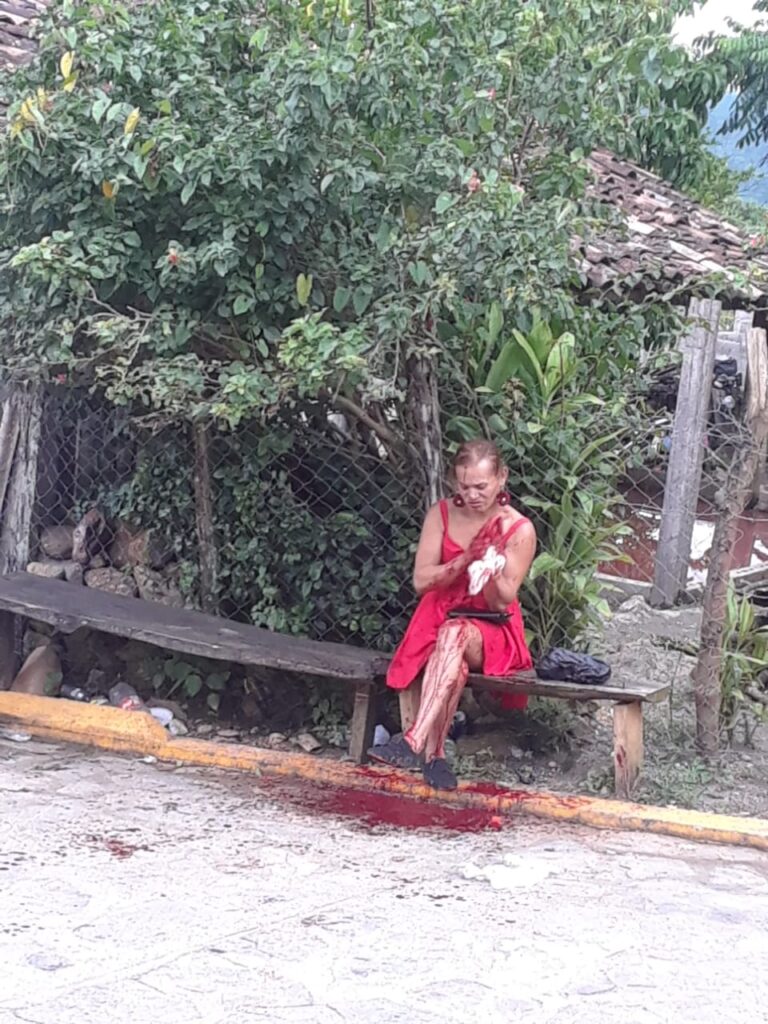
According to Grey's account, upon seeing her inside the establishment, Tábora told her, "I'm going to kill you." Grey did not leave the bar, so the aggressor proceeded to carry out his threat by taking a machete—a farming tool used by Honduran farmers—approaching Grey and striking her on the left wrist, causing a deep wound that required ten stitches.
“I left without saying anything to see if anyone would help me,” Grey told Presentes in an interview. “I went to sit on a bench at a bus stop. The people who were there helped me.”
One of the people at the bus station took the photo that has gone viral on social media. The image shows Grey sitting with her left wrist pressed against her other hand, trying to stop the flow of blood that has covered her clothes and legs and stained the floor. “Some women squeezed my arm to stop the bleeding,” Grey recounted. She was then taken to a nearby medical center for treatment.
A life of discrimination
The hatred and discrimination against Gray didn't end with the attack. They continued when she filed a complaint at the San José de Comayagua Justice of the Peace Court, where she says no one paid any attention to her. “I felt discriminated against because many of those who took the complaint didn't take me seriously. I felt like I wasn't a person, that I had no human rights,” she laments.
On September 16, Grey and her lawyer arrived at the Comayagua courthouse for a hearing with her attacker, Jesús Tábora. They are demanding a restraining order against him, as well as payment for the medical expenses resulting from her injury. “We also ask that he stop the physical and psychological harassment he has subjected me to,” Grey said.
In addition to the anguish and physical pain, Grey is facing unemployment, as her recovery from the injury prevents her from working. “I have a right to a job, and I don’t know if I’ll be incapacitated for several months after this,” Grey said.

This isn't the first time she's faced scorn from the small rural community where she lives. She began her transition at age 11 and says she's endured humiliation and abuse for most of her life. "But I am who I am, and I'm proud of who I am," she adds.
The attack against Grey is one of many in Honduras. In 2020, the LGBTI Violent Deaths Observatory recorded 16 violent deaths of LGBTQ+ people. Seven of these were transgender individuals.
Networks with Grey
Since the photo of Grey bleeding profusely went viral on social media, many people started a GoFundMe campaign to help her. Her story went viral on the Mexican and US television programs "Escándala." Mexican model Victoria Volkova spoke out about Grey's case after illustrator and LGBTQ+ activist Óscar Ramírez, moved by the photograph, created a drawing depicting Grey injured. Another visual artist, Karla Funes, also joined in.
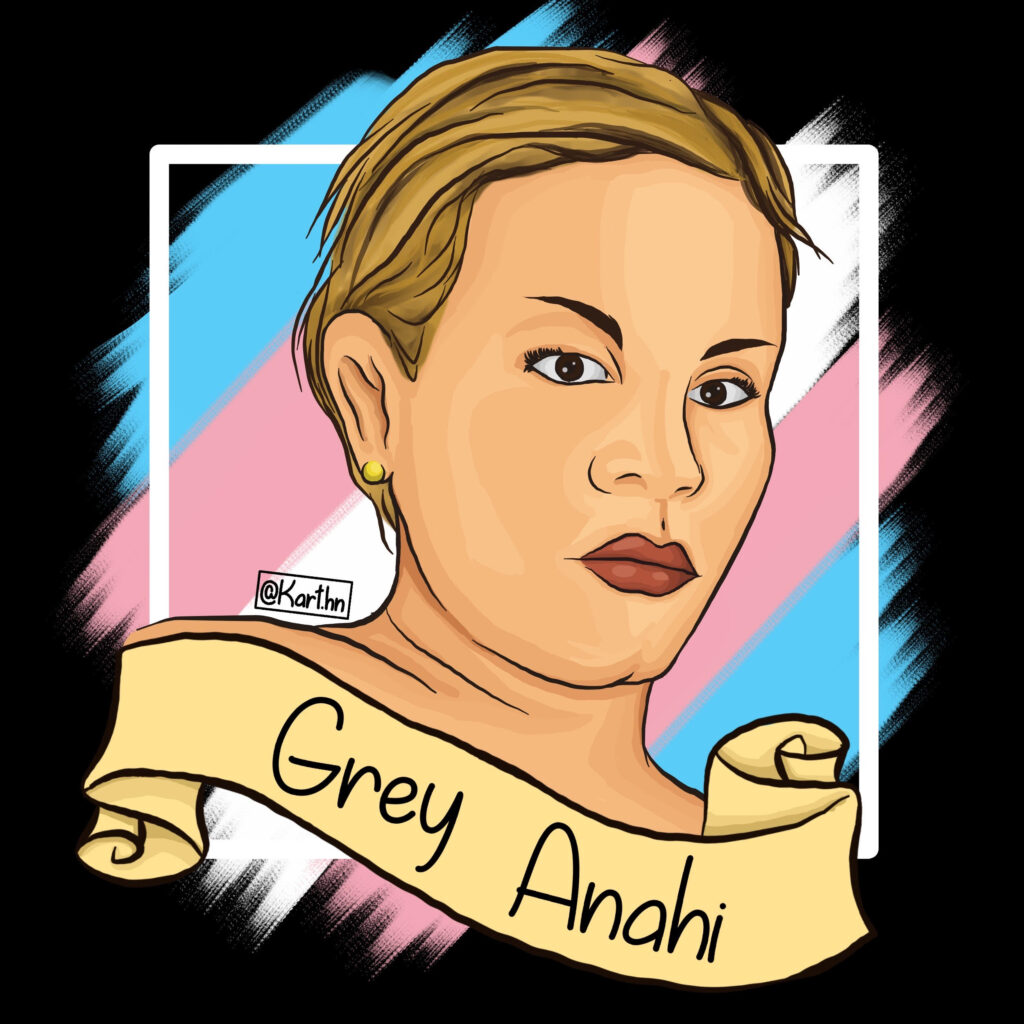
“I took this very personally and wanted to give it more visibility because it’s truly sad to see these situations,” Ramírez told Presentes. “I wrote in both Spanish and English because local media and journalists often don’t listen to us.”
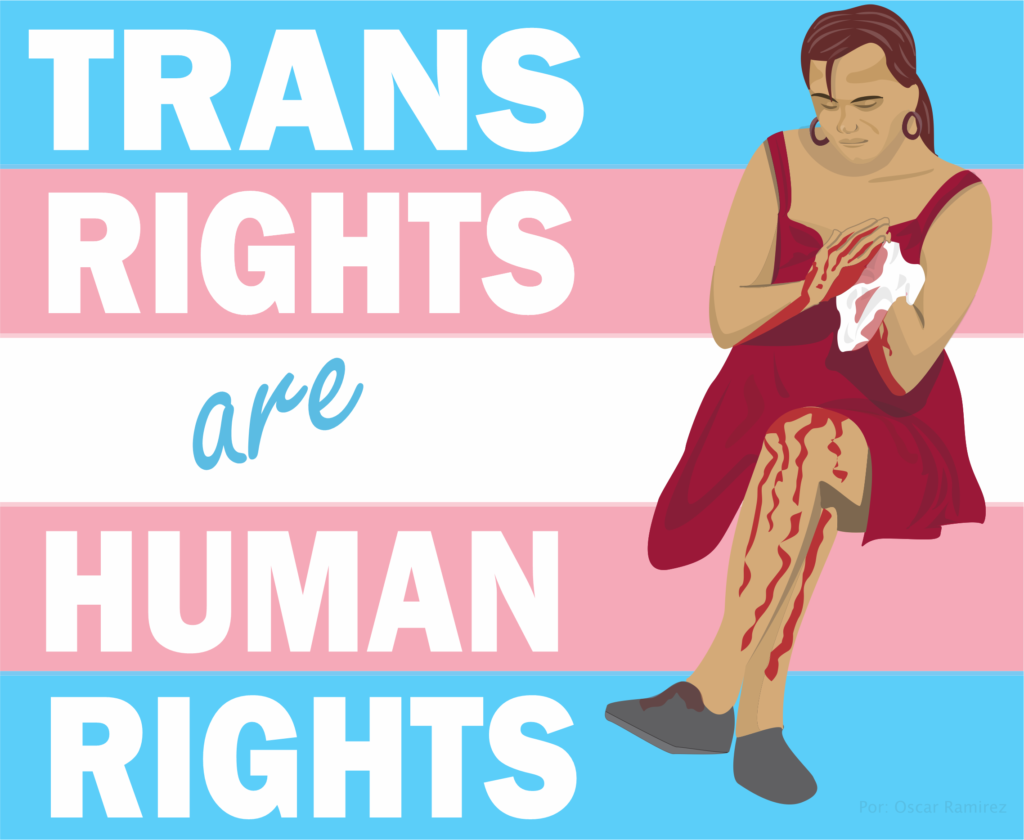
Erick Montalván, an activist and artist with Safe Space and one of the fundraisers, expressed that the situation for LGBTQ+ people in rural Honduras is very difficult. “For me, this case is very powerful. Her image moved me deeply, and several organizations, including Honduras Diversa, Iguales, The Color Project, and AFET, decided to join forces to offer Grey assistance.” They say that one of their next steps will be to provide her with immediate financial support to ensure her life is never in danger again.
All our content is freely accessible. To continue producing independent, inclusive, and rigorous journalism, we need your help. You can contribute here .
We are present
We are committed to journalism that delves into the territories and conducts thorough investigations, combined with new technologies and narrative formats. We want the protagonists, their stories, and their struggles to be present.
SUPPORT US

FOLLOW US
Related notes



We are present
This and other stories are not usually on the media agenda. Together we can bring them to light.