

The province of Santa Fe regulated a 5% transvestite trans job quota
In the province of Santa Fe, the transvestite and trans job quota will be 5% and for those who have accessed the registration change by national gender identity law.


Share

The regulations for Law 13,902 on trans quotas, approved by the legislative branch on October 31, 2019, were signed yesterday by Governor Omar Perotti.
By Victoria Stefano /Periodicals *
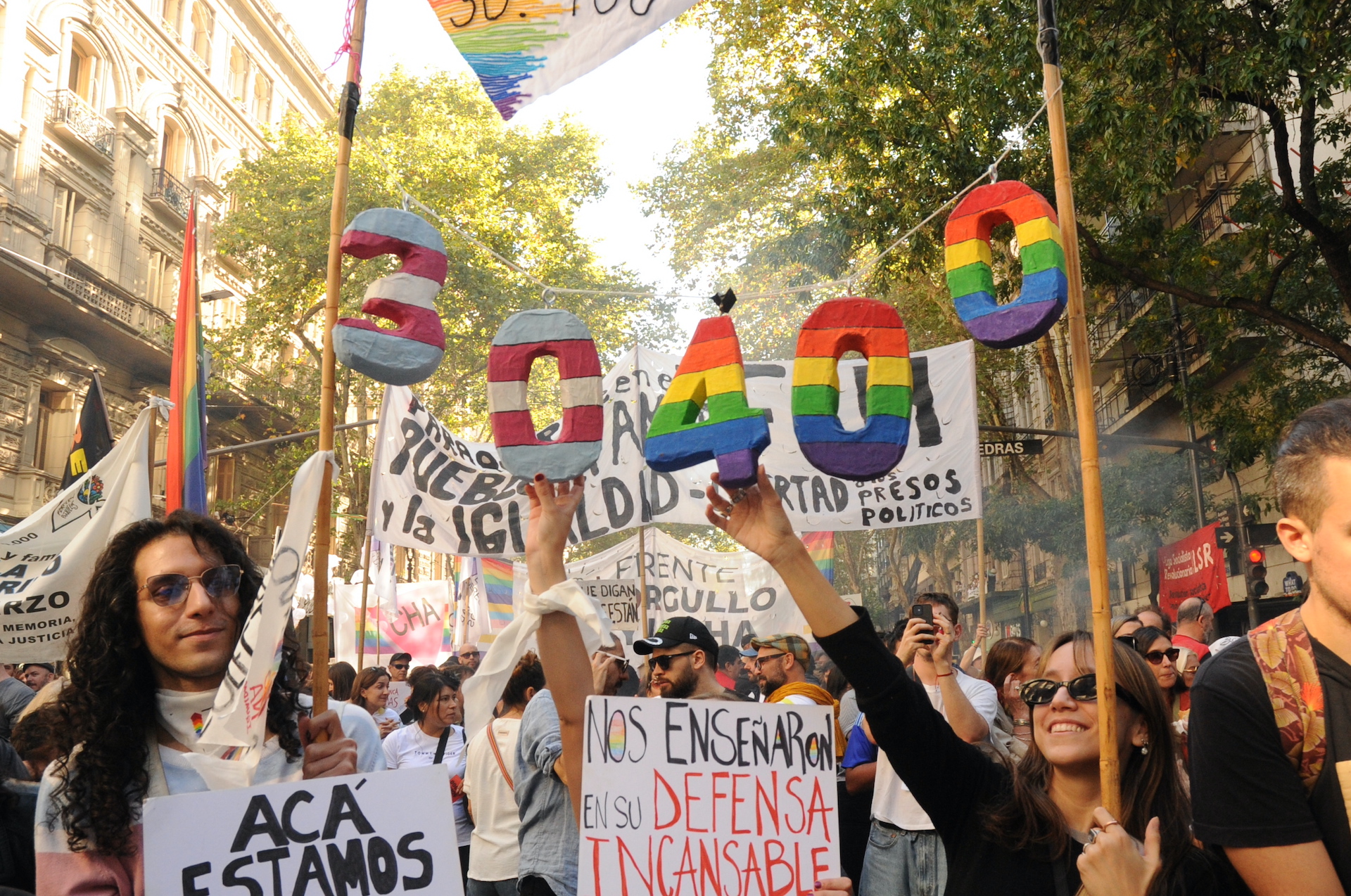
Photo: Gise Curioni
In a historic day for the trans population of Santa Fe, decree 0951 was published today in the Official Gazette, regulating the employment quota for transvestite, transsexual and transgender people in the province of Santa Fe.
How the quota was created in the province
Since 2012, through various and successive legislative initiatives, the path began that culminated yesterday in the governor's office.
The project that managed to pass the legislature and become law was presented by Congressman Carlos del Frade in 2016, obtaining half approval in the lower house in September 2018.
A little over a year later, with expedited processing and modifications to the percentage of people included in the quota, it was approved by the upper house and returned to the deputies for final approval on October 31 of last year.
With the change in administration and the arrival of the health crisis, the regulations were postponed. But finally today, through their publication in the official gazette, almost 11 months after the regulations were approved, they were implemented.
Differences with the national decree
The long-awaited signing follows the same line as Decree 721/2020, signed less than a week ago by President Alberto Fernández, which establishes a 1% trans job quota for all workers in the national public administration.
The provincial regulations set a different proportion: they provide a quota of 5% of the total number of trans people who have accessed the legal gender change guaranteed by the national gender identity law 26.743 in the province of Santa Fe.
The Santa Fe project, strongly supported by sexual diversity organizations, empowers the Ministry of Labor, Employment and Social Security in coordination with the State Secretariat for Equality and Gender to issue the complementary implementation and operational provisions deemed necessary for compliance with the law.
The main points
Among other regulations, it orders the creation under the Ministry of Labor of a Registry of Applicants in which the applications of people who wish to enter the Provincial State under the regime of the law will be recorded, guaranteeing the principle of confidentiality.
To ensure equal opportunities, it provides for the provision of training tools for those who register in the Registry of Applicants but have not completed their education. It also establishes an Advisory Council to provide guidance in the selection processes.
This body will be made up of a representative from the Ministry of Labor, a representative from the State Secretariat for Equality and Gender, a representative from each of the unions in the provincial public sector, and a representative from the organizations of transvestite, transsexual, and transgender people in the province.
This decree culminates a historic struggle by the trans population of Santa Fe and places the province at the forefront of expanding rights for the transvestite, transsexual and transgender population.
* This article was originally published in Periódicas and is republished as part of an information alliance between Periódicas, Comunicación Feminista desde el litoral, and Agencia Presente s.
All our content is freely accessible. To continue producing independent, inclusive, and rigorous journalism, we need your help. You can contribute here .
We are present
We are committed to journalism that delves into the territories and conducts thorough investigations, combined with new technologies and narrative formats. We want the protagonists, their stories, and their struggles to be present.
SUPPORT US

FOLLOW US
Related notes


We are present
This and other stories are not usually on the media agenda. Together we can bring them to light.