

Fifí, the border queer who sings tango in a queer key
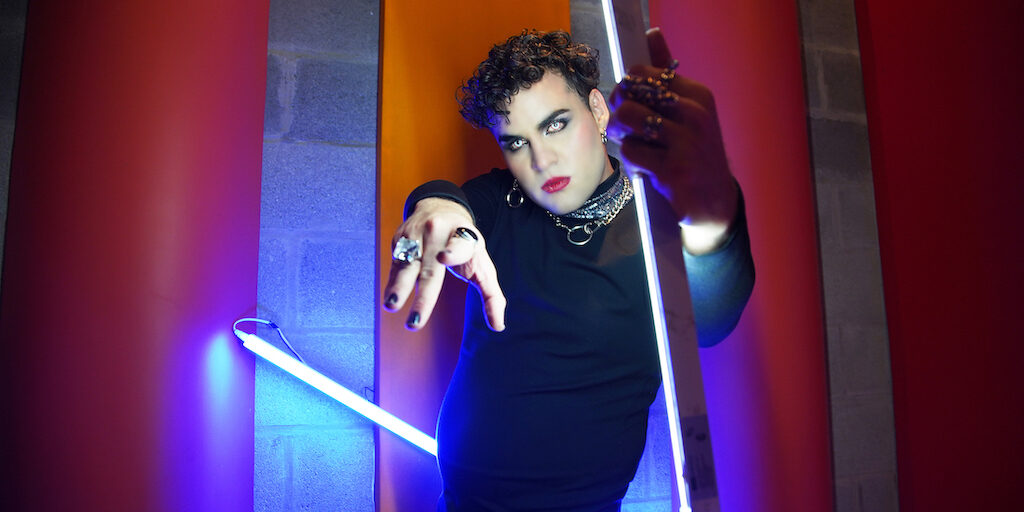
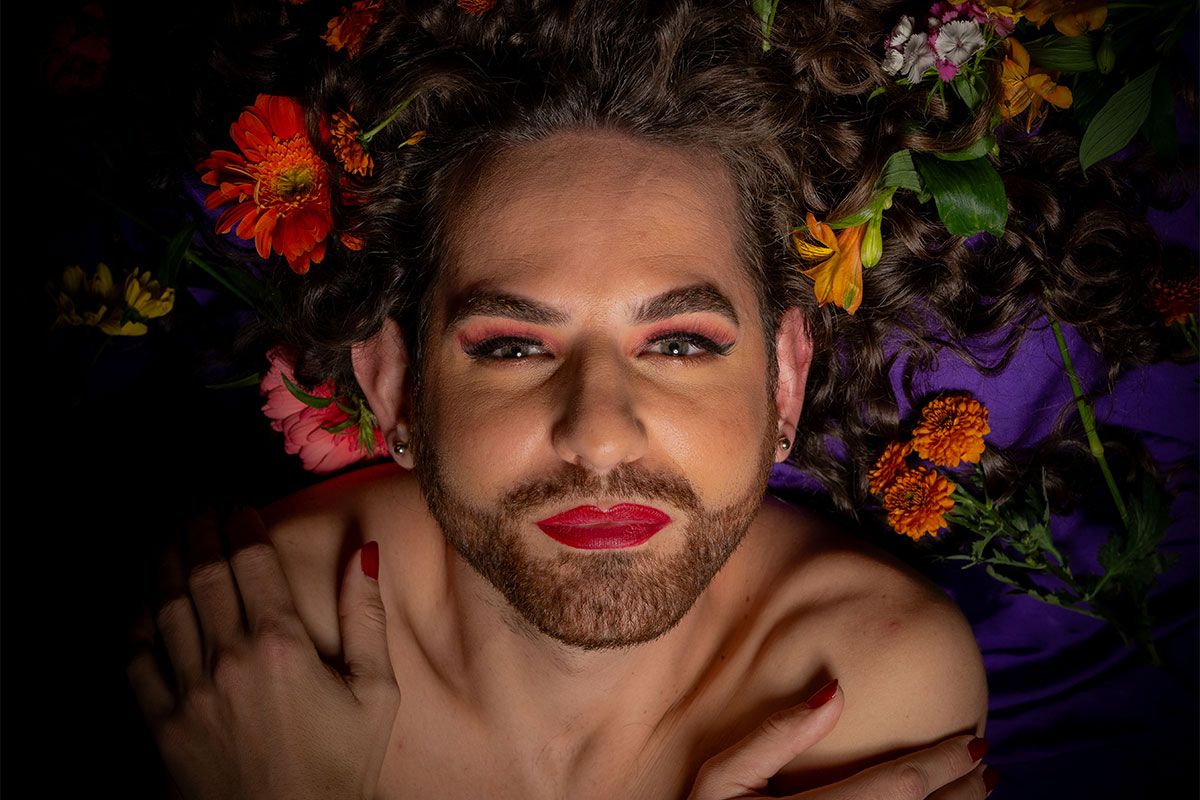
She defines herself as a “non-binary, borderland queer” artist. Her singing, music, and dance create a queer, dissident, glamorous, and activist experience, applauded in the trenches of the Mu cooperative bar or in the mythical Maipo theater.

Share

Photos: Ph Morfia (opening), Fede Kaplun, Pablo Gómez Samela (courtesy of Fifí)
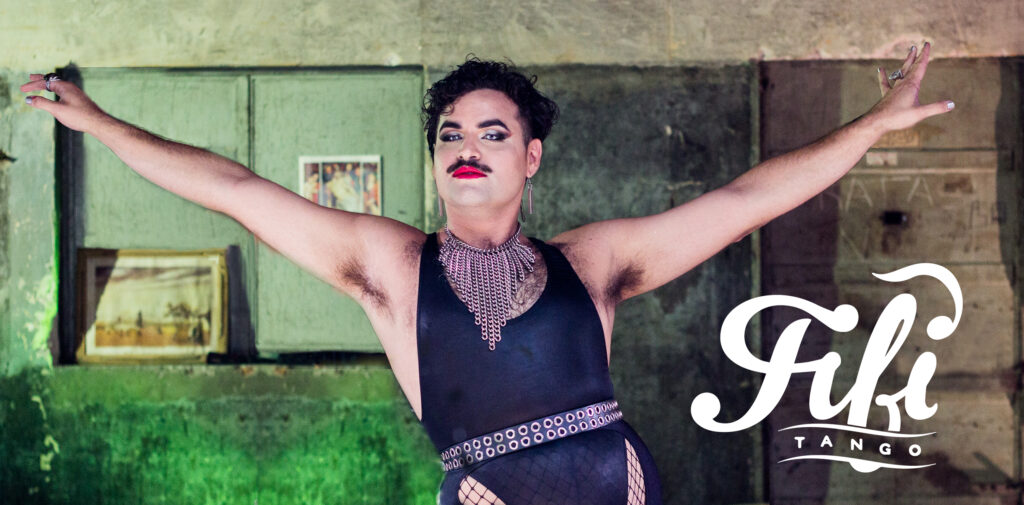
Fifí Real defines herself as an artist who “is non-binary, queer, and borderland.” Her singing, music, and dance create a queer, dissident, glamorous, and activist experience, applauded in the trenches of the Mu cooperative bar or in the legendary Maipo theater. Fifí sings her own tangos and the classics, but she reinterprets them to dismantle binary thinking and normativity. Through her artistic project 'Fifí Tango,' she reflects on the transformation during the pandemic and the history that brought her to this point.
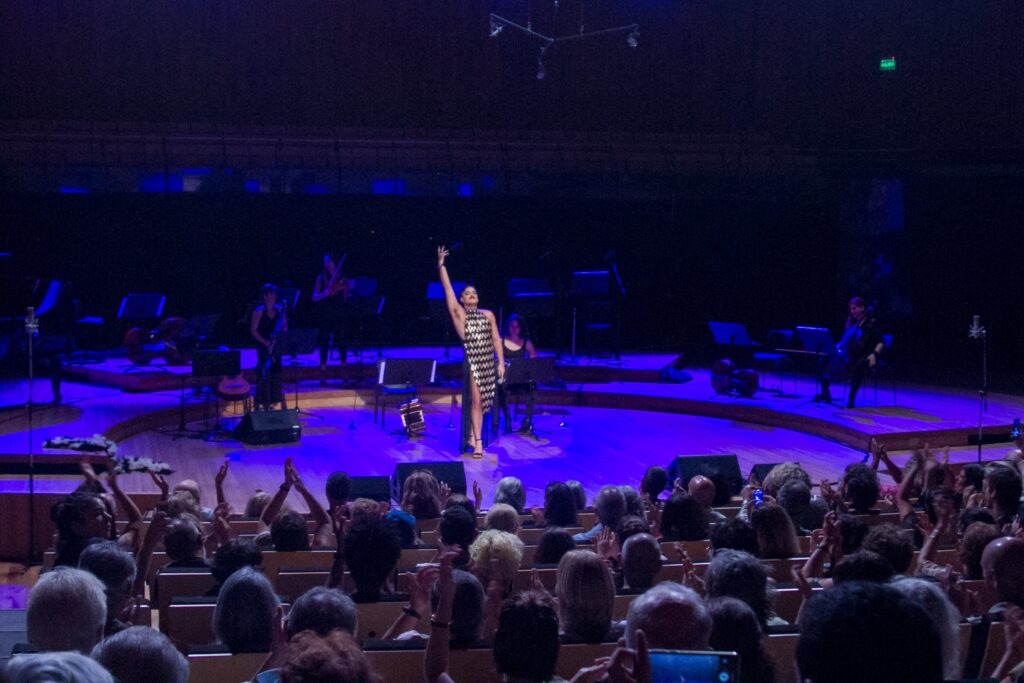
“You say tango and people imagine a tacky scene, a couple in red and black dancing La Cumparsita in some tourist trap. But when I came across this, I said: let’s fill it with glamor, let’s make it an experience,” she says, her own body language a passionate display of expressions and gestures that complete her answer. In March of this year, at a packed Néstor Kirchner Cultural Center in Buenos Aires, and through social media and national public television, thousands of people across the country witnessed her fulfillment when she sang Tita Merello’s “Se dice de mí” with her own unique style and power.
For eight years, her career has been celebrated on all kinds of stages: “I don’t want to be just another party favor, someone who’ll say, ‘Oh, look how strange,’ ‘Can you take a picture with my husband?’” And with this desire, which is both premise and action, she arrived at the Llamarada event. When La Empoderada, Orquesta Atípica, invited her to be part of this event, its director suggested that the arranger remove the humorous parts from Tita’s song and adapt it. They all knew that many gay men in the country would be watching. There was a responsibility to fulfill.
Fifí understood this Tita Merello song as a bridge between queer people and tango, between queerness and the hegemonic. And although she admits it's not one of her favorites, she'd felt its presence for some time after seeing it interpreted in a dissident way by Rodrigo Peretti, with whom they had also worked together. "'Se dice de mi' was written with a queer person in mind, but one couldn't perform it, so who was the closest, pregnant queer person at that moment? Tita," Fifí explains, with a touch of poetic revenge.
Popular music is ours
The first thing she wore on stage at the Néstor Kirchner Center was a dress designed and sewn as a manifesto: “I already tried to get tango people to make dresses for me, and they ended up making baggy things, for older women. I realized that at that moment I couldn't be clear about my trans desires. What I wanted was a tango dress, a woman's dress, not a t-shirt!” The creation of this dress by Esteta Estudio is also part of her weaving and building queer networks, which is why she says she prefers to work with LGBT+ people. Among them, there are things she no longer needs to explain: “The pain we feel will never be understood by a middle-class, white, cisgender man.”
The Néstor Kirchner Cultural Center was packed, and when she saw her emerge with a rose in hand, her dress a statement, her song and presence radiating emotion, she decided to call upon her late friend Le Brujx, a drag queen and mother of the Trabestia party. “I felt compelled to invoke Le Brujx and Tita, and to celebrate those who can no longer express themselves. I was thinking of my friend, of the many queer, trans, lesbian, and trans people who have distanced themselves from popular music because they feel it's an exclusionary space, and it is. The dynamics of musical hegemony don't make you want to belong. So my aim is for people to understand that popular music is ours; we're going to take it and make it our own .”
As she speaks, Fifí tosses an imaginary, kilometer-long mane of hair, glaring at you with a femme fatale gaze in a pre-pandemic café that she now invokes as the setting for this interview: “There have always been monsters in tango, it’s just that the official, white, cisgender history took it upon itself to erase them. They won’t take tango away from us.”
The thing is, tango and its lyrics are so binary, Fifí explains, that gay men have always had to turn to the most ambiguous songs or songs by women to feel represented. “Well, always Thalía,” he clarifies with no less drama than the Mexican actress in key roles like Marimar.
Along the way, the first step was studying musical comedy and realizing that her appearance wasn't going to get her into leading roles: "Dance is hegemonic no matter how you look at it." She was in her second year when, with a fat, hairy, and effeminate body, she encountered a teacher "who told us all: 'On stage, men or transvestites.' You'll see, I chose."
Having graduated as a Musical Comedy Performer and knowing that prejudice would only get her minor roles as the funny gay friend, she took a summer tango workshop with Marcelo Macri. “There I sang the tango 'Por la vuelta'. At that time I was totally smitten with a gay guy from Mendoza, so I changed the lyrics and said: 'my sweet little blond boy'. When the four guitarists heard 'boy' instead of 'little girl', they went 'pruuuum' in their strumming and let out a 'hey'.” And yes, the anecdote was sung.
“That’s when I realized I had to do this. I chose song to tell my stories through art, in my own words. And tango has something very powerful: the ability to tell stories in a very condensed poetic style,” Fifí explains. Then came meeting other queer people with whom to create projects together. Eventually, they put on shows at the MU Trinchera Cultural Space : “I want this for myself,” she told herself. And so began her process of abandoning everything related to musical theater and staying in the tango scene, queer and dissident, from 2012 to the present day.
I am a neo-cabaret dancer
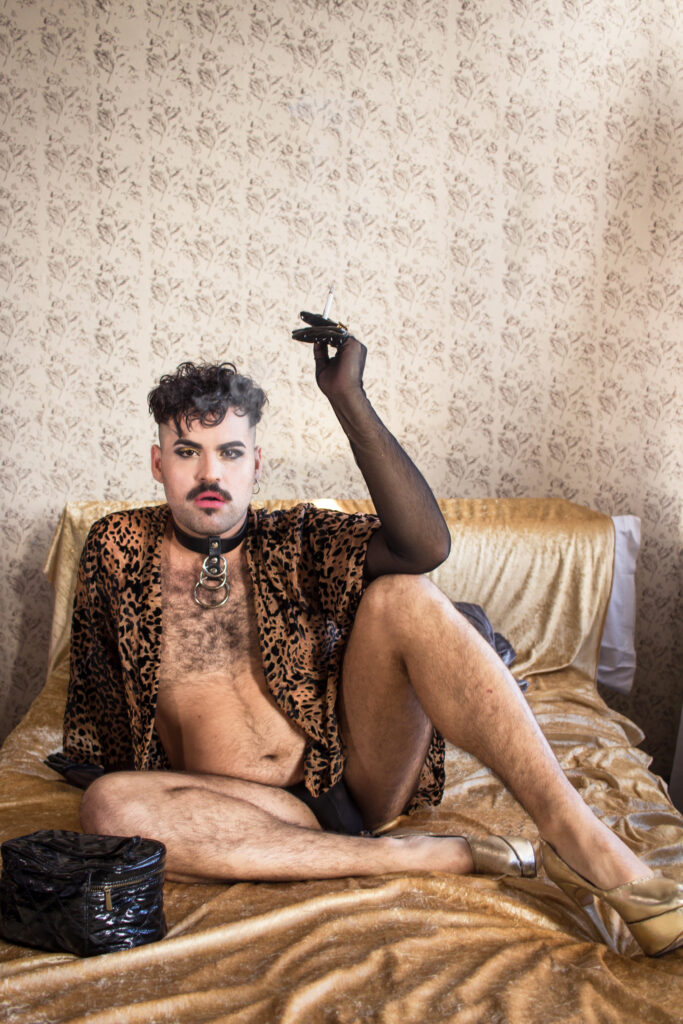
She toured Chile, Uruguay, Colombia, Brazil, and Paraguay. Locally, she was part of several production teams, including the biodrama 'Me gritaron Fifí' (They Called Me Fifí), written with Mirko Delfino. Directed by Franco Kuma La Pietra, it was co-produced and premiered by the Paco Urondo Cultural Center of the Faculty of Philosophy and Letters of Buenos Aires (UBA), and later restaged at the legendary Maipo Theater.
Before this, his story also has a strong tango element: “Imagine, a queer man who went into exile at 18 from his hometown in Misiones. I came to Buenos Aires with 800 pesos (from that time, 2006) and a stowaway bag on a bus that had left Asunción,” he recounts. That's how Fifí—who could see the Paraguayan coast from his window—arrived at the Retiro bus station: “The port of Buenos Aires offers a lot of advantages because it allows you to express yourself. But it's a port with its own dynamics of exploitation, built centuries ago on blood and moisture.” The conversation with Fifí has the rhythm of a street dance. That's why, amidst erotic and esoteric stories, he suddenly plants his heel and concludes: “We are the neo-cabaret. I am a neo-cabaret dancer .”
Life and art in a pandemic
During this pandemic, with theaters closed, Fifí returned to working in IT. “It was quite stressful at first, strange but nice because it’s the first time I’ve had a formal job where my non-binary identity and self-identified name are respected. Although it was very uncomfortable because at ANSES (the social security administration), my health insurance provider, and the bank, Article 12 of the Gender Identity Law isn’t being respected. I’m already filing complaints with the support of Capicúa Diversidad.” Together with Trans-Ti, Transistemas, and other organizations, they are working to help trans people find jobs in IT.
The situation of independent culture in the context of the measures taken due to the coronavirus is worrying. Fifí Real comments that many spaces and colleagues will be lost because of this. “We are part of the dissident self-management movement, now under even greater pressure and pushed into self-exploitation without resources, so depressed that we don't even have the energy to supplement our income with government assistance,” she reflects. She recounts how several of them are in the process of adapting their artistic work to the era of social media: “ It's one thing for a 20-year-old drag queen with followers on TikTok, and another for a 50-year-old transvestite who doesn't even have a club left to work in .”
'Fifi Tango' investigates and explores digital alternatives to continue creating. "From a queer art perspective, this moment can be an opportunity to build the space we want and not simply transfer the precarious working conditions we've been experiencing to the digital world." And she urges: "It's always a good time to rethink everything."
Agenda
On Saturday, September 4th, Fifí Tango will launch new material at the Dystopian Festival. This dissident digital initiative , born to confront the current crisis in the cultural sector, will premiere its third volume.
Hosted by Michelle Lacroix and featuring artists like Bife, Susi Pirelli, and Max Vanns, Distópico allows you to pay for access and watch it over several days. “In this context, a group of self-managed artists from the dissident music scene organized ourselves through this digital festival in order to generate a minimal income and maintain the visibility and resilience of the independent artistic projects we've been working on,” the festival organizers explain.
#Quarentanga LivePodcast series on YouTube . Episode 3, featuring guest artist Galan , will be released on September 26th at 9 PM. Tickets for this episode and previous episodes are available on the G Productora website.
We are present
We are committed to journalism that delves into the territories and conducts thorough investigations, combined with new technologies and narrative formats. We want the protagonists, their stories, and their struggles to be present.
SUPPORT US

FOLLOW US
Related notes
We are present
This and other stories are not usually on the media agenda. Together we can bring them to light.