

Santa Fe: Transvestites and trans people one step away from overturning the pension law
Based on a collective presentation, the Santa Fe Pension Fund is considering granting pensions to transvestites and trans people over 35 years of age.

Share

By Victoria Stefano from Santa Fe/ Periodicals *
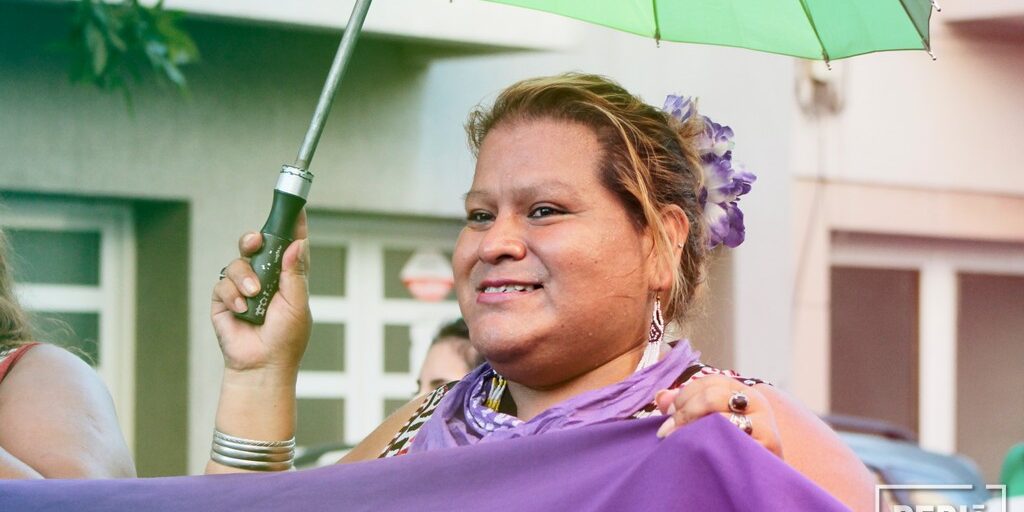
Photo: Priscila Pereyra
Since last year, and within the framework of the La Kasa de las Locas in the city of Rosario, a transformative initiative has been underway: to incorporate transgender people over 35 years of age into the population covered by provincial law 5110. This law mandates the creation of the Santa Fe social pension fund, which aims to provide social assistance by granting benefits to vulnerable sectors.
Where there is a need, a right is born.
The initiative arose in response to the needs of trans women and began to take shape with the Access to Justice program, which is run by students of the Access to Justice and Protection of Vulnerable Groups course at the Faculty of Law of the National University of Rosario.
The organization Comunidad Travesti Trans Rosario points out that while "at first we thought the advice would be more related to the gender identity law or other issues, the students who were there guiding the women were able to detect a clear lack of economic resources. And based on that, they began to see what tools could be put in place that were already in operation."
Loopholes in the law
From there, they studied Law 5110 and encountered a clear limitation. But they also found a powerful opportunity: the vulnerable people of 1942, the year the law was enacted, are not the same as the vulnerable people of 2020, and they began to consider how to adapt the law to current paradigms.
"What we did was shift the focus to the concept of old age , which is also contemplated in the law, based on our average lifespan, because if this law benefits elderly people and the average person lives 70 or 80 years and we die between 30 and 40 , then we can say that at 30 years old we are already in the old age stage, because we have a very short life expectancy," says Michelle Vargas Lobo, a member of the organization and the program.
Action and reaction
Based on this, and considering some legal issues, a file was submitted to the front desk containing all the requests from the women who approached the program. They chose this option "to see what responses we would get, and if the forms we submitted didn't make it through the administrative process, we would consider our strategy, which would most likely be an injunction." But fortunately, they didn't have to go that far because the initial submission was sufficient.
While the idea was to submit everything before the public administration shut down and to begin working on the proposal in March, the pandemic hit. "We were fortunate enough to receive a call from the Pension Fund in mid-July," says Michelle. "They contacted the lawyer handling the legal strategy and informed us that, based on the work we had submitted, they were considering amending the law and are currently working on it ."
Cosmic alignment
Simultaneously with all the efforts being made by the organizations, the Social Pension Fund (Law 5110) was working on an internal restructuring focused on specific areas, such as those that establish the percentage of work disability, the inclusion of transplant recipients, defining categories like senior citizens, and redefining the population of young people in situations of extreme need, which the regulations address in one of their sections. And the proposals couldn't have come at a better time.
José Luis Rosetto, head of the Caja, stated that they enthusiastically received the initiatives from the organizations involved with the State Secretariat for Equality and Gender. He emphasized the importance of collaborative work. He explained that the requests will be received through the provincial Equality and Gender agency, and from there the reports will be forwarded to his department for follow-up and to grant the benefits.
The State, up to the task
Nerea Tacari, provincial director of Equality Policies, commented that about a month ago the director of the Social Security Fund invited them to participate in the project to amend the Law. Their proposal was the temporary inclusion of victims of violence and transgender and transvestite individuals in the benefits provided by the regulations . Upon learning of the work they had been doing in Rosario, they decided to join forces.
"It is a commitment and a political decision of this administration to establish public policies that will last over time. Changes like this, which contribute to reducing gaps, taking into account the structural inequalities that people belonging to these populations live with, and which are not merely spasmodic responses to the emergency," the provincial official Periódicas
" The State has a historical debt to women and the trans and travesti population, and it is time to start paying it off with measures that last over time, " Tacari concluded.
To recognize is to repair
For her part, Vargas Lobo emphasized the symbolic value of the reform: “The importance of this isn’t monetary, because it’s not a large sum of money. Rather, the fact that they’re recognizing our average life expectancy of 35 to 40 years in a law, and that they’re granting us a pension for that, allows us to start thinking about other policies in parallel. Because obviously, it won’t solve the problems of our colleagues, but we need to think about deeper policies, about access to the system in general, employment, housing, and healthcare,” she concluded.
Awaiting treatment
Currently, the amendment project presented by Senator Alcides Calvo from the Castellanos department and his counterpart from the San Justo department, Rodrigo Borla, has already been approved by the Budget and Finance Committee and awaits approval from both chambers.
* This article was originally published in Periódicas and is republished as part of an information alliance between Periódicas, Comunicación Feminista desde el litoral, and Agencia Presente s.
We are present
We are committed to journalism that delves into the territories and conducts thorough investigations, combined with new technologies and narrative formats. We want the protagonists, their stories, and their struggles to be present.
SUPPORT US

FOLLOW US
Related notes



We are present
This and other stories are not usually on the media agenda. Together we can bring them to light.