

Salta: Indigenous women denounce police violence and rape threats
Indigenous women from the Misión Tapiete community, in the city of Tartagal, San Martín department, reported that members of the Salta Police have abused their families and threatened to rape them.

Share

By Elena Corvalán , from Salta
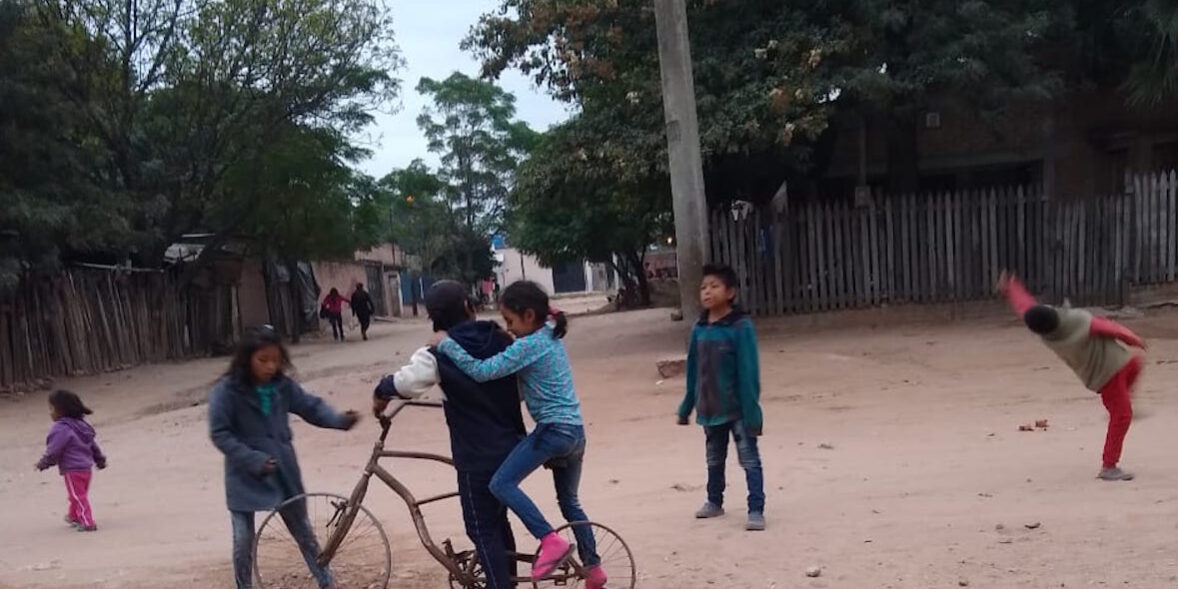
Photo: Tapiete Nation
Indigenous women from the Misión Tapiete community in Tartagal, San Martín department, reported that members of the Salta police force have assaulted their families and threatened to rape them. Community members confirmed that the officers enter the community while intoxicated and commit repeated abuses. After several appeals by the Indigenous Women's Movement for Good Living, the Public Prosecutor's Office opened an investigation.
M., one of the women who received the threats (we are withholding her identity for her safety), recounted that she and her family had already suffered police abuse. “On June 30, between 10 and 11 p.m., a group of police officers began firing shots at my parents’ house. My parents are elderly and have health problems,” she told Presentes. The police had been following a boy from their community who had gone into his mother’s house. “They wanted to enter my mother’s house. My brother wouldn’t let them in,” she told Presentes. Her brother and a nephew were hit by rubber bullets.
Police Station 42 refused to take her complaint: “They told me that’s their job and that we’re in quarantine.”
On Saturday night, July 4th, police officers returned to the community, hurling insults at the young people who gather on street corners. An hour later, they came back: “That’s when they started shooting rubber bullets and slingshots. My brother was hit in the foot by a slingshot, causing a bruise. Several other young people have been injured by rubber bullets. Then they entered the homes of two families, trying to take two children who were sleeping. The parents fought with the police to stop them from taking them,” M. told Presentes.
“They told my brother that they were going to arrest me and do a lot of things to me, that I was the one complaining. And they said that not even I was going to save him from the beating the police were going to give my brother. They said, 'We're going to rape your sister.' They were provoking him so that my brother would come out,” M. told Presentes.
“My sister was also threatened. They saw her with her cell phone and told her to stop messing around, to stop filming because if she filmed and filed a report, they wouldn't take her seriously, but if she did file a report, they would rape her and frame her. 'We can come at any moment.'”
M.'s statements were corroborated by Sara Chavarría, a resident of Misión Tapiete and also a member of the Indigenous Women's Movement. And, in part, they were also confirmed by Eleuterio Quillo, another resident of the community whose house the police also tried to enter.
So far, she has been unable to file a criminal complaint. Following the intervention of the Indigenous Women's Movement for Good Living, the Human Rights Prosecutor's Office (responsible for investigating crimes committed by members of the provincial security force) opened a case.
A marginalized and violated community
Misión Tapiete is organized into blocks and dirt roads, where between 200 and 300 families live. It is located near the center of Tartagal, surrounded by the Creole neighborhoods of Luján, San José, San Antonio, San Roque, San Ramón, and Arturo Illia. The Guarani community of Julio is also nearby. All of these neighborhoods are very poor and plagued by unemployment, limited access to education, and a lack of prospects for improving their quality of life. In this context, addiction and violence have long been commonplace.
Many people in Misión Tapiete make a living working in the sawmills. They also work in agriculture on a 7-hectare plot in Paso del Cherenta, 16 kilometers from the town. There they grow watermelons, corn, and other crops that they sell. The rural area is mostly inhabited by older people who haven't adapted to city life.
Right on the border between Misión Tapiete and the Arturo Illia neighborhood, there's a field that serves as a meeting point, for playing soccer, but also for drug use. “There's a large soccer field where they sit and use drugs. There are some logs along the edges of the field, and that's where the kids sit. That's their way of coping, so to speak,” Armando Álvarez, a social communicator and professor at the Tartagal campus of the National University of Salta (UNSa), told Presentes.
Under these conditions, the teenagers and young adults of the community live alongside the police. Sources consulted agreed that the kids, whether they use drugs or not, have bad experiences with the police. And because they fear them, every time a patrol car appears, they run away. “As soon as they see the police, they start shooting; they’re afraid because if they get caught like that, the police will start hitting the minors,” M. told Presentes.
Most of the children are afraid of being discriminated against or arrested by the police to the point that they don't want to go to school, according to several mothers in the community who spoke to M.
Among the young people, some work in construction, others do odd jobs, and still others are involved in social organizations. The Darío Santillán Popular Front and Barrios de Pie have a presence in Misión Tapiete. Some people receive social assistance programs, pensions, or retirement benefits. Some own small businesses. But most of the young people haven't completed secondary school. “Only a few are in secondary school and maybe five or six in college. There are young people who work, have families, and some work in sawmills because they don't have an education. They go to the sawmill at 3 or 4 in the morning, and every time they go out, the police catch them, and they're only released after two days,” and then they lose their jobs,” Chevarría explained.
As an example, Chavarría cites his brother. When he was 20, he was studying at night school, and his mother had bought him a motorcycle. One night, on his way home, a group of police officers stopped him, accusing him of driving a stolen motorcycle . They arrested him, beat him, and released him only after verifying that the motorcycle belonged to him. When his family tried to file a report, they were sent to the hospital to get a medical certificate stating that he had been beaten, but the doctor refused to give it to them. “So nothing came of it. I think that’s why young people don’t continue their studies,” says Chavarría.
Armed causes
In June 2019, a boy was shooting on a motorcycle. M. called 911, and a police car stopped in front of her mother's house. She explained that the boy had already left. Then, “a police officer started insulting my brother, calling him names like 'get inside, faggot, mama's boy,' and all that.” She asked her brother to go inside and told the police to leave. She insisted again that they leave. “Right then, the other one started shooting. My two brothers were in intensive care for almost a week, one with an open wound in his stomach from rubber bullets fired at very close range. My husband lost a finger, torn off by a rubber bullet when he tried to shield her from the police gunfire. I was also hit by rubber bullets.”
A third brother who was visiting took them to the Juan Domingo Perón Hospital. But the police were waiting for them and began beating them “even though they were wounded.” Then, the woman said, they wouldn't allow a doctor to treat them.
Her brothers and her husband were prosecuted for that incident and are currently under house arrest.
On June 22, 2019, the woman filed a complaint with the Human Rights Prosecutor's Office, but there have been no updates on the case. On the contrary, “the police officers are still working. The only ones who have suffered are my brothers because they lost their jobs and, on top of that, they're facing charges.” Meanwhile, “they recently sent us a notice saying we have to pay 6,000 pesos for damaging the helmet and the truck.”
M. said she is afraid. “Sometimes they threaten the boys, saying they’re going to rape them.” She recounted that before the quarantine, her nephew would come home at midnight with friends, “and the patrol cars caught them, asked them what they were doing there, asked them where they were from, they said we were from Tapiete, and they told them, ‘You better go home or we’re going to rape you.’”
The head of Police Station 42, Alejandro Guanca, refused to make any statements to Presentes about these events.
We are present
We are committed to journalism that delves into the territories and conducts thorough investigations, combined with new technologies and narrative formats. We want the protagonists, their stories, and their struggles to be present.
SUPPORT US

FOLLOW US
Related notes

We are present
This and other stories are not usually on the media agenda. Together we can bring them to light.