

Salta: Trial begins for the transfemicide of Mirna Di Marzo
Mirna Antonella Di Marzo was brutally beaten on October 21, 2018, outside a nightclub. She died in January 2019.


Share

By Elena Corvalán, from Salta
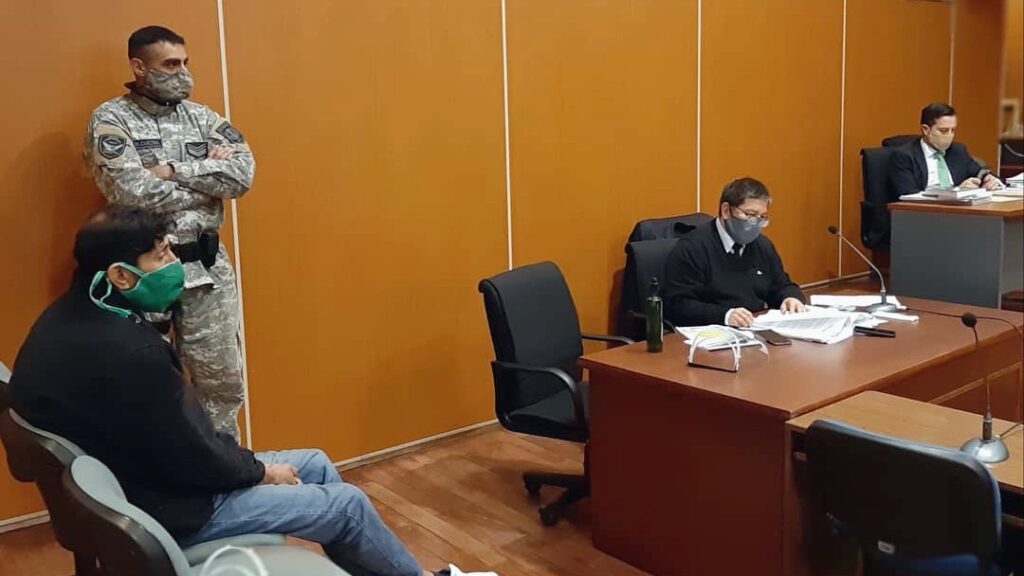
With delays due to the hygiene protocols required because of the coronavirus, the oral trial for the murder of trans woman Mirna Antonella Di Marzo began yesterday, Monday—though mostly behind closed doors. Mirna Antonella was brutally beaten in the city of General Güemes (50 kilometers from the city of Salta) on October 21, 2018, and died on January 27, 2019. José Gustavo Gareca, a man with a history of sexual violence, attempted murder, and assault, is being tried for this crime. Gareca is accused of “aggravated homicide due to gender-based violence.” The family's legal team and LGBTI+ organizations argue that the attack against Mirna should be classified as a transfemicide/travesticide.
“She was a cheerful girl, a good daughter. She had her issues because she was trans, and she was discriminated against. I want justice because my daughter deserves it. They abandoned her to her fate,” said her mother, Cristina Salas, during her testimony on the first day of the trial. She testified via videoconference from the General Güemes Prosecutor's Office because Judge Roberto Faustino Lezcano, of the Fourth Chamber of the Trial Court, decided to implement strict safety measures to prevent possible coronavirus infections.
For this reason, the proceedings are being held in the Grand Courtroom, which, as its name suggests, has ample space where participants can sit comfortably without any proximity. Despite these conditions, Judge Lezcano decided not to allow the public or the press to enter. The only means of dissemination was the broadcast of the first part of this initial hearing—the reading of the prosecution's indictment—on the Salta Judiciary's YouTube channel. The judge announced that the closing arguments and the verdict will also be broadcast. Everything else that occurs during the trial will remain within the four walls of the Grand Courtroom.
Since the quarantine began, the Salta Judiciary has not allowed public attendance at any hearings, nor has it ensured their broadcast through other means. This decision in this particular hearing caused dismay among Mirna Di Marzo's family. "It's important that my sister's side be present," stated Janet Di Marzo, the victim's sister and, in her own words, the person who knew her best. Janet's statements reveal that the family still suffers the discrimination Mirna endured: "I don't know what they're going to say about my sister," the young woman lamented, after noting that a local newspaper had reported earlier that day that the young woman had a relationship with her attacker, a claim she vehemently denied.
In addition to the setback of not being able to attend the hearing, Janet suffered another refusal from the court yesterday. While her mother was waiting to testify, she requested, through the family's lawyer, José Lazarte, that she be allowed to accompany her, concerned because Janet has a pacemaker and was very distressed about having to give her testimony. " Until they testify, they cannot have contact with the witnesses," the judge concluded. "If it's a minor, yes, but if it's an adult, it's not authorized." The magistrate's concern was futile, because Janet lives with her parents, meaning they have had more than enough time to talk about Mirna's death and about her testimony.
Attack and social complicity
Mirna was 31 years old when she died. She lived with her family in a working-class house in General Güemes. She had worked as a prostitute at some point, but since March 2018 she had resumed her secondary school studies and was determined to turn her life around. She took care of the housework, and she and Janet made homemade sweets to sell.
In the reading of the prosecution's indictment, delivered by prosecutor Verónica Simesen de Bielke, who participated in the first part of the investigation of this crime, it was recalled that Mirna was attacked as she left the Caribe nightclub, after 4 a.m. on October 21, 2018. The prosecutor concluded that she left accompanied by Gareca, but a few meters away the man attacked her with punches and kicks and took away a small black purse she was carrying.
According to testimonies detailed by the prosecutor in the indictment, the attack lasted approximately 20 minutes. The attack was witnessed from a distance by at least three people who did not intervene. Two young women excused themselves by saying they feared being attacked as well or didn't want any trouble. The third witness was a taxi driver who, by illuminating the scene with his car, caused Gareca to flee. Mirna was left unconscious at the scene, on 20 de Febrero Street, and never recovered.
Gareca was identified through these and other testimonies from people who had seen him at the nightclub, as well as by security cameras in the area. Shortly afterward, he attacked another young woman, also striking her in the head, just as he had attacked Mirna. In this instance, the woman was defended by another young man who happened to be passing by. Gareca is accused of the crime of "aggravated homicide due to gender-based violence." The prosecution asserted that Gareca intended to cause Mirna's death and that his actions had "a misogynistic component," seeking "to cause harm because she was a woman." After the reading of the charges, the formality of identifying the accused and asking him if he would make a statement was addressed. At this point, the live broadcast of the proceedings was cut off.
The press office of the Salta Judiciary later reported that Gareca said he would not make a statement at this time, although he anticipated doing so later. They also reported that he has three prior convictions: one for sexual abuse, another for attempted aggravated homicide, and another for minor injuries. For these, he received a combined sentence of 18 years and nine months in prison and was released in March 2018.
First testimonies
Following this, the first testimonies were heard. It was reported that among the witnesses summoned for this session were Cristina Salas; Keyla Molina, a friend of Mirna's; and Esther Terrazas, an employee of the nightclub. Speaking
via videoconference, with the added difficulties this entails for an elderly person unfamiliar with new technologies, Mirna's mother shared what she could. According to the Judicial Branch's report, she recounted that she learned what had happened to her daughter at 7:00 a.m. on October 21st. She said that two girls came to her house and told her they had found her lying unconscious in the street near the nightclub.
“When they notified me, my daughter was already in the hospital (Joaquín Castellanos, in Güemes). I went there but I was never able to speak to her because she was unconscious, in a vegetative state. Her head was badly injured. The doctors told me that she was in that state because she had been lying in the street for a long time and her brain had been deprived of oxygen,” she recounted.
She recalled that Mirna was studying and, in those circumstances, described her as a “good daughter.” Due to legal procedures, she was asked to look at Gareca and say whether or not she knew him. She didn't know him, and having to see him was painful for her, Janet later recounted in a conversation with Presentes. She added that her mother was “angry” because the connection wasn't very good and she didn't understand the questions from her lawyer and the prosecutor, Ramiro Ramos Ossorio.
“All transvestite and trans organizations and the LGBTI+ diversity movement have demanded justice in the recognition of the crime in terms of transvesticide and transfemicide, a homicide qualified by hatred of gender identity and by the presence of gender violence and treachery,” LGBTI+ organizations stated in a press release, adding that “justice must assume an active role, incorporating human rights standards, the precedents of the trial for the transvesticide of our comrade Diana Sacayán, and the recognition of the structural networks of violence and hatred towards transvestite and trans identity.”
They also asserted that “justice must recognize the violence, such as the hatred directed at our trans and travesti identities, and the context in which these crimes are embedded in our society, considering, on the one hand, gender identity ,” but “hatred of identity itself is also an aggravating factor in these crimes.” The hearing is scheduled to continue until August 12.
We are present
We are committed to journalism that delves into the territories and conducts thorough investigations, combined with new technologies and narrative formats. We want the protagonists, their stories, and their struggles to be present.
SUPPORT US

FOLLOW US
Related notes


We are present
This and other stories are not usually on the media agenda. Together we can bring them to light.