

The Peruvian judiciary reversed its decision to exclude LGBTI people from access to justice
The Executive Council of the Judiciary decided to reconsider its adherence to the "100 Brasilia Rules on Access to Justice for People in Vulnerable Situations without exceptions"

Share

Photo: Presentes Archive
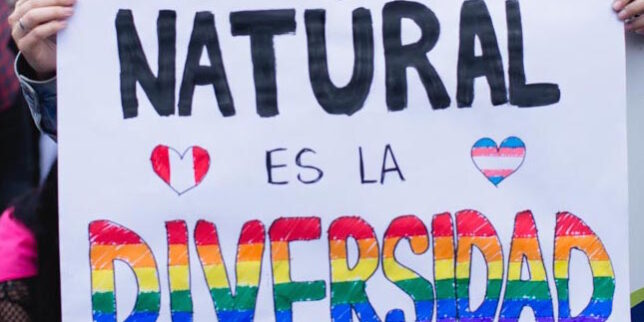
Today, the Executive Council of the Judiciary decided to reconsider its adherence to the "100 Brasilia Rules on Access to Justice for People in Vulnerable Situations without Exceptions ." This decision followed protests sparked by the exclusion of the LGBTQ+ population, one of the most vulnerable groups in Peru, as confirmed by 71% of Peruvians in the Second Human Rights Survey conducted by the Ministry of Justice.
Several state organizations expressed their rejection of the Executive Council's decision and lamented that it failed to consider the Inter-American Court of Human Rights ruling in the Azul Marín case , in which she waited 12 years for justice and reparations. They also cited the two Constitutional Court rulings that prohibit discrimination based on sexual orientation or gender identity, and the Ombudsman's report, which explicitly expressed its concern.
"The Judiciary has reconsidered a decision that was absurd and arbitrary. Now we celebrate that it has been reversed, but this should never have happened. It has been frustrating," provisional Supreme Court Justice Carlos Calderón Puertas told Presentes.
The Ministry of Justice and Human Rights and the Ministry of Women and Vulnerable Populations, as well as the Judicial Branch's Access to Justice Commission, requested the Executive Council to reverse its homophobic decision, which was based on denigrating arguments against LGBTIQ+ people, which is a crime in Peru, so it was paradoxical that the Judicial Branch itself ended up being a space that violated the criminal law in this regard.
Unfortunately, neither the Office of Judicial Control nor the National Board of Justice commented on these events. These bodies are obligated to initiate an investigation ex officio into the crime of discrimination against the six members of the Executive Council, including the president of the Judiciary, since Article 47, paragraph 7 of the Law of the Judicial Career states that "discriminatory conduct and treatment" constitutes a serious offense.
Judges and human rights defenders indicated that they would not comply with the exclusion and would continue to generate resources for access to justice for Peruvian LGBTIQ+ people.
]]>We are present
We are committed to journalism that delves into the territories and conducts thorough investigations, combined with new technologies and narrative formats. We want the protagonists, their stories, and their struggles to be present.
SUPPORT US

FOLLOW US
Related notes
We are present
This and other stories are not usually on the media agenda. Together we can bring them to light.