

Guatemala: From the first Pride marches to the Sexual Diversity Parade
Why the transfeminicide of María Conchita Alonso is crucial to the LGBT+ memory of Guatemala. Pilar Salazar reconstructs the history from the first Pride marches to the Sexual Diversity and Gender Identity Parade.

Share

By Pilar Salazar, from Guatemala City
Photos: Presentes Archive/Celeste Mayorga
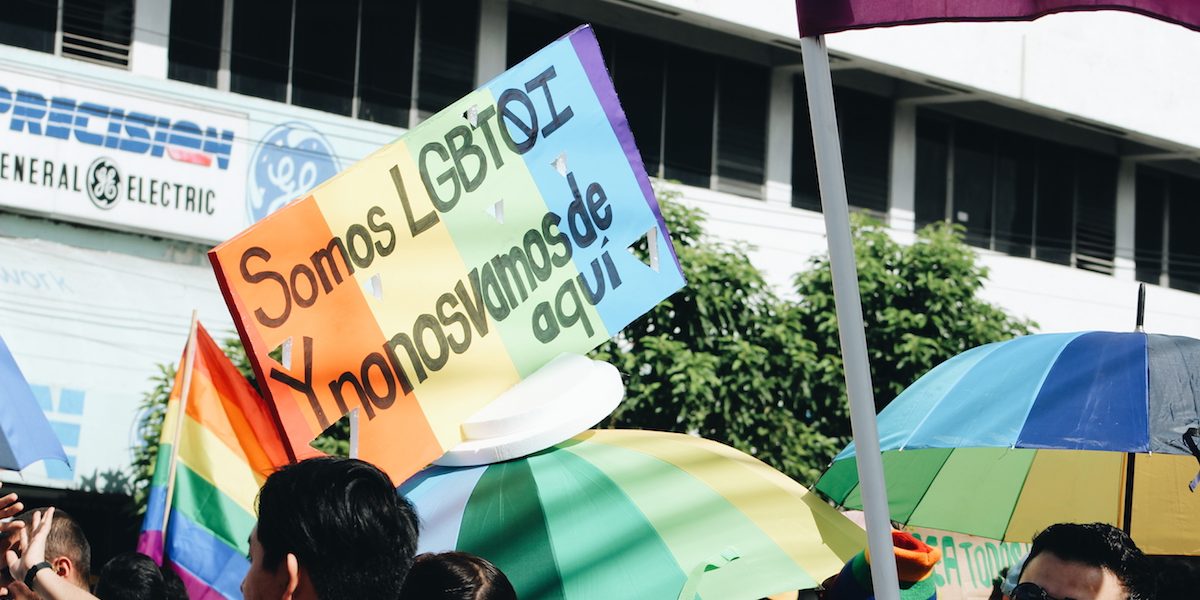
In many countries, Pride is celebrated in June, commemorating the Stonewall riots (New York, USA) of 1969, which marked the beginning of the LGBTIQ+ liberation movement. But in Guatemala, the Sexual Diversity and Gender Identity Parade takes place in July, and behind it lies a little-known history of pain and activism, stemming from the transfemicide of María Conchita Alonso.

Arrests between 1960 and 1990
To tell this story, we must go back to an investigation that began with the accidental discovery of police records from between 1960 and 1990. This discovery allowed investigators to uncover certain events during Guatemala's internal armed conflict. Within this context, it is documented that the National Police and its paramilitary wing, "G2," detained more than 156 people, including gay men, lesbians, and transgender individuals. They were accused of homosexuality and pedophilia, and were forced to imitate "modeling runways" before being subjected to ridicule, physical abuse, and psychological mistreatment.
The of Conchita Alonso
On December 29, 1996, the peace accords had just been signed in Guatemala. Trans women faced harsh discrimination, even from gay men. Activist Jorge López Sologaistoa, founder and director of Oasis, an organization that has promoted the human rights of sexual diversity since 1993, admits with a serious expression that, in its beginnings, it was “a transphobic organization.” Activist Israel Boanerges states that at that time, the Rodalinda organization was the only one that supported the community development of trans women.
María Conchita Alonso, a 23-year-old trans woman originally from Jutiapa, was murdered steps away from the Oasis organization while she was surviving by working as a sex worker. The trans femicide occurred on Thursday, October 2, 1997, at the intersection of 11th Street and 5th Avenue in Zone 1 of Guatemala City. Some accounts obtained by this publication blame two soldiers. Another account states that three men were walking down the street, and one of them, wearing loose shorts, said something to Conchita as she passed by and took her hand. Witnesses say that Conchita took a few steps back, and that he took a few steps, turned around, and shot her.
Aldo Dávila—the first openly gay member of parliament in the 2020-2023 legislature—describes Conchita as a link. She tried to unite trans women and gay men. Mario Alvarado, for his part, says she was a very charismatic woman who helped her colleagues.
From the mass to the march for Conchita
On October 11, 1997, a mass was organized for Conchita, but using her legal name . It was feared that the priest would refuse to perform it because she was a trans woman.
Maria Conchita’s friends,” to gather after Mass and carry a wreath of flowers. They went to the fountain in the city’s Central Park (now called “ Plaza de las Niñas” ) to hold a commemorative event. “ There were 24 of us who decided to go out and break the silence,” recounts Sologaistoa. They then went to the spot where Alonso had been murdered: “When we arrived at that corner, we placed the wreath of red roses (bought at the central market with money donated by the House of Culture, as were the candles) and stayed there for a few minutes. Laura Asturias read a statement she had written on behalf of OASIS, and Marlon Vega read a poem to “Maria Conchita” written under the pseudonym Marieta Branco,” relates Carlos Ibañez.
The media played an important role at that time and paid attention to the march that her friends made to the place of María Conchita's murder. The newspaper Siglo XXI published a note the next day: "The first gay march in Guatemala."

Journalist Carolina Vásquez Araya also published an article that same day in the newspaper Prensa Libre: “They Killed Conchita,” although they described her as a “man dressed as a woman,” words that are sadly still used in many media outlets today. Sologaistoa clarifies: “It wasn’t the first gay pride march.”
2000: the first “Gay Pride March”
Israel Orrego tells this publication that the first parade commemorating the murder of María Conchita was organized in 2000. “At that time, people were talking about gay rights, since there were no trans organizations. The only one that existed was the Rodalinda project, which provided services to trans people,” he recounts.
On Sunday, June 25, 2000, approximately 200 people marched from "La Bodeguita del Centro" (a nightclub in Guatemala City) to the National Palace of Culture. Their main objective: to be seen. From there, they proceeded along 6th Avenue (a local commercial center) to the Pandora's Box nightclub, where a commemorative plaque honoring María Conchita was unveiled. The slogan of the march was "For respect for diversity," Jorge Sologaistoa told this publication.
Olga Morales, mother of Congressman Aldo Dávila, was the first mother to accompany the first "Gay Pride" parade, as it was called at the time, in an interview conducted by Gente Positiva (an organization that works for the human rights of the LGBTIQ+ population and people living with HIV).
In 2001, due to disagreements between organizing groups, an official sexual diversity parade was not held.
2004: the power of the trans collective
According to Debby Linares (LGBTIQ+ human rights advocate), the trans movement in the country was born at that year's march through the trans collective Reinas de la Noche Otrans-RN. In 2004, all the sex workers got together and paid for a platform to build a float. “We were all dressed up. What I can say is that, of all of us who were there, I'm the only one still alive,” says Debby.
2005: a year stained with blood
Jorge Sologaistoa recounts that 2005 was a bloody for the LGBTIQ+ community. That year, eight trans women, most of them sex workers, and ten gay men were murdered. Among these victims were Rachel Paulina Marrot, communications assistant for Oasis, and Bárbara Palacios, from the fledgling organization Otrans-Reinas de la Noche (Otrans-Queens of the Night), who were killed in extrajudicial executions. A “mourning” march was called for 2006. “I estimate that two-thirds of the marchers wore black, filled with rage, fear, and pain ,” Sologaistoa recalls.
2007: from march to parade
In 2007, the use of the word "march" was questioned in Guatemala . Because it carries a symbolic military connotation, it was proposed to change it to "parade " with an "allegorical" meaning. This action succeeded in engaging more people, according to Sologaistoa.
2012 with two parades
In 2012, further disagreements arose, resulting in two separate parades. One was held on June 23rd (the Sexual Diversity and Gender Identity Parade), and the other on June 30th (the Pride Parade). The discussions stemmed from some participants' reluctance to share the streets with the military, while others argued that there was no need to fear them.
Among some of the people involved in the beginnings of the movement and the first "gay pride" march, this media outlet was able to identify the Promoter Group of the Gay and Lesbian Collective of Guatemala, Friends of María Conchita, Fernando Bances, Claudia Acevedo, Samantha Sams, Marlon Vega, Maritza Lemus, Olga Morales, Edgardo Lou, Lilo Euler Coy, Nancy, Tara, Susana, Rubén Mayorga, Daniel Hernández (photographer), Eduardo, Laura Asturias, Jorge Sologaistoa, Israel Orrego, Carlos Ibañez, Lesbiradas Organization, Antonio López, Mario Vinicio Álvarez, and Aldo Dávila.
The change from June to July in 2019
The date for Pride celebrations in Guatemala changed in 2019, when a new date was set for the Sexual Diversity and Gender Identity Parade, moving it to the third week of July, according to Jorge López Sologaistoa, who is also part of the parade's organizing committee. In 2020, it will be held on Saturday, July 18.
Twenty-three years have passed since the murder of María Conchita Alonso, an event that made her a martyr of the community, beginning a struggle that is still ongoing.
We are present
We are committed to journalism that delves into the territories and conducts thorough investigations, combined with new technologies and narrative formats. We want the protagonists, their stories, and their struggles to be present.
SUPPORT US

FOLLOW US
Related notes


We are present
This and other stories are not usually on the media agenda. Together we can bring them to light.