

What is it like to be a non-binary person in Latin America?
Artists and activists share what it's like to be a non-binary person and how they live their identity in everyday life in Latin America.

Share

Non-binary people exist. They are those who do not necessarily identify with the male or female genders. They can be both, neither, destroy that binary, or build something new.
It's common for them to be associated with the neutral pronoun (elle), but the use of these is a personal decision. There is no single way to be non-binary.
The first case in the region where a person was able to register their gender as “non-binary” occurred in Argentina . However, in Latin America, the recognition of non-binary people within existing gender identity laws remains an outstanding issue. While regulations aim to uphold the right to identity based on self-determination, they continue to offer sex and gender markers within a binary spectrum: woman/man; female/masculine.
The visibility of non-binary people doesn't end with having their identity reflected in their documents. There is a political struggle that is embodied in everyday experience in all spaces.
“Being non-binary means that I am neither a woman nor a man.”
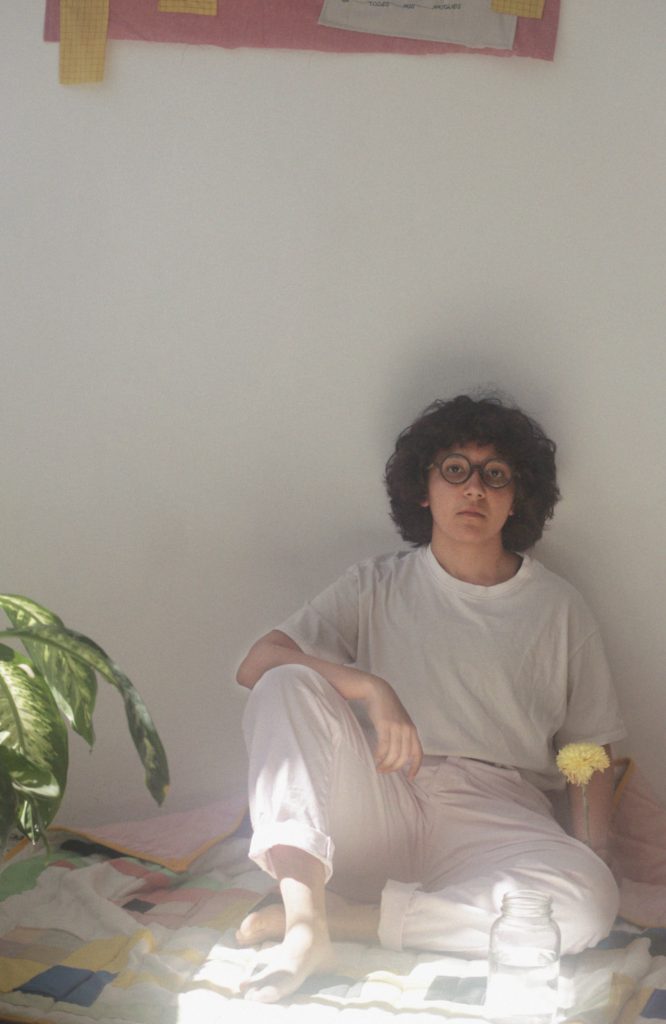
Larissa Garza is an artist and cultural manager, she lives in Guadalajara, Mexico.
“I realized I wasn’t a woman from a very young age. I felt like a fraud in the gender I was supposed to be, and at other times I excused things I wanted to do that were seen as 'masculine' by asking them to believe me: 'I'm not a boy, I don't want to be one.'
I'm on hormone replacement therapy, and when I went to the nutritionist, she considered my body to be that of a woman. My body now functions differently. Healthcare services don't know what to do with our bodies, and few doctors are trained to treat us. Even if they are trained, there isn't enough research to offer us safe hormone replacement therapy.
In Mexico, legally, socially, and systemically, we are forced to choose to embody a gender that we are not. This is violent and generates violence. This hurts, and it feels as if every time we give in, we exist a little less. That's why I believe the most powerful thing we can do is turn to each other, create spaces for ourselves, generate information, educate ourselves however tiring it may be, take care of each other, support each other, represent ourselves, be brave, and defend ourselves.
Only nine Mexican states recognize gender identity through an administrative process, but no regulations include non-binary people.
“They talk about us in theory”
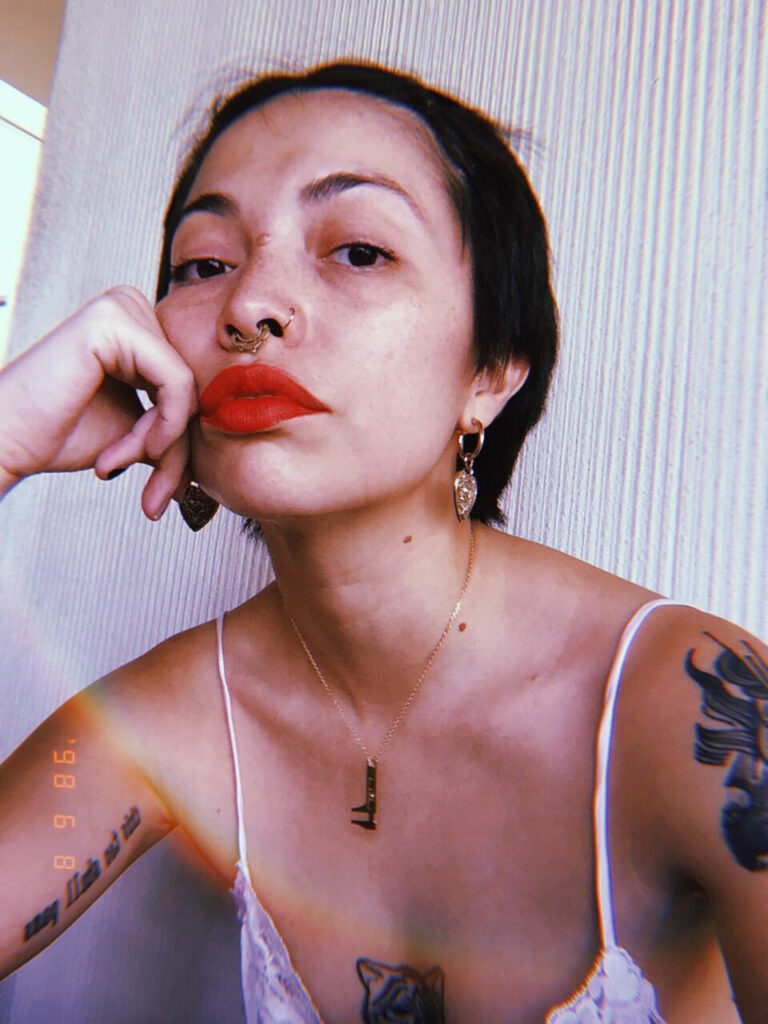
Andrea is a merchant and lives in Guatemala.
“Being a non-binary person is about being constantly in transition, in the feminine, the masculine, everything in between and around. It is a conscious nonconformity and, at the same time, an involuntary movement of my body.
Despite moving in many circles where the topic is discussed and where people are aware that non-binary people exist, openness and acceptance are still a long way off. People talk about "us" in theory, the neutral pronoun is used more as a plural, and my way of being and looking myself tends to be seen as eccentric.
The challenges lie in recognition, violence, and rights. Conversation and action are almost nonexistent in Guatemala. Knowing we are misunderstood, to the point of being endangered for who we are, is a very powerful and strange thing. And because we are not named, our identity recognition, our right to health, and our right to security are not considered.
The Guatemalan Congress has not yet read the proposed gender identity law . In contrast, bill 5272 "Law for Life and Family," supported by the evangelical church and which threatens the human rights of women, girls, and LGBT+ people, was suspended due to a lack of quorum for its third reading in plenary session.
“We live on the margins, often for self-preservation.”
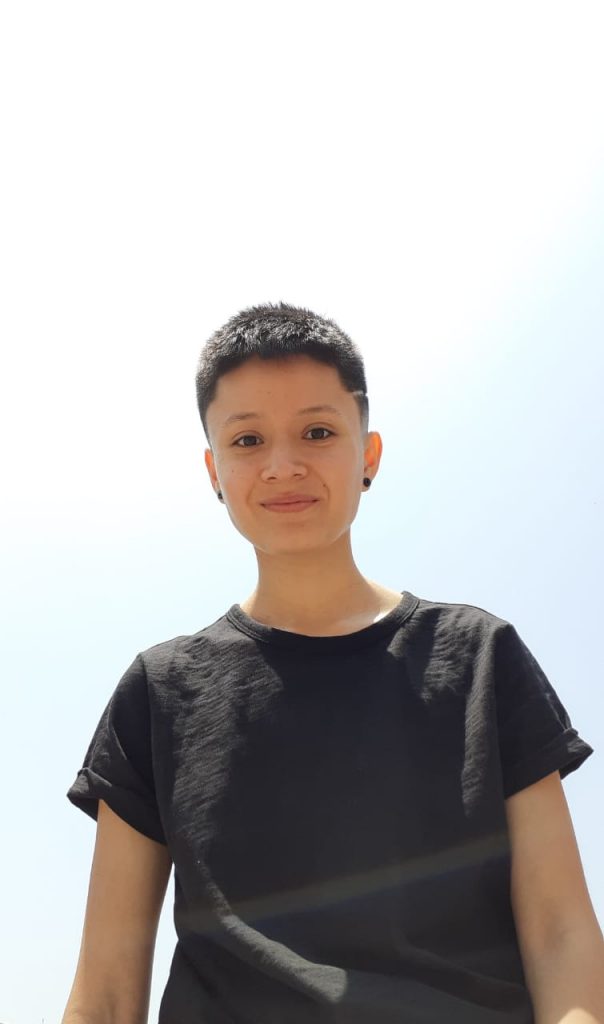
Emil Fabianne is an artivist from Peru dedicated to dance and education.
“For me, being non-binary is completely and naturally revolutionary. It is evidence that many of our invisible and disabled peers existed. It is synonymous with courage and resilience because it takes a lot of courage every day to be in this society. Finding myself in this identity is very powerful and motivates me to keep fighting.”
One of the biggest challenges in Peru is not having an identity document. In Peru, non-binary identities are practically nonexistent. We face limitations in living our lives in areas such as health, education, work, and socialization. The biggest challenge in Peru is the lack of accurate information about us, which leads to a cyclical state of disorientation and a sense of not belonging.
In Peruvian society, gender roles and expectations for gender expression are deeply ingrained. We encounter various barriers, some higher than others, but all harmful. We live on the margins, often out of self-preservation, sometimes out of fear, and sometimes because we can no longer cope with it all.
The gender identity bill has been on hold for three and a half years because it has not been debated in the plenary session of the Peruvian Congress.
“No biological characteristic determines our identity”
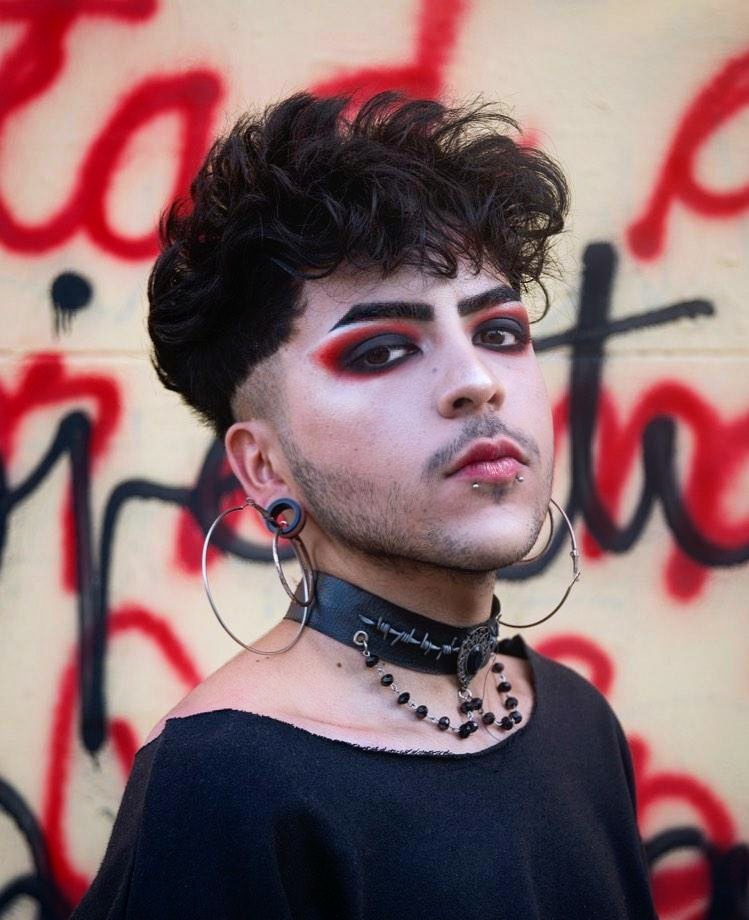
Savka de Plutón has decided to dedicate her life to art, she is the coordinator of the Neutres Chile collective and she works in makeup.
“For me, non-binary is a political identity. It’s a way of expressing oneself outside of the structural binarism of modern societies; it’s a protest against the gender norms and roles assigned to us at birth based on our genitalia. We propose the idea that no biological characteristic should determine our identity; we are free to perceive ourselves however we want.”
In Chile, we face total exclusion and invisibility from institutions and society. People, in particular, always invalidate us because the idea of someone not being a man or a woman is inconceivable to them. We are constantly attacked by having our existence denied or being referred to as a 'passing fad'.
Our main challenge today is to amend the gender identity law and achieve institutional recognition of our identities, thus paving the way for social recognition. This would help us in the workplace, in healthcare, and in education, allowing us to have a better quality of life and ensuring we are protected from the patriarchal violence to which we are constantly subjected for living outside the gender binary.
Where can I go for help?
Larissa, Andrea, Fabianne, and Savka recommend these organizations and collectives where non-binary people can find support from others and receive legal and health advice.
Mexico: Cuirtulias ; Genderqueer Guadalajara ; Impulso Trans .
Guatemala: Central American and Caribbean Madmen Organization ; Cuirpoétikas ; Anarkiperreo .
Peru: I'm Not Afraid ; Trans Male Diversities ; More Equality .
Chile: Neutres Chile ; Pies Disidentes ; Colectiva TransForma ; Asociación OTD .
]]>
We are present
We are committed to journalism that delves into the territories and conducts thorough investigations, combined with new technologies and narrative formats. We want the protagonists, their stories, and their struggles to be present.
SUPPORT US

FOLLOW US
Related notes
We are present
This and other stories are not usually on the media agenda. Together we can bring them to light.