

HIV: Another news story about the cure that isn't
This week, the news again featured talk of a "cure for AIDS." Besides failing to distinguish between HIV and AIDS, these headlines spread misinformation.

Share

This week, the news again featured talk of a "cure for AIDS." Besides failing to distinguish between HIV and AIDS, these headlines spread misinformation. They exploit a hope that vanishes with a quick read.
This time, the "cure" comes from a patient known confidentially as "the São Paulo patient." Ricardo Díaz, a clinical researcher at the Federal University of São Paulo, is leading the study. Díaz explained to ScienceMag that this HIV-positive Brazilian man was treated with a combination of antiretroviral drugs (ARVs) and nicotinamide (vitamin B3). He then gradually discontinued the medication and, despite having stopped all treatment, has shown no new evidence of HIV in the tests performed on him.
People who are HIV-positive are treated with antiretroviral medication. This keeps the virus under control and, in most cases, allows us to achieve undetectable viral loads. This doesn't mean we are "cured," but rather that the viral load is reduced so much that it is undetectable, significantly lessening its impact on our health. A person on treatment has a lower chance of the virus progressing to acquired immunodeficiency syndrome (AIDS).
But for all of this, we have to continue taking our medication regularly. The doctors explain that the patient in São Paulo, in addition to the usual ARVs that those of us living with the virus take, received other combinations. The news, then, is that now, more than 15 months after stopping all medication and with some further tests pending, the virus still hasn't reappeared in his body.
A single case
What the headlines don't reflect, and what should be read in the main body of the articles, is that this is a rather unusual result, since it only worked for one out of five people tested. This was stated by Andrea Savarino, a doctor at the Italian National Institute of Health who co-led the research, in an interview with the website NAM Aids Map .
Franco Bova, a doctor and activist with the Positive Cycle Association , attended Dr. Ricardo Díaz's talk on Wednesday, July 8th, during the AIDS 2020 Conference, which is currently being held virtually. He explained: “Of all the people undergoing this treatment, only one remains without viral relapse, with a stable CD4 count (defenses), and apparently no virus found in some reservoirs; others still need to be examined. This person is in what we call remission; we cannot yet speak of a cure.”
The patient in São Paulo is a single case, and further testing is still pending, but even so, it could offer some hope. It could be the beginning of a long road to finding a solution to this pandemic. It helps us think that there are ways to eliminate the virus. But if we step back and look at the bigger picture, it's far from what the headlines suggest.
The news of the cure
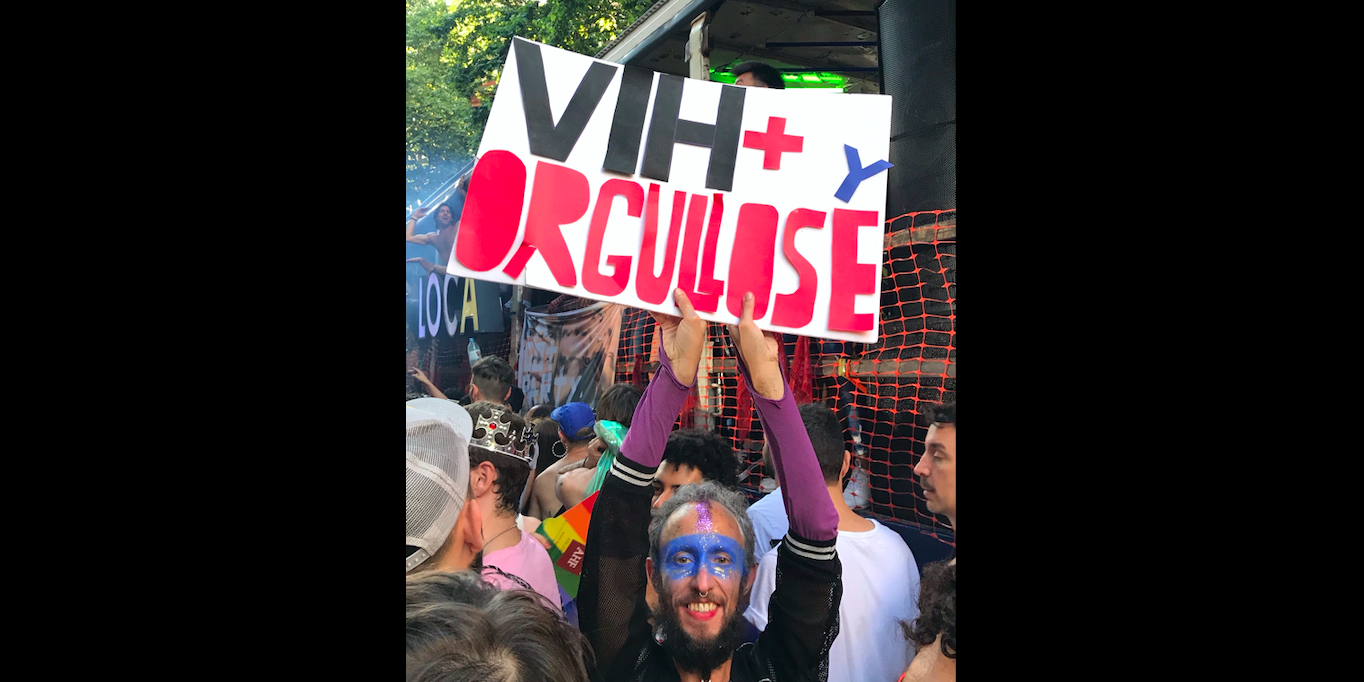
I've been HIV positive for over ten years. During that time, I've received almost every news report about the appearance of "the cure," repeatedly. From claims that bees could cure HIV to cures with plants. There are also people who tell me that HIV doesn't actually exist. But when the news reports involve the scientific community, I try, with some hope, to understand a little more.
The previous times I heard about "the cure" were in reference to patients in London and Berlin. Unlike the current case, those two underwent bone marrow transplants, highly invasive procedures. And in those two cases, just like the patient in São Paulo, the virus did not return. The major difference with the current case is that this time only medication was used, and these interventions were not necessary. But the common factor in all three cases is that they are the only ones from several trials. Behind the published success of each "patient of" are many attempts in HIV-positive individuals that did not yield the same results.
I understand that my perspective on life as an HIV-positive person may seem very negative. I'm not criticizing the researchers and the science that are working toward that long-awaited cure. My objection is to the media that so casually talks about a "cure" without considering the consequences. I am worth far more than the number of clicks any news website wants.
And above all, I criticize the glorification of these news stories in contrast to how much we are ignored when we are being called out. In many countries, there are still shortages of medication. We are more than 30 years into this pandemic, and the news has already forgotten that people are still dying from AIDS-related causes. Hospitals are running out of supplies, and I don't even want to think about the obvious: who would have access to that cure?
According to UNAIDS figures, as of the end of 2019, 38 million people were living with HIV, of whom 1.8 million were infected that year. Since the beginning of the pandemic, the organization has recorded almost 33 million deaths. This isn't news. It seems our reality and our deaths don't sell.
We are present
We are committed to journalism that delves into the territories and conducts thorough investigations, combined with new technologies and narrative formats. We want the protagonists, their stories, and their struggles to be present.
SUPPORT US

FOLLOW US
Related notes



We are present
This and other stories are not usually on the media agenda. Together we can bring them to light.