

Astrid González, Afro-Colombian activist and migrant: “Talking about racism in Chile was impossible”
Steeped in ancestral diversities and decolonial Black feminism, Astrid distances herself from “white academic” feminism.


Share

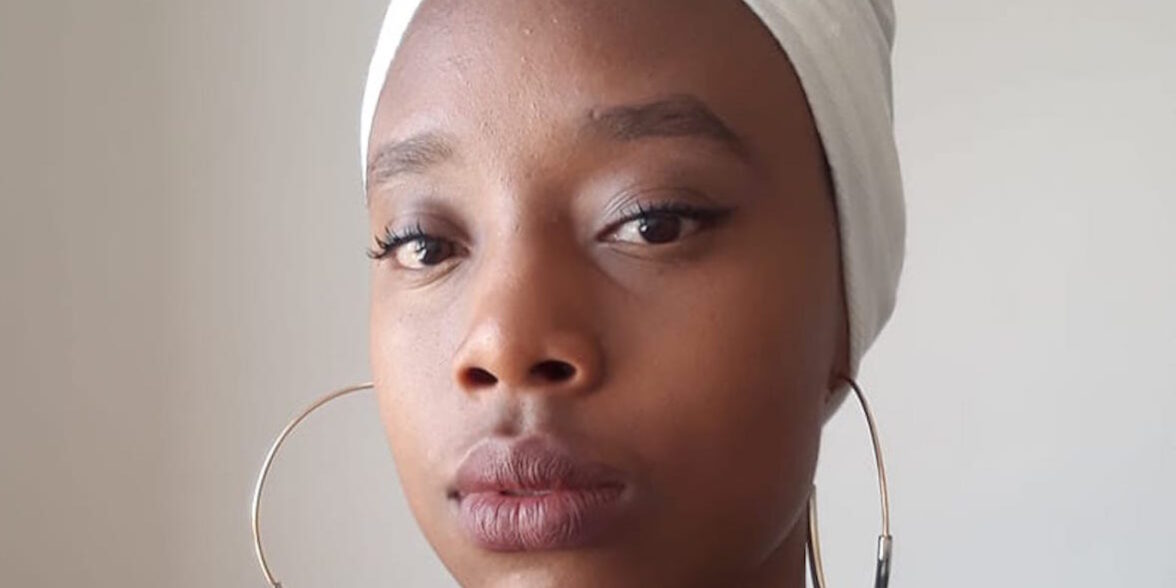
Astrid González is a young Afro-Colombian woman who has lived in Chile for four years. Immersed in ancestral diversity and Black decolonial feminism, she distances herself from "white academic" feminism. She is a Master of Fine Arts and works in Chile as an artist and teacher on educational and creative projects. Her passion lies in the streets and the need to connect her experience with that of other women like herself, as well as with Afro-Chilean women and women from Indigenous communities.
In 2019, she published Ombligo Cimarrón (Wild Navel) , an arts research book that explores the history of Afro-Colombian territories and communities through her own experiences. She was born and raised in Medellín, a city with deep colonial roots, but feels a stronger connection to the Colombian Pacific coast, where her parents and grandparents were born.
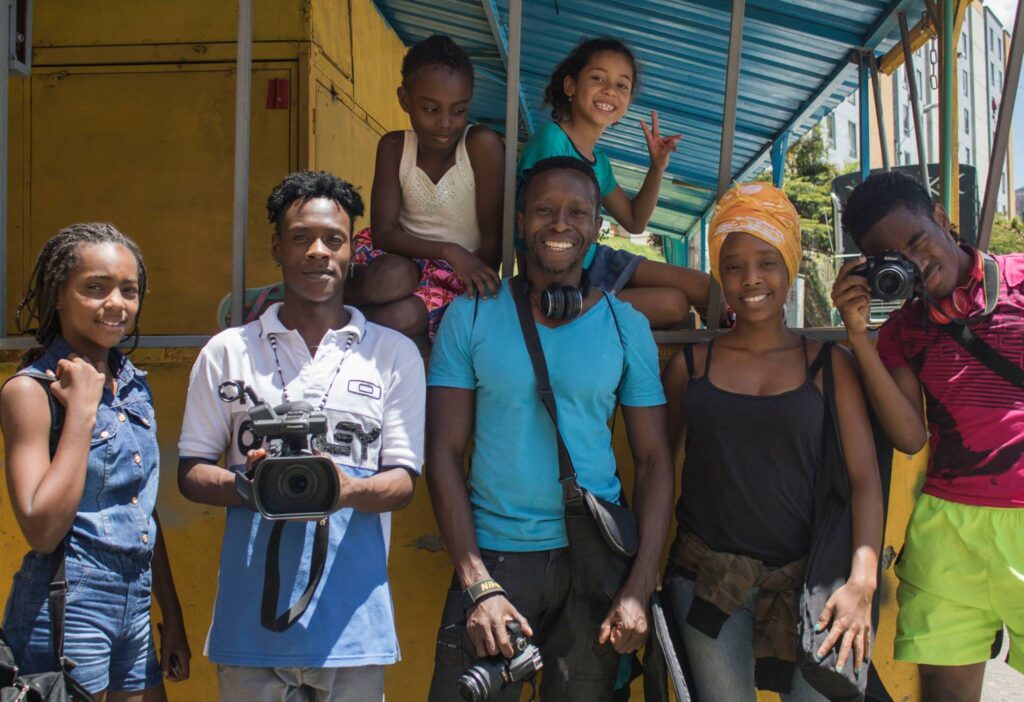
She is part of the Afro-Diasporic Women's Network, a community created to make visible, disseminate, and recognize the experiences of Black women of African descent in Chile. Here, most of its inhabitants consider themselves "whiter than other people from Latin American countries," and many believe that migrants are "dirtier," according to a 2017 study by the National Institute for Human Rights.
Astrid is 25 years old, but the murders of George Floyd and Breonna Taylor at the hands of US police don't surprise her, because she knows they stem from violence rooted in decades of racism, discrimination, and segregation. What she finds valuable is that, with these events and the widespread "Black Lives Matter" movement, at least in Chile, people are starting to talk about racism openly and clearly. She discussed this, her experience as a migrant, and other abuses with Presentes.
-How do you feel about the global revolt and the uprising of so many voices around the world against racism?
What's happening is something that many people have been writing about, denouncing, advocating for, and studying for years. Street protests against police racism are nothing new, especially in the United States. What I find interesting, besides the scale to which the protest message has spread, is that there's no longer so much fear in naming racism. In Chile, for example, talking about this was practically impossible until recently, not even considering that Mapuche communities have been subjected to oppression for years. This is well-documented by their collectives, organizations, and their own historical narratives. No one who wasn't racialized called it racism. That's why I think it's important that people stop being so uncomfortable with the concept and stop disguising it as discrimination or xenophobia, which are completely different concepts but coexist with racism.
-What were your first impressions upon arriving in Chile? Did you feel welcome?
-As soon as I arrived, the first shock was realizing that I was now part of the migrant population census and therefore had to face an endlessly bureaucratic process just to be able to walk the streets regularly and peacefully. It's a very long process that I'm still learning about. Especially because, in the social imagination, I'm part of a group that, for some years now, has been seen as a phenomenon that comes to 'disturb' or 'bother': a racialized, impoverished migration, where the vast majority of people don't arrive by choice , but as a result of problems in their countries of origin, also known as forced migration.
-How do you position yourself politically and as a black woman in relation to that reality?
In Colombia, I was already involved with a group of young Afro-descendants, drawing on political, cultural, and aesthetic perspectives, as well as my own personal experiences. When I arrived in Chile, one of my first goals was to build or connect with networks of migrant women, specifically Black or Afro-Chilean women who were going through a similar process to mine. So, I sought to position myself as a political subject from that perspective and from the recognition of the existence of other Afro-descendant experiences in the country. This is primarily because I come from Medellín, a region where Blackness is foreign and associated only with the Pacific coast of Colombia, where my more recent ancestors were born. However, a large number of Afro-descendants have now settled in the country's main cities, and we have contributed to shaping its history.
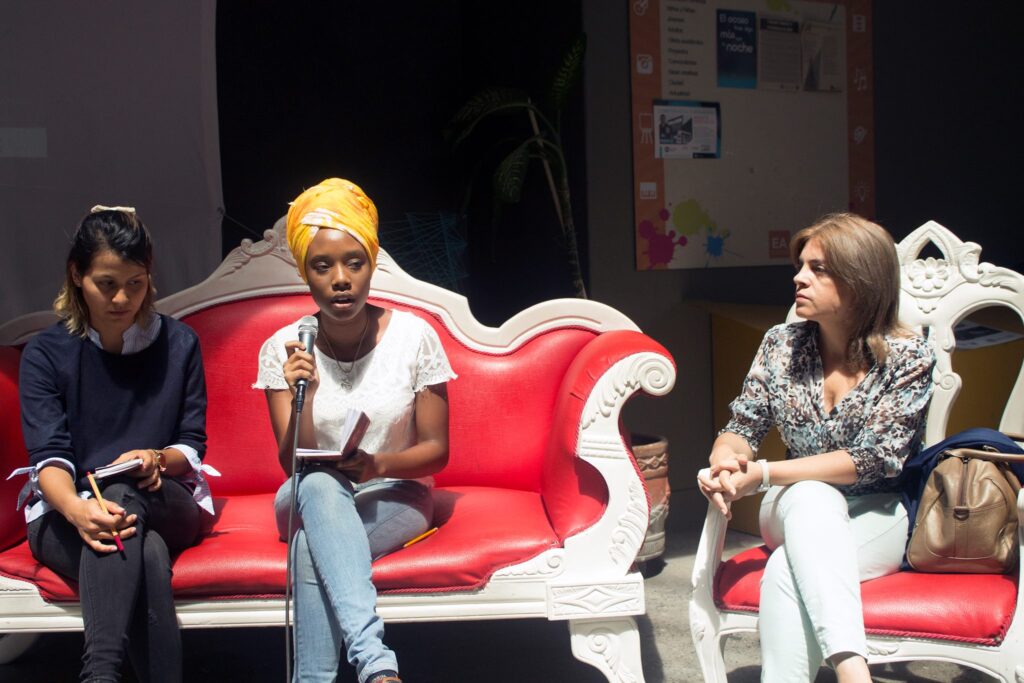
-What things did you discover as a migrant and as a researcher in the arts?
As a migrant, I understood that there are other Black experiences and other ways of thinking about migration, because institutions treat migrant groups differently through bureaucratic processes, which is a manifestation of institutional racism. And as an artist, I must say that in Colombia I moved in non-hegemonic and non-elitist art spaces, which are very much on the margins of the institutional. When I arrived in Chile, I realized that these spaces also exist, but I wasn't familiar with them. So I approached a group of Mapuche artists who, based on their experience in the peripheries of Santiago and their Indigenous heritage, create art not only through visual and plastic arts but also through poetry and performance. I became interested in their work because it points precisely toward my own research and formal interests.
-Does the racism you describe affect you personally?
Constantly, inside and outside my home. For example, once at the Arica airport, returning from a forum where I was invited to speak, the Investigations Police decided to pull two Black women out of the line. They took us to a room to check our passports, only us, not the other people . It happened several years ago, but it's one of the most intense experiences I've had here. And like that one, many others. In this country, migration is perceived and assumed to be a pathogen, something that comes to contaminate. There's also a distinction made about which bodies come to contaminate, because it's not everyone: it's Black bodies and bodies from Abya Yala (Indigenous peoples of the Americas). European bodies, for example, are well-received. All of this is based on the historical construction of Eurocentric purity and the notion of colonial development and modernity.
-Speaking of which, what is your opinion of the treatment migrants have received during the pandemic? Many Ecuadorians, Venezuelans, Colombians, and Haitians were left without work and without homes in Santiago, and until the beginning of June they were still in camps outside their countries' consulates waiting for some help.
Given this situation, the ideas of Cameroonian theorist Achille Mbembe make perfect sense. He speaks of necropolitics as a concept, understood as the way in which states and governments are designed to decide who lives and who dies. Those who live are people in power or who belong to elites, and they decide how those who neither consume nor produce die—in this case, migrants during the pandemic and racialized groups. I believe we are at the mercy of necropolitics and a structural racism rooted in colonial times, which has become normalized and sophisticated. It is very worrying.
-And what do you have to say about Chilean feminism?
– The truth is, I'm a big supporter of thinking from a decolonial perspective, or from a feminism other than white feminism . The writer Bell Hooks talks about how the presence of Black women in the world cannot be homogenized as being the same as others. I completely agree with that. I feel that many of the ideas of white feminism are based on the premise that all women are the same and suffer in the same way, without considering the intersection of ethnicity and culture with class and gender . So, obviously, many of the slogans and ideas of that white feminism, often academic and which negates the historical agency of Afro-descendant and Indigenous peoples, don't resonate with me because they don't respond to my needs, my reality, or my perspective.
We are present
We are committed to journalism that delves into the territories and conducts thorough investigations, combined with new technologies and narrative formats. We want the protagonists, their stories, and their struggles to be present.
SUPPORT US

FOLLOW US
Related notes
We are present
This and other stories are not usually on the media agenda. Together we can bring them to light.