

“For families of trans children, we are driven by love tinged with fear.”
When I hear the cries of my trans and travesti sisters, I want to run and hug them. In them, I see my daughter screaming in despair, and so, continuing to stand and fight becomes very difficult.

Share

By Gabriela Mansilla
On June 28th, a lump forms in my throat. I don't march like I do on other days. I have the feeling that we're making a little progress, but achieving nothing. Because no one has heard me scream enough yet. As if my very life depended on that scream. I'm angry; so much injustice stirs my entire being. My womb cries because it gave birth to a trans girl, who is in danger and who isn't heard. Although nothing changes immediately, and perhaps even though more and more allies will join, there's an emptiness that few people will understand. Surely it will be another mother, another father, who walk beside me, trying to fight the worst of this fate.
When I hear the cries of my trans and travesti sisters, I want to run and hug them. In them, I see my daughter screaming in despair, and so, continuing to stand and fight becomes very difficult. Because the question is always circling in my mind: Which trans and travesti sister will be next? Who will be missing from the next march?
Each person who joins the protest does so for different reasons, and surely, they will experience countless emotions, but there's one I don't know if they'll all share: the feeling a mother has for her trans daughter. The feeling a father has for his little trans girl.
[READ ALSO: “Being the son of” ]
This year, 2020, we can't take to the streets with our flag and signs, but we will continue to raise awareness through social media, because what isn't named doesn't exist, and we will name it until it seeps into their very being and the demand burns within them, as it burns in our hearts. We will make them uncomfortable with our demands, we will question everything, because if the lives of our children are in danger, we will not give this binary, patriarchal, biologistic, and colonial system any advantage or respite.
“Our children were left out of all planning.”
I don't know if we chose it, I don't think so. All I know is that we are driven by love, the same love tinged with fear, the desperation of being unable to avoid or change the destiny that our children inherit. That destiny imposed by hatred, by ignorance, orchestrated as a plan of extermination, beginning within the family and continuing through other institutions that expel what is "deviant, perverted, sinful"—that which cannot be tamed even by force, that which is so full of life and demands so much freedom that it frightens.
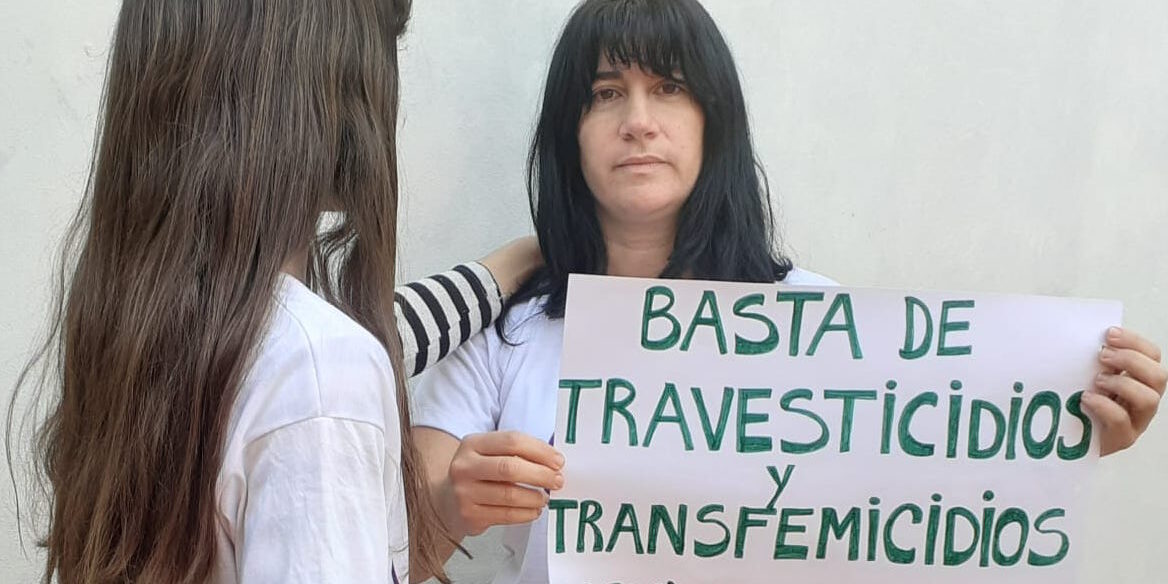
It's not easy to go out into the streets with a sign that says, "Stop killing them for being transvestites and trans people." I think no family could have imagined it before; no one is prepared for something like this. We weren't activists; our children gave us courage, and we took on that responsibility.
[READ ALSO: “Pink boys, blue girls”: a documentary about trans children ]
Today, the families of the Free Childhoods Civil Association are collectively thinking about how to ensure our children are not in danger. Because we understand that we cannot do it alone, but rather together, joining forces.
Our children were left out of all planning; the state didn't consider them. Their very bodies are criminalized, and what are we supposed to tell them? That we should take to the streets to demand they stop killing them? Our children are barely 5 or 7 years old. They're children, they're teenagers. It seems insane, but nothing has been resolved for them.
I always wonder how to go home, how to face them, because the children there are waiting for us, anxious, to ask how we've been, if the world has changed, if they have nothing left to fear. And arriving without the answers they need for us is a huge disappointment.
I've noticed with great sorrow that trans women face greater risks; that violence seems to be directed with more cruelty than toward trans men. But ultimately, it's the same violence that kills in the same way, sooner or later, and that leads this community to have a life expectancy of 35 years. What family can live knowing this?
How can we tell our daughters that their classmates are being killed for being transvestites and trans people, when they are transvestites and trans women themselves? We don't want to scare them, but we also don't want to lie to them.
We're out here demanding they stop killing them. Our children love their trans aunts, and so do we.
Our children sleep soundly in their beds, unaware of the dangers out there. We are adding a new page to the book of the trans community, a page no family has ever written before, the missing piece, the absence that should have been responsible parenting but wasn't.
We know that not all our sisters die at the hands of a murderer; transvesticide and transfemicide also occur because of abandonment, because of so many nights spent in jail. There are those who survived police beatings, those whose bodies were poisoned by liquid silicone, sickening their entire bodies. There are the sisters I saw with my own eyes, alone in the beds of the Muñiz Hospital, because HIV was consuming them. And so, what can I say to my daughter? What can I say to all the girls? Because the pain a mother can feel facing this prospect of life—which, although my daughter hasn't experienced it yet, the entire transvestite and trans community experiences—and for these children to exist today, they had to die without anyone wanting to prevent it.
With each friend who is no longer here, the hope for a different life, for other opportunities for transvestite and transgender children and adolescents, dies.
How much hope can we give to our children?
What should change? All of humanity! Because this model has clearly failed, it's over.
Let's talk about the State's responsibility, the preventable deaths, the historical police persecution, how many of these women live to old age, the years spent standing on street corners as teenage girls; the drugs and alcohol that numb their minds when they are forced into prostitution, and the expulsion from their homes—from those cis-heterosexual families who cast them out with such cruelty—and those who choose to run away to live as they feel called to. What do we, as a society, have to offer these new generations?
Let us also talk about those who are more sensitive, those who cannot endure it, and in an act of liberation, and tired of having no hope, say enough is enough by their own hand, silencing their own voice.
The mockery they endure, pointed at by the accusing finger of morality, the ignorance, the stares, when they turn their backs on them. And I say this to you: you who rape them, you who use them and discard them, why don't you dare to love them?
Denied, criminalized, abandoned—society does this to them, and it's a crime that seems to go unpunished. You don't need a knife; this crime often involves the complicity of your eyes, and it's a social transvesticide and transfemicide. You kill them too.
How much hope can we give to our trans and gender-diverse children and teenagers? How can we strengthen our resolve to protect their lives? Can we guarantee our children that they will have another chance? That they will grow old? That all this violence will not affect them?
[READ ALSO: Tiziana, a trans girl from Salta: dancing, resisting and growing old ]
As long as they are not included in political projects, as long as the education system does not properly name them, as long as their bodies continue to be forbidden and wrong, how are we going to look them in the eye and tell them that everything will be alright?
The only hope is knowing that our families are in the midst of this battle, that we don't know if we'll win, but that we will do everything in our power, and more , to change our fate, and that we will honor the trans community because so many butterflies paved the way for our children to continue their flight. And we will stand before all of humanity to prevent history from repeating itself. We will not stop fighting and challenging. We are cisgender people with trans fury in our souls.
“There is no greater or truer love than the love of a family that embraces a trans child, no greater courage than to be, without belonging, to live freely. Together we will break with prejudice, with pathologizing views, and with the repressive role of institutions. We will break with the single destiny this community has had. These trans children and adolescents deserve to be happy, they deserve to enjoy equal opportunities, and if they achieve this, we families will feel that then, yes, we can die in peace…”*
This June 28th, let's shout together: Stop the murders of trans women, stop the murders of trans women!
*Extracted from the booklet "Disobedient Childhoods, Bodies That Discomfort" ACIL 2019
All our content is freely accessible. To continue producing independent, inclusive, and rigorous journalism, we need your help. You can contribute here .
We are present
We are committed to journalism that delves into the territories and conducts thorough investigations, combined with new technologies and narrative formats. We want the protagonists, their stories, and their struggles to be present.
SUPPORT US

FOLLOW US
Related notes

We are present
This and other stories are not usually on the media agenda. Together we can bring them to light.