

"Being the son of"
Although Father's Day is a commercial holiday, imposed by capitalism, it deeply affects this dad, who must demonstrate every minute what place he occupies in this society.
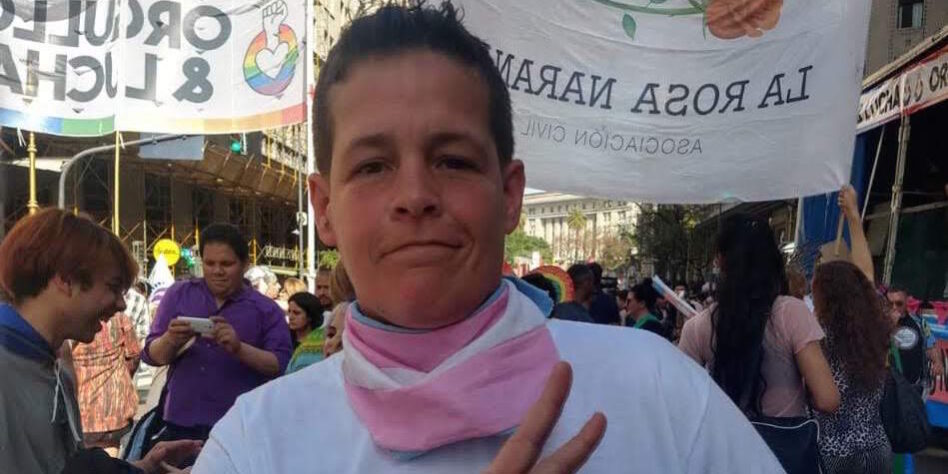

Share

Matías* lives with his 16-year-old son, Nicolás, in a humble neighborhood in the greater Buenos Aires area. They rent a small house that's more than enough for the two of them. Nicolás does his schoolwork like any other boy his age, but he's never felt at home there. Perhaps this will be a quieter year for him.
Matías and Nicolás always arouse the curiosity of the entire neighborhood; every time they go out, they are looked at with suspicion. The neighbors often whisper behind their backs, and sometimes those looks instill fear in them, making them feel powerless, and they lower their heads more than once, not out of shame but out of resignation or because they feel tired.
Being Matías's son was always difficult. Nico had to bear the burden of stares from childhood, a contempt he never understood. The kind that hurts your body and leaves you no room to defend yourself. The violence of an adult world blinded by prejudice, condemning the childhood of an innocent child, denying him any respite; as if his very existence were an insult.
Father and son have moved several times because some places become dangerous for both of them. Fleeing to save themselves and start over.
Discomfort from school
When Nico was younger, school instilled discomfort in him, and the shame he carried in his backpack crushed his desire to learn. He suffered the teachers' morbid curiosity and interrogation for not conforming to the "model family" ideal. He often needed his mother to come and pick him up to shield him from the taunts and violence born of ignorance—the kind that arises in a family with only two boys.
Where is your mother, Nicolás?
– I don't have a mom, I have a dad.
-Did he die? What was his name?
– It never existed
Matías always tried to fill those voids. He tried to do everything, he was attentive to his son's education, he dedicated himself to working, to cooking for him and doing the housework.
Nicolas grew up in what patriarchal society calls a dysfunctional home.
The reason there was no mother in that home is because Matías was the one who carried Nicolás in his womb.
A father who was born with a vulva and who never identified with the gender assigned to him at birth based on his genitals. He has identified as male for as long as he can remember.
Matías is a trans masculinity.
Today he is 42 years old, and he remembers that when he was five he would put on his father's ties and shirts, and express as best he could who he was without anyone listening to him.
[READ ALSO: Trans mom: “I’m going to raise him with the freedom that was denied to me” ]
His family might have been the ones to save his life, but they chose to disregard that right and deny reality. To look, but elsewhere.
Around the age of 16, he was able to call himself Matías, but he had already lost almost everything. Loneliness is never alone; it always comes with sadness and a lot of fear . He couldn't even finish his studies. He was expelled from the convent school at a very young age for not being like the other girls, for not wanting to wear the jumper, for insisting on using the boys' bathroom, and for not being ladylike enough.
They ingrained in him the message that still permeates school classrooms today: boys have penises and girls have vulvas. Believing himself to be a monster, an undesirable and deviant being, he despised the body that wasn't "normal" for this society.
He grew up with the loneliness and helplessness that his own family returned every time he sought comfort, and he withstood every violent corner that tried to correct his deviant rebellion.
And when he least expected it, he experienced one of the many corrective violences suffered by some trans men, which instantly robbed him of the last drop of dignity he had.
His son was born nine months later, when he was 27. Carrying the pregnancy was difficult. Those days were as hard to endure as they were to forget.
There wasn't a single doctor who respected their identity. There were no laws, and no one willing to listen.
And he wept inconsolably, swallowed his shame, his hands raw from knocking on doors, and clung to that thread of light his son awakened within him. His womb cradled the revolution this world needed to see. And he gave birth to himself alongside his baby. A father was also born, one who proved to have the courage to face everything, but this time, together.
[READ ALSO: Trans Dad and Mom: The Story of the Argentinian Family That Became a Comic Book ]
To resist and stand tall in the face of all this adversity was synonymous with struggle and also necessity, but it would not have been possible to live even a second without that capacity to love, the one that Matias has, the one that many people will never have.
Although Father's Day is a commercial holiday, imposed by capitalism, it deeply affects this dad, who must demonstrate every minute what place he occupies in this society.
The patriarchy was responsible for showing him how a man should be; machismo was an example that Matías did not replicate, one that he had to fight against and still has to face daily.
Her body isn't treated with hormones; that was her choice. Everyone should follow their own desires and build themselves freely, without relying on models or stereotypes that not everyone wants to emulate. And that's what it's all about: knowing yourself and being diversely free.
For Matías, being a dad is about nurturing love, it's about having so much freedom in his arms to hug and teach, to contain and be able to transform everything for the well-being of his child ; it's not about having a big beard and a very deep voice to fit into a system that oppresses without giving respite; he learned that too.
[READ ALSO: Trans youth: advocating for gender in schools ]
Being a dad means letting go of selfishness and being willing to love beyond what we think love means. It means being an example of courage. Of responsibility. It means being able to raise your arms even when you can't bear any more disappointment.
Being a father is having the ability to reinvent yourself every day, it is drawing strength from the depths of pain and turning it into wings that will carry away the sadness that society puts in your child's eyes every day.
Being a dad is giving life, and that life can also be conceived in the body of a trans man. Happy Father's Day, Matías.
Gabriela Mansilla is an activist and the mother of Luana, the first transgender girl to obtain her new identity document in Argentina. She is the founder of the organization Infancias Libres (Free Childhoods).
*Matias Veneziani is secretary and coordinator of the transvestite adolescent group of the Civil Association Free Childhoods.
All our content is freely accessible. To continue producing independent, inclusive, and rigorous journalism, we need your help. You can contribute here .
We are present
We are committed to journalism that delves into the territories and conducts thorough investigations, combined with new technologies and narrative formats. We want the protagonists, their stories, and their struggles to be present.
SUPPORT US

FOLLOW US
Related notes
We are present
This and other stories are not usually on the media agenda. Together we can bring them to light.